Memories of Old Taytay: The People, Landmarks, and The Man Who Saved Them on Film
Avelino Zapanta picked up a camera in the 1960s. His albums are now helping protect historic Taytay.
Published on Nov 13, 2026
(SPOT.ph) Avelino “Lino” Zapanta is writing his autobiography. For a man born in 1942, it is easy to imagine the pleasure and contentment that comes with piecing together a life well-lived. And yet, squeezing a full life’s history into a handful of chapters is no small feat.
Zapanta, after all, has worn a lot of different hats over the last eight decades. He was once a playful boy running around a very different, rural Taytay; later, a diligent man working his way up the ladder at Philippine Airlines (PAL). Eventually, he took on his most recognized role as PAL’s president and chief operating officer, famously steering the nation’s flag carrier through some of its rockiest years. There have been many other hats before, after, and in between: student, professor, congressional candidate, husband, and father.
But it is his love for photography that recently brought Zapanta’s name back into the local spotlight. An exhibition put together by the Taytay Advocates of Cultural Heritage Inc. and United Architects of the Philippines (UAP) Rizal Nuevo featured Zapanta’s personal collection to showcase the evolution of the municipality. For the organizers, his early hobby of carrying a camera around turned him into an unplanned documentor of Taytay’s history, from ancestral homes to the daily lives of regular people.
.jpg?fit=cover&width=960&q=82)
Farm boy in rural Taytay
Looking at Zapanta’s vast archive of photographs, it is easy to assume he was born with a camera in hand. But it is ironic: for all the history he managed to save on film, the one thing Zapanta doesn’t have is a single picture of his own childhood. “Sadly, we didn’t have photographs as kids, from elementary down,” he says.
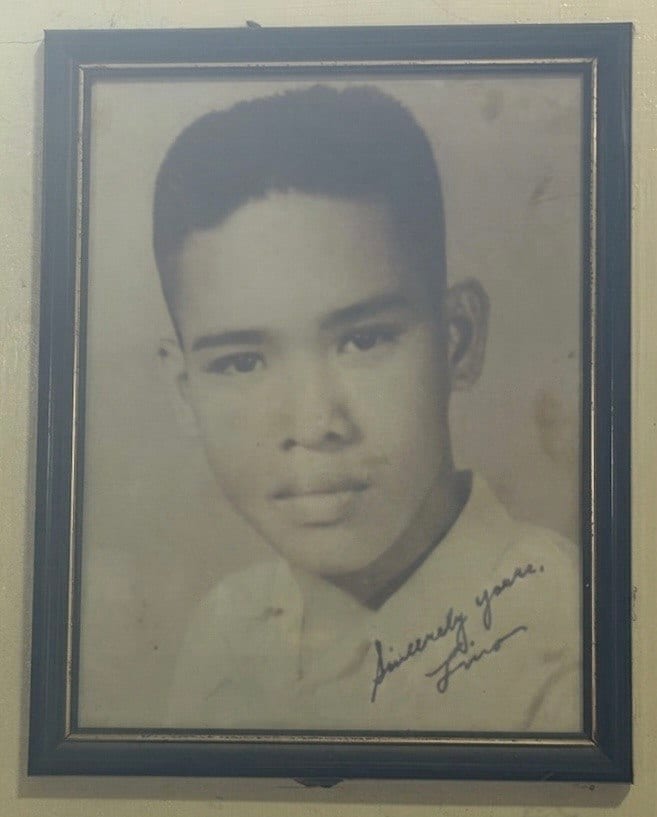
He grew up as one of six children in a household run by honest, tactile labor. His father was a master carpenter and foreman, while his mother worked as a seamstress while running a sari-sari store. It’s a background that will feel deeply familiar to many locals in Taytay, a town celebrated for beautiful woodworks, and where nearly every household once hummed with the sound of a sewing machine.
A true-blue Taytayeño, Zapanta remains firmly rooted in his childhood town. He still lives in the exact same lot where his father built their home in the 1950s, constructed after their original ancestral home was burned during the liberation campaigns of WWII. Zapanta lived in that wooden house until 1998, when flooding and natural degradation finally prompted them to start remodeling it. Demolishing and rebuilding the house piece by piece took almost 10 years, but he saw it through.
.jpg?fit=cover&width=960&q=82)
The complete overhaul of his home reflected Taytay’s changes as well. “Our roots are really from Taytay,” he says, recalling the rural green canvas the town was before it became a bustling urban hub. The bustling streets and residential properties that surround his home today used to be nothing but rice fields—a bountiful playground for restless children. Zapanta describes himself as a “war baby who became a farm boy,” spending his childhood summers helping at the fields and playing with the carabaos on his grandfather Dadang Angel’s farm.
“It was very rural,” he recalls of the Taytay he grew up in. “Rice fields hanggang doon sa dulo.” As farmers prepared the muddy fields for planting, he remembers catching dalag (mudfish) and kuhol (apple snails). “Kinakain namin yun, gustong gusto namin yun.”
Commuters today will only recognize Kay Tikling as an ultra-busy crossroads with buses, jeepneys, cars, and tricycles tangled up while navigating the boundaries of Taytay, Cainta, and Antipolo. For young Zapanta in the 1950s, it was a slow-flowing creek where he and his friends would spend afternoons leaping into the water.
.jpg?fit=cover&width=960&q=82)
From boyhood to box cameras
As he grew older, his idyllic childhood adventures made way for academic and extracurricular accomplishments at Rizal High School. His instincts to remember and record took shape as he worked on the campus newspaper, rising from Filipino section editor to editor-in-chief. In his senior year, he was chosen for a one-year scholarship at Maryville High School in Cheektowaga, United States. In a world completely different from the rice fields of Taytay, he soaked in the opportunity to learn. “That’s where I decided to take three industrial arts subjects in one year: driving, photography, and piping. Pinakinabangan ko lahat yun.”
When it was time to return to the Philippines, his American host family gifted him a simple Kodak box camera. And back home in Taytay, he transformed the nook under the stairs into a functioning darkroom, outfitting it with the paraphernalia needed to process black-and-white film. Color was too expensive, but his monochrome prints of changing streets and local faces began to stack up.
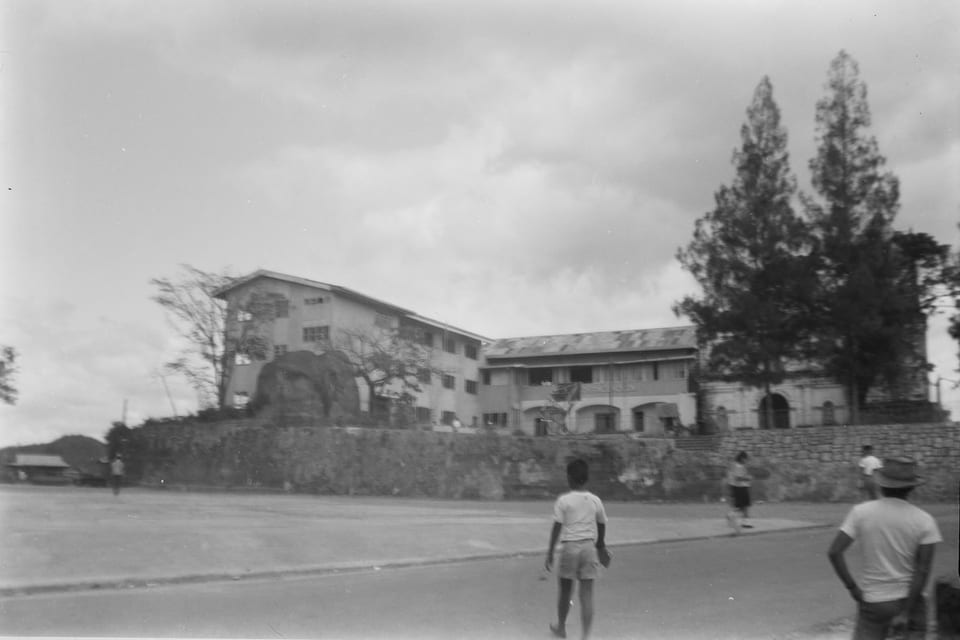
“That’s where my obsession with photo collection began,” Zapanta recalls. “Nung bumalik ako dito, August 1961, I started taking photographs of family members, mga paligid, bukid, mga playgrounds namin noong araw.”
Long before Ortigas Extension cut through the hills, or the Manila East Road bypassed the town center, Taytay was the gateway to the rest of the province. Back then, motorists heading to the eastern towns of Rizal had to go through Taytay. Zapanta remembers that in the corner where the main street, Rizal Avenue, branches off, L. Wood Street goes left, all the way up to Antipolo. The right fork extends to Angono, Binangonan, and the lakeshore towns.
.jpg?fit=cover&width=960&q=82)
“Being at the crossroad, Taytay was the most progressive town,” Zapanta explains. “Apat ang sinehan namin noon, ang ibang bayan wala. Ang palengke namin malawak. So, yung mga tao sa eastern towns of Rizal, inevitably, they would have to pass through Taytay. Dito sila nanonood ng sine, dito sila namamalengke.”
Zapanta spent his youth enjoying the larger-than-life stories of Filipino cinematic classics like Prinsipe Amante, Siete Infantes de Lara, and Gengis Khan. More significantly, the ever-bustling activity in Taytay provided him with endless street scenes, local characters, and bustling markets to capture with his new camera. “Kaya marami akong nakuhang photographs noon.”
 (1).jpg?fit=cover&width=960&q=82)
 (1).jpg?fit=cover&width=960&q=82)
The municipality’s existence stretched all the way back to pre-colonial times, with woodworking and carpentry said to have always been part of its identity. But inevitably, the post-war era brought an industrial wave. Manufacturing companies set up operations along what is now Ortigas Avenue Extension, chief among them was the Singer Sewing Machine Company.
 - This ca.jpg?fit=cover&width=960&q=82)
 (1).jpg?fit=cover&width=960&q=82)
Modern sewing technology proved to be a seamless fit with the town’s tradition of craftsmanship. Many Taytayeños remember growing up with sewing machines in their family homes, with locals crafting ready-to-wear clothing from fabric remnants. In those early days, entrepreneurs would sell these handmade clothes in the then-distant markets of Divisoria and Baclaran.
When Zapanta began snapping pictures with his Kodak box camera in the early 1960s, Taytay was undergoing this transformation. But just as Taytay was hurtling toward industrial development, his own career began taking him to new heights far beyond his hometown.
 (1).jpg?fit=cover&width=960&q=82)
Taking flight
“I decided to apply at PAL, because the travel bug was in me already,” Zapanta explains, noting that his time as an exchange student, combined with summer vacations and early work trips, had permanently fueled his love for travel. That work ethic translated into marching up the corporate ladder. He started at the bottom, moving “from being a crate clerk, check-in clerk, load controller, ramp agent, and to station agent—supervisor position na yun.”
This climb positioned him at the center of the airline’s most turbulent era. During the severe financial distress and labor strikes of 1998, Zapanta played a crucial role in bridging the gap between management and the workforce. Eventually, the flag carrier took flight again and his leadership led to a milestone unmatched in the airline’s history: in 1999, he became the first person to rise from a rank-and-file position to PAL President and Chief Operating Officer (COO).
Following his PAL retirement, Zapanta shared his expertise by teaching management and aviation courses at De La Salle, UP, and PILSCA. He went on to spend a decade as president of Southeast Asian Airlines (SeaAir), expanding the domestic carrier into a regional operator. Later, in 2017, he stepped back into the classroom for the aviation business program at WCC in Pangasinan.
 (1).jpg?fit=cover&width=960&q=82)
But it was during the post-PAL years, around the turn of the millennium, that he returned to familiar grounds. Zapanta began walking the major thoroughfares and narrow alleyways of his hometown—with his camera, of course. He set out once again to photograph Taytay, capturing its new commercial hubs, developing intersections, and rapidly changing landscapes.
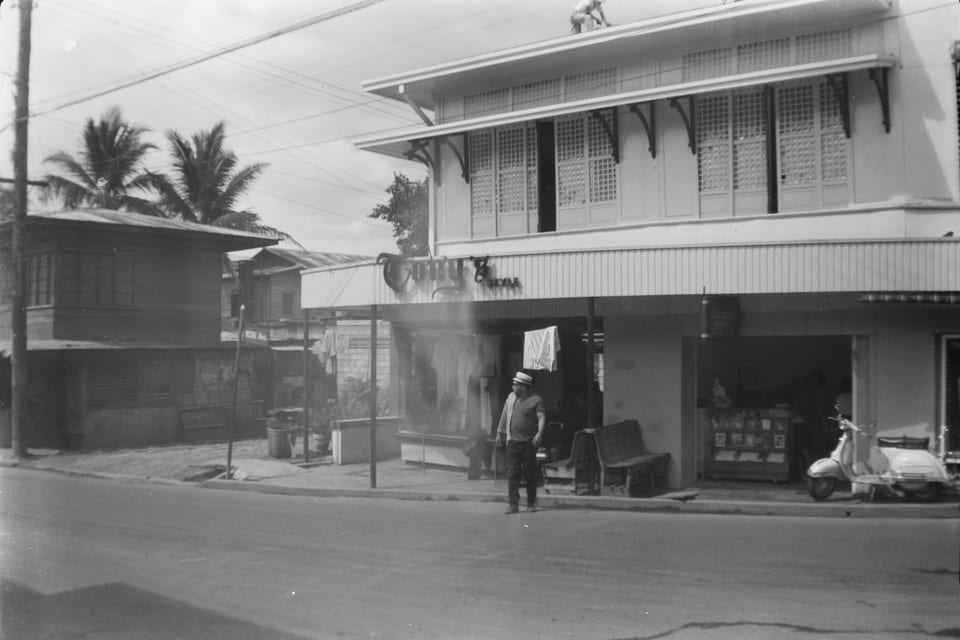
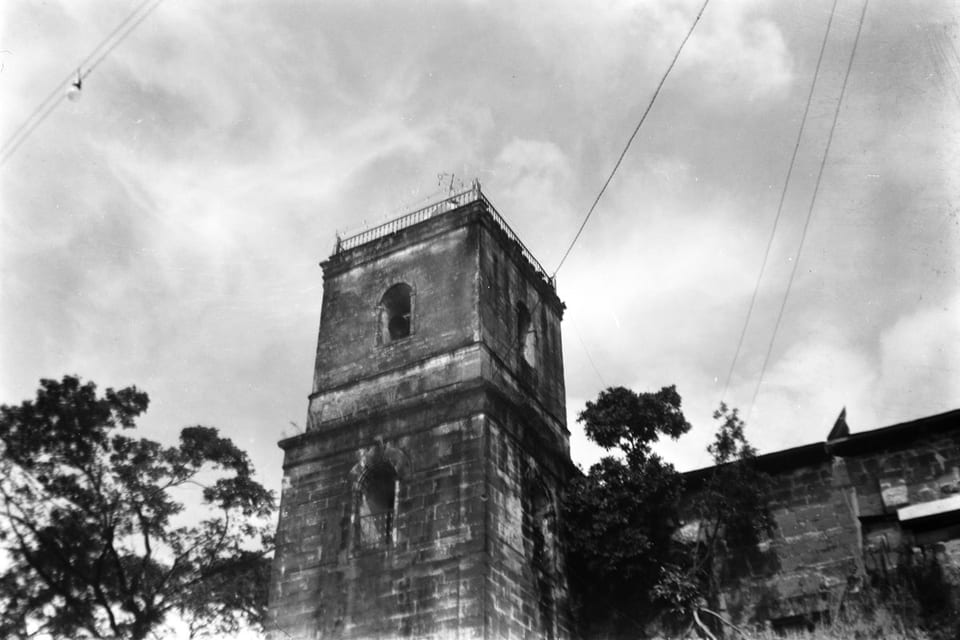
More than two decades have passed since he shot those frames. Today, the vintage snapshots from the 1960s and the early 2000s show worlds that are vastly different from contemporary Taytay. This personal collection is a rare archive of the town’s transformation. Plus, the images serve a practical purpose, too: local officials have used his albums to help identify and preserve the town’s heritage buildings.
From personal albums to public archives
This is where the Taytay Advocates of Cultural Heritage Inc. (TACH) found an invaluable partner in Zapanta. When the group led the protests to block the demolition of the 60-year-old Old Taytay Municipal Hall, they pulled from his black-and-white 1960s snapshots to prove the building’s original foundation and age.
Sadly, the building was ultimately demolished for a provincial hospital annex, but Zapanta’s photographs remain a valuable record of what was lost and what still needs protecting. Councilor John Tobit Cruz, one of the founding members of TACH, praised the former PAL president’s meticulous record-keeping, saying he kept all the prints and negatives neatly organized and labelled at home.
.jpg?fit=cover&width=960&q=82)
Beyond individual preservation campaigns, TACH also targets long-term conservation. In 2023, the group partnered with the United Architects of the Philippines (UAP) Rizal Nuevo for a massive cultural mapping project cataloging the municipality's tangible and intangible treasures. They are currently lobbying for a local ordinance that would formally declare the historic Poblacion district a protected heritage site, shielding its architecture from urban development. Councilor Cruz emphasizes the importance of the mission: “I owe it to Taytay to preserve our cultural heritage.”
.jpg?fit=cover&width=960&q=82)
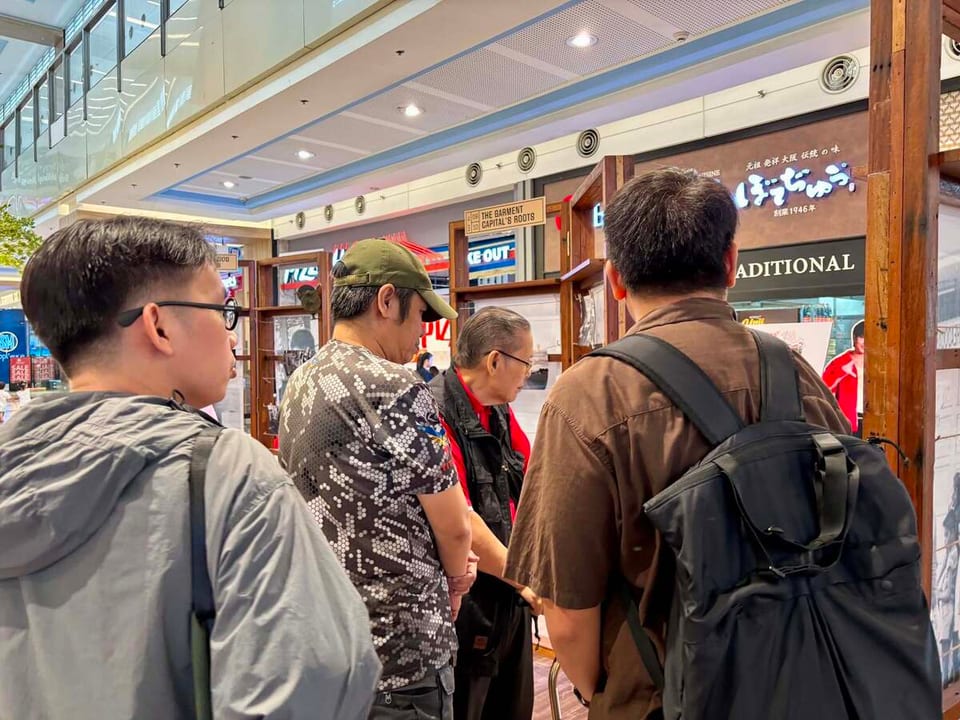
In early June 2026, TACH and UAP Rizal Nuevo teamed up to showcase Taytay’s cultural heritage through Zapanta’s lens. The week-long exhibit, titled “TAYTAYAN: Bridging Roots and Expanding Horizons,” featured the changing landscapes of Taytay. Many of the visitors were long-time Taytayeños who delighted in the walk down memory lane. Some of the landmarks pictured are long gone; others have endured Taytay’s commercial transformation. Through it all, Zapanta was both witness and documentarian.
Writing the annals of Doc Z back home
The autobiography Zapanta is writing, called The Annals of Doc Z, covers all of these chapters—and a lot more. Spanning 45 volumes, the digital manuscript contains over 45,000 photographs.
“It will never see print,” he acknowledges with pragmatism, pointing out the impossibly high costs of publishing such a massive work. After all, The Annals’ first two-chapter volume alone runs 300 pages. It will, instead, live as a digital record.
.jpg?fit=cover&width=960&q=82)
But here, in his Taytay home, the chapters of his life exist in physical form. His library is filled with floor-to-ceiling shelves of meticulously organized photo albums, along with old coins, ballpoint pens, and various other knickknacks collected from around 60 countries he has visited. Stored on his personal phone are illustrations he sketched himself for the early childhood years that were undocumented by film.
Days are quieter and relaxed. The formidable Avelino Zapanta spends his time surrounded by his children and grandchildren, who manage his schedule, medical checkups, and occasionally even messages by inquisitive interviewers (ahem). And though he reflects on his life with clear-eyed fondness, he remains entirely unbothered by the concept of legacy.
“Wala naman akong thoughts tungkol doon,” Zapanta says. “I am glad kasi ngayon, araw-araw, nagma-mass ako kasama ng misis ko (Nicole). Araw-araw, nagbabasa ako ng gospel readings. We are preparing ourselves for the hereafter. That is what’s important. There's no sense to entertain any more ambition when you know that any moment will go.”
The print editions may not hit the racks, but the record remains complete. In his digital files and within the walls of his childhood lot, The Annals of Doc Z is a personal archive of a life full of purpose.
Celia Nachura writes to pay for plane tickets, tennis classes, and a pile of books she’ll never have the time to read. She is also the emotional support human to two dogs, Daisy and Nacho.