Lui Chuon Tong: One of Binondo's Oldest and Beloved Chinese Pharmacies Closes Shop
Another piece of Binondo history is gone.
by Anson Yu
Published on Jan 8, 2026
(SPOT.ph) "Lui Chuon" or spring thunder refers to the period in the Chinese calendar when winter has ended and thunderstorms raged across China. It is likely because of this vivid description of the world emerging from a long, dark season that a Chinese migrant to the Philippines, Ng Tong, decided to use it to name his traditional Chinese medicine store on Binondo's famed Carvajal Street when he opened shop in 1951.
On the day Lui Chuon Tong opened, Binondo's Tiu Gan Family Association gifted Mr. Ng with an etched glass mirror that bore the Chinese idiom that encouraged the latter to devote himself to preserving society’s well-being. The mirror was then placed in a prominent part of the shop for all to see. It was a daily reminder for him to do what is good for his customers. And because of this, Mr. Ng was able to develop a reputation as one of the city’s foremost purveyors of genuine Chinese medicinal herbs and the like.
.jpg?fit=cover&width=960&q=82)
But more than a go-to for healing, Lui Chuon Tong also became a gathering place for the community, thanks to Mr. Ng’s efforts. After getting their medicine, customers could linger, chat and be updated with what was going on in the neighborhood.
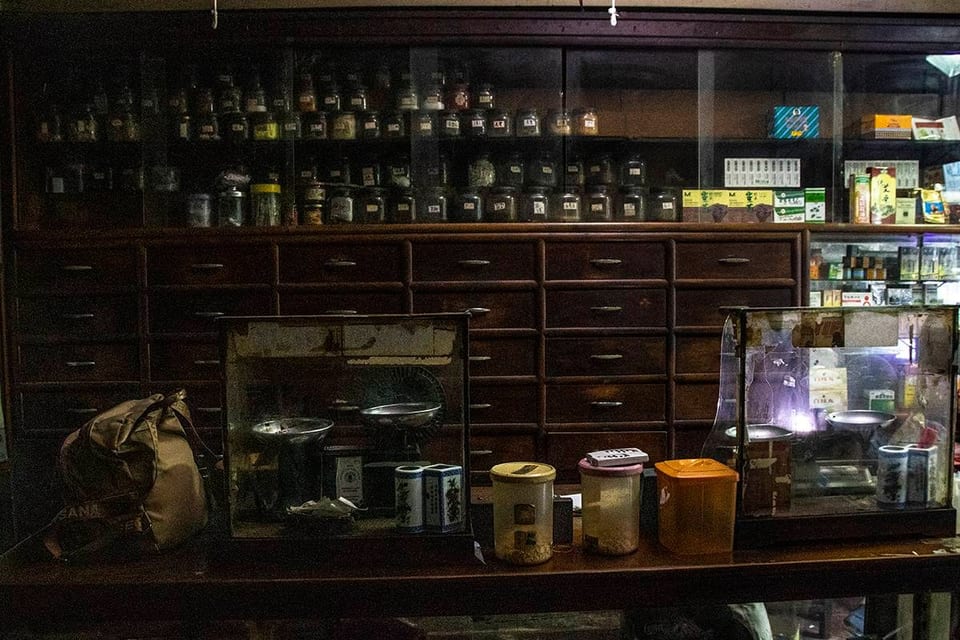
After Mr. Ng passed away in 1971, his son, Jose, took over the task of running the shop and was able to build on his father's legacy. But one thing that Jose never did was change the look of the shop. Instead of updating to the more practical acrylic and metal fixtures, he maintained the dark wood and glass fixtures of the pharmacy. In particular the multiple wooden drawers where the medicinal herbs were kept.

Jose also kept the huge black and gold indoor signage that many traditional Chinese businesses used to proudly display. Aside from the shop name, it bore the year the shop opened, which also implied the number of years since the founding of the Kuomintang government in Taiwan. He didn't mind if the shop looked old fashioned; it was a fitting memorial to his father and also gave their loyal customers a familiar and safe place to keep coming back to.
Recently, the shop suffered several setbacks. In August 2024, a fire broke out in the building where the drugstore was located. Thankfully, the fire spared the shop and the Ngs were able to continue to operate even without electricity. Then in October of the same year, Jose passed away, leaving the shop to his widow, Bonita. Bonita was able to continue managing the store for a year, until health issues made her decide it was time to retire. Since all her children have careers of their own or have migrated abroad, the decision was made to finally close the shop.

In an effort to keep the memory of Lui Chuon Tong alive, the family is now in talks with a local museum to donate some of the shop's wooden furnishings. Hopefully this will secure the future legacy of the now closed drugstore.
The closure of Lui Chuon Tong has sparked some discussion about the role of third generation children running Chinese family businesses. Many third generation business owners continue to live under the shadow of traditional elders who believe wealth runs out in the third generation, implying they are not as skilled or as able as the generations that came before. But this kind of thinking disregards important factors such as changing business environments or once sellable things naturally losing their relevance over time. The closure of this traditional Chinese medicine shop should not, however, be seen in this outdated light. If for nothing else, Lui Chuon Tong has enabled the descendants of Ng Tong to stand on their own and become upright members of society. This, instead of living off what remains from the success of their forefathers. This should be one of the goals family businesses should consider when envisioning their future.
Anson Yu is a writer, photographer and public historian. He is the author of his first self-published book, Binondo Everchanging.