What's New
The 38 Million-Peso Question: What’s In It for the Buyer of Solidaridad Bookstore?
Or why this beloved Ermita icon is more than just another bookshop.
by Leana Vibal
Published on Jul 3, 2025
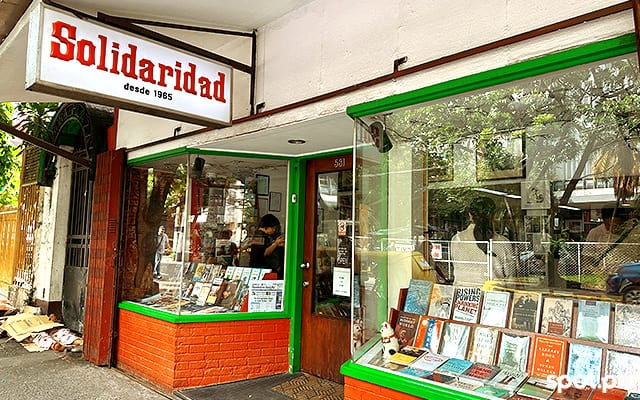
(SPOT.ph) From the outside, it looks just like any other shop time forgot. But peer through the glass window and you’d see a bookworm’s paradise: shelves heavy with books, stocked magazine racks, and a welcoming aura inviting you to wander the aisles and search for a read you didn’t know you were in search of.
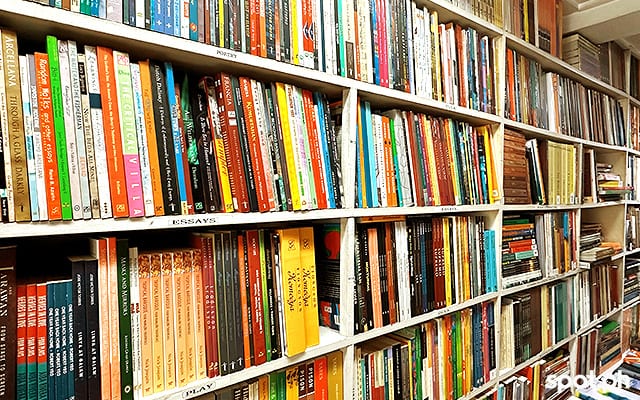
Once you step inside, you’ll know for sure this is not your average bookstore. The scent of freshly printed pages mingles with the musty, magical scent of older ones. There are no “BookTok picks” or “Bestseller” labels here. Instead, you’ll find shelves packed with Filipiniana titles, art books on Filipino masters like Napoleon Abueva and Botong Francisco, and what I once assumed were glossy gossip rags—but turned out to be zines and journals diving into everything from Filipino pop culture to Marxism versus Capitalism.
This is Solidaridad—and soon it may no longer be the same.
Click to Enlarge
Tucked along Padre Faura is the famed Solidaridad bookstore established by F. Sionil Jose. Photo by Leana Vibal..
Click to Enlarge
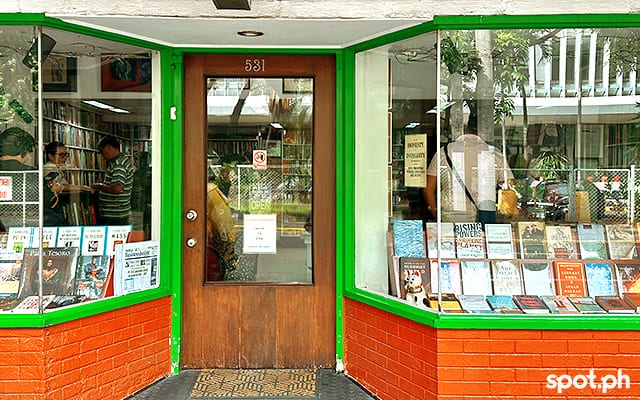
There are no bright lights to lure you into Solidaridad. Photo by Leana Vibal.
What is Solidaridad?
TikTok might have you believe that Solidaridad is just one of those hidden gems that go viral on social media. A small mom-and-pop shop carrying unusual reads, largely unknown to the masses, and gatekept by those in the know. But the lore behind Solidaridad's importance in Manila’s culture scene goes way back. It’s not just another shop along Padre Faura.
Established in 1965 by National Artist for Literature Francisco Sionil José—author of Po-on, the Rosales Saga, and Tree, among other Filipino classics—this quiet, unassuming store in Ermita houses almost 3,000 Filipino titles. It keeps the country’s largest retail selection of Filipiniana books by authors from Jose Rizal to Severino Reyes to Butch Dalisay.
Click to Enlarge
The shelves in Solidaridad are a mix of local and international titles all handpicked by F. Sionil José. Photo by Leana Vibal..
Click to Enlarge
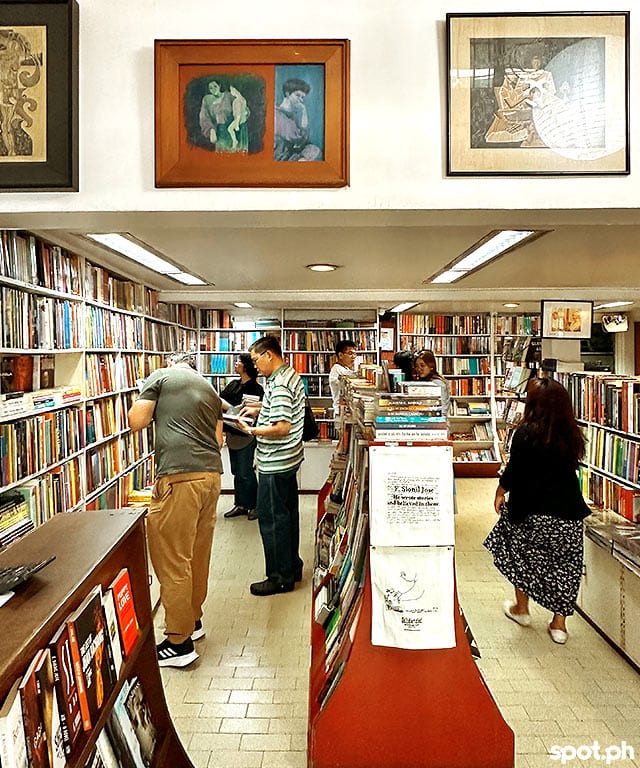
Readers of all ages, races, and genders come to Solidaridad to look for their next read. Photo by Leana Vibal.
Often hailed as “the best little bookstore in Asia,” Solidaridad has long been the go-to destination for hard-to-source reads and out-of-print works that offer deep insight into the Philippine experience and diaspora.
Its selection of books cuts across a wide variety of genres, including political thought, poetry, recipes, and much more—no wonder its total inventory is close to 5,000 books (foreign titles included). But more than the size of its roster, the real strength of Solidaridad is in its curation—it doesn’t stock a book just because it’s trending or it’s a bestseller. When F. Sionil Jose was still alive, every title had to pass his careful, uncompromising standard of what a good read should be.
“He knows a good book when he reads it,” says his son, Antonio “Tonet” José, who now manages the store. “If it interests him and he thinks, magugustuhan at makakatulong ito sa iba, he’ll bring it in.”
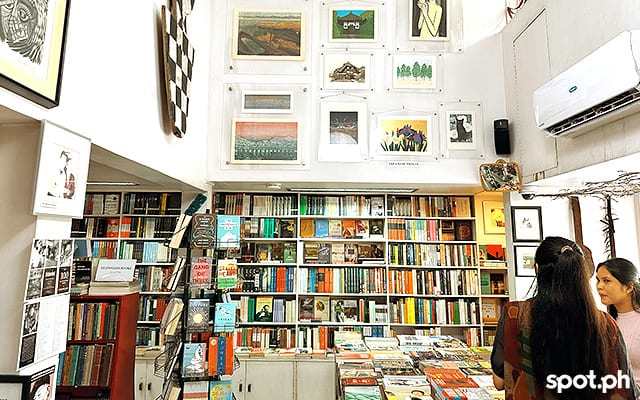
Click to Enlarge
Aside from books, the shop also has framed Japanese art pieces for sale. Photo by Leana Vibal.
If you ever wondered what someone like F. Sionil José would recommend to young readers, you only need to peruse the Solidaridad shelves. And while its tasteful selection of fiction and non-fiction reads is undoubtedly a bookworm’s goldmine, that’s only half of the bookshop’s charm—the other half is its history.

Click to Enlarge
If you ever wondered what a National Artist for Literature would consider as a good read, check out F. Sionil José's recommendations. Photo by Leana Vibal.
ADVERTISEMENT
Solidaridad is the home of stories and ideas
In its 60 years of existence, Solidaridad was never just a bookstore. Built on roughly a 77-square-meter land area, the Josés maximized the space by building vertically. The bookstore occupies the entire first floor, while the second floor is the shop’s administrative office. Most customers typically only visit the ground floor. They might sneak a peek into the offices if they look up, but all they’ll really see are a couple of desks and décor.
The most interesting and storied part of the property is the third floor. “If these walls could talk, ang daming kuwento dito,” says Tonet as we make our way to the building’s topmost level.
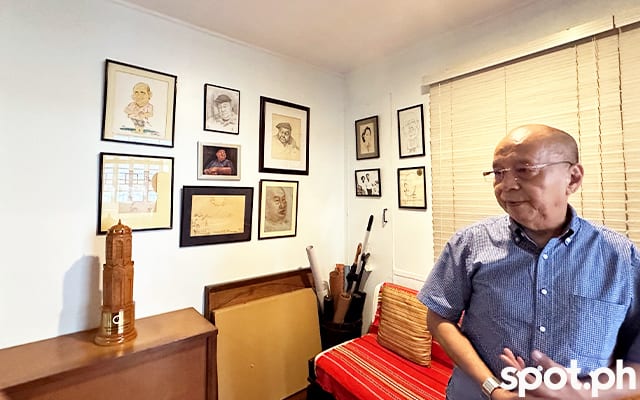
Click to Enlarge
Tonet Jose showing us around Solidaridad's third floor. Photo by Leana Vibal..
At first glance, the third floor looks like a simple reception area for Jose’s office, where the literary titan spent countless hours writing novels, essays, letters and so on. Save for a few pieces of art on the wall and a glass sculpture on a shelf, the room is simple, with a large round table serving as its centerpiece and a few chairs here and there. A waiting room at best, at least for the uninitiated.
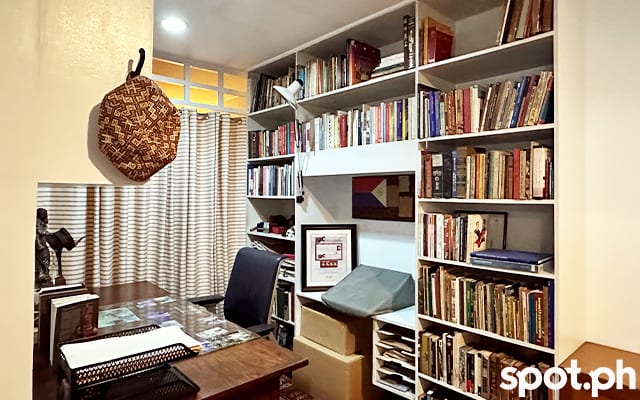
Click to Enlarge
F. Sionil Jose's office at Solidaridad was where he worked on many of his novels and essays. He would also host his friends here, including one of his best friends, Nick Joaquin. Photo by Leana Vibal..
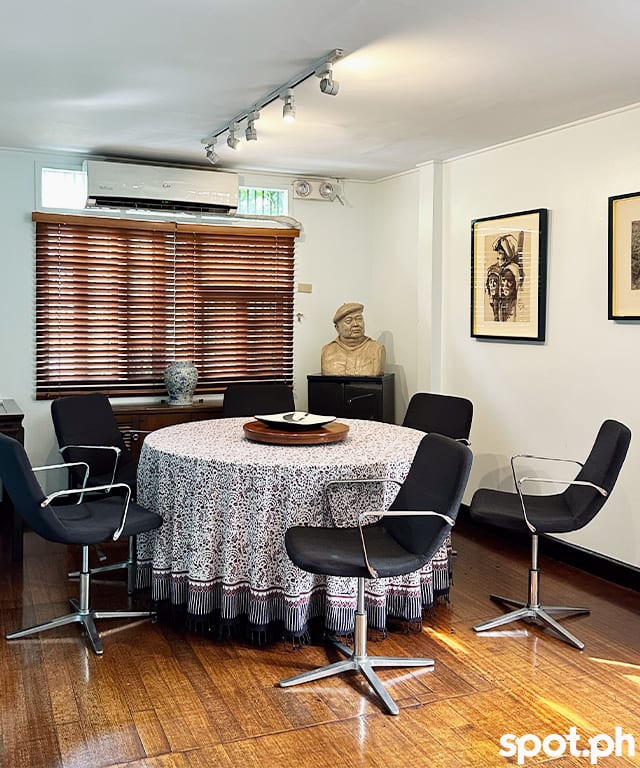
Click to Enlarge
The third floor of Solidaridad wasn't anything special, or so we thought. Photo by Leana Vibal..
What looked like a modest waiting room was, in fact, something far more significant—a space where discourse and brilliant ideas once thrived. It served as the headquarters of the Philippine chapter of PEN—or Poets, Essayists, Novelists—an international organization of writers promoting freedom of expression and literature. The local chapter was founded by José in 1958.
PEN Philippines would often organize forums, meet-the-author events, seminars, and other pocket activities here. Some were attended by distinguished literary figures and intellectuals from all over. Think the likes of Claro M. Recto and Carlos P. Garcia, N.V.M. Gonzales and Edith Tiempo.
Throughout its years as the local PEN base, it became a pit stop for distinguished writers, thinkers, and Nobel Laureates, too. There was the Nigerian poet, playwright, and activist Wole Soyinka, two-time Pulitzer Prize winner Norman Mailer, Richard Kim, Chinese philosopher and cultural ambassador Lin Yutang, and many other important figures in thought. They all sat here, drawn to the same round table where Jose once presided over some impassioned discussion or hosted a friendly meal.

Click to Enlarge
Writers from all over the Philippines attended the first National Writers' Conference organized by PEN in 1958. Photo from Website/ PEN Philippines.

Click to Enlarge
Writers and guests at Solidaridad back when it was the headquarters for PEN Philippines. Photos from Website/ PEN Philippines..
Click to Enlarge
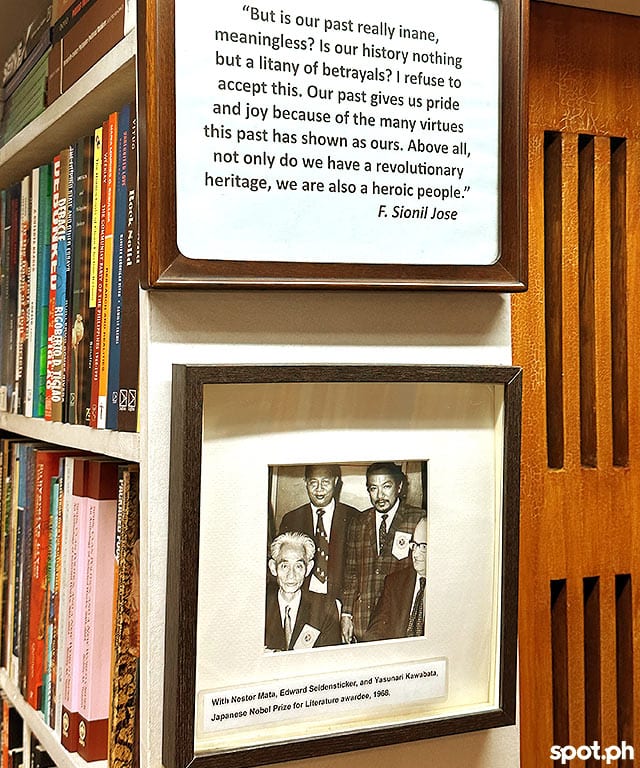
Photos of dignitaries, writers, Nobel Laureates and other notable figures in the humanities can be found framed all over Solidaridad. Photo by Leana Vibal..
If it’s not clear yet, Solidaridad was more than a business. Or if you were to take Tonet's word for it, it wasn’t a business at all.
“Bookselling is not a money-making business,” he says. “My parents always hoped that the prices of books would be lower and that people would read more, that’s what keeps the shop going.”
The Joses really did walk the talk. Frankie and wife Teresita kept book prices affordable. Sure, there were titles that reached up to P12,000 or P15,000, but these were rare Filipiniana gems or were already out-of-print. For most of the books, they’re priced the same way the publishers priced them for retail— no markups.
The store made a modest commission of 30% on local trade sales—just enough for a little bit of profit, which often went to paying the staff and the general upkeep of the store. “If we didn’t own this building, we would not have lasted 10 years,” he says matter-of-factly.
This is how the store kept afloat all these six decades. And while the family was okay with that, Tonet admits it’s harder and harder to keep going the same way. Time eventually catches up with everything.
ADVERTISEMENT
The pending sale and the future of Solidaridad
News of the impending sale of this storied Manila fixture came as a shock to many. When the University of Sto. Tomas' Varsitarian newspaper broke the news, many expressed concern. But for the Jose family, selling Solidaridad has become a necessity.
Tonet is the one handling the day-to-day affairs of the shop, and at 75 years old, he knows it would be nice for the next generation of heirs to take over but that's not quite the case here. "If I were a lot younger, I would keep running it, pero hindi, eh," he says. “After me, wala na. Ako lang nandito. All of my siblings, nieces, and nephews are living abroad."
But one thing was clear to Tonet from the start: “It was never an option to close completely,” he says.
After all, this was a place where memories were made—not just his own, like the memories of the time spent in the shop during their younger years, when they would be tasked with cleaning, mopping the floors, and wiping the surfaces after school and on weekends—but also those of readers.
Like the time a customer was quietly eyeing a book they couldn’t afford. A stranger noticed, asked “Magkano ’yan?” and paid for it on the spot.
How do you walk away from a place like that?
Simple. Sometimes when you love something, as the cliche goes, you have to set it free. Rather than see the store close, fall into disarray, and eventually die with him, Tonet and his siblings made the hard and painful decision to sell Solidaridad and open the door to a whole new era for this beloved bookshop.
“My only hope is that whoever buys it can keep it for another 60 years. I could not want for more,” Tonet says.
While he hasn’t fully come to terms with the decision, selling is something Tonet and his siblings know in their hearts is the best thing for the family’s legacy.
As of this writing, the sale is underway. According to Tonet, he and his siblings are selling the property for roughly P38 million. This value encompasses the entire property, including the structure, the bookstore and its furnishings, the office space, and Solidaridad’s entire inventory of books.
Tonet declines to say who is acquiring the property, but he did mention something that patrons of Solidaridad would love to hear: “The prospective buyers are looking at really keeping the spirit of the place alive.”
Click to Enlarge
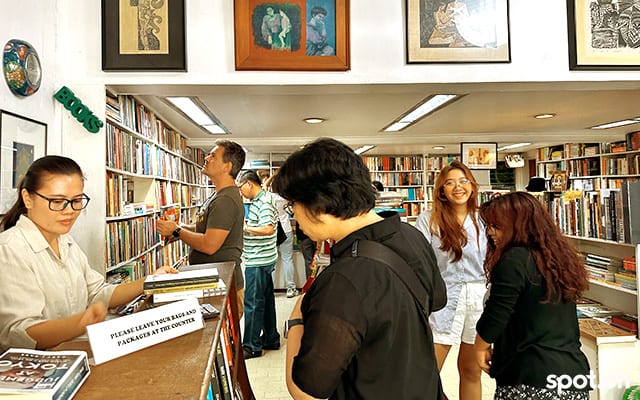
More than just a bookstore, Solidaridad formed a community of book lovers. Photo by Leana Vibal.
The buyer, he adds, is a close family friend who is looking for ways to retain Solidaridad in its current form, from the ground-floor bookshop to his dad’s office on the third floor.
The future remains uncertain for Solidaridad —for now, and fans will just have to wait and see. A new chapter awaits, one that could be written by another person, group, or family, but here’s hoping they keep it true to what it is and what it has always been: a singular place for books and the people who love them.
Solidaridad is at 531 Padre Faura St, Ermita, Manila City. It is open from Tuesday to Saturday from 10 a.m. to 5 p.m. For more information, visit Solidaridad's Facebook page.
10 Libraries in Metro Manila That Are Open to the Public
Leana is Spot's go-to for Arts & Culture and Things to Do. On any given day, she’s either glued to her screen—or gliding underwater like the mermaid she swears she is. Contact: leana@spot.ph
You Might Also Like