I Was an Intern at Josh Boutwood's Helm For a Night: Here's What It's LIke
A front row seat to what happens behind the scenes at dinner, at the Philippines' only 2-Michelin-star restaurant.
Published on Oct 7, 2026
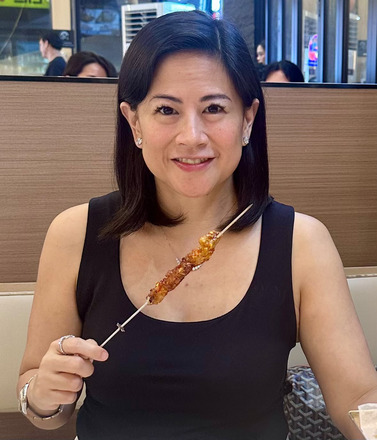
(SPOT.ph) Seven months ago, I was sitting at Helm as a diner, happily enjoying Chef Josh Boutwood’s food. And then I recently found myself helping prep and serve the restaurant’s latest tasting menu. What a difference being on the other side makes.
For background, I work in the corporate side of retail and e-commerce but am also a lifelong food enthusiast. And a few months back, I took a Fundamentals in Culinary Arts course as a side quest. Which led to my idea to stage in restaurants (pronounced as “stahj,” basically a kitchen internship) so I could complement my classes with real-world experience.
I first did it at Los Tacos in BGC, one of the Bib Gourmand awardees at last year’s inaugural Michelin honors for the Philippines. I really enjoyed it and decided I wanted to experience a fine-dining kitchen next. So I shoot my shot and aimed for 2-Michelin-star Helm. Good thing Chef Josh Boutwood agreed.
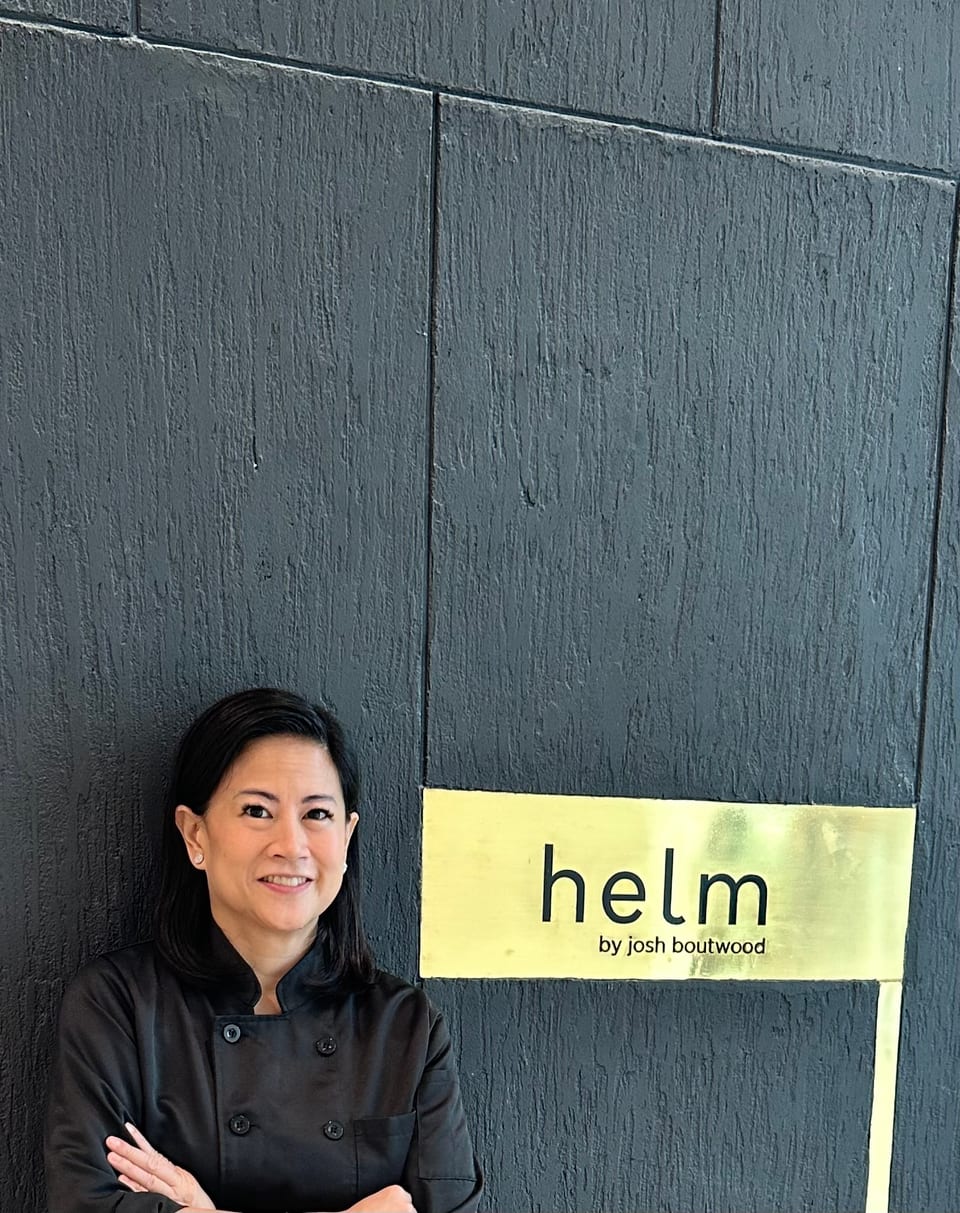
I was pleasantly surprised at the structure that staging at Helm followed. I went through the cold and hot stations, prep, and service. One of the chefs said Chef Josh wanted it this way so I fully experience what goes on in the kitchen. Looking back, it gave me a glimpse into Chef Josh’s mind. Structured, OC, and with a clear interest in how his people learn and work. It is something you can feel throughout his restaurant.
At Los Tacos, when they placed me at the hot station, I was responsible for the end-to-end preparation of a dish. If someone ordered a fish taco, I would batter the fish, fry it, add the sauce, garnish it, and plate it.
At Helm, one dish had many layers and many hands. One chef would sear the wagyu, another would make the jus, another would prepare the sides.
My first assignment was cutting sourdough croutons—one small component of a dish. When the chef handed me the measurements, checked my work, and even asked me to cut some of them again, I immediately understood that precision mattered.
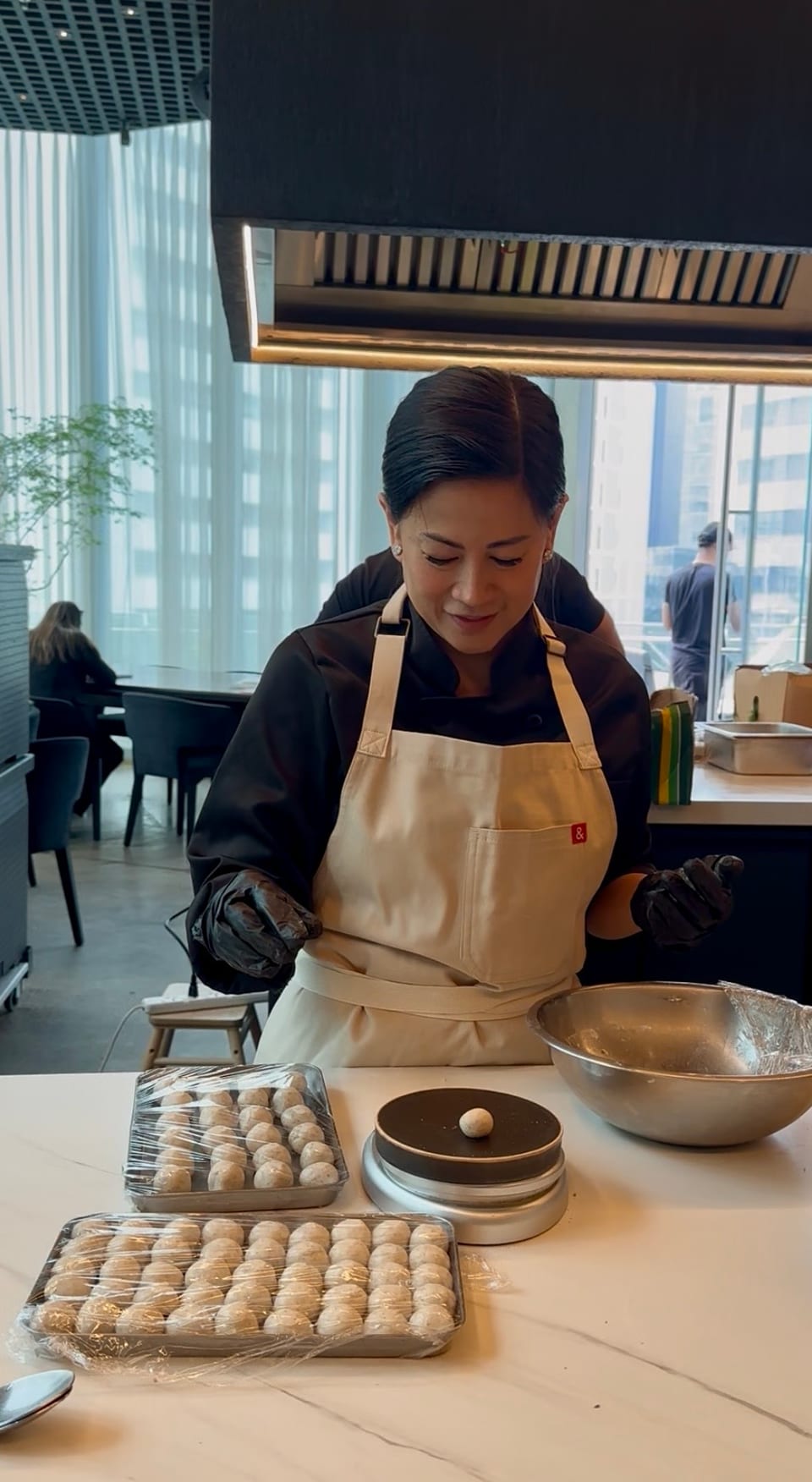
Then I was tasked to roll and measure dough for the lobster buchi. 12 grams each. I made 80 of them. That was easier.
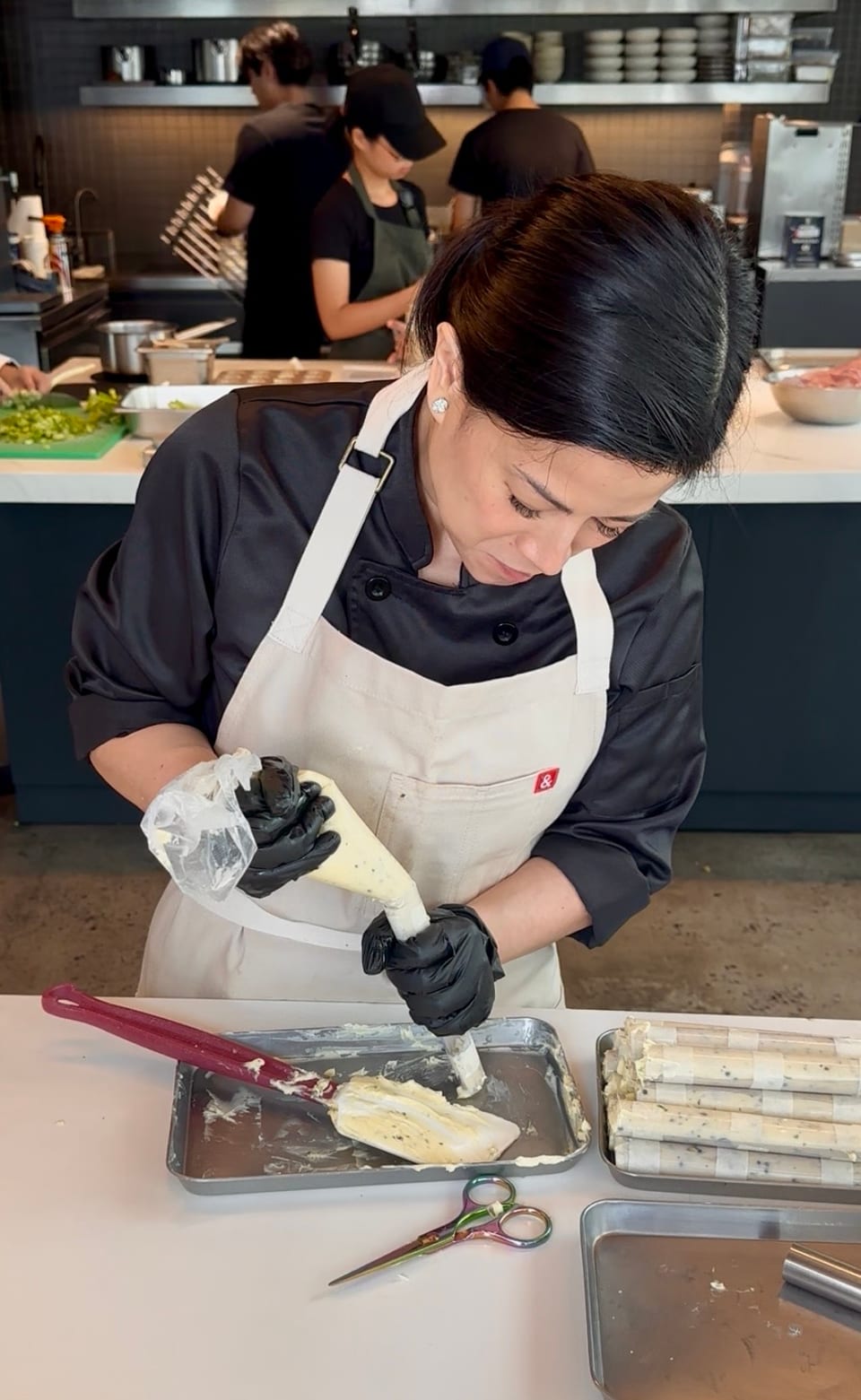
After that, I filled tube molds with caviar butter using a piping bag. They freeze the butter, unwrap the mold, then cut each piece at a 45-degree angle. It is one of the three butters served with their miso brioche.
If they unwrap the butter and there is a bubble or a tiny dent, they do not serve it.
Then I helped prepare the chawanmushi, making sure each customized bowl had 3 diced squash and exactly 50 grams of broth.
Prep happened throughout the restaurant, using the two large chef’s tables. That was when I realized how cleverly the whole space was designed. The chef’s tables doubled as freezers and drawers underneath. Even the high ceiling on one side was used as storage. Everything was intentional. If you are dining there, the kitchen area looks small with just the stove top counter by the wall. But each corner of this restaurant has purpose, each fraction of space assigned its own function. The kitchen expands far beyond the stove.
When prep was almost over, they started setting up for the first seating. I saw someone measuring with a ruler. The distance between the glass and the edge of the table has to be 6 inches. They also whipped out an ironing board, and the chefs took turns ironing their aprons.
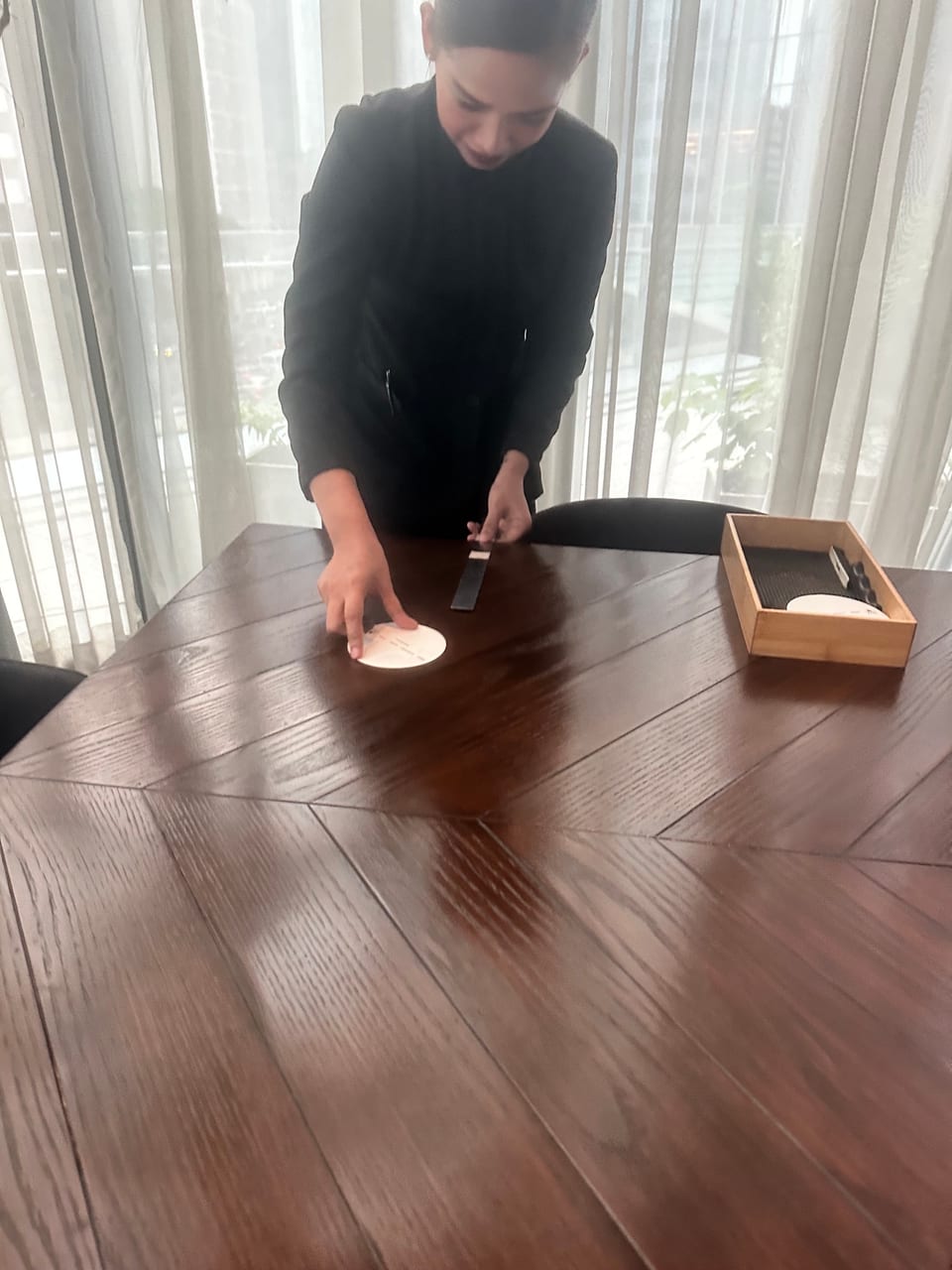
At 5:55, the host announced the guests would enter in five minutes. Everyone took their places.
Then 6:00 p.m. came. It’s showtime.
The guests arrived and were greeted personally by Chef Josh. Each chef stood quietly at their station.
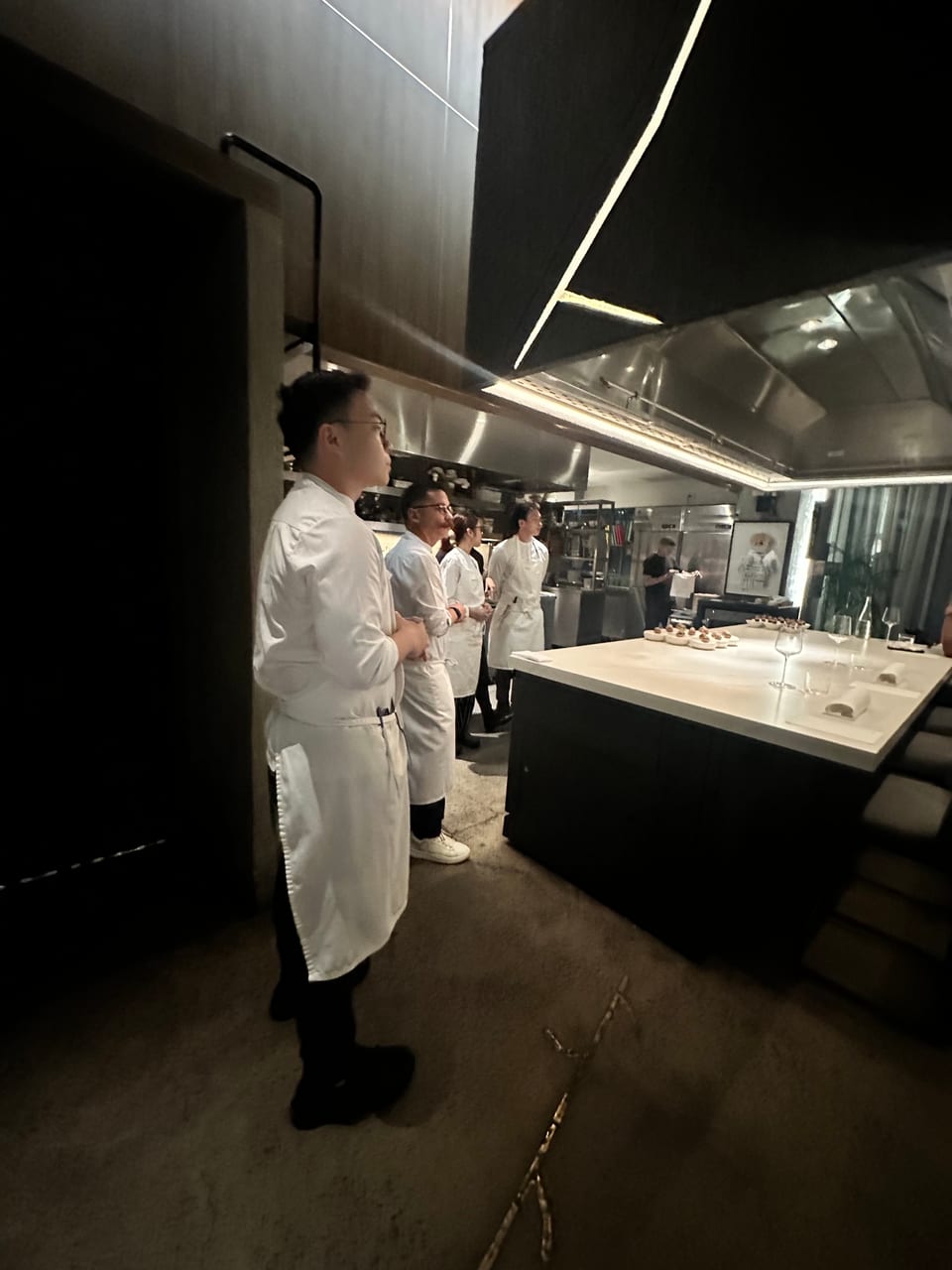
Just as the restaurant transformed from prep area, to kitchen, to a fine-dining room, I noticed the chefs transform too. They went from quiet preppers to confident chefs in immaculate white uniforms and aprons, greeting guests and engaging with them.
Then came the actual service.

On the main chef’s table, the plates were laid out, and all the chefs moved in like an assembly line, each with their own task. One added sauce, moving from plate to plate, while another chef beside him added another component. The movement was synchronized and effortless. Almost like ballet. I was thrilled when they asked me to add the garnish on top, so I joined the line. Then I realized Chef Josh was right beside me.
I suddenly got nervous. It felt like when your teacher walks up behind you during an exam and you start wondering if they saw your answer and already know it’s wrong. I suddenly questioned whether I was doing it properly. Meanwhile, Chef Josh was talking to the guests while working the line, completely relaxed, so eventually I calmed down too. Still, those were probably the longest 10 seconds of my night.
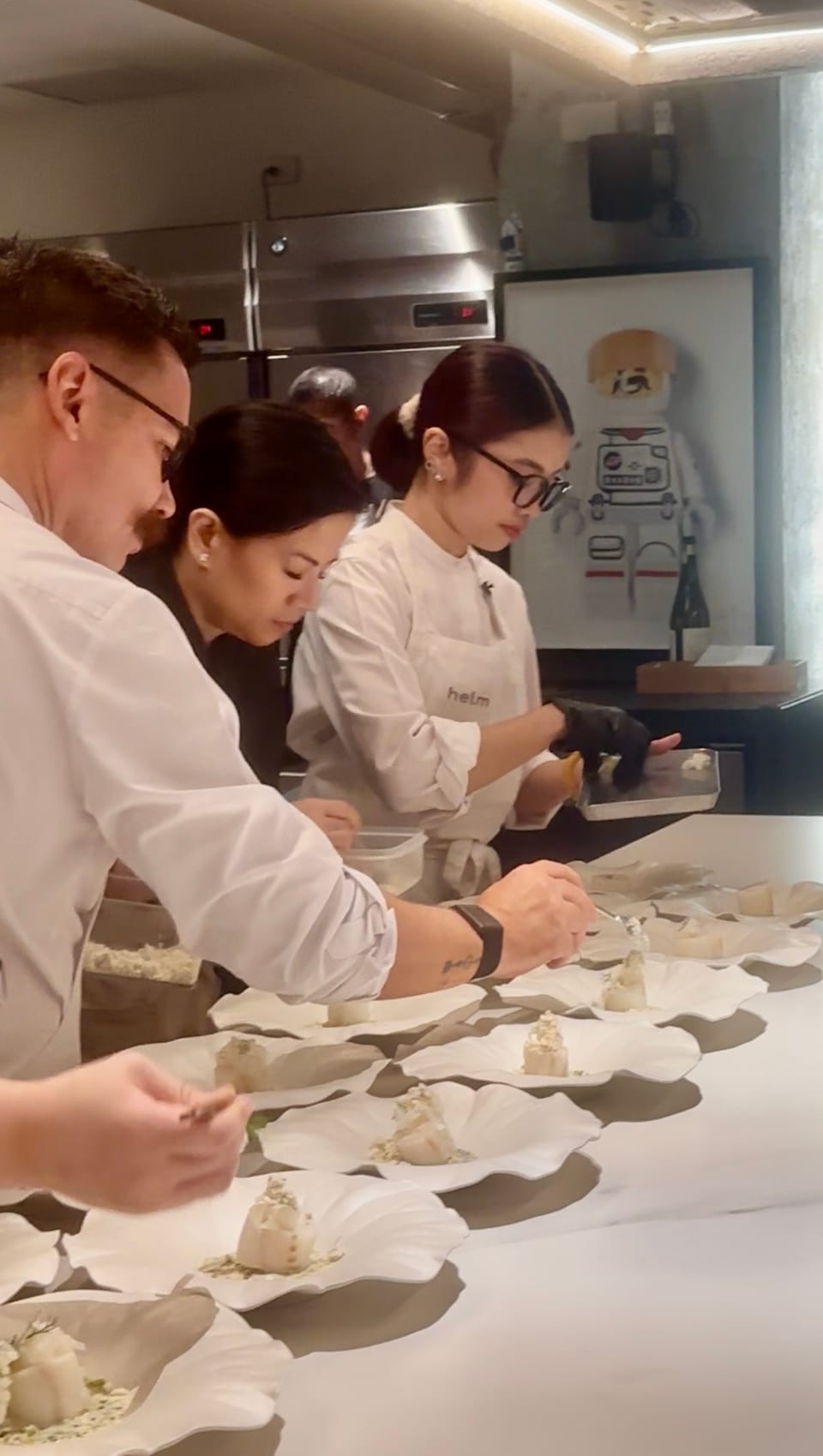
I wanted to help serve the dishes, but even that had a system I could not immediately understand.
One table had 4 diners, with each seat mapped according to their notes. A couple was celebrating both an anniversary and a birthday, so the dessert plates needed different cards and a candle. There were even specific angles and sequences for how dishes were served. At some point I realized having someone explain the whole system to me in the middle of service would probably take longer than just doing it themselves.
I helped with dessert plating and watched one of the chefs redo something I had already plated. I wasn’t offended. I understood.
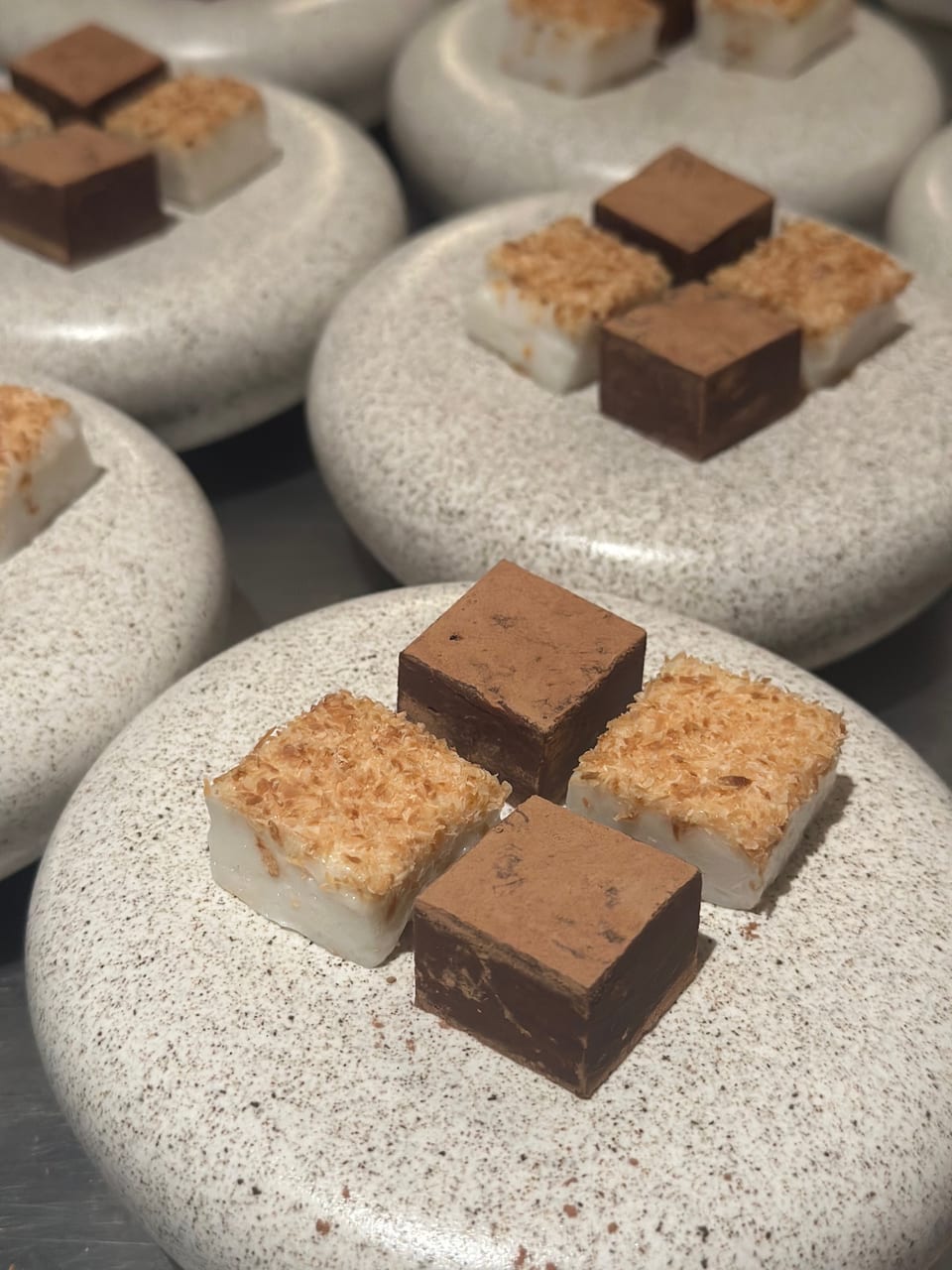
One of the chefs also told me they only start preparing dessert once they notice that the service team has removed the cutlery and changed the guests’ water.
It was like a secret signal only they understood, so the diners are not bothered, and they experience a seamless transition.
There is timing for every dish, but you do not feel rushed as a customer. The first seating has to wind down by around 7:45 p.m. to 8 p.m so the restaurant can prepare for the 8:30 p.m. seating. But the service moves with such rhythm and cadence you never feel the pressure behind it.
After the first seating, I noticed that some guests didn’t eat the dessert. Maybe they were on a diet, or whatever reason, but I honestly felt bad. Now that I know how much time and labor went into making those treats, seeing them untouched felt personal.
In between the service, I asked Chef Josh whether his standards had always been this high, even before Michelin. Apparently, yes. One of his chefs, who had already been working there before they received the stars, confirmed it. She said the way they worked had not really changed. What changed was the pressure.
After Michelin, more diners came in, naturally, but so did more scrutiny. People now arrived with high expectations, wanting to know what made a 2-star Michelin restaurant different from another equally fancy restaurant without the stars.
At one point, I also jokingly asked Chef Josh about the number of cute chefs at Helm and whether that was a requirement for an open kitchen. He laughed and said he hires more for overall personality and engagement because skills can be taught.
After the second seating ended and the staff started closing down, I was chatting with the sous chef while he did an informal post-mortem of what went wrong during service.
He mentioned that a cream dispenser had gotten stuck and delayed service by three minutes. Three minutes. He also said two pieces of chocolate had come out of the silicone mold without the proper indentation in the middle. It made him upset during service.
I told him he was a great actor because I noticed absolutely none of it.
Not the three-minute delay. Not the chocolate. And honestly, the indentation will be covered with caramel and popcorn anyway. Only an insane diner would deconstruct a bite-sized chocolate and notice.
But that was the point.
Chef Josh had told me earlier that he works with the mindset that there could always be an inspector in the restaurant, or one OC diner who notices the tiny bubble in the butter.
That standard clearly filters down to the entire team.
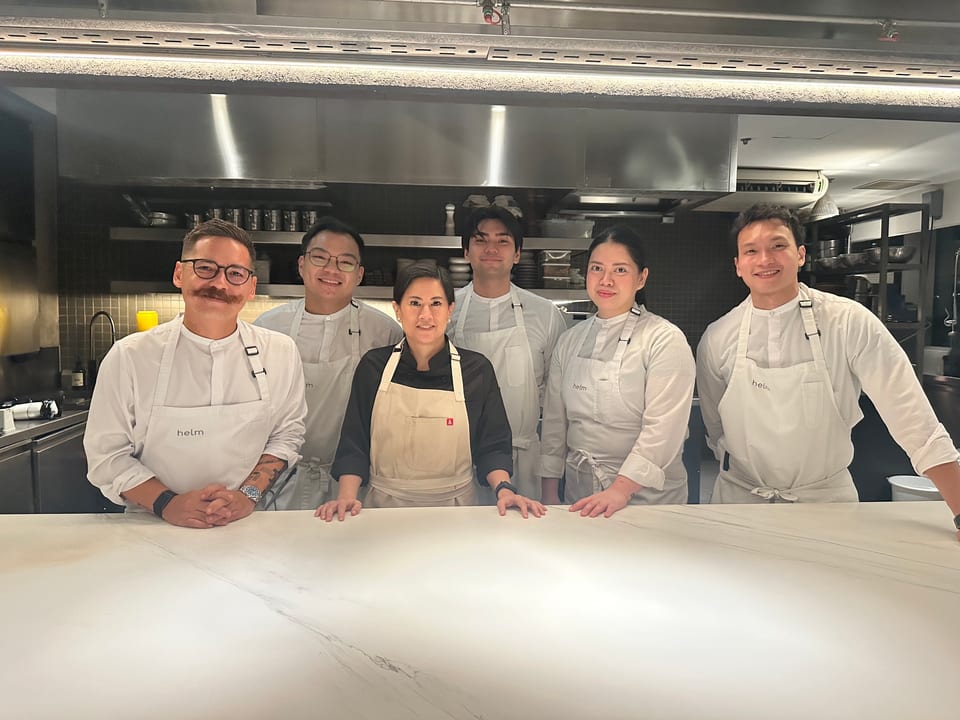
What I found magical was that, while there’s clearly a weight to those standards, none of the pressure was passed on to the customer. I admit I am a finicky diner. When I ate at Helm seven months ago, I did not feel any stiffness or tension. I just remember having an excellent experience.
By 10:30 p.m., I was exhausted and ready to head back to my old life.
On my way home, I thought about my reservations at Helm the next month, and I’m not sure I’ll ever look at the food and their service the same way again after experiencing the intense discipline behind the scenes.
I can’t wait.
Bernice Tenchavez is a corporate executive leading retail expansion and e-commerce, a café co-owner, and a lifelong food enthusiast. She comes from a family of food lovers and restaurateurs. Follow her on Instagram at @heybernph