Meg Koh's Binondo: A Super Foodie Tours Manila's Top Chefs in Her Home Turf
We uncover the familiar mystery often seen at exclusive culinary events.
Published on Jan 16, 2026
(SPOT.ph) She's a face that nearly every food writer or chef in Metro Manila has seen (or even been seated next to), and a voice that carries when she's excited—and when it comes to food, for better or worse, it's not difficult to get Meg Koh excited. To some, she’s a fixture; to others, she’s the most vocal mystery they’ve ever come across. I myself have been stopped at events by peers in the industry, only to be asked, “Who’s Meg?” And I had gotten so used to her that I thought the answer would come easily; I actually had no idea.
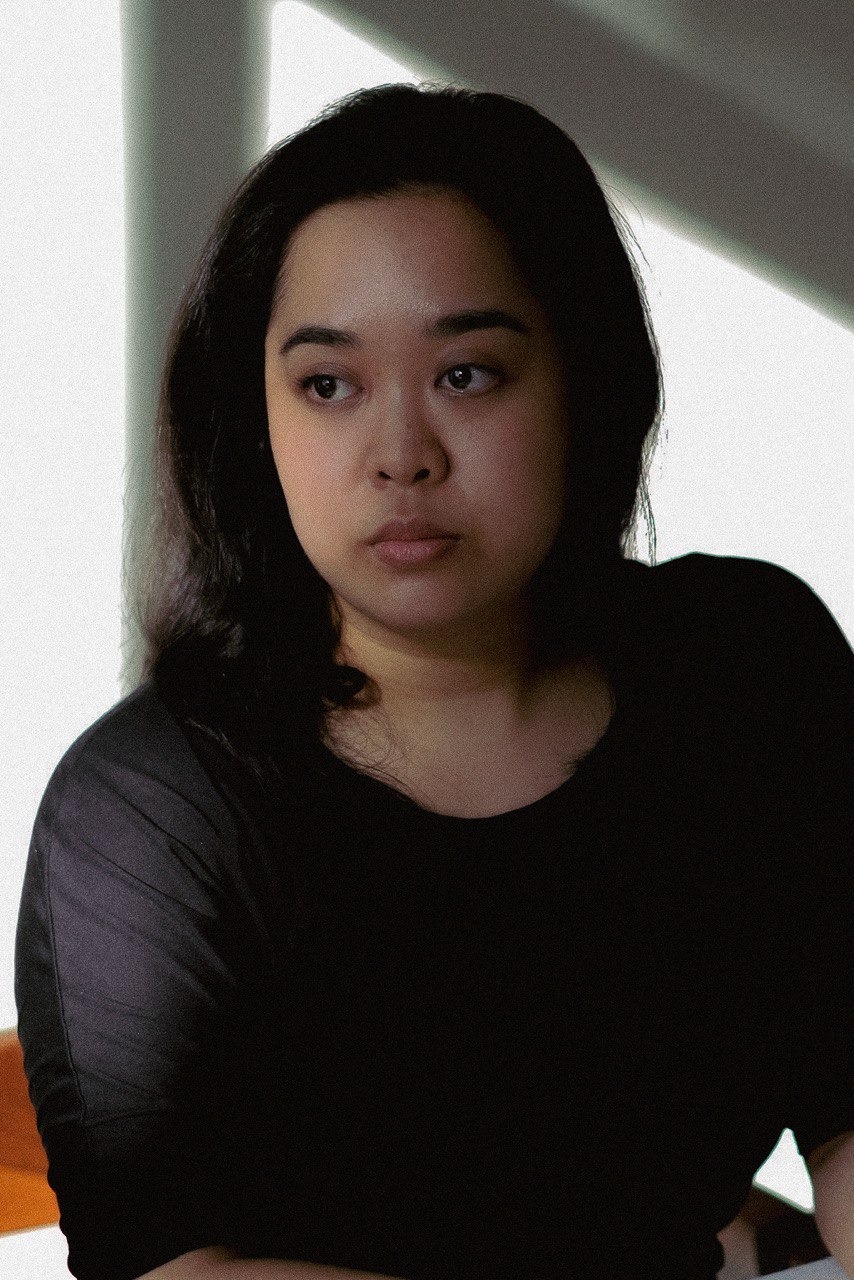
But outside the confines of pleasant conversation, this is what I can say: Even in a crowd of much taller people, her gesticulating brings her to the forefront of a scene. Short hair, utilitarian spectacles, and comfortable clothes—every bit the modern Asian auntie with strong opinions—but what it really communicates about Meg is that she is always prepared to eat. She will tell you herself that this is no exaggeration, especially when she’s taking you on a tour of Binondo, her home turf. I tucked this information into the back drawers of my brain once she extended the invitation to me.

Binondo Through the Eyes of a Native
Our tour begins in the most Binondo way possible—on the corner of two streets named for Filipino men with Spanish names, at least six English signs for banking brands whose Hanzi translations get equal billing on the marquee, and about a thousand different smells every 100 meters. Anyone who loves to eat can tell you that this description barely scratches the surface of the world's oldest Chinatown, but it becomes clear not long into this excursion that very few could beat Meg as a resource.
After a look at some fruit stands, she takes us to a couple of places she doesn’t like—we won’t name them, obviously. This fit of irony is still an education, especially since the two or three establishments she points out still boast long lines. “The taste has changed,” she says, which pretty much sums up the basis of anyone’s loyalty to a restaurant. But if you were to ask her to get into specifics, it takes a little bit of nudging to get there.
"I honestly think in three languages," she tells me, specifically of Tagalog, English, and Fookien. "They mix together in my head and by the time I'm talking, I realize that some terms need translating depending on who I'm talking to and I can get some things mixed up. But that's how I grew up."

Naturally, so it is with her food, and her background of enjoying it immensely. We duck and dive and cross until we get to the Norberto Ty Street branch of Tasty Dumplings, where Meg recommends having the pork chop with bihon rather than rice, which turns out to be a bit of a revelation. (To our great dismay, we’ve just missed the day’s supply of homemade soy bean milk.) This woman has an exacting knowledge of what she wants and where to get it, leading our group with a staunch sense of certainty and apparently no fears or qualms about the clash between cars and pedestrians on the road. But if I really think about it, that might be the only way to get around Binondo.

They don't make it easy for newcomers here, but that's all part of the game. IYKYK may have only entered the modern collective lexicon in the past decade, but what it embodies—that participation in an in-group is its own reward—is nothing new, especially when it comes to food and traditional medicine. But these days, this little but labyrinthine network of take-out and temples sees multiple in-groups that overlap at many points, perhaps to the point that very few may actually be excluded, let alone feel it. As Meg explains it, "I can't tell you what's right or wrong about food—there's only what you like. If you can back up what you like, no one should have a problem with it."
What she means is probably best illustrated in two parts, in as many establishments. There’s a little spot along Masangkay Street that makes the best fresh lumpia I've ever had, and that's coming from a certified lumpiang sariwa hater. It's the Hoti (crispy seaweed, though not quite comparable to nori) that makes all the difference—our host won't eat lumpia without it, and now neither will I.
Then there’s Masuki, everybody's reliable siopao standby; people also tend to order the noodles, which Meg admits to never having understood before. “There’s a flavor in it I couldn’t wrap my head around before, and I dismissed [that feeling] as a permanent dislike,” she shares, “but now that I’m older, I see why people like it. I have my own modifications so I can enjoy it along with everyone, but I think I get it.”

By day, Meg runs the backhouse operations of her family's furniture business. But her love of food doesn't hit a wall here; her parents instilled in her a thread of association that runs between food, precision, leisure, and cultural significance. Even the food that the world seemed to withhold from her at first--a fun way of saying she watched street food vendors from the safety of the residential building's fire escape—warranted great fascination.
"I discovered over time that my tastes really lean Taiwanese, in a sense," explains Meg. "That can be traced back to my mom, who worked at the Taiwan embassy. I appreciate the diversity of influence, pero hindi pa rin nawawala yung pagiging authentic."
Your Favorite Restaurant's Favorite Regular
The diversity she prizes isn't only that of recipes handed down by generations of Filipino-Chinese intermingling. "I think [what Filipinos forget] is that Chinese food is very regional. What we're most familiar with is Cantonese," she observes. "But there's been an influx of Mainlanders from different regions, so even now I'm discovering new Chinese dishes because of them."
This open-mindedness may come as a surprise to some; the circles she runs in know her to have preferences like boundaries, and opinions made of brick and steel. But make no mistake; Meg is an advocate too of the new and exciting. Outside of the Chinatowns of the world, her palate has been all over the place—and it might as well be chefs stamping her passport, which may lead some to believe that she’s something of a Star chaser. (She finds this funny; her least favorite kind of food personalities are those who don’t give small or local businesses a chance.) And while she may base her travel itineraries around nearby Michelin or 50 Best awardees, she doesn’t limit herself to the buzz of the moment; her search for the next big thing to talk about is constant.
Regardless, about a third of our tour group are Michelin-recognized personalities; whenever the tour pauses, we are of course talking about other people on those lists.
("Have you tried his new—?"
"She definitely deserved more—"
"—nasa spam folder din yung email nila!"
"Oh, yeah, they'd love this place.")

During a coffee break, we have a play-by-play about that awards night. Friends of SPOT already know that the office group chat burst to life like a salon watching the Miss Universe Top 5 announcements; there was this deflated feeling in the room when the 1-Stars wrapped, and one Chef Josh Boutwood had not been mentioned since his multiple Selected wins. "I thought there'd been a mistake," agrees Meg. "But maybe I was just thinking too small."
Sure enough—in case you'd forgotten—Boutwood's Helm won two Stars. And while some may (rightfully or otherwise) hmm and haw over what went down that night, it's Meg who can tell you why this particular win was meaningful, whatever anyone says: "I remember when Helm opened again after the pandemic... I couldn't get a seat fast enough. I remember the food just being so good because Josh was just happy to be cooking again, and you could taste it."

Her presence in these circles may appear at first to be counterintuitive—in a culture that cannot stomach critique, Meg doesn't hold back. But that intrepid mindset might be exactly what gets her exclusive invitations to one-night-only dining affairs, right there with lifestyle press. "I always want to get to know the chef after enjoying, say, a good tasting menu," she shares. “I like picking their brains, learning how they view food. I talk to coffee people about coffee, with wine people about wine… I even like talking to food writers about how they write. I try to broaden my perspective about food.”
She also makes it a point to be, in her words, "a very good customer." During the pandemic, she had apparently made it a point to pick up her restaurant orders personally; it was “less cold” that way. “I figured it was never only about the sales,” she explains. “F&B is such a social industry, and ang hirap to lose that regular human connection. It was for them as much as it was for me.”
And for dessert...
We make an obligatory stop at a shrine—specifically the Sto. Cristo de Longos Cross. It could almost be a depiction of Meg’s own upbringing, and that of the thousands like her. The combination of traditions and origins speaks as much to the adaptability of the host culture as it does to the permanent touch of influence, something one might find in every proper fusion restaurant. This is something that, both in food and in life, people like Meg fluctuate between wrestling with and embracing. “Some might say we give authenticity too much weight,” she muses, “but preservation is important.” It’s a sentiment we share, to a point; change is inevitable, but that’s precisely why origins and context matter.

I do not partake of any incense or time to pray at the shrine, though some in the tour group do. Maybe I should have, and offered up a wish that I share with Meg herself—that those who claim to love food can get comfortable with the internal battle between an eagerness to learn and a backbone for one’s own perspective.
Because it isn’t expertise that makes Meg a force in the foodie circles, but appetite—for connection, knowledge, and the next incredible dish.
If you’ve never been afraid of how much someone loves food, you’ve never met Michiko Manalang. She predictably has multiple cats; she less predictably can row 70 pounds.