Makati’s Birdjovi Serves the Juiciest Chicken in Its Yakitori Omakase
Chef Takuto Kato's mastery of the grill shines through in every skewer.

Published on Feb 26, 2026



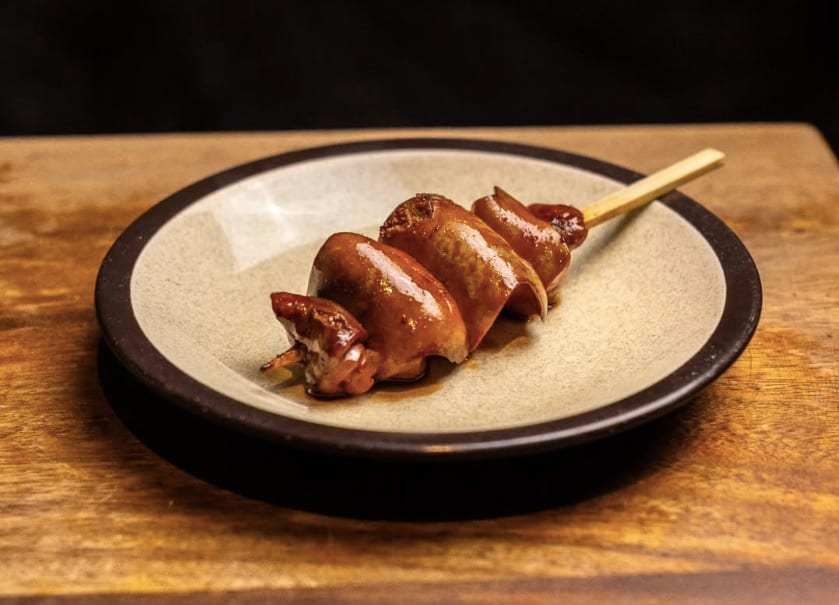

(SPOT.ph) Grilling meat is in many ways a straightforward affair, but what separates the good from the great is all in the details. In the case of Birdjovi, the cozy yakitori-ya located at Comuna in Makati, it’s in that way different cuts of chicken are sliced; the charcoal and equipment used; the timing of the cooking; and the other seasonings and ingredients imparting their flavors onto the bird.
The place is on the cozy side, seating just nine at a time at the L-shaped counter. The open kitchen right behind it serves as the stage of sorts where Chef Takuto Kato and team work their magic on a range of chicken cuts. You’ll see the chef himself facing the grill, rotating the skewers as their exteriors crisp up and brown at the edges. Occasionally, you'll see a thin stream of smoke rising from the grill racks—but it never seems to cloud the area beyond the grill, likely owing to Birdjovi's use of binchotan. A type of Japanese hardwood charcoal, binchotan is considered by some to be the best charcoal in the world; it produces minimal smoke and odor and has the ability to keep a consistent level of heat—ergo, more controlled cooking.
Kato, who hails from Nagoya and owns Yakitori Ao Chan by Suijin in Cavite, is known for his mastery of the Japanese grill—a mastery that he had developed through self-study, by reading books and honing his skills through practice. Prior to Birdjovi, he also opened Yakitori Ao Chan by Suijin, a low-key spot in Carmona, Cavite that's gained a following among serious food lovers and Japanese expats. Birdjovi similarly puts yakitori in the spotlight, though with a more focused menu this time around.

Their main offering is their yakitori omakase (P4,500), highlighting skewers of different chicken parts grilled over binchotan charcoal; note that the exact lineup changes regularly. There are two seatings per day: 5 to 7:30 p.m. and 7:45 to 10:30 p.m., from Tuesday to Sunday. Expect to be taken through the different parts of the bird, with non-yakitori numbers every so often for variety.
Also read: LIST: The Restaurant Openings We're Most Excited About This 2026
Highlights from Birdjovi's yakitori omakase in Makati
Monaka

The omakase opens with a packet on a plate. Unwrap the packet and you’ll find the Monaka, a two-to-three bite treat of chicken liver mousse and sweet persimmon encased in a wafer shell. Think of it as a pâté-on-crostini situation in a different form, the silkiness of the filling enriching the wafer’s light crispness beautifully. (Photo by Patricia Baes)
Yakitori Galore

The omakase is as much a set menu as it is an exploration of chicken’s different parts, and the wide range of tastes, textures, and mouthfeels the bird has to offer. Standouts from our visit are the Hatsu (heart), sliced thin for tenderness then layered together and sprinkled with sansho; Seseri (neck), with meaty, cartilage-y, and fatty parts for a balanced bite, plus aromatic strings of perilla; Negima (chicken thighs + scallions, pictured) with a paper-thin layer of skin, dotted with zesty yuzukosho; Bonjiri (tail), a whole skewer of chicken butts with a slight char to balance out the buttery meat; and the standout Liver, kept especially plump and brushed with savory-sweet tare. Worth noting is the way Birdjovi allows the natural taste of the chicken to shine, seasoning and embellishing their skewers just enough to enhance but not overpower. (Photo by Patricia Baes)
Tebasaki

Here, a single chicken wing is stuffed with ground chicken thigh and neck then grilled, rendering the skin crisp and the meat juicy as can be. The wing is served over an umami-rich broth, partnered with a runny egg yolk that enriches the liquid as you pierce it through. (Photo by Patricia Baes)
Ramen

The grand finale of savory courses on the lineup is a warm bowl of Ramen—one with a chicken-based broth that appears translucent, but delivers hearty slurps. It’s light enough that it’s soothing on the stomach rather than heavy, but it satisfies regardless with its deeply savory, shoyu-tinged profile. (Photo by Patricia Baes)
For Trish, food is as much a source of pleasure and fuel as it is an outlet for creativity; a medium by which stories can be passed on; and a way to connect with others.