Erik Matti's Poblacion Restaurant Rekdi is a 'Modern Karinderya'
But the director-gourmand-cook would rather the food just speak for itself.

by Philbert Dy
Published on Feb 7, 2026



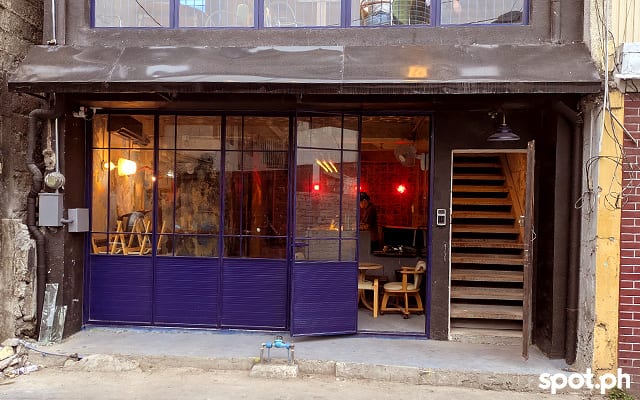

(SPOT.ph) Erik Matti doesn’t know exactly how to explain what his restaurant is. Rekdi, situated on Pagulayan Street in Poblacion, has on the cover of its (tentative) menu several attempts at encapsulating the concept: “Modern karinderya,” and “Everything grilled,” and “High and low,” among other words of explanation. He’s not sure, at this point a few days before opening to the public, if those words are going to stay on the menu. As a seasoned traveler, and a diner at many of the world’s finest restaurants, he certainly understands the value of having people understand the context in which food is being served. At the same time, part of him just wants the dishes to speak for themselves.
“Medyo mahirap nang mag-explain,” he says, several times during the meal. Matti has garnered some notoriety in the dining space for making known his opinions about various restaurants in the Philippines. Notably, he went viral for panning Toyo Eatery, wherein he did say that maybe the restaurant spent a little too much time on the narrative behind the dishes, instead of concentrating on the taste of the dishes.
In any case, Rekdi does seem like a unique affair. It stands three floors, with a cocktail bar on the ground level, serving drinks and bar chow. The second floor has tables, but it’s the third floor that they consider the main dining area. It’s all counter seating, with space for maybe up to 20 people, if they squeeze in. It’s all focused around the charcoal grill, with the chefs preparing food right in front of diners.
Also read: Dinner With Erik Matti: “In the End, Everything Else Is Forgivable Basta Masarap"
Erik Matti's Rekdi in Poblacion
Interior: Night
“It’s not fine dining,” Matti says of the menu, with much of it built around one of the most fundamental forms of cooking. “But meron din naman fussy na dishes.” Most things on the menu are easily shared between two people, and he imagines pairs of diners ordering two to four items from the list of mains and a starch to go along with them for a full meal.
The dishes are defined by novel combinations, with all of them having at least one component derived from the land, and another from the sea. The Rekdi BBQ (P580) is two substantial skewers of grilled pork and beef belly, served with a crumble of anchovy, mushroom and capers, served with kansi onion soup and fontal cheese. With the dish bearing the name of the restaurant, it stands as a statement of intent: it is something that feels familiar (a grilled meat skewer), served alongside something unexpected (the crumble, the kansi onions), with all of it focused on delivering big punches of umami flavor.
.jpg?fit=cover&width=960&q=82)
One can see that thinking in another skewer: grilled chicken thigh (P360), topped with their own pineapple-cashew chili crunch, served atop a shrimp bisque with crispy alamang and charred leeks. This is very much yakitori, the juicy chicken taking on the flavor of the charcoal smoke, given another dimension by being paired with a shrimp bisque.
It gets more complex from there. Their version of tsukune (P390) or chicken meatballs is served in a clam soup, where bilo-bilo and watermelon balls add surprising textures to the soup. Crispy squid heads (P340) are coated in kiamoy powder to create something akin to a Chinese sweet-and-sour dish. Baby mackerel (P390) is pickled and grilled and served atop some mascarpone calamansi, pickled cucumbers and orange, resulting in a delicate bite that all serves to highlight the taste of the fish.
Rekdisserts and strange ideas
One of the craziest dishes on the menu is the grilled baby squid (P520), which is served with stracciatella, pickled bell pepper, spherified taba ng talangka and squid ink, grapes, and a truly unexpected component: nata de coco. Put together into a single bite, the dish delivers a wide range of flavors that are made harmonious through the progression of their textures. It is one of those dishes that makes it understandable why Matti might have trouble explaining the concept of the restaurant: it is a strange idea that doesn’t feel like it could have come from anywhere else, and doesn’t quite belong in any easy category eatery.
To go with these mains, one might try one of their two noodle dishes. The black sesame dandan noodles are sweet and mildly spicy, built on a foundation of scallion oil and chili crunch. The egg noodles, tossed in a sauce made of grilled tomato, anchovy and capers, is like a puttanesca, with big and briny notes that lean into the flavors of the sea.
.jpg?fit=cover&width=960&q=82)
There’s dessert as well, designed by Crumb Next Door, of which one of Matti’s daughters is a partner. The grill remains a part of the experience, with brown butter cake (P360) warmed over coals and served with a kesong puti cream sauce and topped with batwan-raspberry jam. There’s also Rekdissert (P360) - a tinutong na monggo riz au lait served with chocolate mousse and a candied dilis crisp. The dessert somewhat recalls champorado, with the chocolate and the crispy fish, but the mung beans add another layer of flavor and texture that just must be experienced.
So, what is Rekdi, in the end? It’s still tough to explain. Or perhaps it is best not to explain at all. A previous interview with Matti revealed what matters most to him in a dining experience: “basta masarap.” There are many words that could be used to describe the food in this menu, which takes inspiration from several cuisines, and often uses unusual combinations of flavors to surprise and delight. But it does all come back to one idea: basta masarap. That ought to be good enough for anyone.
Philbert Dy has been writing professionally for over two decades. He is often found walking in Quezon City, looking for something to write about.