Pizza Studio Tamaki Is in Manila Serving Some of the Best Arrabbiata, 5-Cheese Slices in Town
There's plenty to love at the Tokyo pizzeria's recently opened branch at Ayala Triangle Gardens.

Published on Oct 27, 2025
Pizza Studio Tamaki
Paseo De Roxas Street corner Ayala Avenue, Makati City
Instagram: www.instagram.com/pst.philippines
Open from 5 to 9:30 p.m. (Monday); 11 a.m. to 9:30 p.m. (Tuesday to Saturday); 10 a.m. to 9:30 p.m. (Sunday)
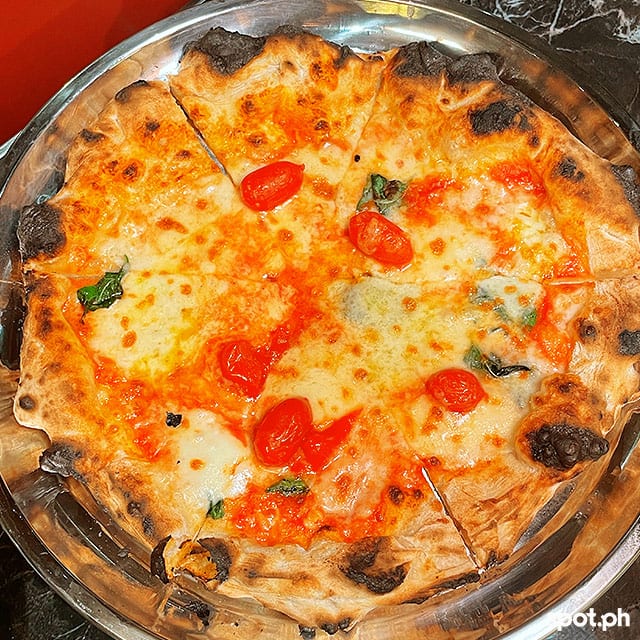
(SPOT.ph) Pizzas, still hot and slightly smoky from being cooked in Pizza Studio Tamaki's wood-fired oven, arrive one by one on our table. It's hard not to be mesmerized the cornicioni on the pies, each fiercely blackened in spaced-out points through its circumference—and that’s before we even got to their centers that are brimming with sauces, melted cheese, veg, and meats. It's no wonder the pizzeria from Tokyo is well-loved for their Neapolitan-style signatures, and now they're ready to serve Manila's pizza-loving crowd at their recently opened branch at Ayala Triangle Gardens.
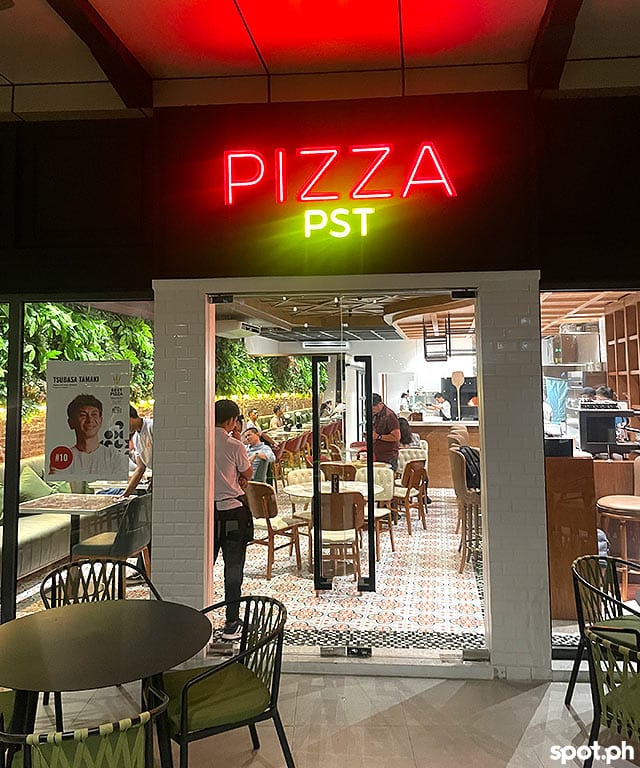
Japan might best be known for the likes of sushi and ramen, but those deep in the Japanese dining scene would know they absolutely excel at pizza, the country being home to pizzerias that marry Italian tradition with the craftsmanship and perfectionism the Japanese are known to exhibit. Among the country’s best is Pizza Studio Tamaki (PST, for short), which has been lauded by the likes of Truly Tokyo, Condé Nast Traveler, Time Out, and The Japan Times for their Neapolitan-style pies. In Japan, PST has locations in Tokyo, Hokkaido, and Okinawa; globally, there’s Singapore and Bangkok, Thailand, and now the Philippines.
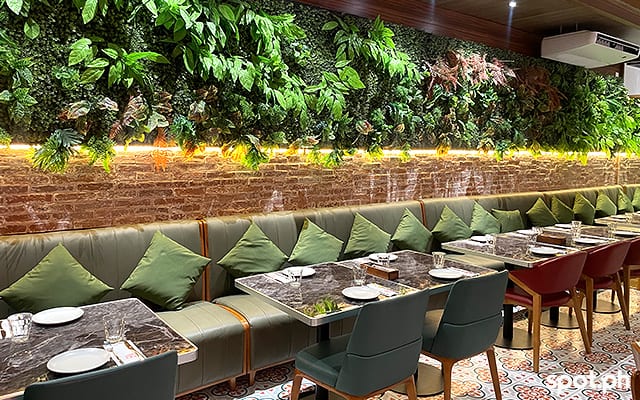
Pizza Studio Tamaki at Ayala Triangle Gardens
Behind PST's superb slices is the skilled Chef Tsubasa Tamaki, who’s made it to the Pizza leg of the Best Chef Awards every year since 2023 (this year he was ranked at #10!). Born in Okinawa, Tamaki self-learned the art of Neapolitan-style pizzas before even visiting Italy, gaining experience workingat famed Japanese pizzerias Seirinkan (also called Savoy) and Pizza Strada. It was in 2018 that he opened the first PST in the Roponggi district of Tokyo, which racked up a following for its pizzas made with a 30-hour fermented dough that uses a blend of Japanese and American flours.
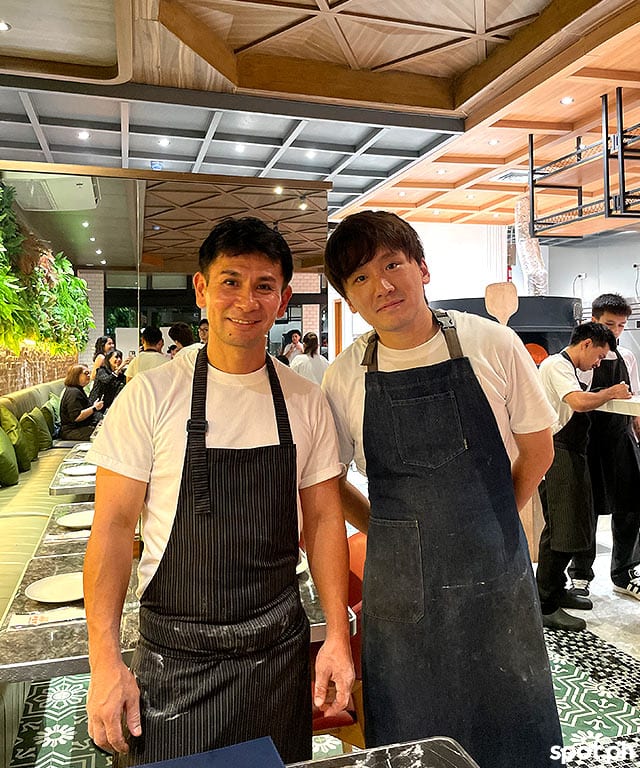
The Makati branch is vibrant but laid-back, with earth tones on their furnishings; Machuca tiles on the floors; and a strip of foliage on the walls, all of which work together to draw the eyes in. Diners can watch the local team (led by Chef Hiromi Nakada) in action at the open kitchen toward the back; it’s here that you’ll the aforementioned wood-fired oven custom-made by Japanese brand Yamamiya. To the left of the kitchen is the PST pantry, whose glass windows allow guests to peek through. Stocked on the shelves are tins of Delsud olive oil, dairy products, spices, bottled sauces, and their exclusive pizza flour blend, of course. They made sure to bring in the exact same ingredients that they use in Japan, Tamaki tells us, so as to keep the quality consistent with that of its home country.
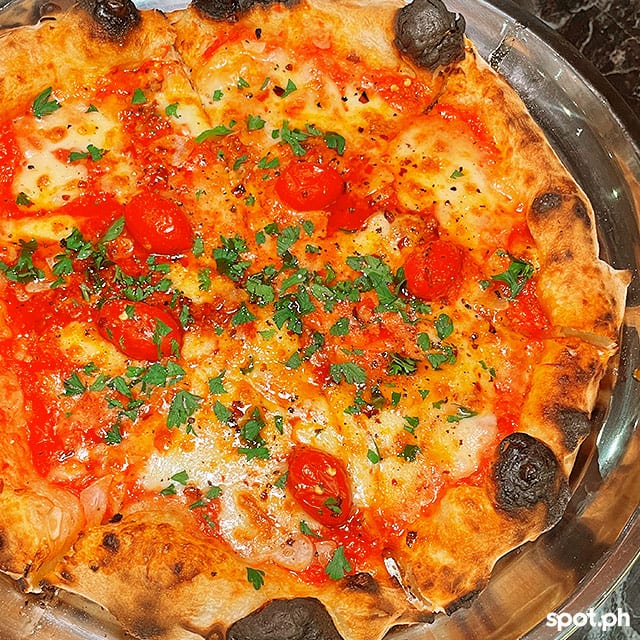
It goes without saying that the pizzas are divine, each pie flaunting bubbly, beautifully blistered edges and a crisp-chewy base that amazingly doesn’t get soggy underneath all the toppings. Some use a red base: there’s the ever-classic Margherita (P760) with the simple combo of tomatoes, mozzarella, and basil; its amped-up cousin (and PST signature) Tamaki (P870) that uses smoked mozzarella and Pecorino Romano along with the tomatoes and basil; and the rightfully spicy Arrabbiata (P910) with chili, juicy cherry tomats, fresh mozzarella, and ‘nduja.
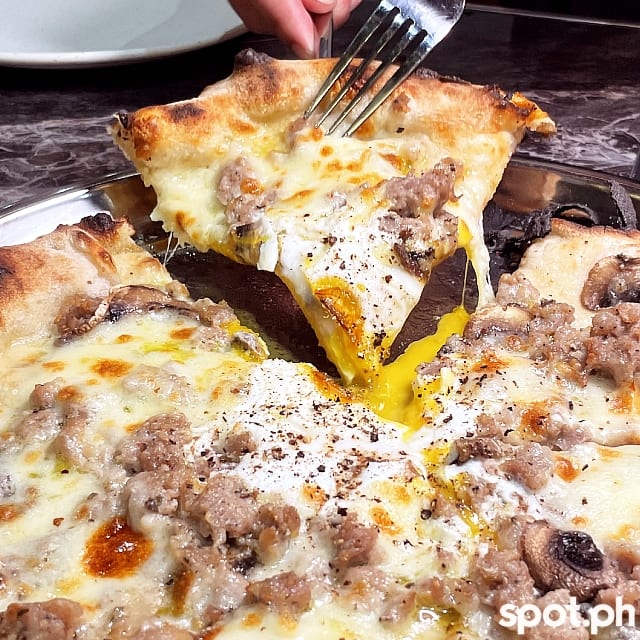
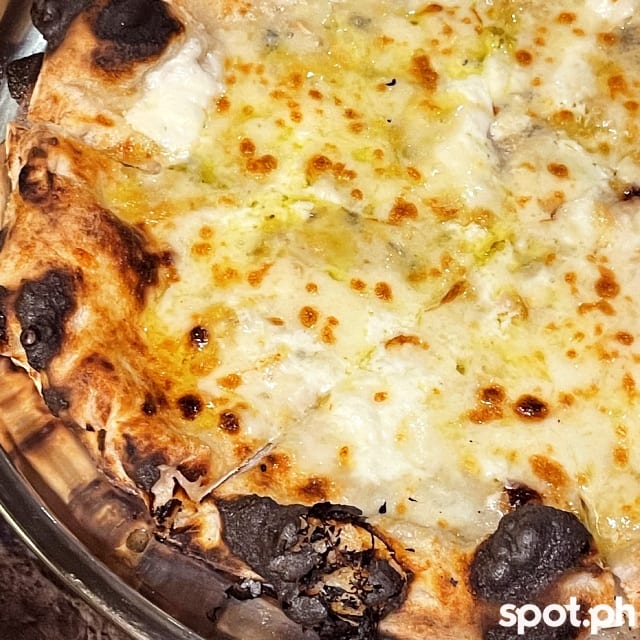
The white pizzas boast as much pizzazz in their own ways—try the Bismarck (P950) with burrata, earthy mushrooms, chunks of salsiccia, pecorino romano, and an egg for a breakfast-y bite; or the Ortolana (P980) with fresh mozzarella, mascarpone, Pecorino Romano, cherry tomatoes, and seasonal veg as a primavera-like option that unites creamy and vegetal worlds. The Five Cheese (P1,090) is a standout, with each cheese on the list each contributing a distinct, discernible flavor to the mix: smoked mozzarella; slightly pungent gorgonzola; buttery Taleggio; nutty Grana Padano; and creamy-as-can-be mascarpone. PST serves honey on the side that you can drizzle over the pizza for sweet contrast.
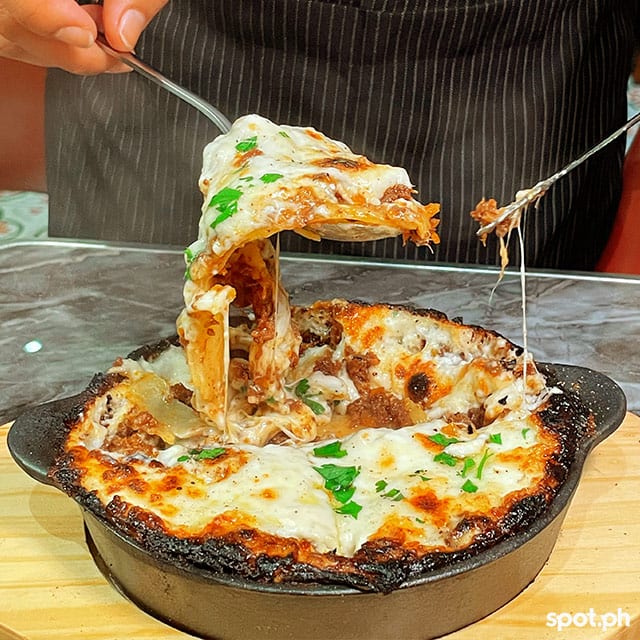
Past the pizzas, there are superb appetizers you can pre-game with, or have alongside their pies. PST’s use of high-quality ingredients makes for superb takes of seemingly simple dishes—evident in the Fresh Burrata with Tomato Caprese (P1,020), a simple pairing highlighting quality ingredients; the Mushrooms, Shrimps and White Bait Ajilio (P820), an East-meets-West situation best spooned over crostini rounds; the Garlic Brocolli (P950), which is akin to an even more garlicky, wine-enriched take on the Chinese veggie side; and the sweet-tangy Balsamic Marinated Pumpkin (P440). Whatever you do, don’t miss the Baked Lasagna (P950)—an especially unforgettable version of the classic given a rustic presentation in an iron skillet, and employing a hearty, meat-forward ragù that’s seemingly enriched with wine.
PST’s arrival in the Philippines came just in time as the Manileño palate becomes more discerning and open to new experiences. Of course, it’s not that PST is looking to reinvent the wheel necessarily so much as show us much improved, near-perfected takes on the familiar—true to the spirit of the Japanese.
For Trish, food is as much a source of pleasure and fuel as it is an outlet for creativity; a medium by which stories can be passed on; and a way to connect with others.