Thanks to Focused Storytelling, ‘Call Me Mother’ Is A Very Different Vice Ganda Film
A clunky setup doesn’t stop the latest from the Unkabogable Star from delivering the goods.

by Philbert Dy
Published on Dec 25, 2025
(SPOT.ph) Call Me Mother centers on Twinkle (Vice Ganda), who ten years ago gave up his career as a pageant coach when his mother died suddenly, leaving behind an infant that she took in. In present day, Twinkle now wants to legally adopt the child she ended up raising, Angelo (Lucas Andalio), so that the child can come with him to Hong Kong where a job awaits. For the adoption to take place, they must get the consent of the biological mother, who in this case is supermodel and aspiring beauty queen Mara (Nadine Lustre). Mara agrees to waive her rights to Angelo, on the condition that Twinkle come back to coach Mara for the upcoming Miss UniWorld pageant.
The setup gets a little clunky – it’s a little questionable, for example, that Twinkle hadn’t managed to get back to the more lucrative line of work he was supposedly famous for after some time. And Mara getting to compete in the pageant at all requires a leap of logic explained away with one line. But these details are easily looked over once the film gets into the meat of its narrative, which involves Twinkle fearing that Angelo might choose Mara over him if the child knew the truth, and Mara coming to grips with one of her biggest regrets.
Also read: 'Manila's Finest' is One Terrific Bummer
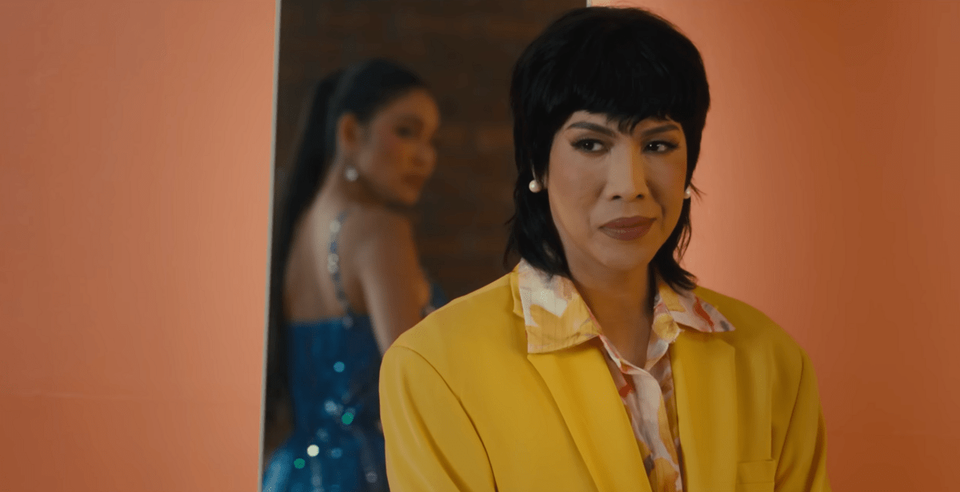
Unusually Focused
The story is unusually focused, as films like this one tend to feature multiple subplots that accommodate the inclusion of several other stars in smaller roles. But this movie really locks on to this one story of these two people, both of them having a claim to being a mother of this one young boy. It doesn’t even bother to ask the question of who the father is, as that’s immaterial to the story. Instead, in an appealing mix of comedy and drama, the movie asks what it means be a mother. To its credit, the movie doesn’t offer up a cut-and-dry answer. It comes close to one, but there is enough awareness and understanding that there are plenty of situations that are less than ideal, but still count as motherhood.
It just all comes together nicely. Director Jun Robles Lana is able to go to both extremes of drama and comedy, mixing absurd humor with out-and-out sentimentality. It seems excessive on paper, but he just makes it work on screen. There’s actually a lot going on here technique wise, with the camera at times feeling restless as it navigates the chaos of events, or tilting at an odd angle to suggest an imbalance of emotions. The movie is lit by Carlo Mendoza, and cut by Ben Tolentino, and they all seem to work together to create something that is definitely maximalist in presentation, but still somehow comes off as appropriately restrained in the right now.
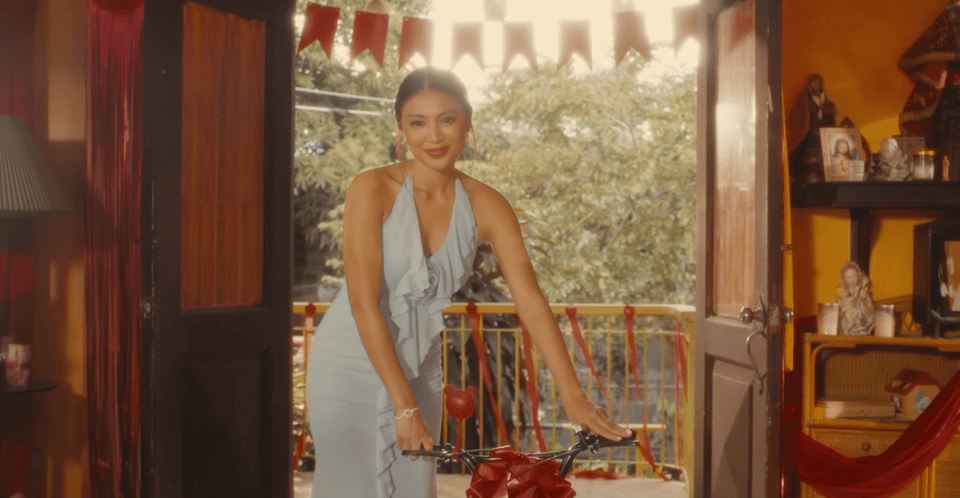
Perhaps it is all in service of the very big performance at the center of the movie. Vice Ganda has always played outsized characters; people with imperious personalities that are eventually revealed to be covering up massive vulnerabilities leading into grand sentiment. Vice Ganda belongs in big movies, and this is a big movie that serves the actor really well, creating a context that finds a place for both wild comedy and big dramatic moments. Lustre serves as solid support, and the young Lucas Andalio plays his role well.
Call Me Mother just feels very put together. MMFF films can feel like they’re kind of thrown together, trying to fill up runtime with multiple subplots, and serving other corporate mandated needs. This, in contrast, feels focused in trying to get the best out of everything they’ve got, giving its star the right platform to deliver the talent we’ve already seen from previous pictures. The setup isn’t the smoothest, but then the movie finds its rhythm and just keeps hitting. And in all of this, it delivers what feels like a deeply Filipino story: one about mothers, children left behind, community, and beauty pageants. Without even really saying it, Call Me Mother speaks directly to who we are as a people.
Rating: 4 ½ stars
Philbert Dy has been writing professionally for over two decades. He is often found walking in Quezon City, looking for something to write about.