We'll Always Have 'Maynila': How Brocka's Disruptive Opus Remains a Bright Light 50 Years On

Published on Jul 27, 2025
.jpg?fit=cover&width=960&q=82)
But it was also a response to outside forces, specifically a reaction to what was happening in the Philippines. Ferdinand Marcos had declared Martial Law in September 1972, and the president was keenly aware of the influence of cinema. After all, his first successful presidential run was helped along by Iginuhit ng Tadhana (1968), a biopic that portrayed him as the man chosen by fate to lead the country. To help his second presidential campaign, Marcos commissioned the production of Maharlika (1970), this time to highlight his wartime feats. Over the nine-year duration of Martial Law, films were heavily monitored for political content, censors meddled with scripts, and so theaters only had room to show action pictures, kung fu potboilers, and racy exploitation films—also known as “bomba” movies, presumably for their bombshell softcore content: exactly the kind of escapist entertainment Brocka was railing against.
Brocka Scores a Hit
In 1974, Brocka returned with Tinimbang Ka Ngunit Kulang (Weighed But Found Wanting), a production of Cinemanila, which was a filmmakers’ consortium he had co-founded alongside similarly minded creatives like the future director Mario O’Hara. In its mission statement, the group excoriated movies geared towards “the ‘Bakya’ crowd, that faceless and nameless multitude of moviegoers who would go for melodrama, plain slapstick comedy, and horror.” What’s more, “the plots of these stories were invariably simplistic, character motivations not psychologically sustained, acting superficial, photography and editing roughly done. And the impression created was that life is one-dimensional—either black or white, tear[s] or laughter, success or failure.”
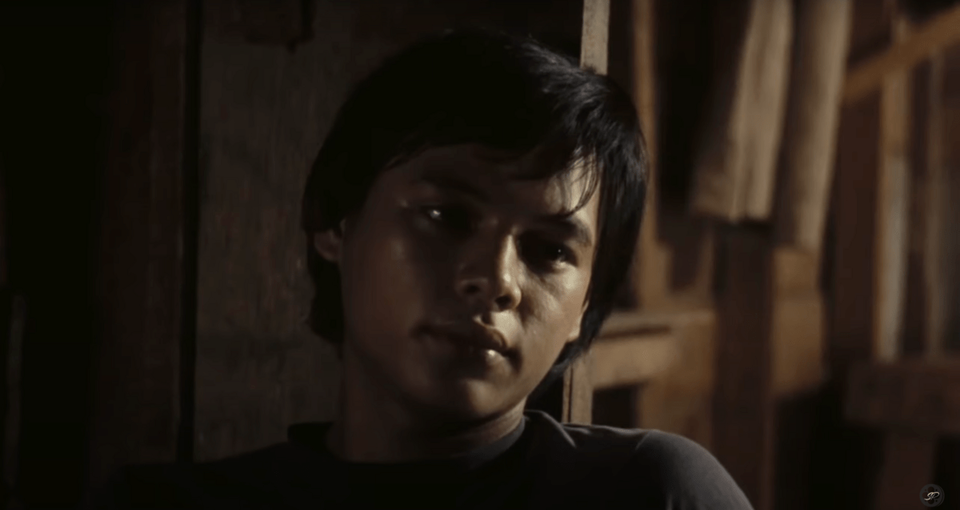
Tinimbang Ka Ngunit Kulang told the story of a young man’s coming-of-age in—and ultimate rebellion against—an upbringing marked by superstition and prejudice. Brocka threaded a fine needle: avoiding overt political messaging to circumvent the censors, while making sure his social criticism still came across. On top of that, he had cast a 17-year-old unknown named Christopher de Leon to play the lead, bucking the studio mandate to cast actors with marquee value. Tinimbang Ka was a box office success, achieving Cinemanila’s goal: reaching the uneducated, working-class mass audience with sophisticated films that had a social conscience.
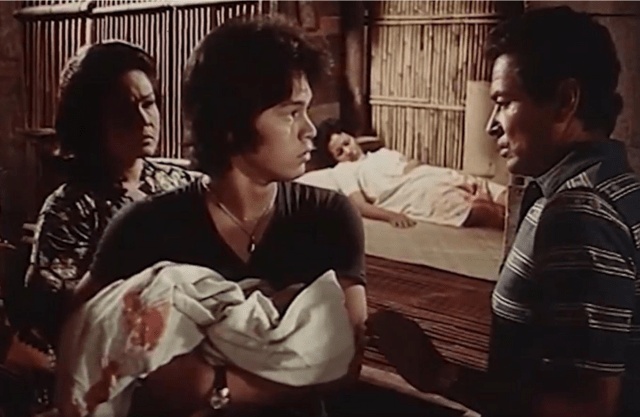
Brocka’s comeback film impressed Mike de Leon, the scion of the family who owned LVN Pictures, one of the four major film studios of post-World War II Philippines. (De Leon was soon to be a preeminent director himself, starting with the 1976 horror film Itim.) Inspired by Cinemanila’s success, he had started his own banner, Cinema Artists. And he approached Brocka with an adaptation of Edgardo Reyes’ social realist novel Sa mga Kuko ng Liwanag, serialized in Liwayway magazine in the late ‘60s, written by a young screenwriter named Clodualdo del Mundo, Jr.
Brocka took a shine to the project: Here at last was material that exposed society’s ills in a broader canvas than his films had ever done to this point. And at this time, Cinemanila had gone belly up because its second project, Tatlo, Dalawa, Isa (1974) had flopped. He signed up, with Mike de Leon not only acting as producer but also as cinematographer.
From Liwayway Magazine to the Big Screen
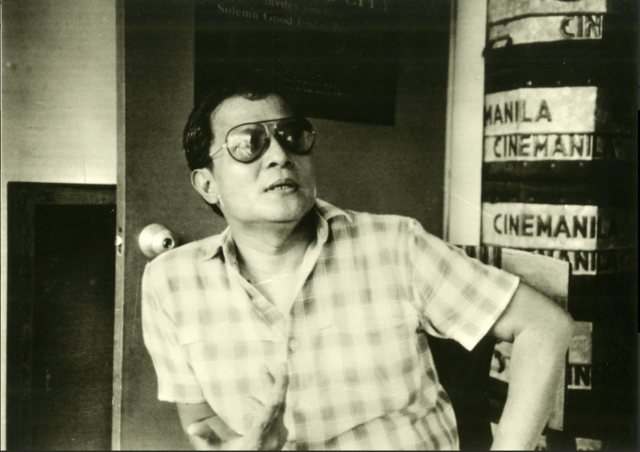
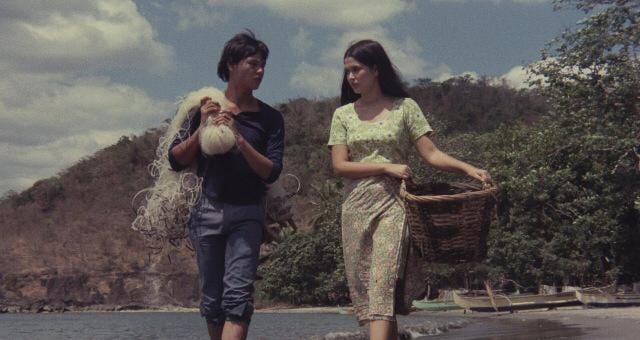
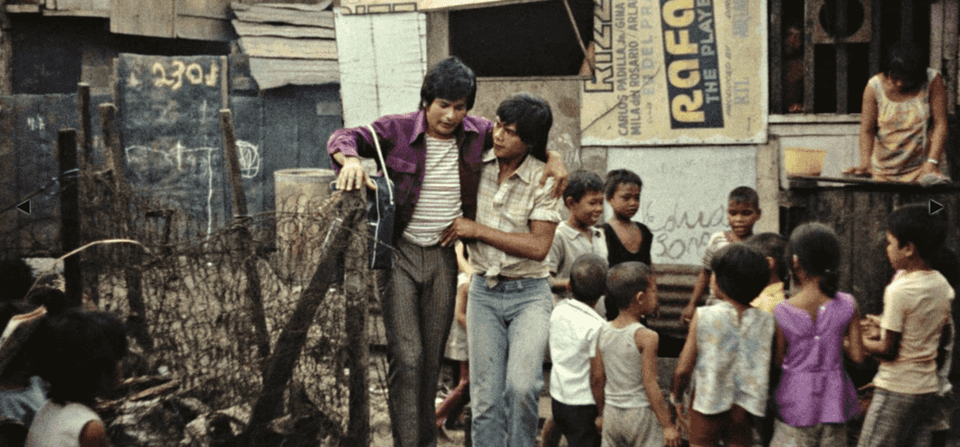
Like Tinimbang, Maynila: Sa mga Kuko ng Liwanag (Manila: In the Claws of Light) centers on a young male protagonist: Julio Madiaga, also played by a virtual unknown—Bembol Roco, going by his formal name Rafael Roco Jr. for his cinematic debut. Julio leaves his fishing town life in Marinduque and goes to Manila to search for his missing love, Ligaya Paraiso (Hilda Koronel), who had been lured by a recruiter named Mrs. Cruz (Juling Bagabaldo) with promises of employment and education. Months pass before Julio chances upon Ligaya outside a church. It turns out she was trafficked into prostitution and has become the kept woman of a Chinese businessman named Ah Tek (Tommy Yap), with whom she has a four month-old baby.
Julio encourages Ligaya to attempt an escape, despite her protestations that Ah Tek has warned her that he will kill her if she ever tries to flee. Still, the reunited lovers agree on a time and place for their meeting. Ligaya misses their rendezvous, and tragedy ensues.
The Gritty Streets, The Gay Demimonde
Maynila benefits from Edgardo Reyes’s vivid portrait of the hierarchy that exists within the country’s socio-economic apparatus. Reyes spent years working as a menial laborer and as a gofer at a Chinatown brothel, and his experiences give the film a bedrock foundation of authenticity. At the bottom of the heap are beggars and prostitutes, like the girl who gets passed around among Julio’s colleagues in their onsite hovel late at night. Above them are laborers like Julio, who live one day at a time. At every turn, the film conveys the menacing sense that these lives can slip through the cracks at any time, with the merest flick of fortune’s finger. Above Julio are the lower-middle-class who exploit subalterns like him; into this strata go people like the foreman Mr. Balajadia, the deceitful recruiter Mrs. Cruz, and the small-time Chinese businessman Ah Tek. And still above them are the oligarchs and plutocrats who are so high up they don’t appear in the film at all, but whose rapacious way of life drives the film’s misery and despair.
But Reyes’s experiences in the city’s underbelly did not include the film’s detour into the gay demimonde. As del Mundo told film critic Joel David in an email interview in 2012: “When Lino made the suggestion to add the excursion into the gay underworld, I asked him and Mike [de Leon, producer and cinematographer] to clear it with Edgardo Reyes. I doubt if they did.” Del Mundo also acknowledges the shift from 1960s Tagalog slang into more contemporary modes of expression like “swardspeak,” which started emerging in the 1970s: “The dialogue would naturally differ from the rest of the film. The character of Bobby belongs to a different group. The dialogue separates him from the world of the construction workers.”
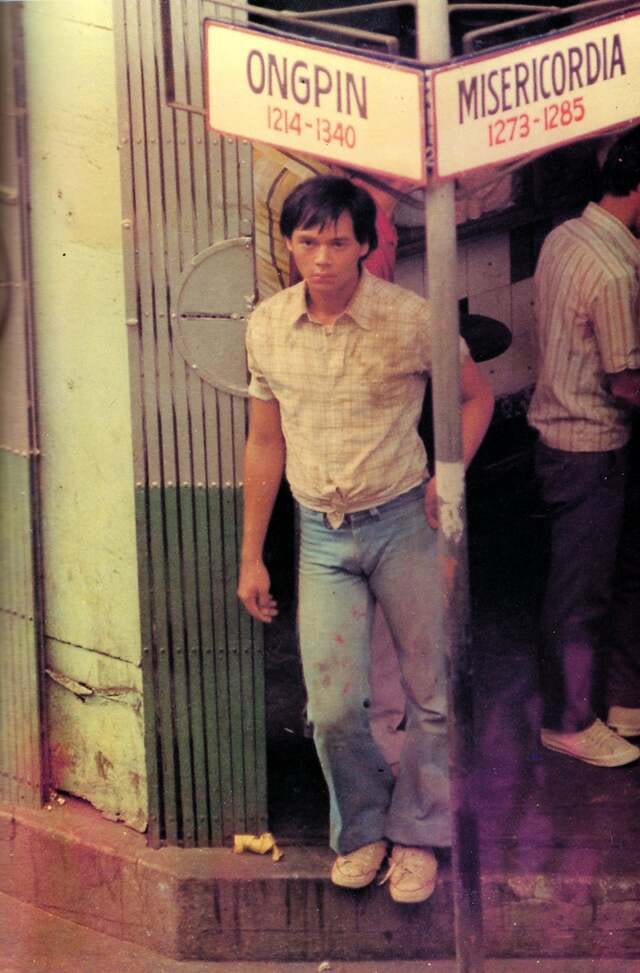
The detour into gay sex work was to have extended far beyond Julio’s introduction by Bobby to the gay pimp Cesar (Chiqui Xeres-Burgos), who bucks homosexual stereotyping by looking like a cisgender male and acting in a straightforward manner sans flamboyant gestures. There was supposed to be a foray into cruising set at Ideal Theater, the former movie palace along Rizal Avenue (the end credits still include the actors in this sequence) and a trip to the beach where Bobby was to confess his bisexual attraction to Julio, prompting Julio to leave sex work altogether. But Brocka cut these sequences—they were never to be restored or reintegrated in a director’s cut—and the whole gay subplot ends up taking about 17 minutes of screen time, about less than 15 percent of the film’s total runtime.
Still, gatekeepers of Filipino masculinity accused Brocka of sensationalizing the gay aspects of Maynila. In an interview published in 1993, Brocka insists Julio needed to experience gay sex work because it gives him moral ascendancy and deep empathy: “When Julio finally meets Ligaya and sleeps with her in a motel room, he understands her travails thanks to his homosexual experiences. He understands what it is to sleep with Ah Tek. The two know what it means to be dirtied.”
A Box-office Success, An Awards Darling
Of course, Maynila is not without its weak points. Let’s not list its problematic depiction of Chinese Filipinos or its latent homophobia as knocks against it. Instead, let us be mature and acknowledge that the film’s specific portrayals weren’t meant to be sweeping generalizations.
But the film still falls into some of the usual traps. Despite its artistic editorial placement of flashbacks, Del Mundo’s script still suffers from some clunky exposition, as when a casual inquiry from a construction site colleague about his lady love prompts Julio to go into a step-by-step narrative of Ligaya’s backstory and the lucky breaks he had in tracking her down. And the lucky breaks can often seem too lucky: In the sprawl of the metropolis, he just happens to land a security guard gig that leads him to Ligaya’s entrapper; he just happens to meet a laborer done good named Imo (Pio de Castro III) after months of no contact, who tells him of Perla’s ultimate fate; he just happens to be standing outside the church that Ligaya visits on the one week where she has eluded the clutches of Ah Tek.
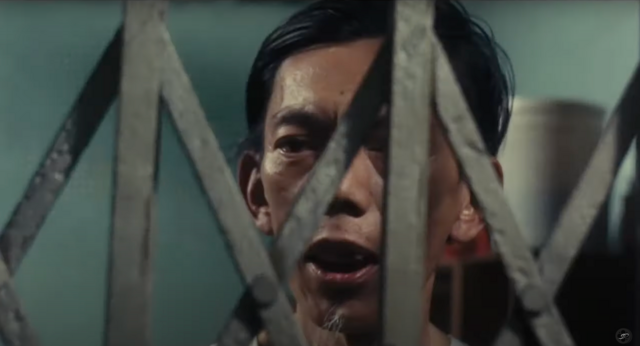
(And speaking of Ah Tek, some names are a bit too on the nose allegorically: “Ah Tek” is a play on “atik,” or the reverse of “kita” or earnings, a vestige of the ‘70s slang of reversing the syllables of words. And how about Julio going in search of Ligaya Paraiso—“Joy Paradise” in English?)
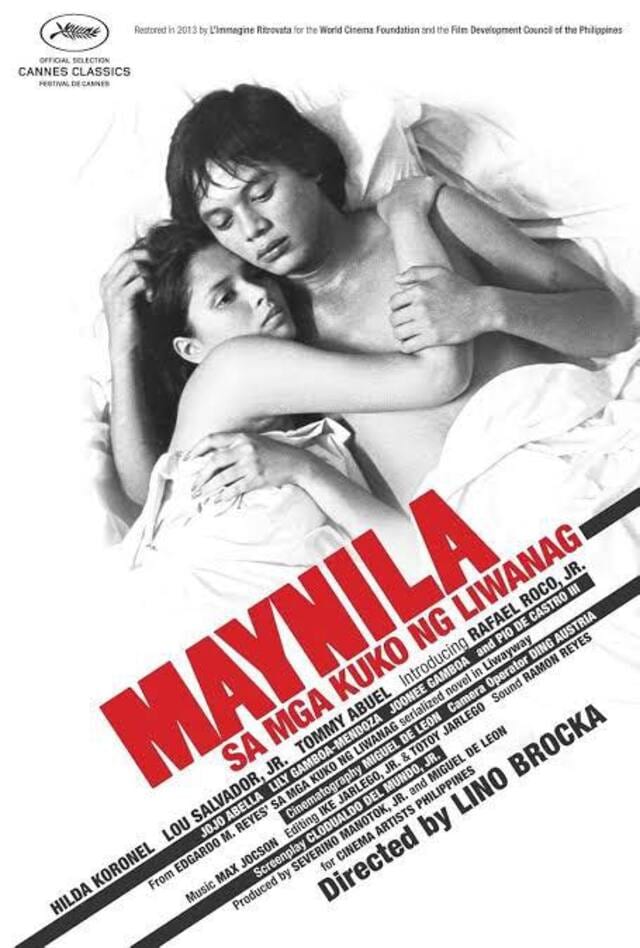
Maynila's deficits didn’t stop it from becoming a box office success and an awards darling upon the film's release on July 16, 1975. Critics were wowed because Maynila felt like the start of something momentous: the first avatar of protest cinema. And the most satisfying part of it all is that Brocka reaped all that success on his own terms. He was even able to squeeze in a rally towards the end with protesters brandishing banners that say “Long Live The Worker!” and “Down With Fascism!” as a means of reflecting Julio’s growing fury at Ligaya’s fate...and the censors didn’t find anything wrong with it! Every frame is suffused with the director’s anger: Every shaky, handheld shot; every abrupt editing cut; every discordant sound design choice—all are indictments of the inequities built into the Philippines’ socio-economic apparatus.
And then there are the apocryphal tales that have sprung up around the film. Clodualdo del Mundo, Jr. supposedly wrote the spec script adapting Edgardo Reyes’s novel as a means of filling his time because he had submitted another project for the venerable critic/host/editor Nestor Torre’s film writing class at the Ateneo way before deadline. Jay Ilagan was supposed to play Julio Madiaga, but Brocka thought his being overweight undermined the character’s poverty-stricken look, and so he recast him. Only movies that have made an indelible impact on the culture produce this kind of mythologizing.
Brocka would go on to direct gems like Jaguar (1979), Ina Ka ng Anak Mo (1979), Bona (1980) and Cain at Abel (1982), as well as important works of protest cinema like Kapit sa Patalim: Bayan Ko (1984) and Orapronobis (1989). His next film after Maynila, Insiang (1976) would become the first Filipino film screened at Cannes. Later on, Maynila would be the only Filipino film listed in 1001 Movies You Must See Before You Die, would finally make its Cannes debut in 2013, and would count luminaries like director Martin Scorsese and actor Harris Dickinson among its fans.

We Will Always Have Maynila
Brocka was a child of the postwar ‘40s and ‘50s, gorging on noir films like The Postman Always Rings Twice (1946), Force of Evil (1948) and The Breaking Point (1950). In many interviews, he has cited these gloomy films as a strong influence on him, not because their stark Expressionist visuals entranced him, but because the idea of their characters being trapped in situations where happy endings weren’t possible spoke deeply to him.
In the ‘60s, a new naturalistic, observational aesthetic in cinema was born just as Brocka’s compassion towards the downtrodden were coming into full flower. You can draw a straight line to Maynila from films like Black Girl (1966) and Midnight Cowboy (1969), films that portrayed the sociological reality of naïve people from the countryside moving to the city, where they are corrupted, chewed up and spat out.
But such was the power of Maynila that critics recognized it as the seminal work of a new Filipino dramatic subgenre—the gritty urban drama—even in its own time. It resonates deeply, still, half a century after its release because its story is still being told by a society that has changed depressingly little in five decades. The yawning gap between the classes still exists—if anything growing even more abysmal that a striving laborer like Imo crossing the divide and becoming an advertising executive feels more like a pipe dream. Women are still being exploited. Laborers are still being ground under the heel of capitalist interests.

What has changed dramatically in the 21st century is that the media by which today’s directors deliver their cries of protests have become fragmented and siloed. Films are no longer the unifying cultural events they were back in the 20th century. Today, the people who should be getting angry don’t even have a chance of being miffed. Mass audiences watch their romances and K dramas on their phones while directors like Lav Diaz and Brillante Mendoza turn to international festival programmers in the hopes of finding validation and distribution for their visions...and maybe, find a circuitous route back to the audience of their homeland.
And still, directors persist in telling the story first told by Maynila over and over again. Maybe it’s paralysis and powerlessness in the face of institutional corruption as chronicled in Kinatay (2009). Maybe it’s the soul-deadening consequences of immorality becoming business in On the Job (2013). Maybe it’s the small beacon of hope in little acts of kindness found in Sunshine (2025).
Maynila: Sa mga Kuko ng Liwanag said it all first. Like Julio backlit by the colorful neon advertisements of things he will never buy as he wanders aimlessly through the shadows of a park, or like Ligaya harshly illuminated in her casket by funeral globes, we will forever be standing in the brilliance of Maynila’s light.
---
All images from Maynila Sa Kuko ng Liwanag, sourced from the BFI trailer, Venice Film Festival and Cannes Film Festival websites, IMDB and Video 48.
Andrew Paredes is a former advertising copywriter and current screenwriter, freelance writer and film critic who is seriously contemplating unchaining himself from his desk.