This Filipina Traveled all 193 Countries On a PH Passport—Here's How She Did It
It's a lot easier than you think.

by Kate Alvarez
Published on Sep 18, 2025
(SPOT.ph) Traveling the world is one thing, but traveling the world with a Philippine passport—well, that’s a whole other level of difficulty that Filipino citizens who've tried have definitely felt the sting of.
The Philippine passport consistently ranks as one of the weakest in the world. According to the Henley Passport Index, our passport currently ranks at number 72 out of 199. But that didn’t stop Katrina “Kach” Medina Umandap from pursuing her dreams.
The 37-year-old Laguna native made headlines early this year when she officially became the first Filipina to travel to all 193 United Nations (UN)-recognized countries and two observer states (Holy See and Palestine) using a Philippine passport. She’s also the youngest Pinay to achieve this feat, according to Nomad Mania, a non-profit network of travelers that aims to inspire travel beyond the ordinary and obvious. The group also has "authority on identifying the people who have been to every country" through their robust verification process that tracks their travelers' journeys exploring the globe.
It took Kach 12 years to complete this journey, and it wasn’t always smooth sailing.
Also read:
The SPOT.ph Guide to Applying for a Schengen Visa
How to Apply for a Japan Visa at the New Visa Application Center
The SPOT.ph Guide to Applying for a U.S. Visa
Kach Umandap: From OFW to Digital Nomad
As a millennial, Kach looked up to the late Susan Calo-Medina, who hosted Travel Time on Studio 23. “Growing up, it was my dream to travel, but I didn’t know how I would do it,” she says.
After graduating from the University of the Philippines Los Baños with a degree in Economics in 2009, Umantad got her on-the-job training (OJT) at the Overseas Labor Office of the Philippine Embassy in Kuwait, Iraq. She soon became an overseas Filipino worker (OFW), taking on corporate jobs in Kuwait and Kurdistan until 2013.
"There are a lot of holidays in the Middle East," she explains, which ultimately led her to go on trips to Armenia, Georgia, and Sri Lanka. By 2013, she made the big and bold decision to leave her job to become a backpacker and digital nomad.
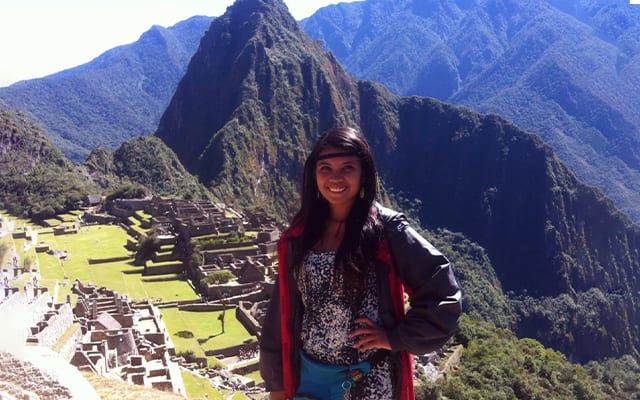
"The appealing part was the freedom to explore and have my own time," she says. "At the same time, there was that curiosity. Would it be a possible pursuit as a Filipino?"
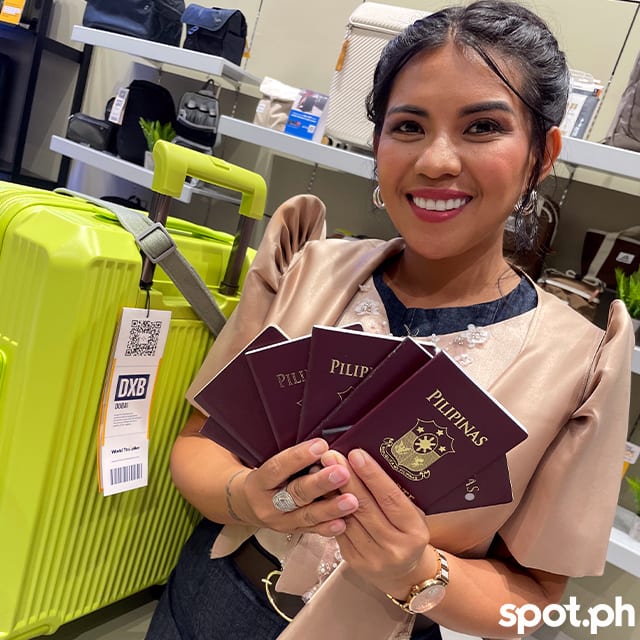
While solo travelers and female backpackers have existed long before 2013, the idea wasn’t that popular with Filipinos. Inspired by the backpacking community around the world, Kach started the blog, Two Monkeys Travel Group, with her then partner, whom she met in her travels, as well as her social media presence. Blog affiliate marketing and ex-deals helped fund her nomadic lifestyle.
It wasn’t until 2017 that Kach realized that it had become a full-time digital nomad career. "In the beginning, I just wanted the capacity and funding to go from one place to another," she says. "Then, I started to make real money. It was no longer just brands. I also started to work with different governments."
By then she had been to 100 countries and received a $16,000-sponsored cruise to Antarctica. "I was like, 'Wow, a big company sponsored me like this?' Kaya ko na yung iba, 'di ba?" she says.
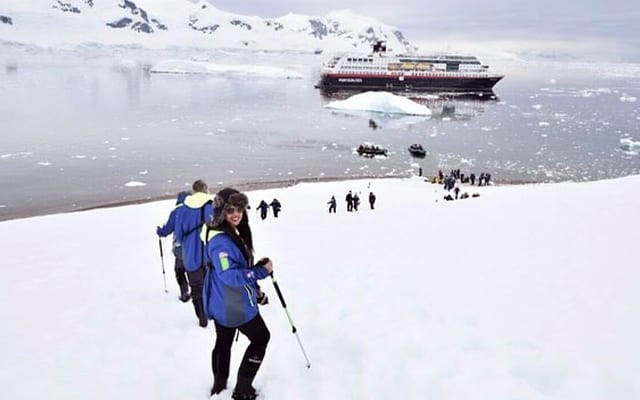
It was also in 2017 when she set her eyes on a bigger goal: to complete all 193 UN-recognized countries and two observer states. "I didn’t expect that I would visit all the countries. Ang gusto ko lang talaga, maka-ikot ako sa buong mundo," she says.
Some countries she would just visit for days at a time, while other places she stayed longer and even called home, such as living on a sailboat from 2017 to 2019, and moving to Montenegro in 2019.
In 2022, Kach started Travel With Kach, a blog and tour provider, as well as Filipino Passport, a visa assistance startup. She has a team of fellow digital nomads assisting her in managing her online businesses.
As for her world voyage, she shares, “I planned my trips per region.”
She traveled the entire Eastern Africa in 2017, Eastern Europe in 2018, Central Asia in 2019, Latin America and the Caribbean in 2021-2022, the Pacific Islands in 2023, and the remaining countries in 2024. On January 7, 2025, she finally ticked Sudan off her list, which earned the final verification from Nomad Mania.
"I started with a dream and then it became an ambition, and then it became a concrete goal," the young traveler reflects.
Kach Umandap's travel tips:
Kach admits it’s not easy to travel the world if you’re holding a Philippine passport. "But if you just know the tips and tricks for navigating visa applications, then it’s doable," she says.
Here are her biggest tried-and-tested tips for Filipinos—" strategies that I wish I employed sooner," she laments—for getting that coveted visa.
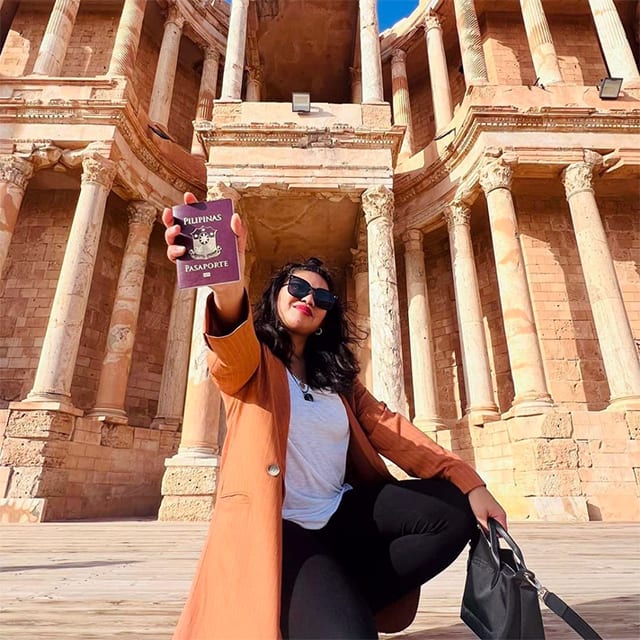
Start with visa-free countries and then work your way up.
If you’ve never traveled abroad and your passport is empty, Kach highly suggests the "Banana Pancake Trail"—Thailand, Laos, Vietnam, and Cambodia. Southeast Asian countries are known in the backpacking community as relatively safe, budget-friendly, and easy to navigate. Think of your empty passport as your resume—you need to build your credibility and experience with our visa-free neighbors first.
When you’re ready for your first country that requires a visa, Kach recommends not to aim for "countries that are full of Filipinos" or where Pinoys notoriously have immigration issues—at least not right off the bat. She suggests starting with tourism-friendly countries that offer short-term visas, such as Japan, South Korea, and Australia. Once you’ve gotten stamps from those places, then you’re ready for countries like the USA, Canada, and Europe.
Cover all bases.
When applying for a tourist visa, make sure you submit all the supporting documents required by the embassy you’re applying to. "Detailed, but not too complicated," she explains. You don’t need to show papers for every single property and car you own (unless they specifically ask for it), just enough to prove rootedness in the Philippines.
"Mas maganda yung sakto lang na pakita," Kach says. They just need to know your reason for traveling, that you have strong ties to your country, and proof that you’re returning to your country or traveling onward to another country.
Don't be vague.
One of the biggest mistakes Filipinos make when applying for a visa is keeping their travel plans unclear, whether it’s in the documents they submit or the answers they give in the interviews. According to Kach, it’s dubious if your application is confusing, complicated, and inconsistent. Declare your concrete plans and prepare the supporting documents.
Know the right way to show money.
In visa lingo, "show money" is proof of financial capability and is one of the main problems Filipino applicants encounter. Many Pinoys make the mistake of doing the "fund transfer scheme," where you borrow a huge amount of money from friends to temporarily pad up your bank account last-minute. It’s a red flag for the consulate, which can tell as soon as they see your bank statement.
"They want to know that you can fund your trip, that you will not overstay or work illegally in their country, and that what you’re saying in your visa application form is true," Kach says. Your supporting documents need to match. “If you tell them you’re a student or minimum wage earner, you can’t have half a million pesos in your bank account. If you tell them you’re the CEO of a company, then it would be weird to have only P20,000 in your bank account, right?"
In Kach’s Two Monkeys blog, she dishes out show money workarounds, such as an Affidavit of Support if someone else will sponsor your trip, credit card transactions to prove your capacity to pay if you don’t have an ITR, and your salary slips or monthly income to prove your financial stability. In FilipinoPassport.com, Kach offers clients a visa coaching service on top of visa assistance to help them figure out what’s best for their situation and the type of visa they’re after.
Don’t be overconfident.
Just because you’ve already traveled to many countries and received visa approvals in the past, it doesn’t mean you should be complacent about your next visa application or renewal. Even with a well-stamped passport and flourishing visa history, you still need to go through the full process and may even get rejected or refused if you don’t submit the complete requirements.
In her Two Monkeys blog, Kach shared the story of how the German Embassy denied her visa application in 2015, even though she had already traveled there the year before. "I was too confident," she said, noting her failure to submit all the necessary documents. She wrote a Remonstration Letter and prepared the documents to support her appeal. About a month later, her visa was issued.
An onward ticket is just as valid as a return ticket.
The embassy needs to know that you will not overstay or work illegally in their country. Show them that you plan to exit before the visa expires, via a return ticket to your home country or an onward ticket to another country or continent.
"You don’t need proof to return to the Philippines. You only need proof that you are traveling onward to a different country," Kach explains.
You can still recover from a rejection or refusal, which are two different things.
A visa rejection means your application is incomplete or doesn’t meet the basic criteria, preventing it from being processed at all. A visa refusal is more grave, as it means your application was reviewed but denied due to ineligibility, missing documents, or failure to meet specific requirements.
"Don’t panic! A visa refusal isn’t the end," Kach says. Depending on each case and the country’s visa rules, there are options for reapplying or appealing. "Think of it as feedback, not failure. You can update documents, clarify details, and reapply with a stronger case."
A multiple-entry visa from a tier-one country can take you to other countries.
Make sure to double-check your active visas. Some multiple-entry visas can grant you access to other countries during their validity period. Case in point, your multiple-entry Japanese visa lets you enter a few countries in Eastern Europe, like Montenegro and Georgia. Your US visa lets you visit Mexico, the Caribbean, Canada, and many more. Your Canadian visa lets you enter the Americas and the Caribbean. The list goes on.
You don’t have to be in the Philippines to apply for a visa.
This option is best for flexible travelers and digital nomads who aren’t in a hurry to return to their home country. You can apply in an embassy in the country you’re currently visiting while preparing for the next one.
Most of Kach’s visas were approved while she was a digital nomad outside the Philippines. She was in Colombia when she got her US visa. Then she applied for her Paraguay and Uruguay visas while in the US. It’s more practical, and—based on Kach’s experience—actually easier for a PH passport holder to apply for a visa while traveling abroad rather than flying back to the Philippines.
The most important visa application document is a strong, well-written cover letter.
"The secret is not ‘show money,’ but a cover letter," Kach tells SPOT.ph. "Even if it wasn’t stated in the requirement, you need to write a very good cover letter explaining why you have to go to that country and why you’re going to the next country or back home."
She lists the following cover letter tips:
Be clear and concise about your purpose of travel and the length of stay.
Make sure the details align with your supporting documents/
Show strong ties to home.
Keep the tone sincere and respectful but not desperate or overconfident.
Kach Umandap's Life After Country #193
Kach has her eyes set on a new goal that’s closer to home—to visit all 1,642 cities and municipalities of the Philippines. When asked how many she’s already ticked off, she replied, “I think I’ve been to 60.” And yes, she plans to go through a proper verification process, this time through The Filipino World Travelers.
She also aims to inspire Filipinos to become RFWs (remote foreign workers) like herself. Similar to digital nomads, an RFW is a Filipino citizen based abroad. Kach hopes it will one day be recognized as a sub-category of OFWs, where they are given the same care and support from the government.
Her new book, How To Become A Digital Nomad, will soon be on sale. She wants to give Filipino children copies of her book while doing talks in schools around the country. For now, Kach and her partner (a fellow traveler who’s been to 100 countries and counting) are mostly based in Palawan. They’re currently in Dubai and are headed to Europe next. "I'm still the same adventurer. It's just that now I travel not to pursue a goal, na may pressure. Now I travel with my bucket list," she says proudly.
Kate Alvarez is an elder millennial writer and commercial model. Visit her travel blog, KateWasHere.com, and follow her on IG @replikate.