The Story of a Garment: Three Young Designers Walk Us Through Making Things Slow and Local
Designers Roko Arceo, Miki Borinaga and Nicolo Perez let Spot inside their workshops and allow a glimpse into their creative process.
by Jerome Gomez, and Clara Rosales
Published on Oct 2, 2026
(SPOT.ph) Few things are certain in this life: death, taxes, and then there are the chat groups that heat up right after a Maarte, Artefino, or Purveyr Fair, with a discussion sparked by a single burning question: ‘Why is local so mahal?’ Pertaining, of course, to the clothes, footwear, and accessories sold in these big artisan bazaars. ‘Mahal’ here reads, understandably, as too pricey. Beyond what most Filipinos can afford. But others make it read, too, like an accusation, as if the creative folks behind these local brands opted for a higher price tag just because—and what right have they to do that when they’re just, you know, local?
For this issue of the Spot Weekender, we spoke to three of the local scene’s designers of the moment, fixtures in the big fairs as well as the more frequent Katutubo Pop-up Market. To get the answers from the makers themselves, yes, but really to understand the journey a piece of garment goes thru before they’re even ready for the bazaar racks.
To offer a different picture of the answers.
.jpg?fit=cover&width=960&q=82)
.jpg?fit=cover&width=960&q=82)
.jpg?fit=cover&width=960&q=82)
Meet Nicolo Perez of Nicolo, Roko Arceo of Maligaya Clothing Co. and Miki Borinaga of Kael Street. They're the founders of their own brands and champions of slow fashion. They envision, design, and often take part in assembling their garments themselves. Their fresh ideas, fun, spirited clothes, and brand of cool attracting a young generation of shoppers that used to shy away from these formerly tita-dominated fairs.
Nico, Miki and Roko recently welcomed us to their workshops—not big warehouses, by the way, rather homes that have also made space for work, production, showroom and atelier. They walked us thru their process and introduced us to the hands that help put their objects of beauty together. Some may dismiss what they make as just ‘mahal,’ as in priced beyond one’s means. But in meeting these designers, we discovered ‘mahal’ can very well mean something else too: precious and made with love.
Nicolo Perez of Nicolo
.jpg?fit=cover&width=960&q=82)
For a young designer with a young career, Nicolo Perez has accomplished the kind of feat much older folks in the local fashion biz still dream about: having a specific look, nay a specific piece of garment, be so identified with his brand. We’re talking about his now familiar striped anthurium shirts, which over the years has built a fandom that includes the likes of former VP Leni Robredo, social media influencer Mimiyuuuh, and young actor Will Ashley.
Blame it on the design’s approachable yet unique quality, a meeting of clean lines and organic shapes that may look simple to pull off but is quite a challenge to put together. A process Nicolo himself walked Spot thru recently. He’s the best guy to break down the whole step-by-step of it; he used to make these shirts by his lonesome back when he was starting —from design to cutting the different parts, to putting everything together. “During my first pop-up in 2022," he says. "I had no team yet so I had to really do everything.”
Each part of the flower—the “petal” and the spadix (the antenna-like protrusion which, in Nicolo workshop parlance, is called the buntot)—is backed first with an adhesive layer so the fabric lies flawlessly flat on the seersucker shirt material. Their shapes are then outlined with a zigzag stitch that Nico still executes in his Juki machine until now—a task he has yet to learn to delegate to members of his team which, by the way, has more than doubled in size since he started a few years back. From a team of one— Nicolo himself, it’s now a team of four—with the fourth member a very recent addition.
At the time of our visit, the new recruit is being trained in every step of the garments-building process. “We don’t really operate like a normal factory, na may cutter, may finishers pa and mananahi. Each piece is done talaga by one person.”
.jpg?fit=cover&width=960&q=82)
Nicolo runs a pretty tight ship in his Cainta workshop, which is housed in a residential structure just next to where his folks live. It doesn’t seem like he’s in a hurry to grow or expand the business, despite proof he has enough fans to make a collab with a more established ready-to-wear brand like R.A.F. a soaring success. It’s clear the guy knows to make clothes people want to wear, no matter the price point. “When I’m out sa mall and I see someone wear one of my pieces, that’s one of the best feelings as a designer, when people actually use what you designed.”
Miki Borinaga of Kael Street
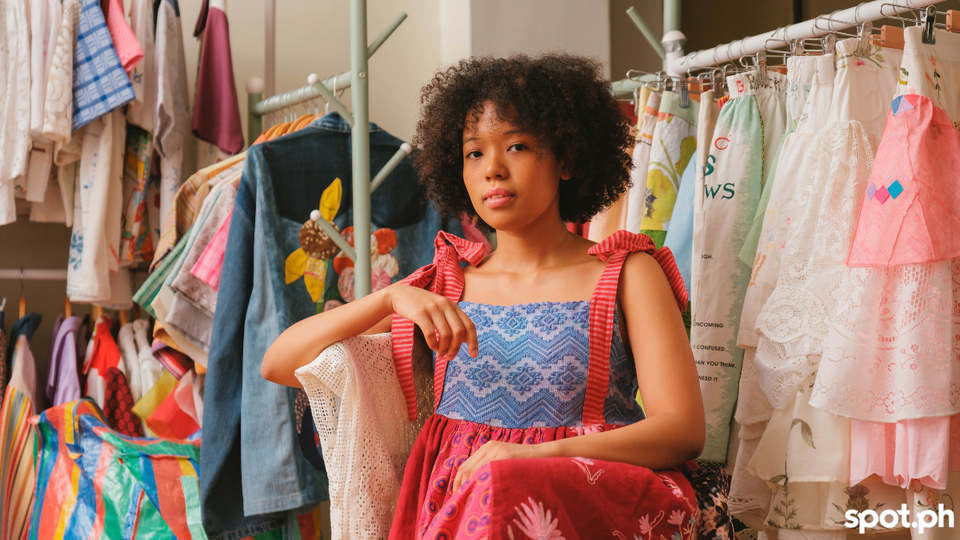
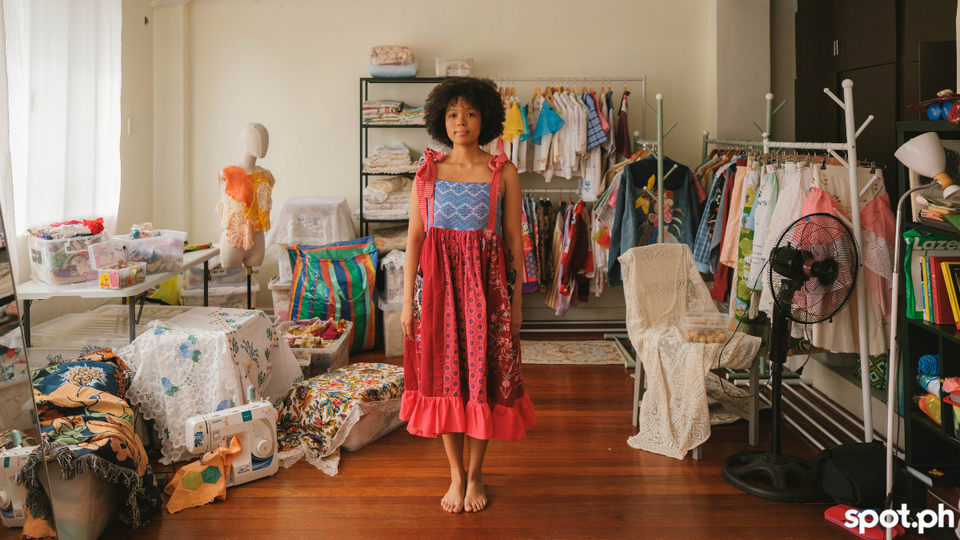
Most garments start out on the drawing board with a sketch, but for Kael Street, vintage textiles and fabric scraps—their textures, colors and shapes—decide where a piece will go. Like the clothes she makes, the brand's founder and designer Miki Borinaga is a tapestry of many different things. She sings, she paints, she studied ballet. Miki grew up in a family heavily involved in television production, so she’s no stranger to the limelight. But instead of seizing the chance to act in front of the camera, she insisted she'd rather work behind the scenes. And so she started her love affair with clothes on the set of GMA's period drama Maria Clara at Ibarra after graduation, working as a member of the styling team and dressing up characters. "That’s kind of how I grew learning how to tell a story through clothes," she says.
Creativity has been part of Borinaga’s life for as long as she could remember, signing up for different workshops and classes, thanks to her very supportive mother, who she jokingly calls “an enabler." If Miki wasn’t sewing up a dress from old tablecloths and curtains, she's teaching herself embroidery and needlework via YouTube videos—in an effort to expand the many ways she could tell a story through clothes.
After wrapping up work on her first period drama, she jumped into a second one: Pulang Araw, which hit screens in 2024. "Through that show I was able to source a lot of vintage clothes," she shares. Around that time, she was helping out Glorious Dias' Jodinand Aguillon, a champion of repurposing vintage garments and transforming them into contemporary fashion. He taught her about having a brand, sharing her passion with other people. "I fell in love and got deeper and deeper into vintage, and eventually I started to build this brand Kael Street. [It's] out of my love for vintage and out of my passion for creating clothes with character, clothes that kind of make you feel like you’re a character in a movie.”
One of her most popular silhouettes is called the Adelina. "I named it after a character from the show," she explains. The character was known for wearing statement collars and puffy sleeves, but Borinaga wanted to make it more palatable for modern tastes. Instead of the cinched waists of the 1940s, she opted for a loose fit anyone could wear. Its sleeves are made from vintage lace, and its collars are sometimes from table runners or edges of a table cloth that "felt like a waste not to use." And it wouldn't be a Kael Street piece without equally quirky buttons.
The Adelina tops, which can take a day or two to make depending on the material, are made in batches. She sources fabrics, digs through her stockpile for the right ones, ensures everything is clean and usable, then sends them off to a mananahi for final construction. She outsources the sewing because she needs someone with more expertise. She knows it takes longer to finish money, but she's committed to creating pieces that prevent scraps from ending up in a landfill and are durable enough to be worn. For her crochet pieces, like her airy Hayahay tops, select doilies are joined by hand-sewing before they are carefully reinforced by stitching on a machine, but carefully so the vintage fabrics are kept intact and the stitches aren't visible to the naked eye.
As an upcycler, Miki is aware others might not see, or appreciate her vision; or if they do, they might not be aware of the blood, sweat and effort that go into making her garments. "Because all they see is a finished product." Holidays often mean people want to buy a lot, but it's not exactly a demand a small brand like Kael Street can fulfill just like that. "It's a good problem because it means people are interested in your business. But meeting that [demand] and still keeping your business ethic of being a slow fashion brand, like meeting that balance, is also a bit difficult. You need a lot of patience," she explains. For Miki, its important to create enough at an ethical and reasonable pace, and to ensure that each piece finds the right home.
Roko Arceo of Maligaya Clothing Co.
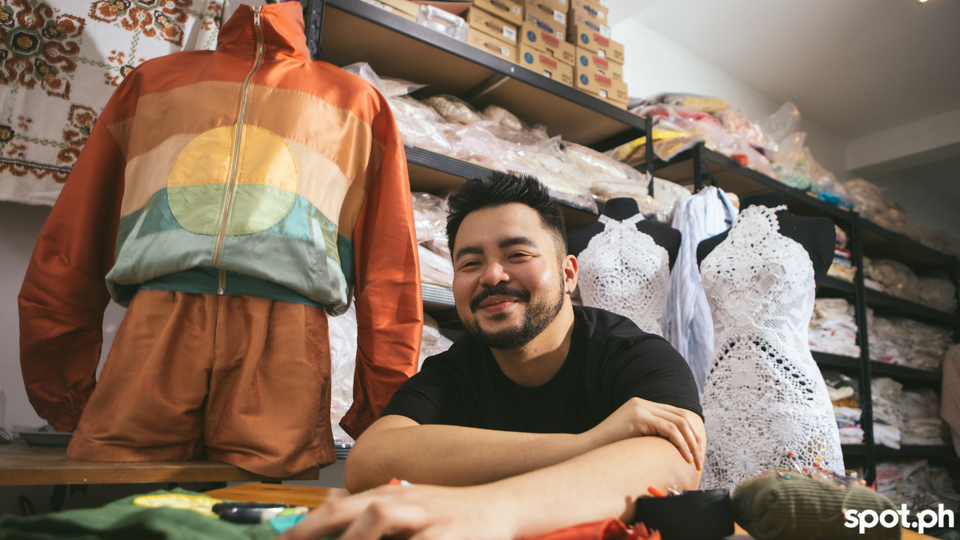
Prior to starting Maligaya Clothing Co. in 2023, Roko Arceo was a stylist for TV—in particular the GMA period drama Maria Clara at Ibarra—and a stylist for celebrities and VIPs. It was while working for then Congressman Toff de Venecia that he would take note of the lack of menswear designer in the scene. For de Venecia’s wardrobe, he was practically just sourcing from two designers: Kelvin Morales and RJ Santos. With this in mind, coupled with the burnout from the demands of TV work and the encouragements from friends, Roko quit television and went head on in building his brand Maligaya Clothing Co.
Social media folks might know Maligaya for its long crochet dresses. Under the brand’s Marikit line, these are one-of-ones and feature vintage crochet doilies pieced together and molded around the body; giving dimension, movement, and texture from every angle. No two dresses will ever be the same, and every crocheted unit is inspected and connected by hand. Some doilies are so old and delicate, they're products of an entirely different time and are no longer in production. "Some of them are antique...some are Madeira embroidery...some are made of special laces like Battenburg lace...yung mga mas vintage, mas mahal," Roko tells SPOT.
For Filipino music fans, Arceo's work is familiar. Indie-folk band Ben&Ben and P-Pop group SB19 usually don his structured and vibrant pieces in tours, concerts, and special appearances. Maligaya's design DNA has always been anchored on memory and joy, and for nostalgic Roko who takes inspiration from childhood trips and Divisoria errands with elders, designing for musical acts rooted in Filipino culture and showcasing talents on a global stage comes naturally. Each era has its own look, but he stays true to his slow fashion philosophy and reworks past group outfits to create something new—as a way to pay homage to the artists' past and welcome the chapter ahead.
Arceo continues to create menswear, even as he’s taken on making clothes for women, too. His ready-to-wear pieces for men are usually dipped in color and laced with embroidery, finished off with the brand's signature whip stitch done by hand. One of his still unreleased jackets, which he presented in a recent fashion show, is made from Thai silk so delicate, it frays immediately once cut. As such, its maker is always on guard, ready to provide remedy with curved stitches once snipped.
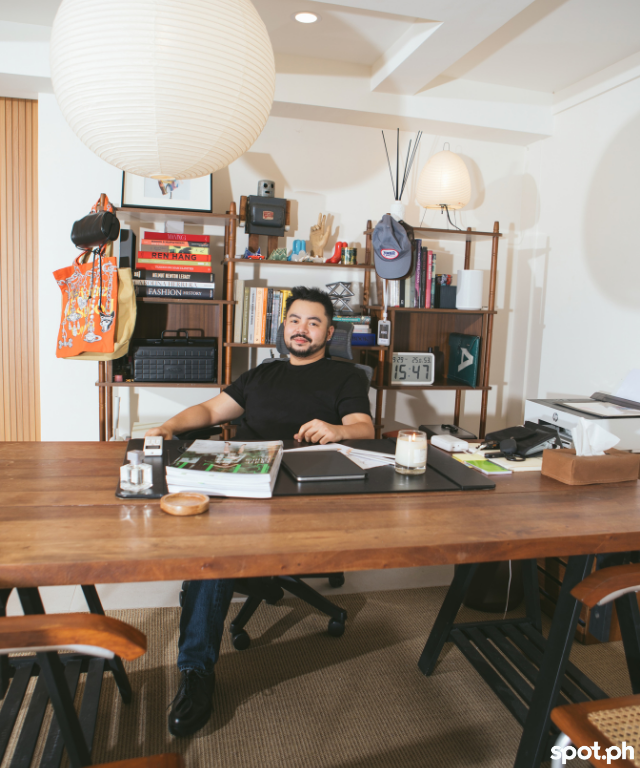
So how exactly does one dress a nine-piece band, a sought-after boy group, and clients with their own requests, quirks and measurements? Not alone, that’s for sure. Arceo owes it to his team of 10—three design associates, four finishers, two people on sewing machines, and one “all-around” person—to get things done. Each one has their own expertise, and their common ground is the dedication to quality and craftsmanship Arceo himself possesses. They’ve become like family to the designer. Some of them even sleep over when days get long during fashion week season and during busier months of the year. When time comes for them to go home, Roko admits to missing their company and laughter.
When some people question his prices, Roko is more than ready to explain how each garment is made, quick to give credit to his staff, and turn suspicion into a teachable moment. "Our dresses take days, sometimes weeks to make, so isipin mo na lang yung labor ng bawat tao. Yung craft, yung kamay,” he explains. Not everyone sees the work that goes into making clothes, or consider the skilled work rewarded with fair wages, but there’s purpose in helping others understand the value of fine craftsmanship and lessening the waste we dump on the world.
Jerome Gomez is Spot's EIC. He counts knowing how to roast a chicken, make Korean army stew, and mix a good Negroni among his great accomplishments in life.

Clara is fond of dissecting song lyrics and finding out how films are made. She also likes astrology, green tea, and dogs.