ICYMI: Japan's Tax-Free Shopping Rules Have Changed—Here's What You Need to Know
The new process has taken effect last November 1.
Published on Nov 3, 2026
(SPOT.ph) Heads up, shoppers: if your favorite part of a Japan trip is a suitcase stuffed with tax-free cosmetics, 7-Eleven snacks, and designer bargains, get ready for a change. Starting this November, you’ll have to pay the tax first and complete a customs check before leaving Japan to get your money back.
The new system could catch frequent Japan-goers off guard, especially those used to getting tax exemptions at the actual shops. If you’re already planning your next Don Quijote shopping spree, here’s what you need to know about Japan’s updated tax-free shopping rules before you fly.
What is tax-free shopping in Japan?
Tax-free shopping allows eligible international visitors to buy certain goods without paying Japan’s standard 10% consumption tax (or the 8% rate that applies to some items like food and drinks). It’s Japan’s way of making shopping even more tempting for travelers—at least at participating stores.
Tax-free privileges are generally reserved for non-residents, such as foreign nationals entering Japan as a Temporary Visitor. Eligible cruise ship passengers can also qualify under specific entry permissions. Overseas Japanese citizens who have lived abroad continuously for at least two years may qualify, too.
For the most part, getting the tax exemption has been pretty seamless: just shop at a participating store and get the consumption tax waived at checkout. (Some stores process the exemption at a separate refund counter, but this is usually still within the same store.) Starting November 1, though, the country is shifting to a new refund method for tax-free purchases.
How Japan’s new tax-free shopping system works
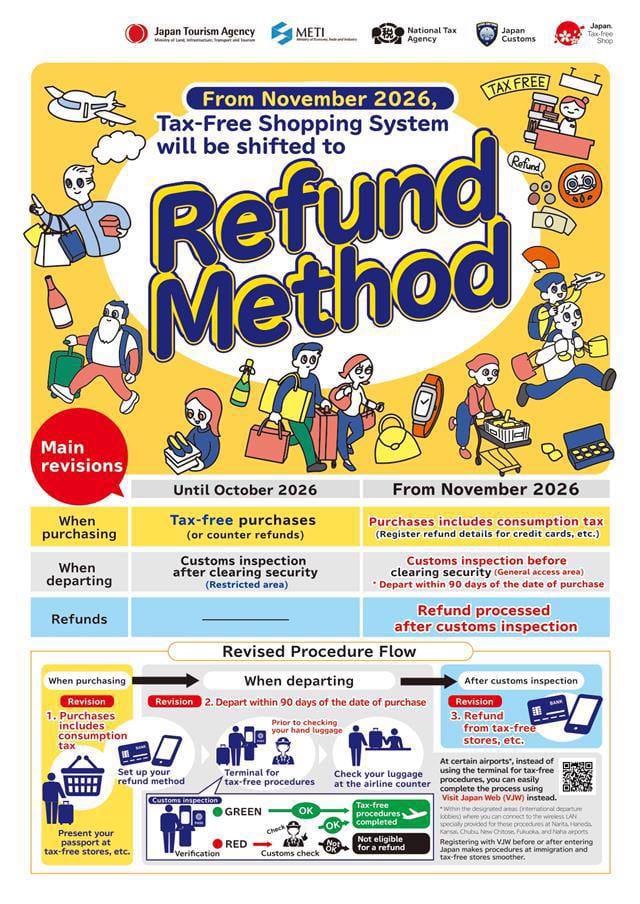
Instead of direct exemption at store counters, international travelers will soon transition to a pay-first, claim-later model to get their discounts in Japan. It’s an extra step for shoppers—but if you’re planning a huge haul, getting that tax money back could make it worth the effort.
First, shop as you normally would. At checkout, present your original passport and pay the full price, including tax. Then follow the store’s instructions to set up your refund, which may involve registering your credit card or bank account details or arranging an app-based refund.
When it’s time to leave Japan, head to the tax-free procedure terminal at the airport or seaport before checking in your luggage. Scan your passport and follow the instructions on the screen. If the terminal displays a green result, you’re good to go. A red result means customs needs to inspect your purchases before clearing your refund, so you’ll have to bring them to the designated inspection area.
At seven major international airports, including Narita, Haneda, and Kansai, you can also complete the initial procedure online through Visit Japan Web. Don't worry; in the spirit of Japanese efficiency and consideration, a dedicated Wi-Fi service is provided to complete the procedure.
The passport scan should be quick, but try to allow extra time in case customs flags your purchases for checking. And do yourself a favor: note exactly where you packed your tax-free goodies. No one wants to be digging through a messy suitcase, especially with a flight to catch.
One last thing: Complete the customs procedure within 90 days of purchase and take your tax-free goods out of Japan. And as tempting as it might be to crack open those Donki snacks or try out your new cosmetics on vacation, save them for when you get home. Under the new rules, products used or consumed in Japan won't qualify for a tax refund.
Getting your refund
Once Japan Customs confirms that your purchases are being taken out of the country, your refund will be processed by the tax-free store or a refund service provider working on its behalf. The payment method and processing time will depend on the store or provider. Check with the store when you shop so you know how your refund will be issued and whether you need to register any payment details in advance.
What items qualify for a tax refund?
To get a refund under Japan’s tax-free shopping rules, you must spend at least JPY 5,000 (approximately P1,995) before tax at the same tax-free store on the same day. The type of purchase doesn't really matter; you can generally combine eligible purchases such as clothes, shoes, electronics, snacks, and medicine to meet the minimum spending requirement.
Under the new system, the previous JPY 500,000 (P199,465) daily purchase limit for consumables at a single store has been abolished. Stores will also no longer be required to seal consumables such as cosmetics, medicine, and food in special plastic bags. Still, organizing them together makes potential inspections much easier.
If you buy high-value items priced at or more than JPY 1,000,000 (P398,930), keep warranty certificates handy, as customs officers may ask for them.
Pro tip: Keep track of what's on each receipt. Customs inspections are conducted per purchase transaction. If even one item on a receipt is missing during checks, none of the tax-free goods on that receipt will be eligible for a refund. Yup, that means if you buy several snacks and eat even just one before leaving Japan, you could lose the refund for the other items on that receipt, too.
There are a couple of other restrictions to keep in mind. Your tax-free purchases must be goods you can personally take out of Japan when you leave, so you can't claim a refund for items you won't be bringing with you. Gold and platinum bullion are also excluded.
For more information, visit the website of Japan's Ministry of Land, Infrastructure, Transportation and Tourism.
Also read:
Everything You Need to Know About Tokyo's New 3% Accommodation Tax for Tourists
Celia Nachura writes to pay for plane tickets, tennis classes, and a pile of books she’ll never have the time to read. She is also the emotional support human to two dogs, Daisy and Nacho.