In Central Vietnam, Rainy Days Mean Canceled Plans—But Not a Bad Time
Here’s your guide to finding Da Nang and Hoi An’s charm even when the weather dampens your plans.

by Leana Vibal
Published on Oct 23, 2026
(SPOT.ph) Located nearly halfway between Ho Chi Minh and Hanoi, Da Nang sits along the South China Sea, with the Han River winding through the city, surrounded by mountains as far as the eye can see. With its dramatic mountain-meets-sea landscape, it’s easy to see why outdoor adventures are a major draw here.
For many travelers, Da Nang is Vietnam’s go-to beach destination, thanks to My Khe Beach—its most famous shoreline—which earned a spot in The Daily Telegraph’s 2024 Top 50 best beaches in the world. The city also makes a convenient base for exploring other Central Vietnam gems, including the lantern-lined streets of Hoi An Ancient Town and historic Hue.
We were in Da Nang recently, and you can bet our itinerary had it all: a half-day excursion to the Marble Mountains, an early-morning stroll along My Khe Beach, and a trip to Ba Na Hills. We even set aside a day to explore nearby Hoi An, with boat rides along the river and visits to fishing villages on the agenda. In other words, we had a lot of ground to cover and very little reason to be indoors—until the weather refused to cooperate.
Suddenly, almost all our carefully planned stops are off the table—so now what? How do we still make the most of our trip?
Surely, moping around the hotel room wasn't an option.
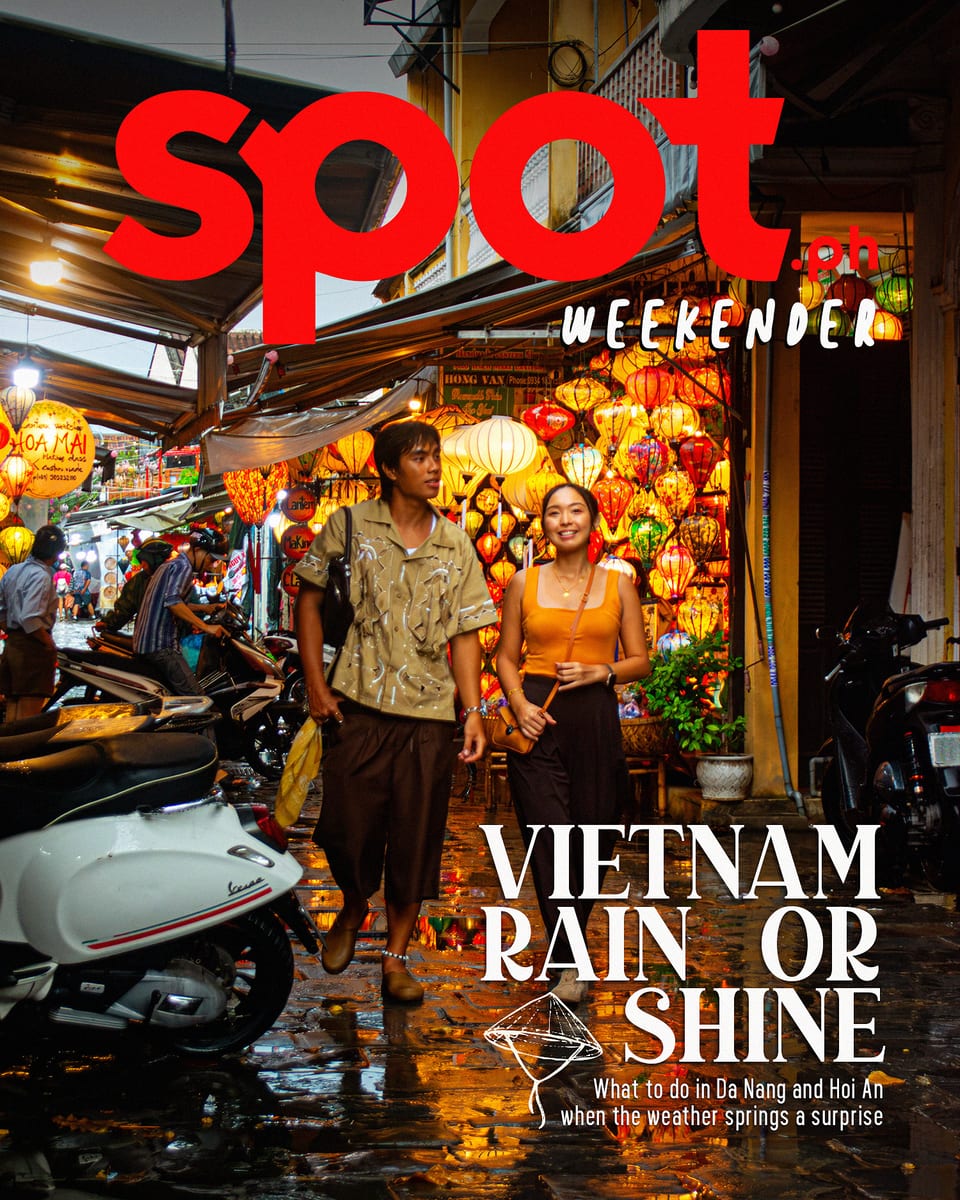
Rain shouldn’t stop your Da Nang adventures
Conventional travel advice points to March through May as a good time to visit Da Nang, when conditions are generally drier. But traveling during the most popular months has its own drawbacks, from pricier flights and accommodations to crowds at the biggest attractions. So when an uncharacteristically dry October presented itself, it was the perfect excuse to book that Cebu Pacific Air flight and go. As we learned the hard way, a month of dry weather can easily turn into a week of heavy monsoon rains.
And while we couldn’t exactly reschedule downpours, we could at least figure out what to do with the trip.
One thing we learned early on is that Da Nang doesn’t hit a standstill when it rains. Some attractions, particularly those that aren’t in the water or in open-air venues, carry on. Here are some of the activities you can do in Da Nang on a rainy day:
Explore Am Phu Cave (Marble Mountains)
The Marble Mountains are a network of caves, pagodas, and temples built by Buddhists and Nguyen Dynasty royals. On sunny days, the mountains offer panoramic views of Da Nang, beautifully carved stone statues of Buddhist deities, plus plenty of Instagrammable moments inside caverns where shafts of light pierce the darkness, creating dramatic spotlights. The trek up the mountains isn't easy, even with the leg up from the elevator, which takes you most of the way. It’s a lot of stone stairs and dirt paths, but the views are worth it. Naturally, on rainy days, the difficulty is taken up a notch.
We wouldn’t recommend tackling the entire Marble Mountains complex during a downpour. Some paths and cave interiors can get dangerously slippery, while others may flood. Thankfully, you don’t have to brave the full trek to explore a part of the complex. Am Phu Cave, or “Hell Cave,” is located at ground level and is a more accessible option when the weather isn’t cooperating.
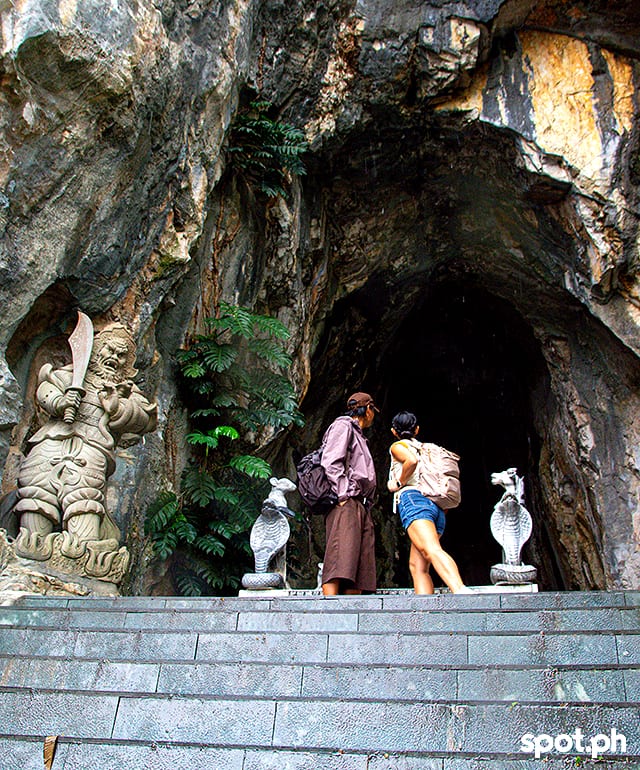
Inside, you’ll find a dramatic recreation of Buddhist hell, complete with statues of demons and fanged monsters lurking throughout the cavernous interior. Towering ceilings and deep trenches depict the soul’s journey through the underworld before reaching heaven. There’s even a small shrine where visitors can reflect on their sins before attempting the steep ascent to “heaven”—which, in this case, is a viewing deck that ends in a bit of a dead end. It’s an intriguing stop, even if the climb doesn’t quite deliver the payoff you’d expect.
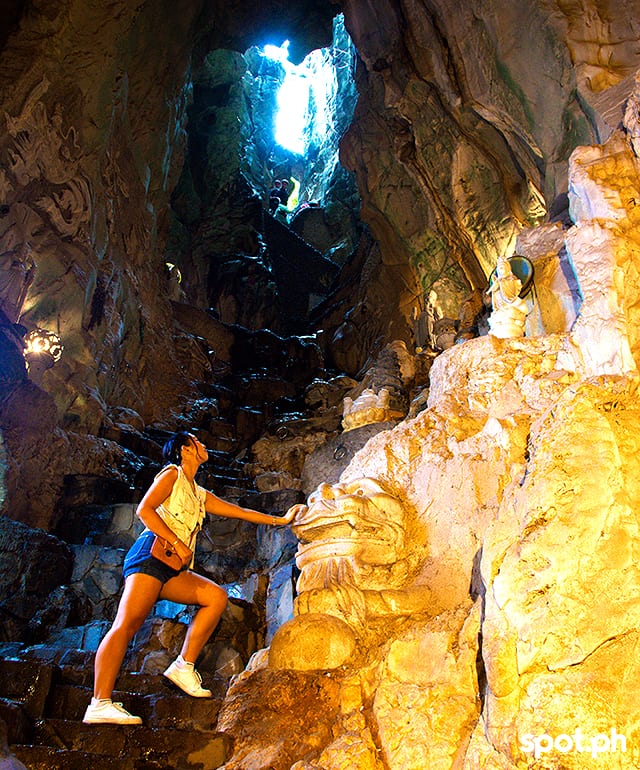
We guess heaven will have to wait.
Eat Your Way Through Vietnam
What’s a trip to Vietnam without stuffing yourself with fresh, umami-rich Vietnamese fare? But if you think Vietnamese food begins and ends with bánh mì and phở, let Da Nang introduce you to the bold, flavorful dishes of Central Vietnam.
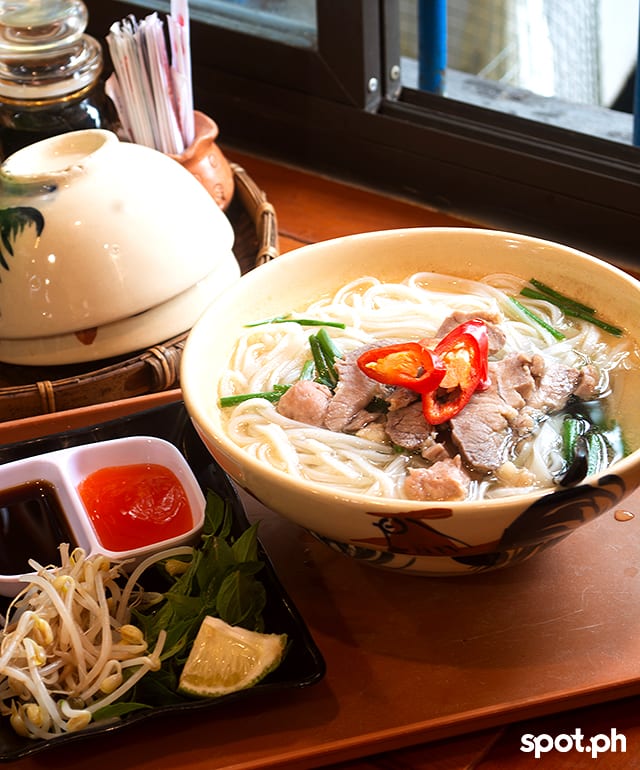
Take your time exploring the city’s dining scene, and make sure to try local noodle dishes like bún chả cá, a fish-based broth served with fish cakes and fresh fish. You can also try the more familiar Northern Vietnamese bún chả, which pairs cold rice noodles with smoky grilled ground pork and a tangy fish-sauce dipping broth.
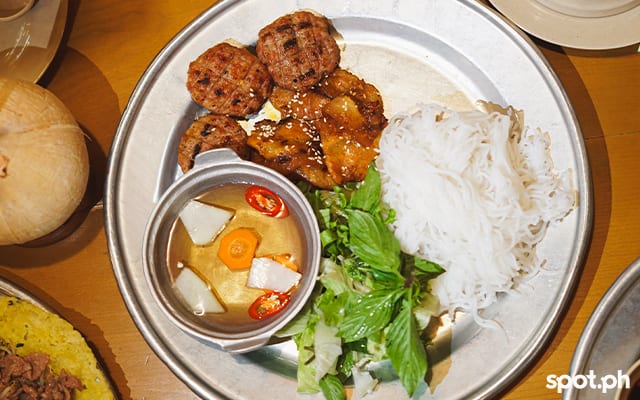
Another must-try is Vietnam’s variety of fresh and fried rolls. Whether stuffed with pork and shrimp or packed with vegetables, these bite-sized treats let you experience firsthand the freshness that Vietnamese cuisine is known for.
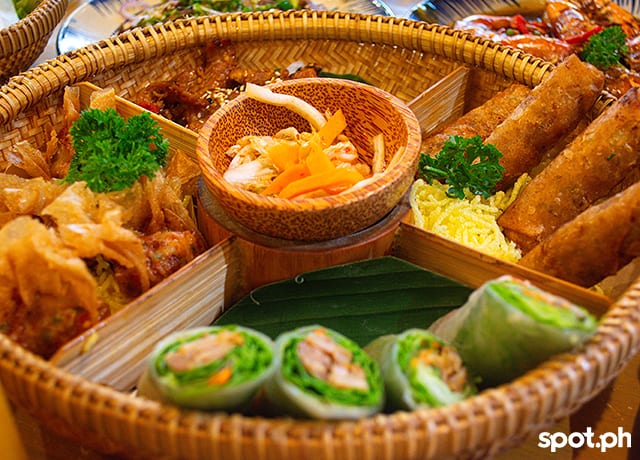
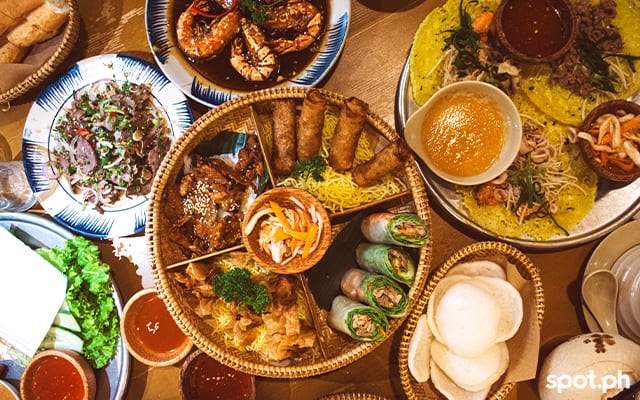
For a sampling of these Vietnamese favorites, head to Bếp Cuốn Đà Nẵng. Whether you’re sitting inside the air-conditioned dining room or outdoors in the lantern-bathed hall, this Michelin-selected restaurant delivers quintessential Asian dining, chaos, flavors, and all. Order the Mẹt Bếp Cuốn platter to try four different rolled bites, served with tangy fish and tamarind sauces. Their bún chả is also worth a try, as is the bánh xèo, a crispy Vietnamese rice crepe that you can fill with grilled beef, squid, and other proteins.
Of course, no Vietnamese food trip is complete without cups of Vietnamese coffee. Da Nang has no shortage of great cafés, from no-frills local favorites to more modern hangouts. For a cozy spot with great ambiance and coffee to keep you energized throughout the day, drop by NAM House Cafe. Its menu features everything from the classic cà phê sữa đá (Vietnamese iced coffee with milk) and coconut coffee to more adventurous concoctions like egg coffee and peanut coffee.
Visit Dragon Bridge
One of the most recognizable landmarks in all of Da Nang is the Dragon Bridge, a massive steel arch bridge spanning the Han River. It is designed after a golden dragon, which in Vietnamese culture represents power, nobility, and good fortune.
The bridge is stunning in the daytime, with the dragon’s golden paint glowing brighter in the sunlight. But at night, the dragon takes on a whole new life—especially during the weekends.
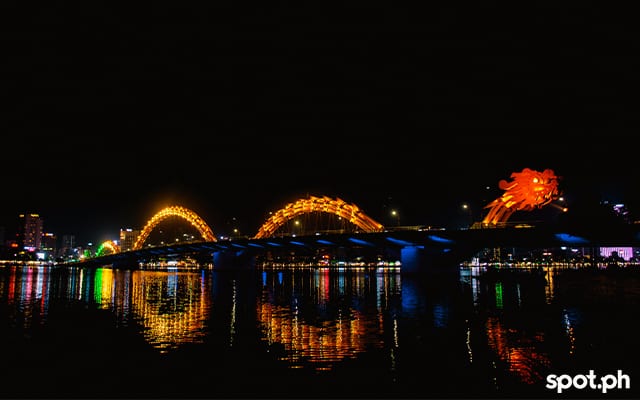
On Fridays, Saturdays, and Sundays, the dragon comes to life performing a mesmerizing pyrotechnic and water show at 9 p.m. During this period, the dragon breathes fire nine times from its head toward the east bank, followed by three rounds of water sprays for good luck. This free show happens rain or shine (except, of course, during strong typhoons).
Outside of the show, the dragon is still a sight to behold once the sun sets. From 7 p.m. onward, thousands of LED lights illuminate the dragon, changing colors at regular intervals.
.jpg?fit=cover&width=960&q=82)
The Dragon Bridge and the show are best viewed along the eastern bank promenade, a small park off the bridge where you get a full view of the dragon’s head. Alternatively, you can also check out surrounding rooftop bars and river cruises for a different vantage point.
Hoi An is still in the cards
As we took cabs around Da Nang, one driver offered a helpful piece of advice: head to Hoi An as soon as possible. The roads leading to and out of the city were at risk of flooding, and if we waited too long, we might miss our chance to visit altogether.
Our Hoi An itinerary initially included plenty of time by the river, with boat rides around the Ancient Town and a fishing village on the outskirts. But there was one more thing we wanted to do while we were there: shop. Taking our driver’s advice to heart, we moved up our side trip and booked a private van transfer online.
Shopping in Hoi An
Hoi An recently became Internet-famous for affordable custom clothes. And while it’s true that there are a lot of tailors in Hoi An, the unpredictable weather and our limited time in the area didn’t make having clothes made a practical choice. After all, bespoke clothes meant coming back for fittings, and we weren’t sure we could do that given the rain. That being said, custom clothes aren’t all you can shop for in Hoi An.
Strolling around Ancient Town, you’ll find a lot of stores selling ready-to-wear clothes. Sizes tend to run a bit smaller and closer to Asian proportions, but mid-size shoppers might find a few gems here and there. There are also a handful of leather goods stores that sell everything from dupes for popular bag silhouettes and shoes to leather jackets at reasonable prices.
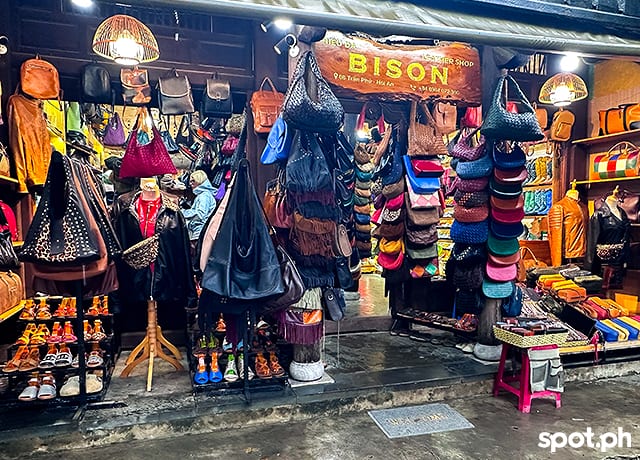
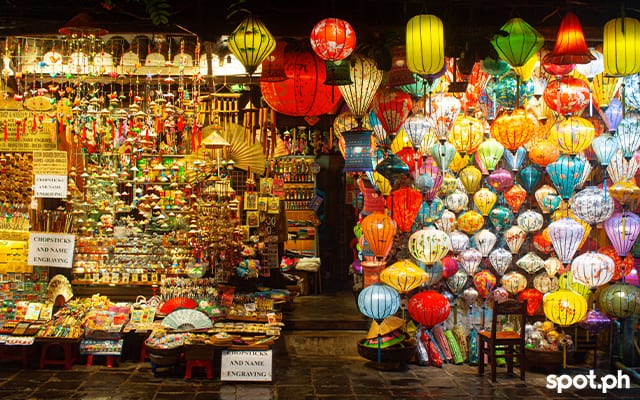
Trinket collectors and tchotchke fans will also have a field day as the Ancient Town is full of stalls and stores selling trays, miniatures, wind chimes, accessories, custom stamps, and many more.
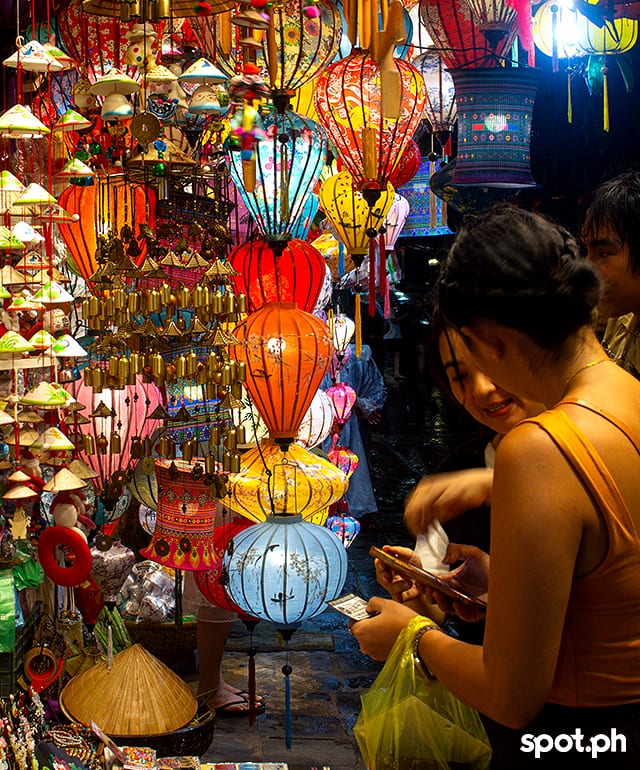
One particular store you shouldn’t skip is Mountain’s Color Hoi An Handmade Shop. This store carries handmade products made by ethnic groups such as the H'mong, Zao, Thái, Tày, and Nùng from northern Vietnam. The products are made from materials found in nature and created through traditional methods—and mind you, they’re both cute and functional. The best part? A fraction of the proceeds from your purchase go back to the community.
Make your own Hoi An Lantern
Hoi An’s small-town charm can be seen in its narrow streets, yellow buildings, and the many colorful lanterns hanging over streets, doorways, and storefronts. Beyond merely being decorative, these lanterns are a reminder of Hoi An’s roots as a trading port for Chinese and Japanese merchants who brought the lanterns to Vietnam. Vietnamese merchants added their own spin to these imports and made them with a bamboo frame, replacing paper with silk, refining bamboo frames, and infusing local aesthetics. Depending on their color, the lanterns can signify different things like protection, wealth, prosperity, and the like.
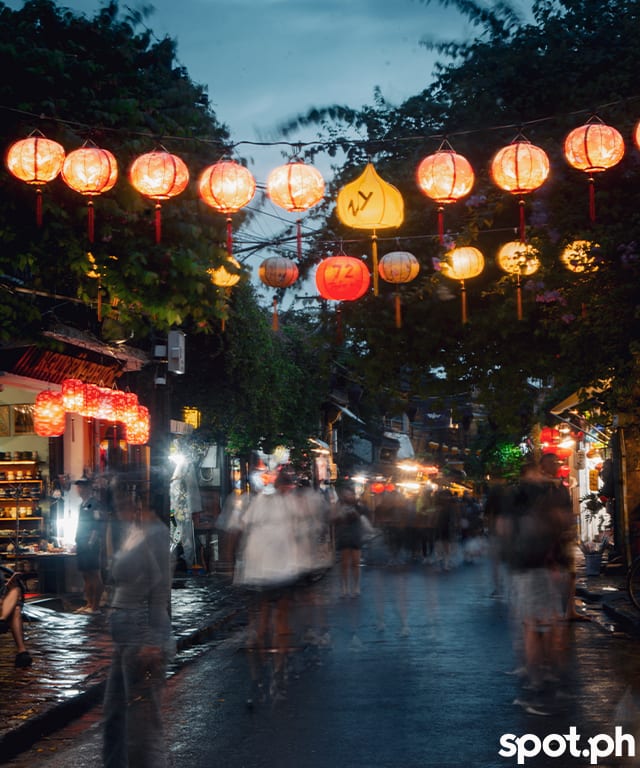
After sunset, the lanterns illuminate Hoi An’s streets with a warm glow. On clear nights, the Thu Bon River joins in the spectacle, with lantern-lit boats gliding across the water and flower-shaped lanterns floating along its surface. It’s a picturesque scene that has become synonymous with Hoi An—and one that’s best appreciated when the weather cooperates.
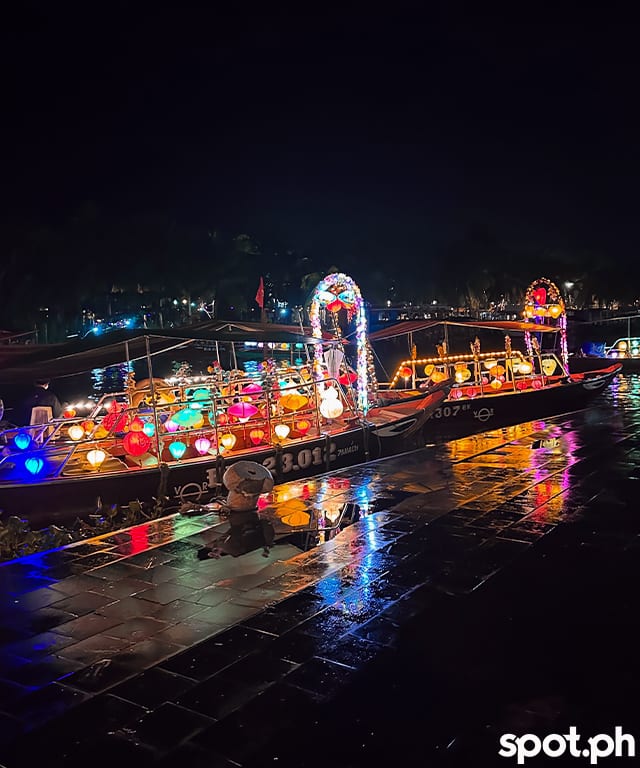
Many shops sell lanterns of different colors and sizes starting at VND 40,000 (roughly P98) to about VND 200,000 (P490) for the larger, more intricate designs.
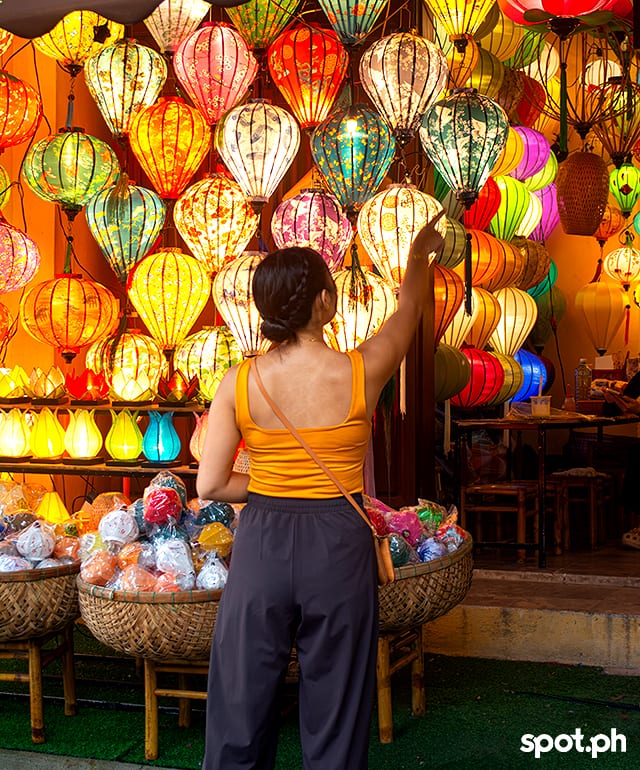
But if you have time, we recommend making your own lantern, especially if you want a souvenir with a memory attached. Several shops offer lantern-making workshops that walk you through assembling the bamboo or metal frame, attaching the electronics and fabric, and painting your designs. We took a lantern-making class at Pho Hoi Lantern, which starts at VND 190,000 (about P469).
Last-day magic: The Sun Finally Peeks Through
The last day of any trip is bittersweet, more so for a trip that didn’t pan out as planned. Whether the weather had finally taken pity on us or was simply mocking our luck, the sun decided to make a brief appearance on our last day. Thankfully, our Cebu Pacific flight wasn’t leaving until late that night, giving us just enough time to squeeze in some of the outdoor activities we’d had to skip because of the rain.
Visit My Son Sanctuary
My Son Sanctuary is a cluster of Hindu temples about 1 to 1.5 hours from Da Nang. Despite the long car ride, it's worth it just to see the mysterious complex of red-brick temples and towers dating as far back as the 4th century.
.jpg?fit=cover&width=960&q=82)
This UNESCO World Heritage Site includes over 70 structures built by the Cham people, with some still buried underground. The temples showcase a variety of architectural styles inspired by Mount Meru, the mythical sacred mountain believed to be home to Hindu gods. Their intricate carvings also depict figures and stories from Hindu mythology.
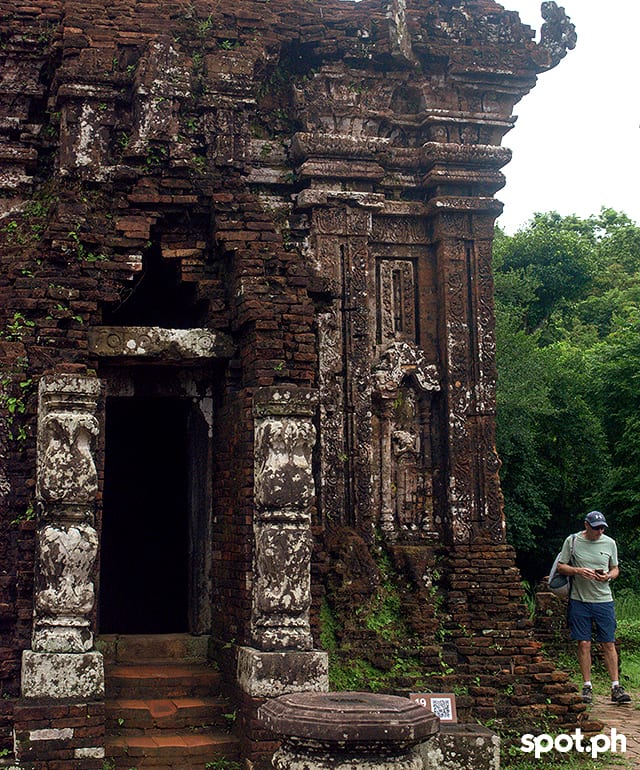
But perhaps the most intriguing feature of My Son Sanctuary is its brickwork. The ancient Cham builders fitted and carved the bricks together with such precision that the binding technique they used remains a mystery and is a subject of investigation. The construction methods have long fascinated researchers, not least because understanding them could help preserve these remarkable structures for generations to come.
.jpg?fit=cover&width=960&q=82)
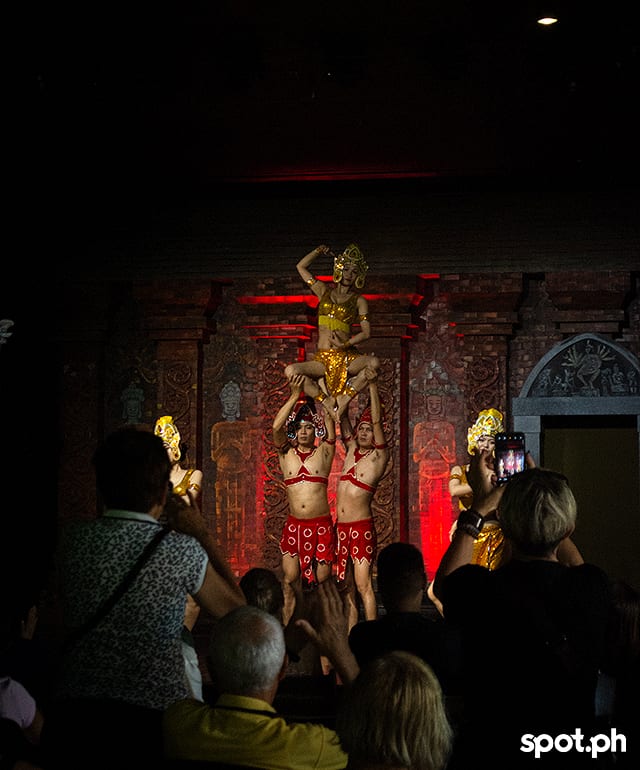
Tours to My Son Sanctuary also include access to a cultural show featuring traditional Cham dances. The 20-minute performance runs at several time slots throughout the day; ask your guide if you can catch a later show in case you run into a massive tour group during your visit. This way, you can have more time to take in the views and take photos without too many tourists.
Keep in mind that My Son Sanctuary closes to the public during periods of heavy rain, so check its official pages before heading out. If you book a tour online or through an agency, they’ll typically let you know early in the morning if the trip is pushing through. Our advice? Pre-book a guided tour for peace of mind—and to make sure your 90-minute drive won’t be for nothing.
A stroll along My Khe Beach
Thankfully, the overcast held up for most of the day and just before we left for the airport, we got one last chance to beach bum on My Khe Beach.
Unlike many beaches in the Philippines, which often require a bit of a trek from the main road, My Khe Beach is conveniently located right along the roadside. Its roughly two-kilometer stretch of sand is lined with restaurants and establishments overlooking the coast, making it easy to grab a bite or enjoy the seaside views without venturing too far from the city.
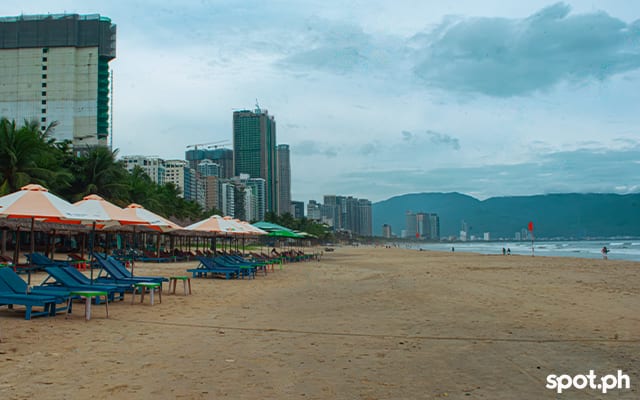
My Khe Beach is generally safe for swimming and a great spot for surfing, but after extended rain and strong winds, the waves can become towering. Make it a point to check the beach warnings before you rush in. On days when the waves are particularly strong, swimming and surfing are not allowed.
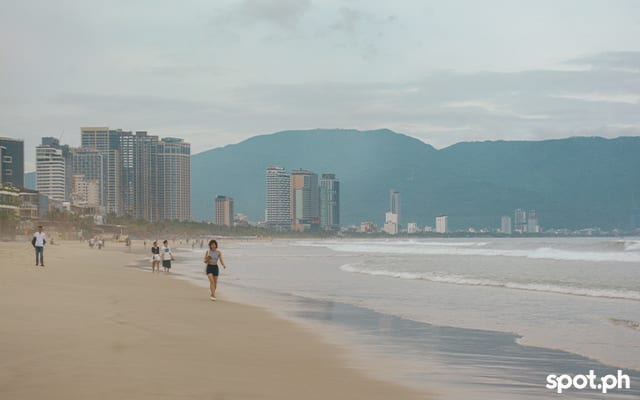
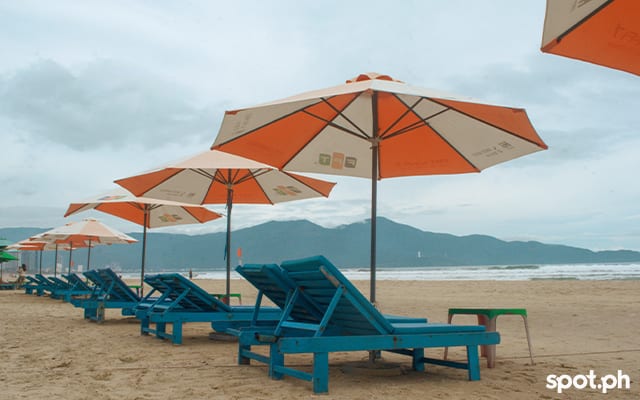
But My Khe Beach is still worth a stop even if you don’t want to get your feet wet. The beach is lined with beach beds and umbrellas where you can laze around and people-watch. The lounge chairs and beach beds are available for rent starting at around VND 30,000 (P74). Alternatively, some beachfront establishments offer free use of their beach facilities when you purchase drinks or a meal—perfect for one last afternoon in Da Nang.
A single overcast day wouldn’t erase the disappointment of a tropical getaway turning into monsoon mayhem, but not all was lost. There’s still plenty to see and do in Da Nang and Hoi An, and suffice it to say, even with all the rain, it was still a good time away from the usual 9-to-5. While it’s true that most outdoor activities are best enjoyed under sunny skies, moping around the hotel or staying cooped up in your room isn’t your only option when the weather turns sour.
Sometimes, you just have to make do with what you have and make the most of the cards you’re dealt. We may not have gotten the sun-soaked getaway we’d envisioned, but we still got to discover new places, eat our way through Central Vietnam, and enjoy a change of scenery—even if it came with a side of rain. And if we had this much fun despite the weather, imagine what Da Nang and Hoi An would be like when the skies finally cooperate. Looks like we’ll just have to come back and find out.
How to get to Da Nang, Vietnam from Manila
Da Nang is approximately two hours and 35 minutes away from Manila by plane, making it an accessible option for a quick getaway. Several airlines offer direct flights from Ninoy Aquino International Airport (NAIA) to Da Nang International Airport, including Cebu Pacific Air.
Cebu Pacific Air operates two daily flights between Manila and Da Nang, with a 7:30 a.m. departure for early birds and a 9:30 p.m. flight for those who prefer to travel at night. Return flights are also available in the morning and evening, giving travelers more flexibility when planning their itineraries.
For more information, visit Cebu Pacific Air’s website.
Leana is Spot's go-to for Arts & Culture and Things to Do. On any given day, she’s either glued to her screen—or gliding underwater like the mermaid she swears she is. Contact: leana@spot.ph