Inside Kapusod, Howie Severino's Lakeside Paradise Where Thoughtful Living Takes Root
At Kapusod, sustainable living and Filipino craftsmanship come together in one enchanting sanctuary
by Leana Vibal
Published on Jul 24, 2026
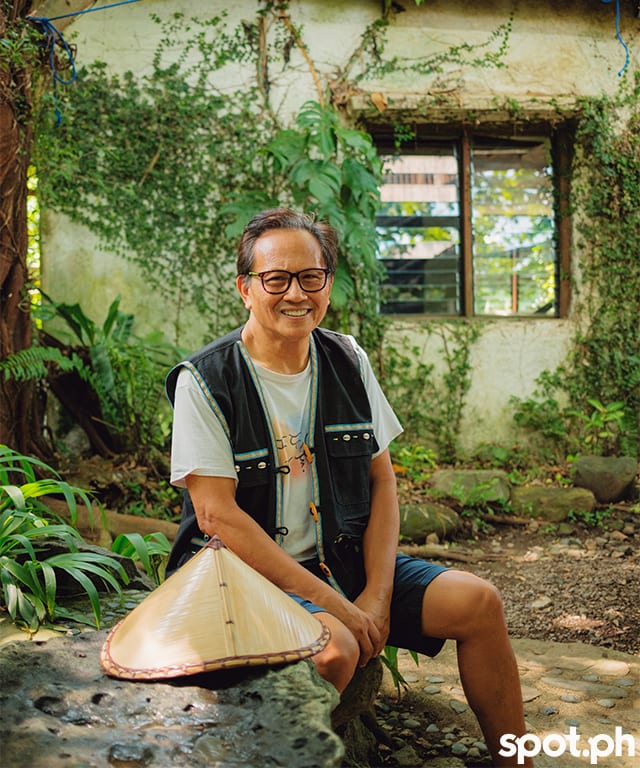
(SPOT.ph) Most people know Howie Severino through his work in television.
For more than three decades, the broadcast journalist has documented the lives of local communities, the landscapes they inhabit, and the environmental issues that shape them. Whether he's following families living beside the Philippine National Railways tracks in Huling Hala-bira (2007) or investigating the pollution left behind by disposable face masks in the award-winning documentary Mask Land, there's no question Severino has built a body of work rooted in curiosity, advocacy, and a deep sense of place.
But somewhere in Batangas, the veteran journo has found another medium for that same impulse to tell stories. Here, instead of just watching him from a screen, visitors get to step inside the narrative itself—which in this case is a carefully created little universe where native trees, Filipino craftsmanship, sustainable design, and slow living come together to tell what might be his most personal story to date.
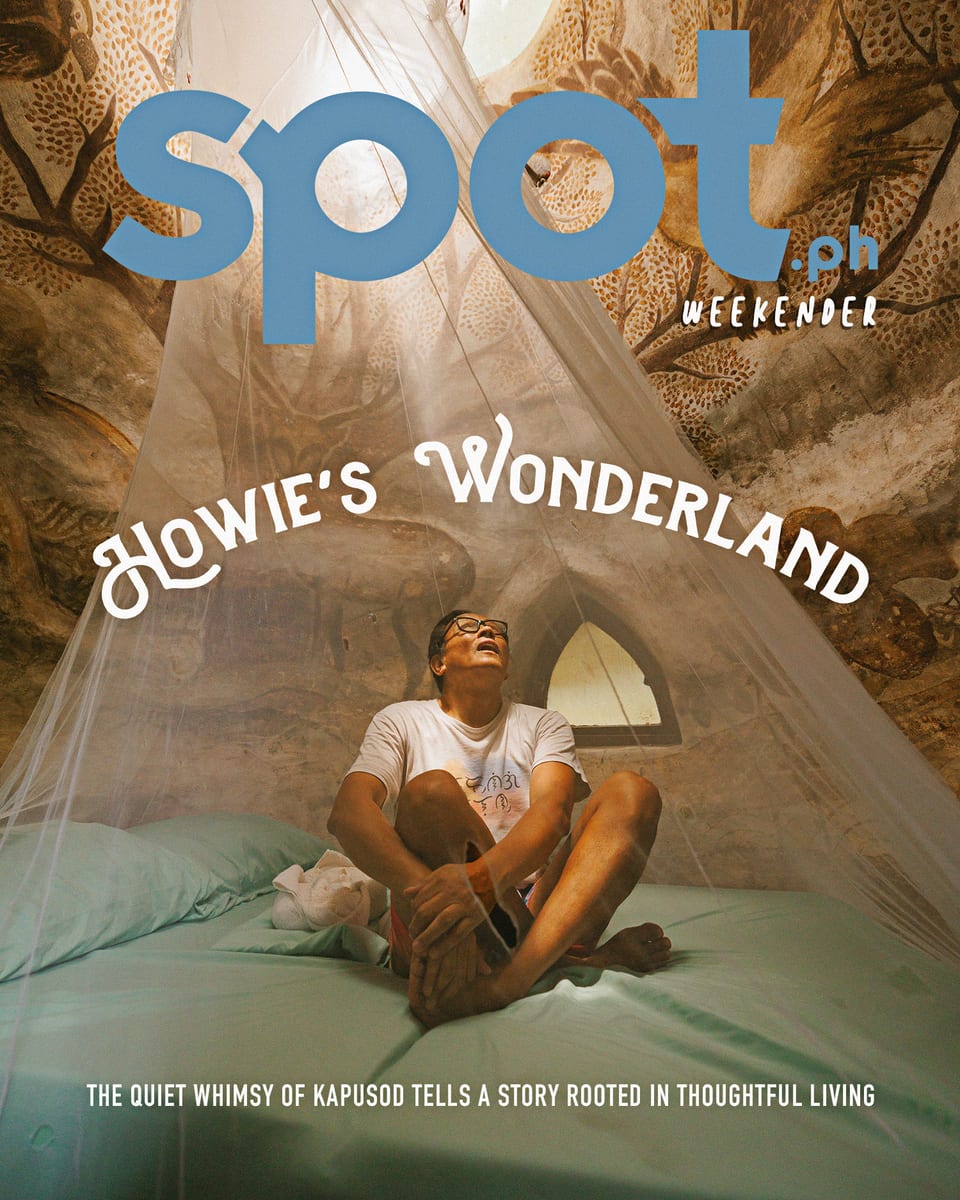
Kapusod: Howie’s Wonderland in Batangas
Along the shores of Taal Lake, some 10 kilometers from the volcano island, lies Kapusod. The 1,500-square-meter property was acquired by Severino and his wife, environmental lawyer Ipat Luna, back in 2011, after falling in love with its storied landscape, sweeping views, and the promise of endless kayak trips across its majestic waters.
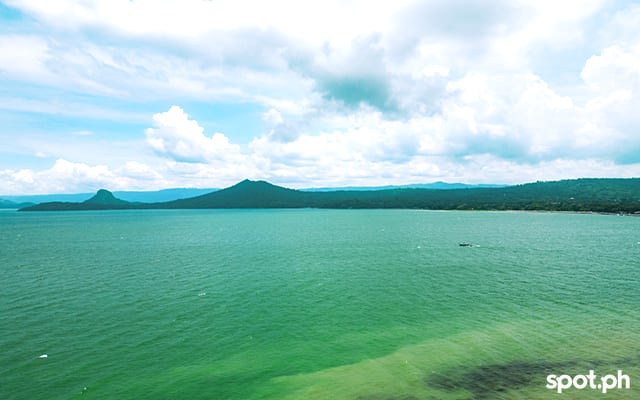
“Malinis dito, walang mga kable, walang mga fishpen, even if it’s a fishing community. It's 15 minutes away from Lipa, from the Starbucks, from city life, pero ang feeling mo dito malayo. Wala ka masyadong maririnig na mga fishing vessels,” he says proudly while looking out into the lake.
Both longtime environmental advocates and lovers of the outdoors, Howie and Ipat have for the past years treated Kapusod as their refuge from city life. They love the place so much that during the COVID-19 pandemic, they made it their primary residence.
The pandemic years were pretty eventful years for Severino, even as people like to say the world came to a halt. He survived a severe case of COVID-19 early in the pandemic, becoming widely known as Patient 2828. In the months that followed, he documented his recovery and launched media initiatives centered on the public health crisis. He also found himself at the center of another national story after being apprehended for briefly lowering his mask to take a sip of water during a bike ride in Quezon City—an incident that sparked widespread debate about pandemic policy enforcement. So it wasn’t surprising that he and Ipat eventually decided to retreat to Kapusod.
“Dito, you don’t feel locked in,” he shares. “Dito, nakakalabas ka—you have this great view, and social distancing talaga kung social distancing. Wala halos tao dito,” he recalls, motioning toward the empty shoreline.
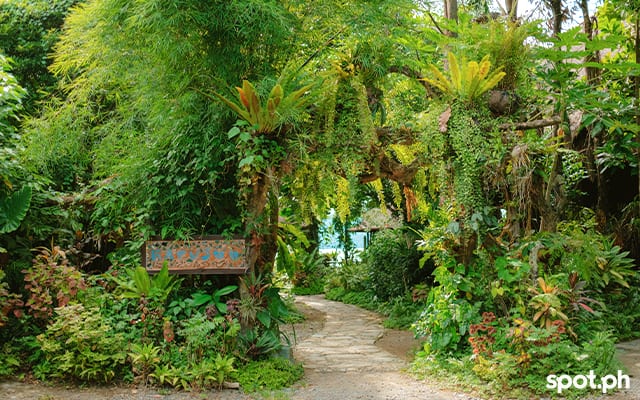
To say the property is beautiful is selling it short. Perhaps it’s the wide, breezy layout that makes it feel much larger than it actually is. Or maybe it’s the lush surroundings, where towering kamuning and narra trees conceal what can only be described as the stuff plantita dreams are made of—a flourishing garden of monsteras, ferns, orchids, and countless other ornamental plants. It’s hard to put a finger on it, but there’s a quality to the property that makes it feel untethered from the outside world—as if you’ve stumbled down a rabbit hole and found yourself in an enchanting, tropical paradise.
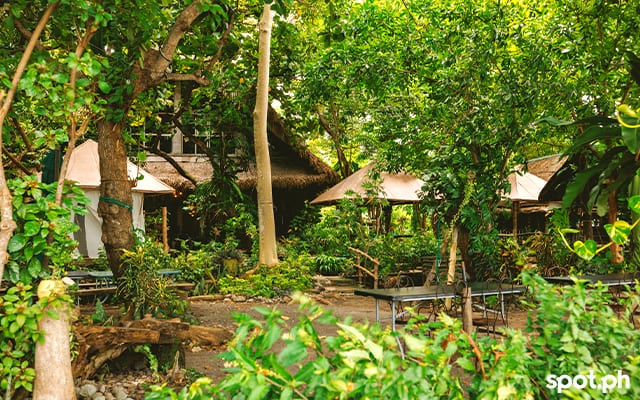
Sharing Kapusod with the world
“Private residence lang talaga ito nung simula. This is the place where we have hosted a lot of memorable events for family, colleagues, and friends. It was one of the favorite places of my father and father-in-law,” says Howie. “It means a lot to us because it's meant a lot to other people.”
Kapusod has long served as the Severinos’ little bubble. It was where husband and wife grabbed the chance to slow down, and where their son Alon spent his teenage years. It was their refuge, their home—and in many ways it still is. But they’ve never been known to gatekeep; and so they now share Kapusod with the world.
“Eventually, na-discover ng mga kapitbahay na may treehouse na sa community," says Howie. "Hanggang sa dinadayo na kami at binibisita, may mga nagpi-picture-picture. Medyo nawawalan na kami ng privacy so nilagay na lang ng wife ko sa Airbnb."
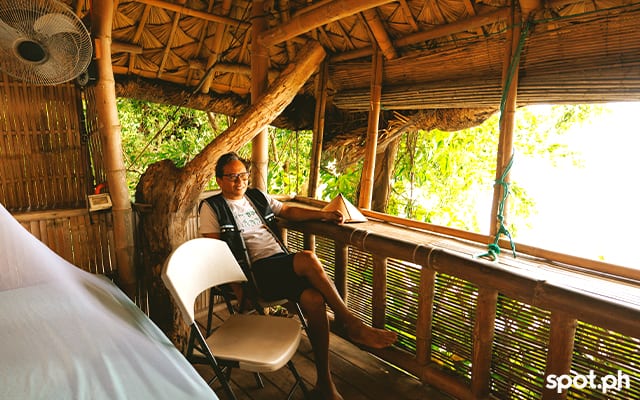
Since listing the property on Airbnb, Kapusod has rarely sat empty. “Hindi na kami nabakante,” he tells us. “Ngayon, kumikita na kami.”
As you may have guessed, profit was never the couple’s primary motivation for opening Kapusod to the public. Every peso earned from guests would just go to improving the property. But what began as a quaint lakeside treehouse with a detached bathroom has steadily grown into a collection of thoughtfully designed accommodations, including glamping cottages, a pool, an earth dome (more on that later), and a larger earth house.
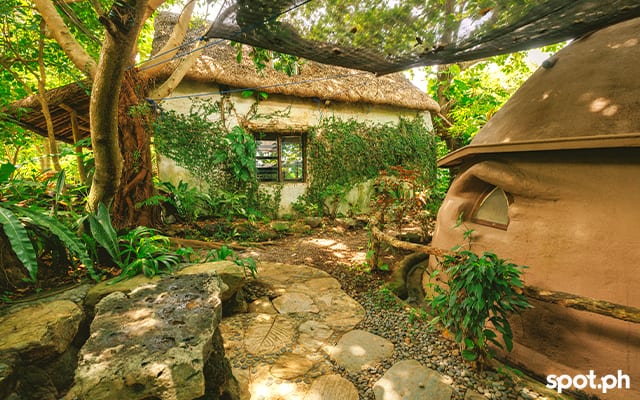
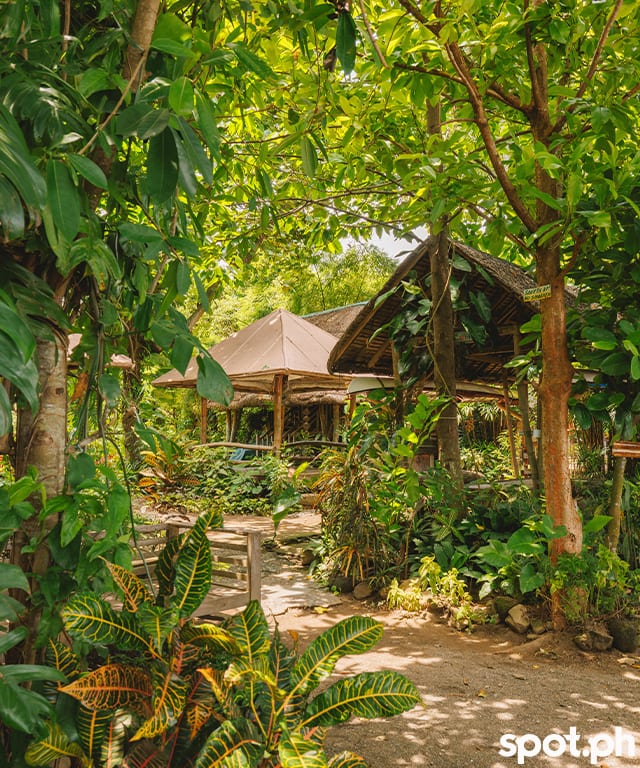
“This started out as a place for our family, so much of what we have here reflects our family's preferences. We didn't really make a lot of this for our guests,” clarifies Howie.
Kapusod is a testament to sustainable shelter
Every structure in Kapusod is built around the principles of sustainable, eco-conscious design—a reflection of Howie’s roots in environmental journalism and his wife’s career in environmental law.
This is evident in every corner of the property. Kapusod embraces a zero-waste approach, powers 80 to 90 percent of its operations with renewable energy, treats and reuses its wastewater, and favors natural, renewable materials in its architecture.
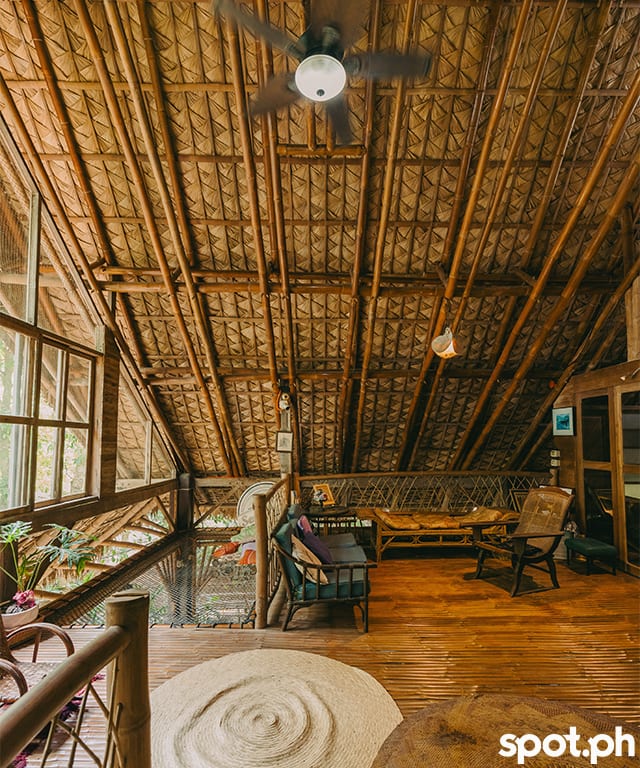
Chief among these materials is bamboo, which the couple has long believed deserves a bigger role in the country’s architectural footprint. They’ve used it to build the treehouse and glamping spaces, going so far as to work with artisans to develop bamboo pegs that replace traditional metal nails, making the Kapusod structures safer and more long-lasting.
The couple has also tapped into a community of environmental advocates, collaborating with fellow sustainability champions to turn Kapusod into a living proof of concept for sustainable shelter. That spirit of collaboration gave rise to one of the property’s most iconic features: the Earth Dome, now the most sought-after stay in Kapusod.
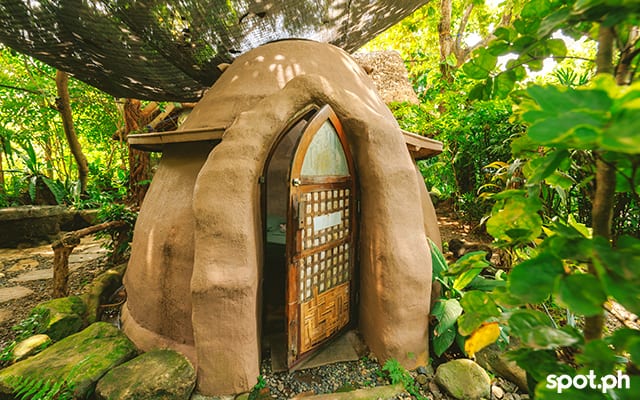
According to Howie, the dome began as the project of a Greenpeace fellow who had trained in sustainable shelter technology in California. Looking for a place to apply what she had learned, she needed somewhere to build a prototype. Ipat offered Kapusod as the site—and the experiment eventually became one of the property’s defining landmarks.
The Earth Dome is built using the superadobe method, requiring no cement at all. It is constructed from a mixture of sand, soil, and lime, packed into sacks and reinforced with barbed wire. Despite its dense, earthen construction, the space remains surprisingly cool. Its design harnesses natural airflow and ventilation, drawing on the same principle behind the traditional clay water jars once used in Filipino homes to keep drinking water cool.
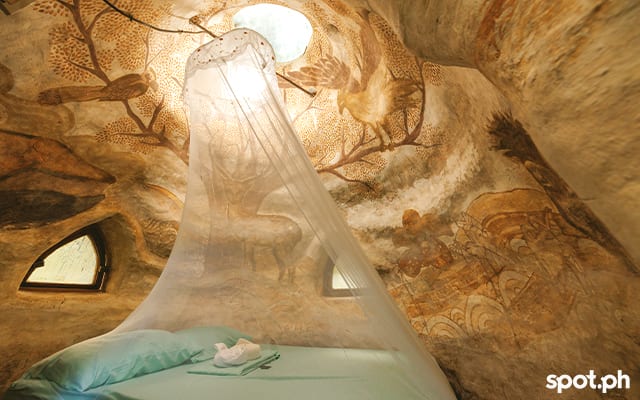
More than a decade later, the Earth Dome has proven remarkably resilient, requiring little more than routine upkeep. Its success eventually inspired the couple to build a second earthen structure—this time a much larger, dormitory-style accommodation that could host bigger groups and meet the growing demand for stays at Kapusod.
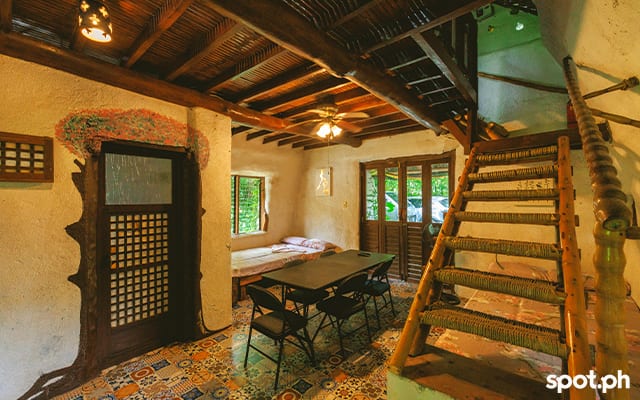
Even its construction reflects the property’s ethos of working with, rather than against, the land. Much of the soil used to build the structure was sourced on-site, and the excavation eventually gave rise to another of Kapusod’s defining features: a natural swimming pool.
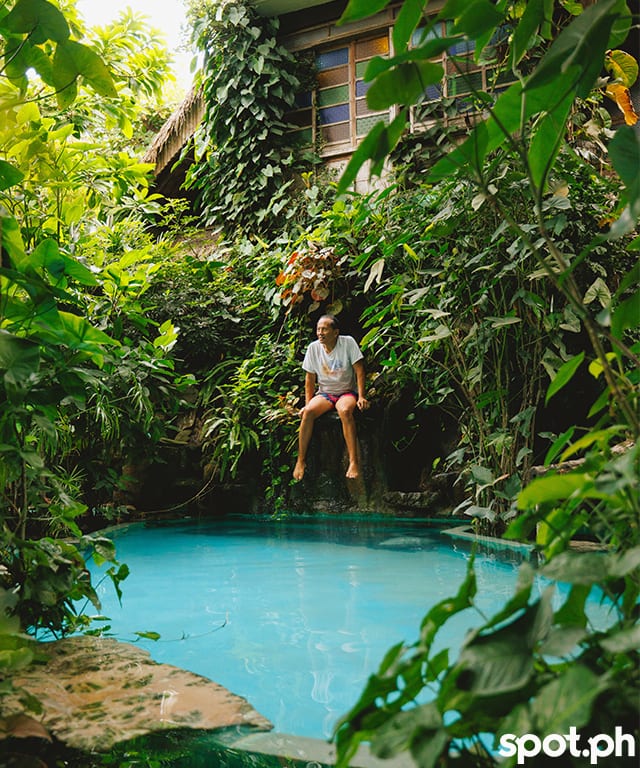
Calling it a “natural pool” might sound like a contradiction, considering it was built by hand. But the term refers not to its origins, but to how it works. Unlike conventional swimming pools, Kapusod’s pool is completely free of chlorine and other chemical treatments. The Severinos rely on a carefully designed ecosystem to keep the water clean.
Aquatic plants grow within the pool, their roots naturally filtering organic matter—a sight rarely seen in conventional pools, where such plants would struggle to survive. Hidden from view are the layers of charcoal that trap larger debris and a UV filtration system that eliminates harmful bacteria. Excess water is then channeled through a network of canals into the property’s fish ponds before it gradually seeps its way back into the ground where it came from—a miniature water cycle built into the landscape itself.
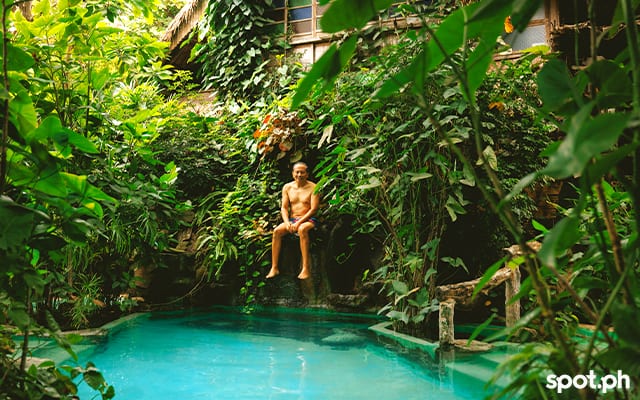
“’Di naman namin inimbento ’yan. These are all from practical experience, YouTube, and [learning from] other properties in Germany and abroad that also have natural pools,” Howie says.
But ask the guy who deserves most of the credit, and he’ll quickly point to his wife. “Siya naman talaga ang nakakaisip. G.R.O. lang naman ako dito,” he says with a laugh. Whether he’s underselling his role or not, it’s clear the property is the product of a partnership built on shared values.
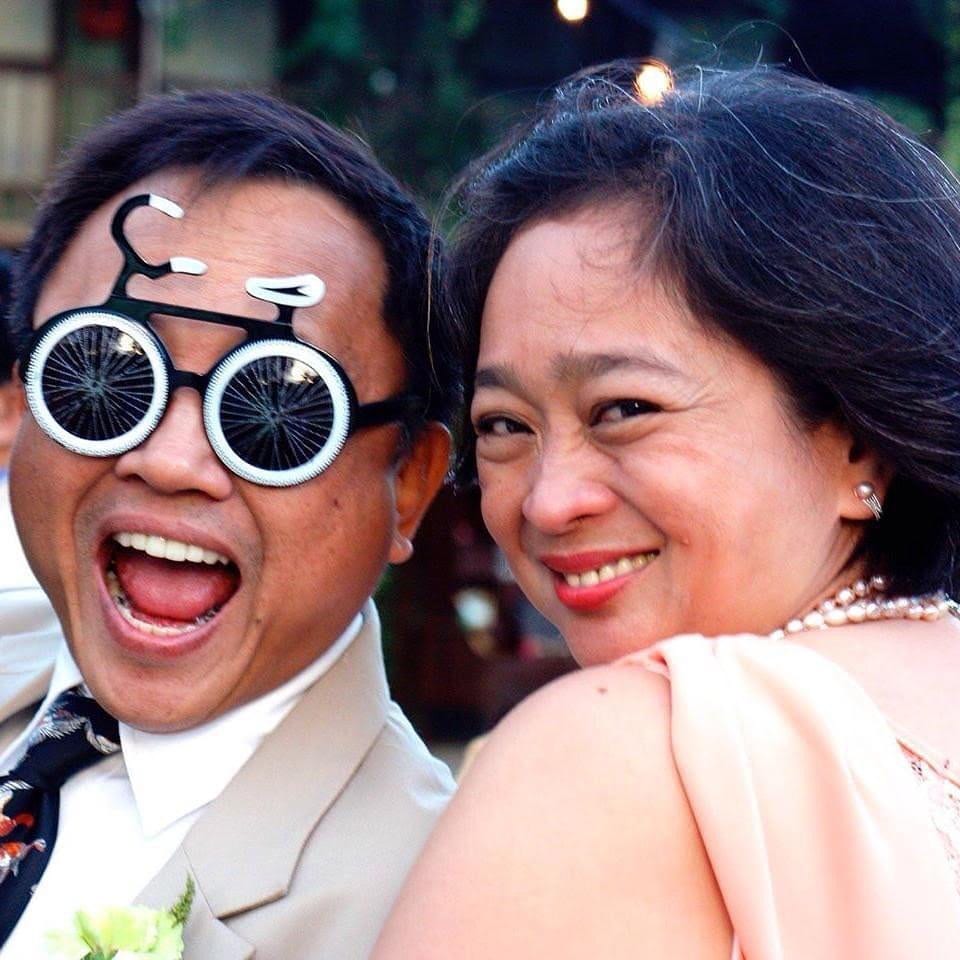
But sustainability is only half the story. All this scientific, technical sustainability know-how is invested with a lot of heart—and accompanied with a lot of art.
Kapusod’s reverence for Filipino craftsmanship
Kapusod has an almost magical quality. It surprises at every turn, yet each surprise never feels out of place.
Its charm lies not in extravagant design, but in thoughtful craftsmanship: toilets made from scrap basalt by renowned artist Sajid Imao, modular furniture fashioned from fallen trees and recycled tires, and handwoven anahaw roofing that celebrates traditional Filipino building techniques. Nothing feels ornamental for ornamentation's sake. Every object has a purpose—and every purpose comes with a story.
Those stories are borne from the Severinos’ relentless curiosity and crafted by the skilled hands of Filipino artisans. They devised ingenious flushing mechanisms for their sculptural “art toilets,” carefully nurtured the property’s native gardens, and even sought out master anahaw roofers from Quezon to train builders in Batangas, helping preserve a traditional building practice that is slowly disappearing. At Kapusod, sustainability isn’t just about the materials used to build the property—it’s also about preserving the knowledge and craftsmanship behind them.
It isn’t lost on Howie that it would have been much easier to simply go with the usual materials and build Kapusod much like any resort or vacation home. It would have certainly been faster and more economical, he jokes—but he’s quick to remind us that economic value isn’t the end-all and be-all of things.
“In our view, it evens out. Siguro, it might be more expensive doing it this way, but you’re only looking at the economic cost of building. You’re not considering the cultural value. How do you quantify the cost of preserving a skill or reviving a cultural craft? Ang hirap,” he explains.
“Kailangan isipin mo it’s priceless. You have to think that much of the reward is psychic. For us, there’s a big value on preserving culture. Think about it, pag nagde-decorate ka ng bahay, minsan kahit mahal kunwari yung art, ilalagay mo pa rin. Minsan ganoon talaga. Kahit mahal, pero mahal mo eh,” he adds.
On any given day, Kapusod is home to tourists who fancy a lakeside getaway, or host to bikers, families, and those hoping for a quick escape from Metro Manila. From time to time, they also host students and teachers for nature education, bamboo workshops, and baybayin learning sessions. Kapusod was never just any rental.
“We don't call ourselves a resort. I think we're more of a sanctuary, a retreat, a learning center,” he says.
“We want our guests to go home with a greater awareness of their place in nature. That we're just part of nature. We hope they appreciate its abundance and value, especially our native trees and plants, and come away with a better understanding of how we can coexist with it—how we can blend in with nature. More than anything, we want them to leave with a greater sense of hope: that the planet will be all right, that our communities will be all right, if we all do our part."
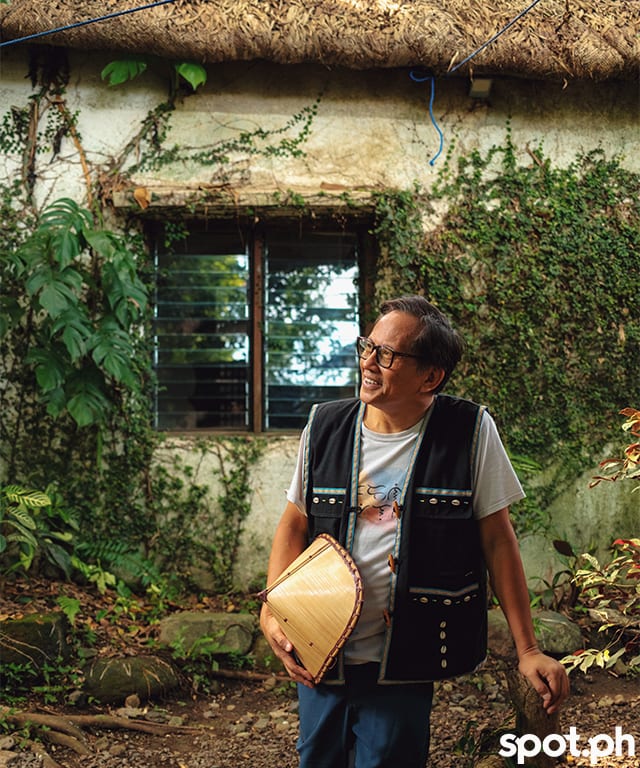
Kapusod feels almost too idyllic to be real. But nothing here happened by accident. Every tree, every bamboo beam, every earth structure, and every sustainability measure exists because of deliberate choices, executed with reverence for heritage, the environment, and the future. And aren’t those the very stories Howie himself champions?
The wonder isn’t that Kapusod looks like paradise or that it’s charming in a way that feels unreal. It’s that it offers a glimpse of what the world might look like if people truly lived by the values they champion.
Check out more SPOT Weekender stories:
Why Ang Babae Sa Septic Tank 4 Is Theater's Most Honest Conversation Yet
Music Photography Gave Niña Sandejas an Exciting Life. Now She's Giving Back The Love
Photos by Jilson Tiu.
Leana is Spot's go-to for Arts & Culture and Things to Do. On any given day, she’s either glued to her screen—or gliding underwater like the mermaid she swears she is. Contact: leana@spot.ph