Looking for a Quiet Escape? There’s a Massive Park Hiding in Plain Sight in Quezon City
The Ninoy Aquino Parks and Wildlife Center is a must-visit for nature and animal lovers.

Published on Nov 20, 2025
(SPOT.ph) Most people pass Elliptical Road without thinking twice, but near that busy loop sits one of Quezon City’s most overlooked green spaces. No, we aren’t referring to the Quezon Memorial Circle or Sunken Garden everyone already knows about. Just across the street is another massive patch of trees and water: the Ninoy Aquino Parks and Wildlife Center (NAPWC). It’s been here for decades, featuring walking trails, quiet picnic spots, a man-made lagoon, and even rescued wildlife like the Philippine Eagle.
Located along Elliptical Road, the NAPWC is open every day from 7 a.m. to 5 p.m. The 22.7-hectare space was originally part of the wider Quezon Memorial Park reservation in the 1950s but was later developed into a public park in the early 1970s before being renamed after Ninoy Aquino in the mid-1980s.
Over the years, it shifted from being mainly a recreational green space to a facility under the Department of Environment and Natural Resources (DENR) that also handles wildlife rescue and rehabilitation. Eventually, the park was classified as a protected area under the National Integrated Protected Areas System (NIPAS), which is why it remains preserved in the middle of major roads.
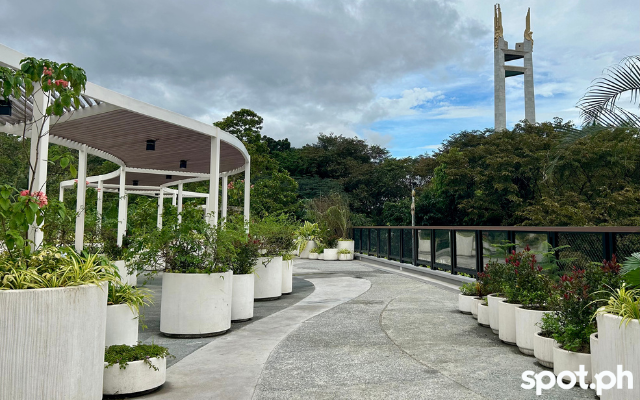
The new elevated walkway linking Quezon Memorial Circle to NAPWC makes it easier than ever to explore this natural retreat from the chaos of the city. It has been quietly doing its thing while the rest of the city piles on more cars, more buildings, and more excuses to stay indoors. But with green spaces proven to lift mood, ease stress, and get people moving, now’s a good time as any to finally step inside.
Even on weekends, the park isn’t packed the way Sunken Garden or Quezon Memorial Circle can get, making NAPWC a great alternative if you want space to hang out, jog, or simply get some fresh air. You can cover the entire park in about one to two hours depending on how often you stop to sit, observe the animals, or take photos.
Also read: LOOK: New Elevated Walkway Links QC Circle to Ninoy Aquino Wildlife Center
What to expect at the Ninoy Aquino Parks and Wildlife Center
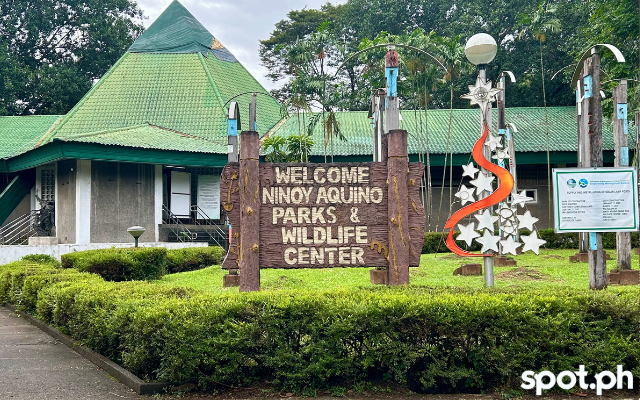
Entrance to the park costs P30 for adults, P15 for students, and P100 for foreigners, with free admission for senior citizens, persons with disabilities (PWDs), and children below seven. Pets are more than welcome, too, as long as they’re leashed. After paying the fee, make sure to keep your ticket with you in case staff conduct checks inside the park. NAPWC has designated parking inside as well, but vehicles must enter through Gate 2 along North Avenue.
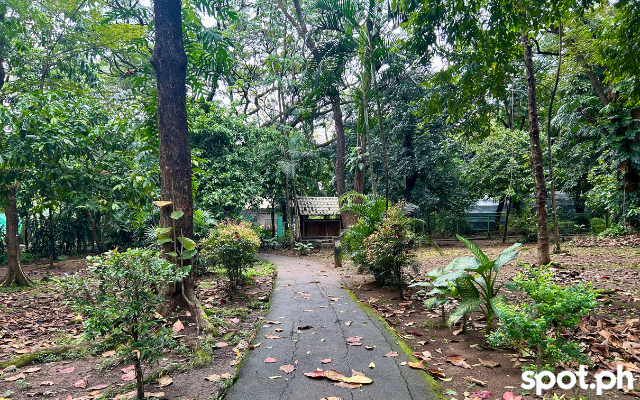
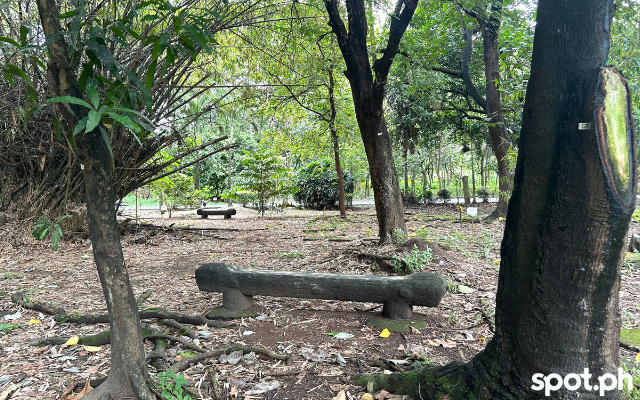
The city noise stops the moment you enter the park. Taking the left route brings you through some of the thickest greenery of the place, where you’ll find native trees like rainbow eucalyptus, ipil, and molave. Even if you aren’t a plant enthusiast, it helps that many of the trees and shrubs have signage so you know exactly what you’re looking at. The pathway is shaded, making it an easy warm-up before reaching the heart of the park.
A short walk leads you to this huge man-made lagoon. The water stays still for the most part, giving the area a quiet feel. The fish aren’t exactly visible unless they surface, but the ripples are constant enough to remind you the lagoon is alive with tilapia, carp, mudfish, gourami, and catfish.
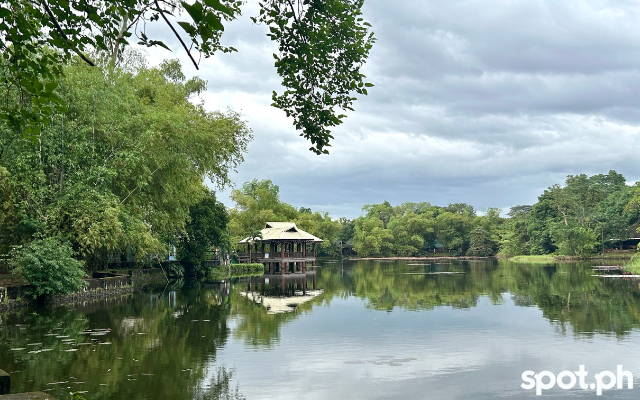
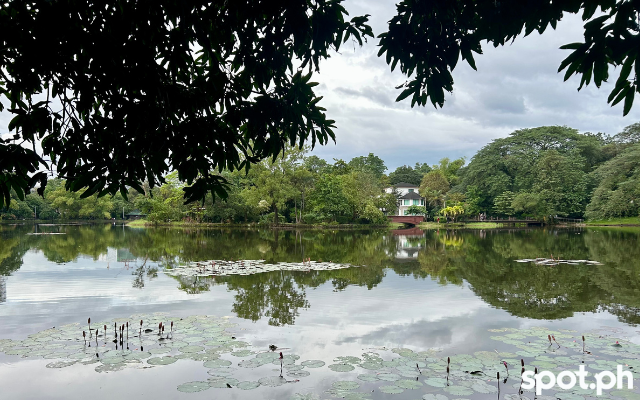
To the right of the lagoon are the stilted huts that make up the fishing-village-inspired area. They’re used as rented spaces for groups, but on regular weekdays, they’re mostly empty. The structures give you a good view of the water, serving as one of the most recognizable photo spots in the park.
Benches are scattered around the park so you always have a place to eat, read, or rest. At NAPWC, there are no vendors inside, so anything you need—water, snacks, mats—should be bought before you enter. Picnics are allowed, but the rules are strict: single-use plastics, cooking equipment, alcoholic beverages, and loud music aren’t permitted. That said, make sure to use reusable food packaging and clean up after yourselves.
A small grotto with a Mama Mary statue also sits nearby, offering a quiet corner for anyone who wants a moment of calm.
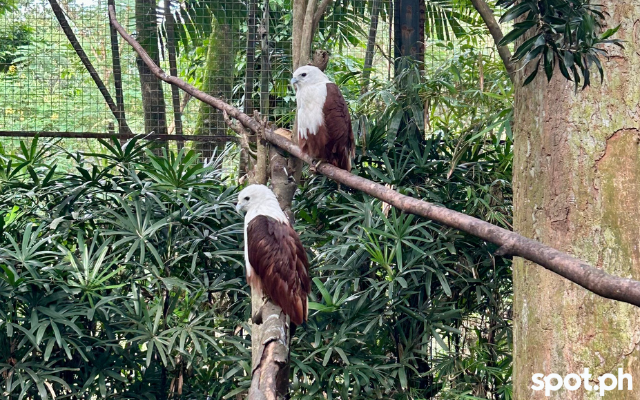
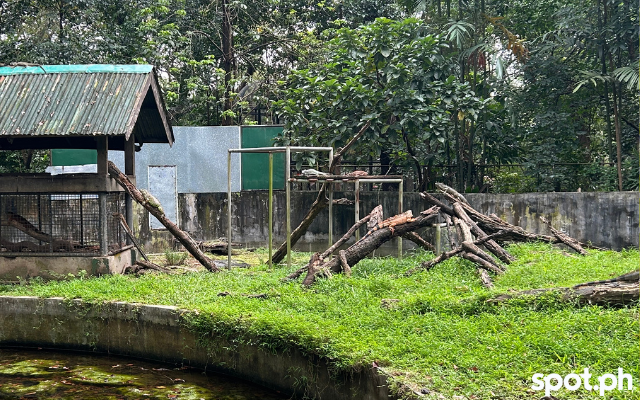
Continuing along the path brings you to the animal enclosures. Among the creatures you’ll find are a collared kingfisher, a reticulated python, and a rufous hornbill, but take note: some enclosures might be empty during your visit. This is because the NAPWC is not a zoo. The rescue and rehabilitation center is primarily for confiscated, rescued, or surrendered animals. It isn’t meant to be a spectacle—it’s more of a behind-the-scenes glimpse of conservation work happening in the middle of Quezon City.
That said, visitors looking for a full zoological experience might feel underwhelmed, so it's best to stay open to whatever you encounter along the way.
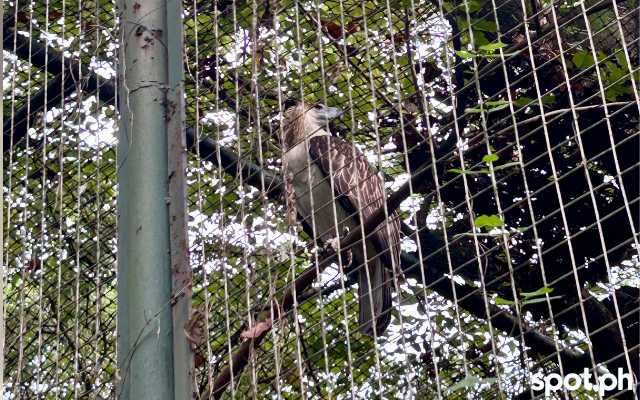
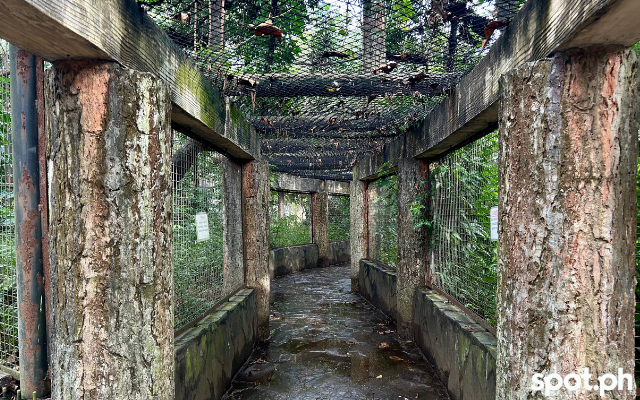
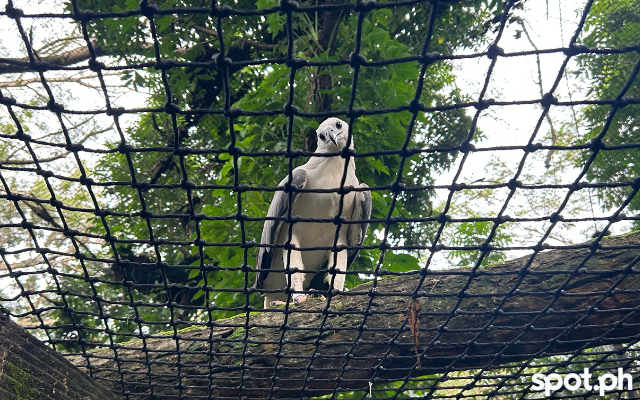
The biggest enclosure houses the Philippine Eagle—you can’t miss it. While this bird is often considered the star attraction, the white-bellied sea eagle is one of the more memorable experiences. Its enclosure includes a passage with a netted top, so you can walk inside and get a clearer view of the bird as it moves and flies within the space.
Most routes naturally loop back to the entrance where you started. If you head right from the entrance instead of left, you’ll find Lungsod Kalikasan—an area where small birds, arthropods, and a turtle pond can be found. This part of the park is noticeably quieter, with narrower walkways, almost like a side trail meant for slower exploring.
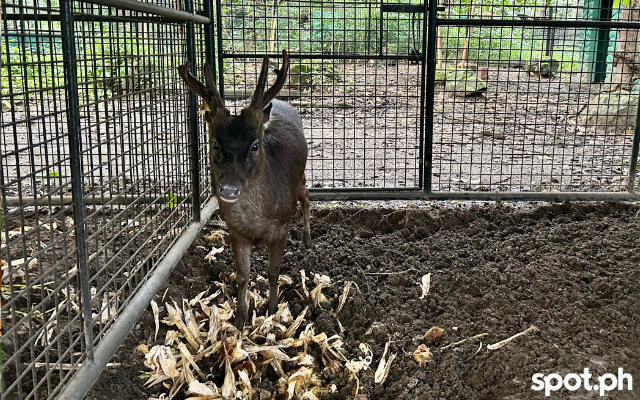
It's in this section where you'll find several colorful iguanas on display, usually stretched out on wooden planks under the sun. As you follow the path to its end, you reach the enclosure of the Philippine brown deer.
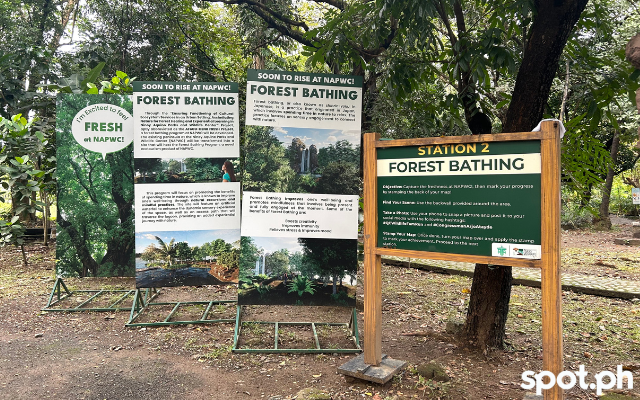
Soon, the NAPWC is set to introduce a forest bathing area inspired by the Japanese practice of using natural surroundings to promote calm and focus. The planned setup will feature an artificial waterfall to provide sensory engagement, with the sound of flowing water offering visitors more ways to feel connected to nature.
Aside from the walking trails and wildlife enclosures, NAPWC also doubles as a venue for different activities throughout the year. The park regularly hosts educational programs, science and garden fairs, orchid shows, small community gatherings, and even occasional religious or civic events, which you can check out on NAPWC's official Facebook page.
It also offers several facilities for rent, including the Tea House, the Fishing Village huts, and the open-air amphitheater, which are often used for workshops, meetings, or small celebrations. For those looking to hold a professional shoot for a debut or wedding, the park also allows commercial photography and videography at P5,000 a day with prior coordination.
It’s not the flashiest park in the city, but it’s steady, spacious, and full of small surprises once you start exploring. If you’re after a place to breathe without leaving Quezon City, the NAPWC is definitely worth visiting. Don't let it go right under your nose the next time you pass by Elliptical Road.
Also read: 10 Green Spaces in Metro Manila for a Quick Escape
Micah believes that writing is always political. Beyond the byline, you’ll find her bruising herself in a pole studio or napping with her beagle. Reach her at micah@spot.ph.