Ninong Ry's Malabon: The Flavors and Memories That Keep Him Rooted in the City
"Sobrang nuanced ang Malabon. Sobrang daming details na gusto kong i-share to anyone willing to listen.”
Published on Jun 5, 2026
(SPOT.ph) “Sino ba talaga si Ninong Ry?”
It’s a muggy morning in Malabon when Ninong Ry himself drops this bomb of a question, in itself a response to the very first in this entire interview: “How do you introduce yourself to people who’ve never heard of you?”
At this point, a smartphone-owning individual who’s never seen, never heard of, or doesn’t even vaguely recognize Ninong Ry in Metro Manila is a rarity.
But in the hypothetical scenario that you are that unicorn, there are many things you can pick up about him just from where we are: specifically, his shiny new (and flood-proof) kitchen studio on the top floor of the three-storey building, where he and his team of seven produce videos in a professional setup with nine heavy-duty lights. Downstairs, their office has a shelf displaying his YouTube Gold and Silver Play Buttons, 15 different books by Anthony Bourdain (all first edition), and a blown-up Magic The Gathering trading card featuring himself, as Ninong Ry, the Versatile and Master of Silog.
 (1).jpg?fit=cover&width=960&q=82)
Very specifically, we are sitting in the part of Ninong Ry’s studio that not all of his 9.6 million Facebook followers see very often: the black leather couch and armchair situation right behind where his camera is normally set up. From here, you can see an endless assortment of cooking equipment on gleaming steel counters and shelves, no fewer than 13 different kitchen knives, and a slab of tree trunk masquerading as a chopping board.
Sitting here, it would be easy to write Ninong Ry off as a food content creator and call it a day. But that would be a disservice to the interesting space he occupies on the internet and in public consciousness: relatable and funny, disarmingly knowledgeable and unorthodox in his cooking methods. And it is frankly surreal to watch him dissect it himself behind the scenes, not just in this interview, but with the release of his second book—containing his memoirs, disguised as a compendium of recipes—Hindi Pa Rin Ito Cookbook ni Ninong Ry published by Summit Books.
'Yung matabang nagluluto sa Facebook'
Give or take, it’s been six years since Ryan M. Reyes first went viral in a world on lockdown with a faceless, voiceless recipe for one of the most bombastic kare-kares anyone has ever seen.
He’d been told by a friend (“nung di pa siya kupal”) for years that he had the skills and the personality to make it as a vlogger—and it would turn out he was right, when Ninong Ry finally made his first appearance. The millions upon millions of dedicated fans he’s connected to with his cooking are a testament to the genuine meatiness of his videos and the absence of artifice in them. There is no carefully-cultivated persona, no brand guidelines for making him look good. He’s just Ninong Ry.
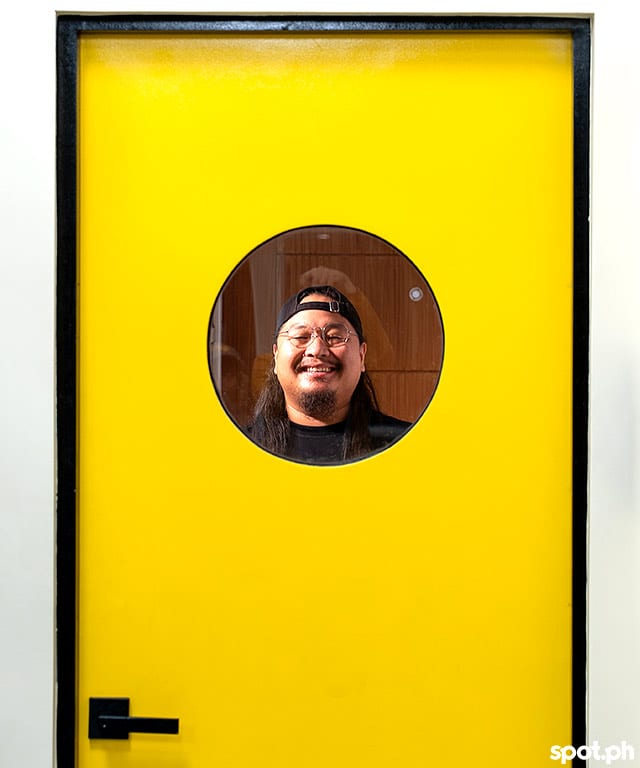
“Sa totoo lang, mahirap i-encapsulate kung ano yung ginagawa ko,” he explains. “Kasi pwede kong sabihin na I cook. Pero I've come to the realization na I'm an entertainer first, a cook second. Yung pagiging educator ay naka-sandwich lang in between those. Kasi kapag gumagawa kami ng videos, it is always to educate. It is always to teach something new.”
The intent of each video is always to sate a new curiosity about the inner workings of food, down to the simple thought of what would happen if you didn’t wash your rice before cooking it, what would happen if you used different types of oil for cooking, or how to deep-fry so it comes out a specific texture.
“Tapos nakabalot lang siya in a colorful packaging na madaling i-consume,” he describes. “May humor, may pagka-barubal, pagka-kanal na hindi naman intentional.”
Over six years, it’s something he’s honed and continues to sharpen: Team Ninong Ry can comfortably shoot 17 reels in a single day, though he still has plans of experimenting further.
But to answer the question, he says this, “So sino ba talaga si Ninong Ry? Kukunin ko na lang yung linya ng mga taong parang kilala nila ako pero hindi: ‘Ikaw ba yung matabang nagluluto sa Facebook?’ Yun. Yun ako. Not just on Facebook, but on all social media platforms.”
Palengkero, kusinero
Long before Ninong Ry acquired Ninong status, he was just a kid named Ryan—or depending on who you asked, Pow-Pow (“kasi mukha akong siopao”)—growing up in the bustle of Malabon’s Hulong Duhat Public Market right along the river, where his parents sold chicken.
While most work follows the 9-to-5 grind, Ninong Ry’s parents were at the market as early as 3 a.m. and as late as 7 p.m., but were never far from home: the market was only a 5 minute walk away. All his meals growing up—breakfast, lunch, merienda, and dinner—were prepared at his family’s stall, from fresh produce from neighboring vendors and fishermen unloading their catches of the day.
“Si Papa, kapag medyo 11 a.m. na, slowdown na yung palengke nang kaunti, nagpe-prep na yun ng ulam namin,” he recounts. “Doon mismo, sa tindahan namin sa palengke. Sa chopping board kung saan siya nagcha-chop ng karne ng manok, doon siya nagcha-chop ng, halimbawa, mga carrots, sibuyas, at bidbid [scraped fish].”
He would eat sarciadong itlog over rice from a stall that would serve everything with atsuete, leaving all its white bowls permanently yellow. Squid so fresh it was still changing colors, bartered by fishermen in exchange for chicken from their stall, that his dad would simply grill or make into adobo. A tindera serving chicken mami he’d always add extra evaporada to. And of course: freshly-butchered chicken legs (complete with the feet!), rubbed in salt and eaten straight from the pugon right outside their house.
“Alam mo, noong bata kami, hindi kami nagki-crave kumain sa labas,” Ninong Ry says. “Talagang yung pundasyon ng pagkain ko, nabuo talaga sa palengke. Lumaki kami sa whole foods, sa totoong pagkain.”
Cooking, however, was a different story—something he was thrust into by his parents, rather than taught.
“Hindi ako tinuruan ng tatay ko,” he recounts. “Inutusan niya ako. Bawal kang magtanong, syempre, so you end up trying it anyway with the risk na alam mo kapag mali yung gawa mo, mapapagalitan ka. Pero gusto ko pa rin magpasalamat sa kanya kasi sa kanya ko nakita yung freedom sa kusina.”
The first kitchen creation to spark Ninong Ry’s interest in food was an arroz caldo he made in Grade 3, one he was forced to cook instead of being allowed to play outside. One of his titos tried it, and praised it.
“‘Yun yung moment na talagang inisip ko, ‘Ah, gusto ko magluto,” he recounts. “Kasi pag bata ka, wala namang natutuwa sa 'yo. ‘Ang kulit mo,’ ‘tigas ng ulo mo,’ ganyan. Pero natuwa sila sa ginawa kong ‘yun, sa bagay na pinagbuhusan ko ng effort. Ang sarap ng feeling, tapos parang chini-chase ko yung feeling na yun ever since.”
Ninong Ry’s experiments in the kitchen would lead to him eventually pursuing culinary arts in college and later becoming the head chef of a local restaurant in Malabon. By the time of the pandemic, however, he would eventually quit and return to his roots running his family’s stall at the palengke. It wouldn’t be Ninong Ry without his own twists though, with their stall soon pumping out bestsellers like their chicken oil, crispy chili garlic, and Chicken Cordon Bleu!
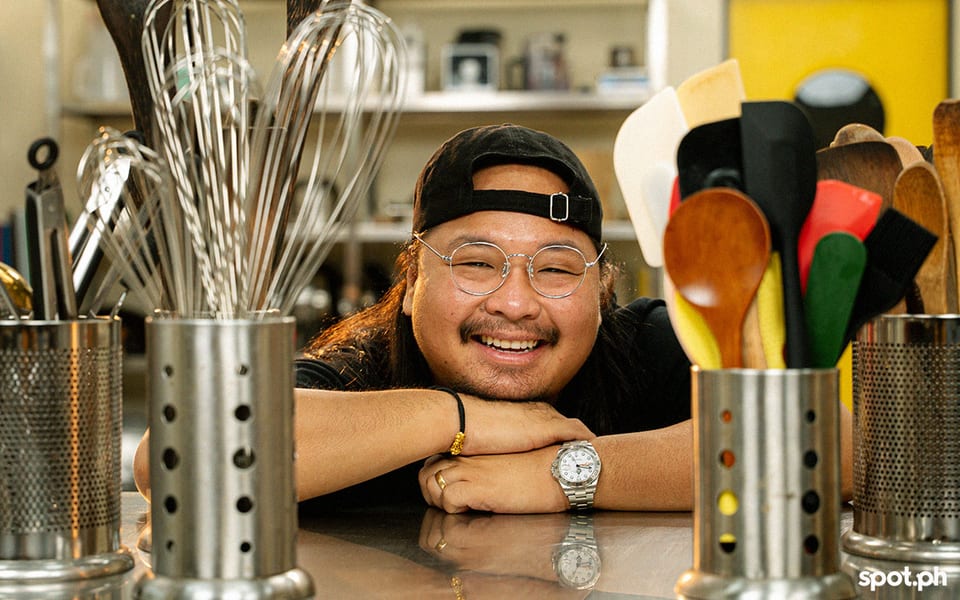
Malabueño
It surprises a lot of people that Ninong Ry doesn’t eat out much (though he does have his favorite restaurants), and was already much older when he started truly exploring his city’s food scene—one made unique by Malabon’s origins as a seaside marshland, making it a prime spot for seafood and even fresh horsemeat from nearby grasslands. Malabon was only made a city in April of 2001, something he distinctly remembers from the celebrations, but it still feels like a probinsyudad: a city with the soul of a province.
He recalls touring a college classmate around on his motorbike, pointing out spots that served good food at nearly every corner.
“Balik na kami sa bahay,” Ninong Ry says. “Sabi niya sa akin, ‘Alam mo, pag inikot kita sa amin sa Pasig, wala akong maituturong ganyan. Yung mga tinuro mo na masarap yung puto dito, masarap yung pancit dito.’ Highly urbanized kasi yung lugar nila, maraming fast food na kung mawala, burado na lang yung memory mo dun. Unlike dito na maraming mga family-owned businesses, either nagsu-survive for decades or mawawala na lang.”
He continues: “Kaya mas may personality ang Malabon kaysa sa ibang lugar. Pag ibang tao, sinasabi nila na kilala lang ang Malabon sa baha at Pancit Malabon. Pero from me, an insider? Ay, hindi. Sobrang nuanced ang Malabon. Sobrang daming details na gusto kong i-share to anyone willing to listen.”
The only thing Ninong Ry will admit to disliking about living in Malabon is, of course, the infamous flooding it experiences every time it rains, let alone storms. Typhoon Carina in 2024 filled his original studio in ankle-deep floodwater, and 2025’s monsoons brought it up to knee level, bringing him to finally decide to relocate—but still, within Malabon.
“Bakit hindi ba kami lumipat when we were given the chance?” He asks. “Marami akong makukuhang mas magandang property na mas hindi binabaha, na mas malaki yung parking, na mas mura ang renta. Pero una sa lahat, kino-consider ko yung mga tao ko. Ang Ninong Ry kasi ay hindi lang isang tao. Ang Ninong Ry ay team, at hindi magfu-function ang Ninong Ry ng walang team—and lahat sila ay taga-Malabon.”
(Not) a writer
From making videos online to becoming a brand ambassador and even starring (and getting brutally murdered) in a Shake, Rattle, and Roll movie, releasing a cookbook—ironically titled Hindi Ito Cookbook ni Ninong Ry—of his most popular recipes in 2024 seemed a natural development.
But Ninong Ry’s second book, still hot off the press, is a completely different dish: one that reveals that there’s an alternate universe where he could have been a writer too, had a teacher not discovered his work and read it aloud to his classmates. But he’d still submit a few articles for school publications and even stories on online forums, though writing overall is something he claims to have outgrown.
Unlike its predecessor, Hindi Pa Rin Ito Cookbook ni Ninong Ry truly isn’t much of a cookbook: it is his life, told through the dishes that make it what it is today. There are recipes, but each comes with a story—be it from Ninong Ry’s childhood, working years, love life (yes, really!), or family man era.
.jpg?fit=cover&width=960&q=82)
“Hindi niyo kailangan ng recipe ng chicharon bulaklak,” he says, “pero may story kasi sa likod ng chicharon bulaklak na ‘to, may dahilan kung bakit significant siya sa buhay ko. Kailangan niyo ba ng recipe ng sopas? Hindi! Pero may recipe ng sopas dito kasi ito yung huling sopas na niluto ko sa lamay ni Papa. Hindi mo kailangan [yung mga recipe]. Pwede mo ngang hindi basahin. Pero may story sa likod nito.”
In this book, you’ll find the recipes for the arroz caldo that sparked his love story with food, the chicken oil his family’s stall became known for in the palengke, the brown sugar-loaded sago (“ni Aling Josie!”) he’d grab after class in high school, the cinnamon roll burger that marked a new era in his culinary experiments, as well as the sweet and sour fish that shook his professional career.
Hindi Pa Rin Ito Cookbook ni Ninong Ry steadily takes you from the nostalgic and downright funny to the genuinely heartfelt, all in what is unmistakably his own voice—complete with his knack for dialogue and a loving attention to detail for the Malabon he grew up with and won’t part with. Not to mention his signature candor and sense of humor.
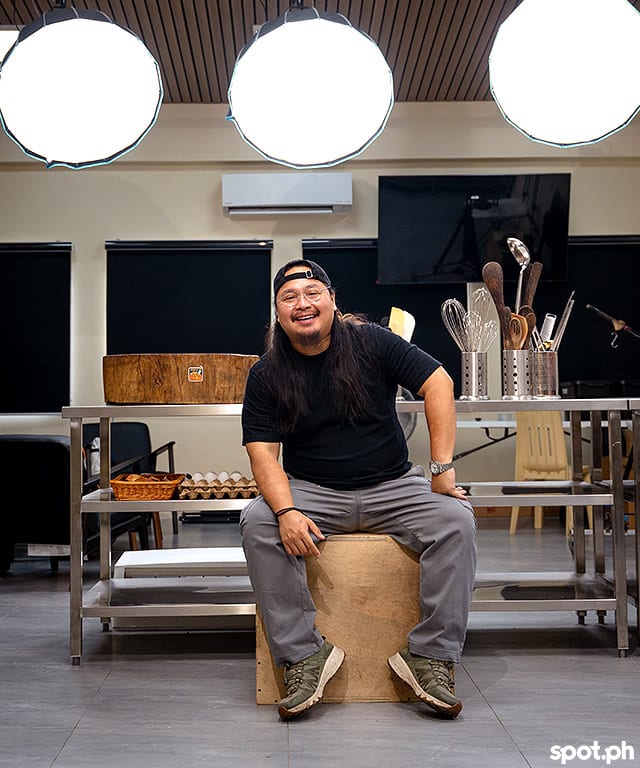
“Lahat tayo may makulay na buhay,” says Ninong Ry. “Walang kwento ng buhay na katulad sa kwento ng buhay mo. Eto, kwento ng buhay ko ito na pinili ko lang ikwento through food.”
It would be very easy to write Ninong Ry off as a food content creator and call it a day—that’s something he has in common with his hometown, which many will leave at just Pancit Malabon and terrible flooding. But take the time to get to know the man, to take to well-loved streets and stomping grounds, and you’ll find that both are unflinchingly true to their roots, unapologetically themselves, with a wealth of ideas to share. A city with a small-town soul, an internet personality with real character that a screen can’t contain.
Patricia Chong is a writer, collage hobbyist, and marketing girlie who talks about food as @pachoeats on Instagram.