Meet the Mahjong Maven Club: The Gen Z Trio Making Mahjong Cool in Manila
Mahjong isn’t just for titos, titas, and gambling dens anymore—these siblings are turning the classic tile game into Manila’s newest social scene.

by Leana Vibal
Published on May 15, 2026
(SPOT.ph) Ivory-colored blocks stacked neatly face down. Aunties and uncles hunched over green felt-lined tables, focused and intense. The clack-clack-clacking of tiles being shuffled. Ask anyone who knows, and they’ll tell you: this is all unmistakably mahjong-coded.
Mahjong, as we know it today, dates back over 150 years, with origins in 19th-century China. Over time, the game has traveled far beyond its birthplace, evolving into different versions across Japan, America, Hong Kong, and the Philippines, among many other countries. Its iconography —the red, green, and blue Chinese characters, the bamboo sticks, circles, and flower tiles—is so instantly recognizable that, if you slap the images on just about anything, people will immediately clock the mahjong motif.
For Filipinos, our history with mahjong is largely tied to the early Chinese merchants who brought the game to our shores. Since then, it has lived many lives: as a pastime of the wealthy, a vehicle for catching up on the latest gossip (because, of course, Filipinos just love to chismis), and a fixture at family gatherings that stretched late into the night.
Over the years, though, mahjong also developed a mixed reputation. On one hand, it became associated with smoky gambling dens where high-stakes bets—and perhaps a few nefarious deals—were settled over shuffled tiles. On the other hand, it lived on in marathon game sessions with uncles and aunties around your ahma’s table. For years, the game was boxed into two extremes: either an old person’s pastime (which, to be fair, isn’t a bad thing at all) or a gambler’s weakness.
But it’s 2026, and that image is rapidly changing. Maybe you can partially credit that iconic mahjong showdown between Michelle Yeoh and Constance Wu in 2018's Crazy Rich Asians. Maybe it’s the internet’s growing obsession with analog hobbies. Or maybe younger generations are simply rediscovering what older generations already knew all along: mahjong is fun.
Whatever it is, the game has found a new crowd. Right now, mahjong to-dos are somehow the hottest social event for Gen-Zs (fine, for millennials too) all over the internet—and Filipinos are no exception, especially if the kids in this story have anything to do with it.
Meet the Mahjong Maven Club. This sibling trio is redefining what mahjong is in 2026. Spoiler alert: they’re also making it cool again.
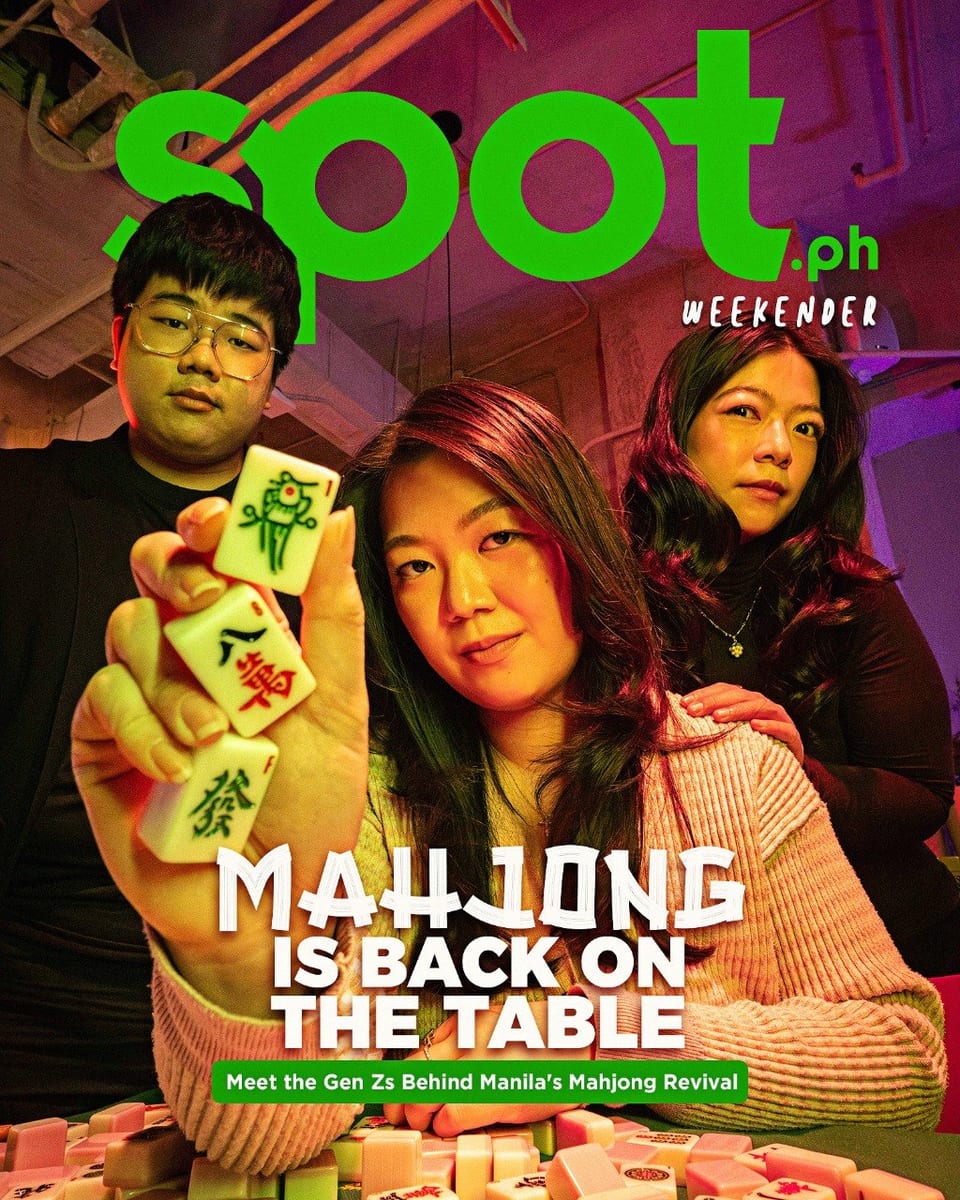
Meet the Mahjong Maven Club: Sheena, Sharlene, and Siegfried Lim
For the uninitiated, the Mahjong Maven Club hosts mahjong game nights and takeovers all over Metro Manila. One day, they’re setting up tables in stylish restaurants like Podium’s Lazy Suzy; the next, they’re taking over cool neighborhood hangouts like Benny and Cherie in Katipunan. Wherever they go, their events draw a mix of players across generations, backgrounds, and skill levels. Because if there’s one thing the Lim siblings are determined to do, it’s bring mahjong to more people—and firmly into the spotlight.
"We play mahjong as a family, with our parents. It’s how we bonded, especially during the pandemic," says Siegfried, the youngest of the three Lim siblings and the one heading the group’s operations.
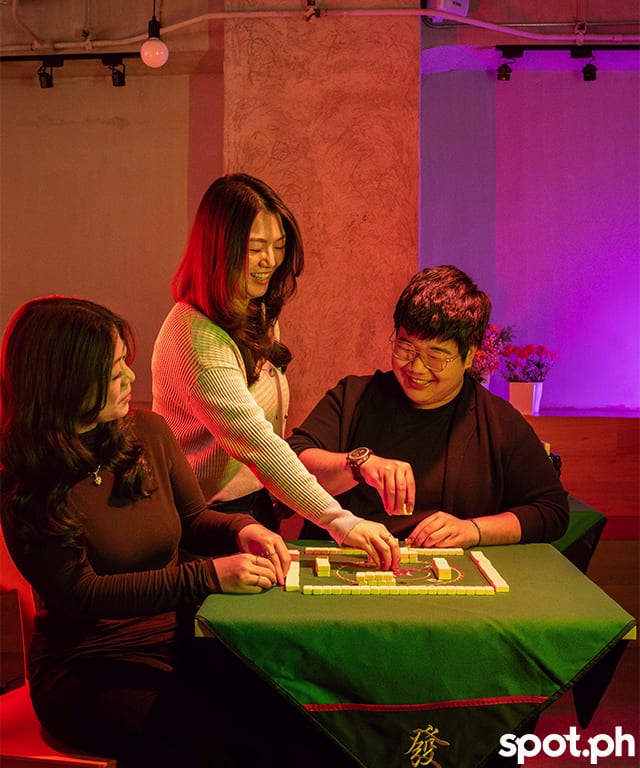
Like many Filipino-Chinese kids, Sharlene, Siegfried, and Sheena grew up around the game. Mahjong was a constant at family gatherings, one that bonded generations. For Sharlene, Siegfried’s dichi and the one leading the club’s marketing efforts, the game was a way to connect more deeply with their grandmother. Through mahjong, she says, they were able to create new memories during their guama’s sunset years.
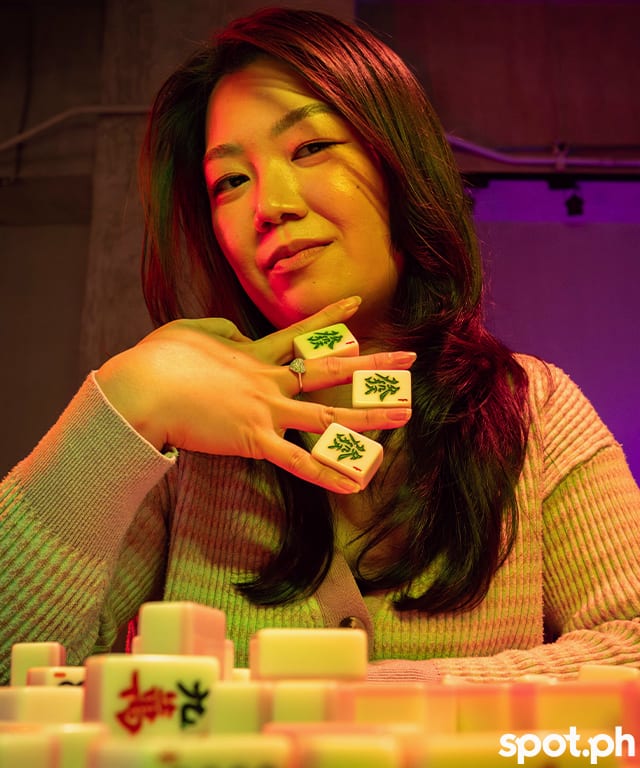
Meanwhile, their achi and the group’s self-appointed visionary, Sheena, brought the game out of the family group chat and into her friend groups. She organized game nights for her barkada and taught curious friends how to play.
"We kind of treat mahjong as a bridge between generations and between cultures," says Sheena. "It’s nice to bring back something that has been passed down from our parents, from our lola and lolos," she adds.
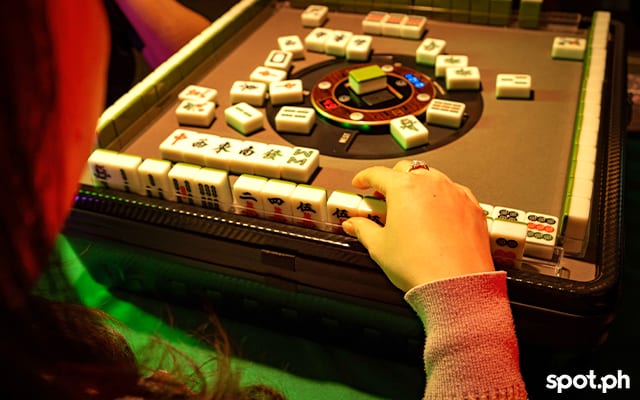
But organizing events wasn’t the original plan. The siblings actually started out selling electric mahjong machines—you know, the kind that automatically shuffles and dispenses the tiles at the press of a button.
They first bought one for their parents so they could keep playing mahjong while traveling. The machine ended up being such a hit that turning it into a business just made sense. Soon enough, the siblings were showing it off to friends and teaching friends of friends how to play.
Then, in true Filipino-Chinese mom fashion, the matriarch chimed in with a simple suggestion: “Why don’t you just go out and teach people how to play mahjong?”
What goes on in a Mahjong Maven Club event?
"At first, I was a bit skeptical because I hadn't heard about mahjong clubs in the Philippines, and I hadn't seen people playing mahjong publicly." Siegfried shared. "But when the events started, it was actually really eye-opening how many people know how to play mahjong, and from different backgrounds too," he adds.
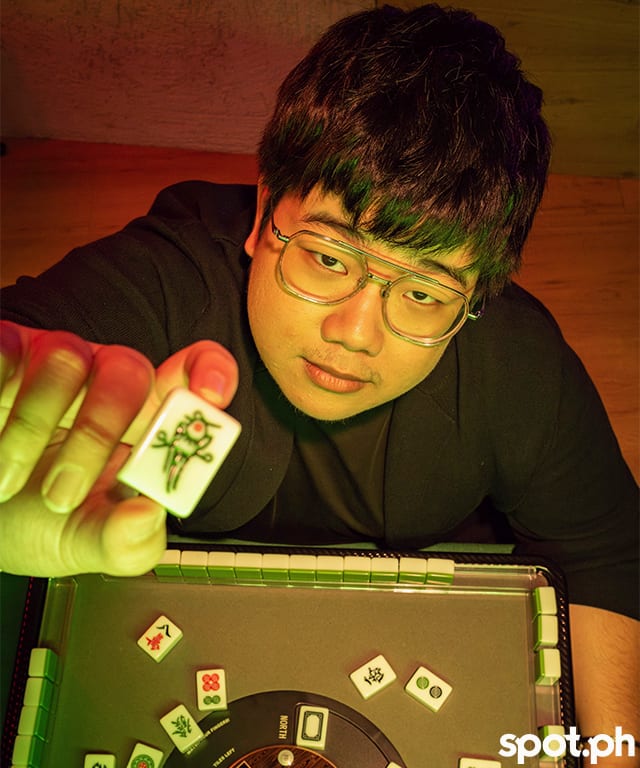
Mahjong Maven Club events are attended by people from all walks of life. Sure, there are the Filipino-Chinese, practically the game’s captive audience, but a surprising majority—more than 50%—of those who join their events joiners aren’t Fil-Chi at all.
But the diversity goes beyond ethnicity, too. They attract people of all ages. Gen Zs, millennials, Gen Xers, and even boomers come to their game nights to play. Sharlene recalls one participant who was already in her 70s and flexed her incredibly sharp skills on the table.
Their events are open to people of all skill levels. You don’t actually have to be a mahjong maven to join the Mahjong Maven Club. You just need to be curious enough to give the game a shot.
"We’re trying to bring back this traditional game with a modern twist," says Siegfried. "We want it to feel more social, more event-focused, and more centered around the camaraderie and friendships that can come out of these gatherings."
At Mahjong Maven Club events, there are no designated tables for experts or beginners. You simply grab a seat, join a table, and play. According to the siblings, most attendees actually arrive solo, turning the events into an easy way to meet new people and widen their circle. As the event progresses, players are free to switch tables and play with different groups—though the siblings note this rarely happens, since a good mahjong game also depends on table chemistry.
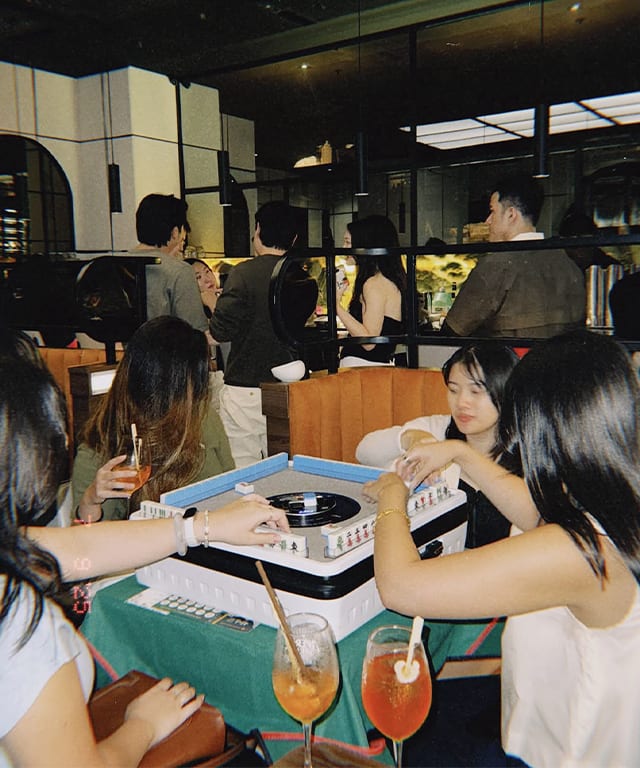
The structure is intentionally relaxed with absolutely no gambling involved. For Mahjong Maven Club, the events are less about determining who’s best at the game and more about creating connections. And as for complete beginners: yes, they’ll absolutely teach you how to play—minus the impatient table tapping and dramatic sighs one might expect from seasoned players. They have designated mahjong teachers to get you started.
Despite the many ways people play mahjong—from regional variants to games that follow different house rules passed down through different families—everyone somehow ends up getting along just fine (no brawls have been recorded so far). Alongside the instructors, seasoned players are more than happy to teach newbies the ropes. At the same time, long-time players remain open to learning other styles, whether it’s the Filipino-Chinese version, the Taiwanese variant, or even the notoriously challenging Riichi mahjong from Japan.
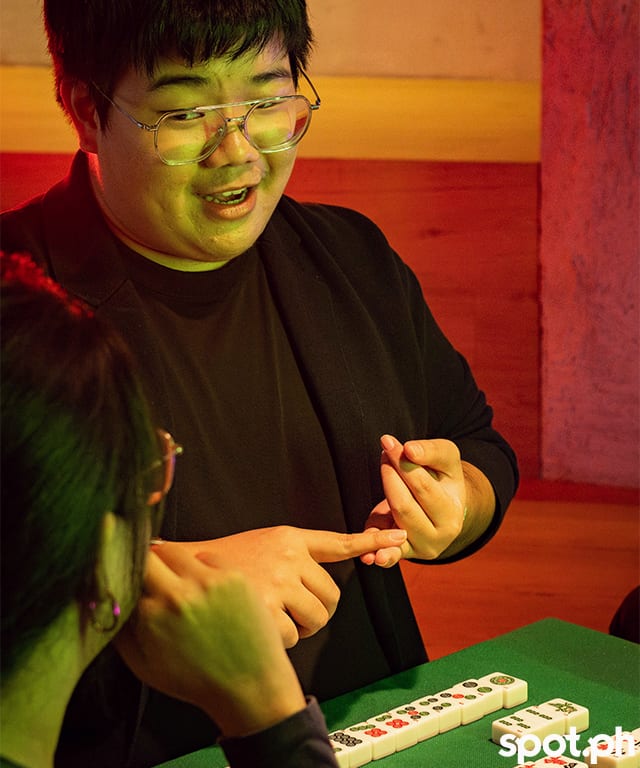
As any mahjong player will tell you, one game is never enough. “People end up not wanting to leave. It’s always bitin—and that’s good,” says Sheena. The group has seen many returning participants, further proof that they’ve tapped into something big with their community.
"We’re all about fun, relationships, and community," she adds. "It’s nice to create something that will bring people together again and enjoy something that has been existing for such a long time."
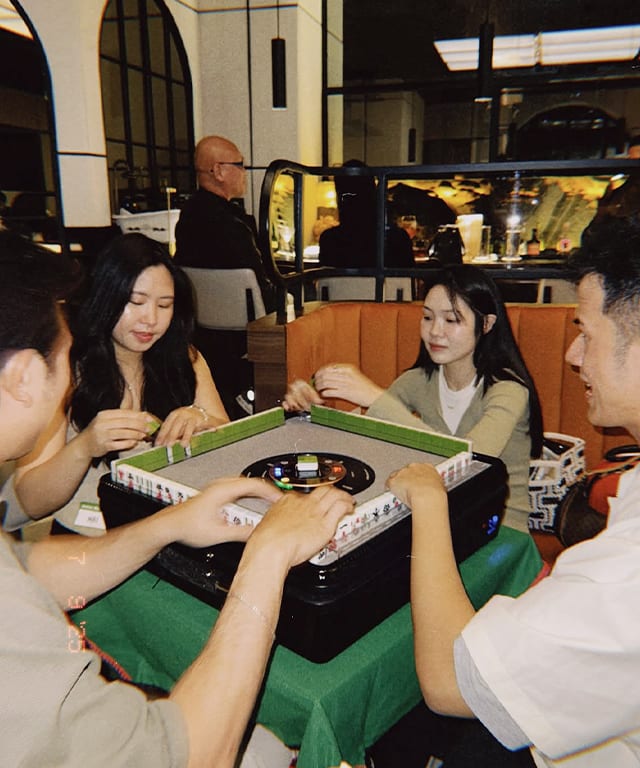
For those curious to experience Mahjong Maven Club firsthand, there are plenty of ways to join. Aside from their regular public game nights around Metro Manila, the siblings also organize private mahjong events and takeovers for friend groups, brands, and communities looking for a different kind of social gathering.
But beyond the aesthetics and trendy venues, what keeps people coming back is the sense of belonging the club has managed to build. The siblings make a conscious effort to ensure nobody feels intimidated or left out, whether you’re a seasoned player who grew up around mahjong or someone who can’t tell a flower tile from a wind tile yet.
"We want to create a space, a safe space, for them to express themselves and actually to meet people in a new way. [In our events] you're free to express yourself, you're free to teach other people the mahjong you know," says Sharlene.
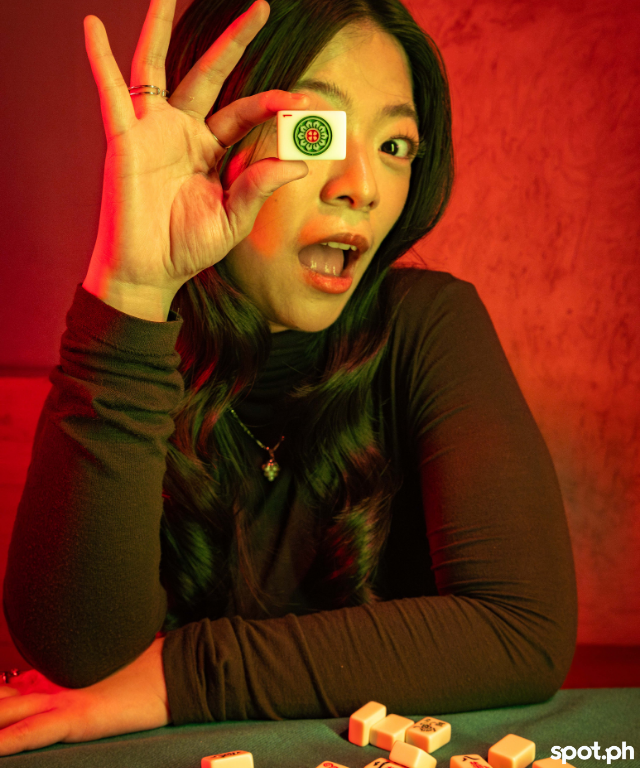
To break the ice, the Mahjong Maven Club also gives out human bingo cards with fun prompts to help players get to know each other. It’s a very intentional way to get people talking and socializing. But surprisingly, they notice people don’t really need it. Mahjong itself is the conversation starter. What starts out as pleasantries and polite chatter turns into conversations about work, life, and everything else.
"People come in as strangers. But we’ve actually seen them leave and then come back to another event as friends," says Siegfried.
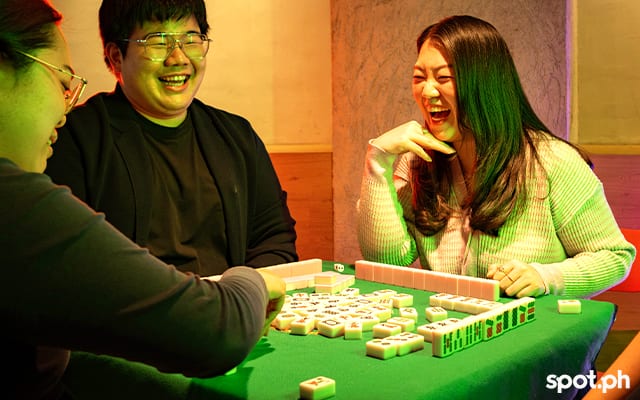
That sense of openness and of belonging, they say, is ultimately what Mahjong Maven Club is all about: creating a space where tradition, play, and community can exist at the same table.
Tradition and community in 144 tiles
The Lim siblings are well aware of mahjong’s long-standing association with gambling. But for the Mahjong Maven Club, the game has always meant something else entirely.
"It’s a common stereotype kasi [that mahjong is an] old man’s game and then gambling is involved, cigars, and there’s a lot of prejudice around it. We’re trying to change that perspective with regards to mahjong," says Siegfried.
For the siblings, Mahjong is many things: a nostalgic connection to their Filipino-Chinese heritage, a mental exercise in strategy, a way of getting to know how people think, and, most importantly, a way of forming connections—and these are the things the group brings to the (mahjong) table.
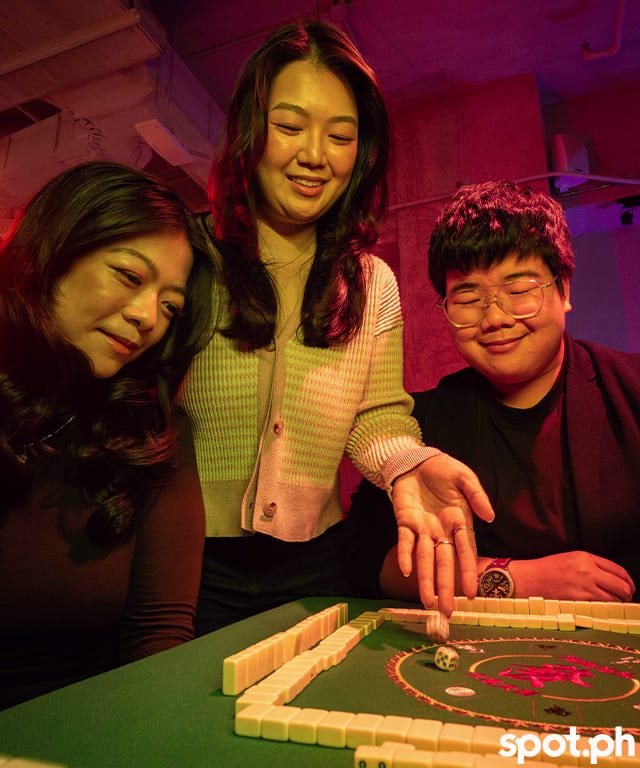
More than just organizing game nights, Mahjong Maven Club is creating a space where conversations flow naturally and friendships form organically. In many ways, the siblings aren’t just teaching people how to play mahjong—they’re reshaping what the game represents for a new generation.
This isn’t just your lola’s Sunday afternoon pastime anymore, nor should mahjong remain confined to the smoky corners of underground gambling culture. The game deserves its moment in the spotlight, and there’s no better time for that than now. In the hands of the Lim siblings, mahjong feels less like an old stereotype and more like what it may have always been meant to be: a shared experience, passed from one table to another.
And one year in, with hundreds of mahjong tables later, their hand is looking pretty good.
To find out more about upcoming events, follow the Mahjong Maven Club on Instagram.
Check out other SPOT Weekender stories:
Mom's the Word: Lottie Bie on Motherhood and Boundaries in the Age of Tiktok
U.P. Gets a New Landmark: The Story Behind Diliman's Atencio-Libunao Hall
The Most Beautiful Retail Stores in Manila
Photos by Majoy Siason
Videos by Vincent Bascos
Video edited by Jaybelle Mataro
Hair and Make by Team Muriel Vega Perez
Leana is Spot's go-to for Arts & Culture and Things to Do. On any given day, she’s either glued to her screen—or gliding underwater like the mermaid she swears she is. Contact: leana@spot.ph