People
Meet the Pinay Matcha Connoisseur Making the Green Drinks People are Lining Up For
The ex publishing girl is now queen of everyone's preferred green drink.

by Bea Faicol
Published on Jul 31, 2025
(SPOT.ph) If you’ve tumbled headfirst into the world of matcha and have made it your new personality—whether it's now your coffee replacement, your go-to post-Pilates ritual, or just tried the trend and loved it, chances are you’ve heard of Jacque and Matcha. And "Jacque" isn’t just a name on the neon-green signage at those sold-out pop-ups (like the recent blockbuster event Coffee Plz); she’s someone whose bylines once graced titles like Stylebible.ph (now Preview.ph) and Preen.ph, where she was busy spilling the tea... in the journalistic sense, of course.
Fast forward a few years and she’s still spilling tea—only now it’s matcha and hojicha, whisked to velvety perfection with a Tango Tanimura chasen (bamboo whisk), handcrafted by generational Japanese artisans from Nara. But who exactly is this pixie-cut matcha queen behind the cup and the winding queues of people desperate to get a taste of her matcha lattes? Let's get to know Jacque De Borja-Medestomas of Jacque and Matcha.
Also read: Top 10 Matcha Lattes in Manila
The "Jacque" in Jacque and Matcha

Click to Enlarge
Jacque De Borja-Medestomas of Jacque and Matcha. Photo by JL Javier..
How did your interest in matcha begin? Was it something you discovered casually and just gradually evolved into a passion?
Jacque De Borja-Medestomas: I started drinking matcha because of my mom, who used to work in the F&B industry. She focused on coffee and tea before she immigrated to the United States. She would let me try different things, including matcha. It was something I would always order from Coffee Bean & Tea Leaf or Starbucks, aside from coffee, starting in 2005.
Then the pandemic happened, and we were not allowed to go out, and I had to figure out how I could get my [matcha] fix. I started ordering from Made in Matcha PH, and then eventually also from Uji Matcha PH, the official distributor of Marukyu Koyamaen in the Philippines.
In 2022, I started reaching out to tea producers in the hopes of supplying locally. In 2023, I met with the suppliers in Japan and did my first tea farm and processing facility visit. But because of fear and hesitation, I paused my business and just decided to put up my personal matcha Instagram account (Jacque and Matcha). So you can say that, yes, it started as casual drinking, then it evolved into a deeper passion. I got obsessed, to say the least!
What steps did you take to develop your expertise in matcha?
JDBM: It started by just reading online articles, watching numerous YouTube videos, chatting with fellow tea people locally and around the world. Thank you, Internet!
It was all self-taught in the beginning. Of course, the travels to Japan and conversations with multiple suppliers taught me a lot too—in fact, one tea sommelier named Ms. Sheryl Martinez, shared that constant communication and travels will teach me a lot about tea. Because of matcha, and because of Ms. Sheryl, I also started practicing Chado or "Way of Tea."
It [chado] is the art of the Japanese tea ceremony. This taught me a lot about self-reflection, careful consideration of others, and hospitality. It is a totally different world of tea that I never knew about, and it just blew my mind. Everything is done with intention and purpose. I thank my teachers for their patience, as I am a beginner on all fronts, and I also do not understand the language.
I have also taken classes and attended more educational tours to learn more about Japanese green tea. Matcha was my gateway to all the other beautiful teas that the Japanese produce. Lately, my husband and I have been throughly enjoying Gyokuro and Wakoucha (Black Tea).
Do you have a personal matcha ritual? Is there a matcha that fits a certain mood?
Click to Enlarge
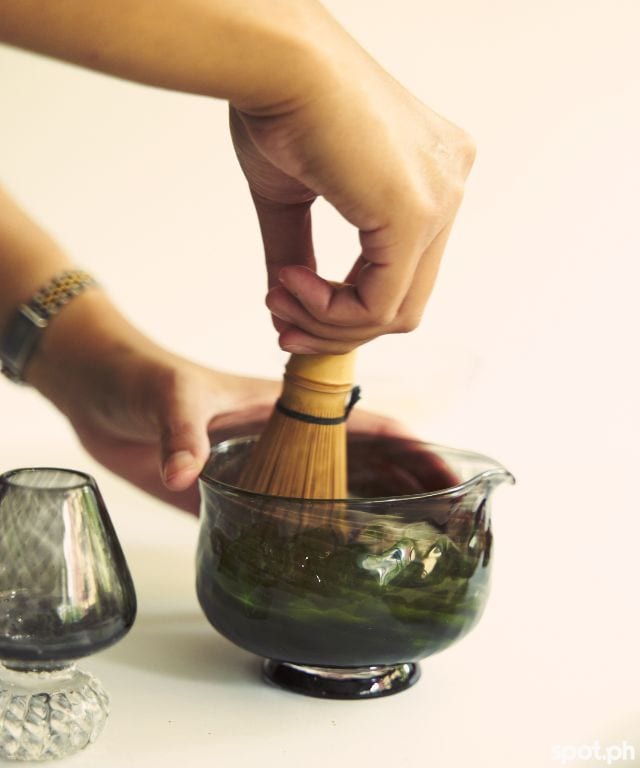
Fun fact: This chawan (bowl)—a katakuchi from Suikaen—is Jacque's favorite! Photo by JL Javier..
Usucha is my usual go-to drink, especially at home. It is simple and straightforward, it allows me to enjoy my matcha in its entirety, and it gives me the right amount of energy without feeling anxious. And also because I don’t really consume a lot of milk.
For my afternoon beverage, I make a fun drink like a matcha latte or a matcha soda. Contrary to popular belief or the focus of my Instagram account, I don’t consume so much matcha! Again, mindful consumption.
What does "mindful consumption" mean to you?
JDBM: Lately, I’ve been trying to be more present. A huge part of this I learned from practicing Chado.
There are days when one cup of usucha is enough, while others need an afternoon fun latte for a pick-me-up. And in light of the [matcha] shortage, I feel it is appropriate, too. I didn’t shop for as much matcha in Japan as I would have in the past. I got one tin from certain brands that I’ve never tried before, and that was it. It reminds me to enjoy what I have and be able to think about the choices I make.
Click to Enlarge
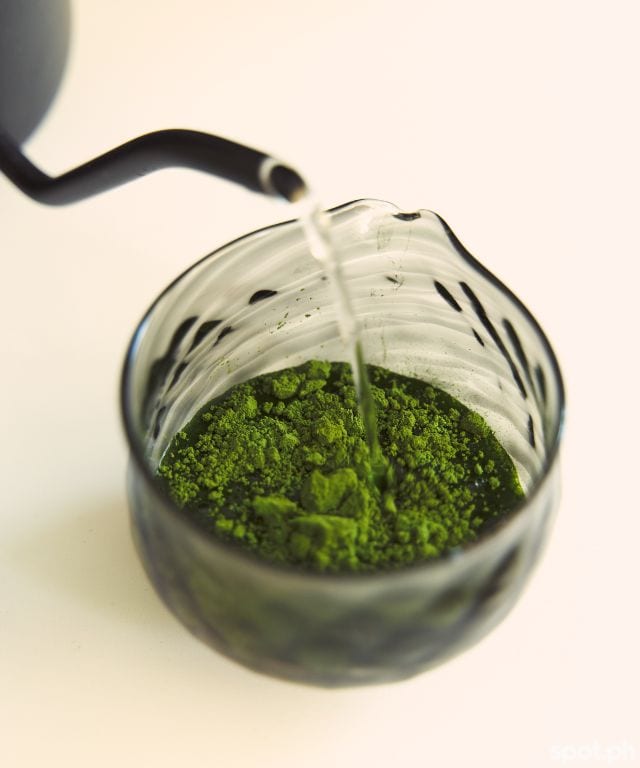
Jacque and Matcha uses Hoshino Seichaen Mokuren for their matcha lattes. Photo by JL Javier..
What are your thoughts on matcha’s growing popularity?
JDBM: It’s great that people are getting into matcha, for sure. This has been consumed in Japan for hundreds of years, and, finally, people are recognizing it for what it is. It’s potentially a way to save the tea industry and get the younger generation of tea farmers interested. But on the other hand, I urge people to get to know their teas, or their matcha, because there is so much effort involved for us to enjoy our cup of tea.
What defines a truly good matcha?
JDBM: There are so many ways go to about this. Great quality matcha usually comes from family farms or generational farms and tea companies in Japan because they uphold a level of quality that is dependable. I say that it needs to come from Japan because matcha is a Japanese product.
Another way to go about it is to know that good matcha also depends on your intended application. Higher quality matcha is best for usucha (thin tea) or koicha (thick tea), which means it is only mixed with water because you will get to enjoy the volatile components of the tea. While matcha that can be lower in quality or grade is best for lattes or flavored drinks because you need the strength, boldness, bitterness, and even astringency to cut through the milk and sugar that you will mix it with.
If you want to dig deeper, it is nice to know more about your matcha so that you can make an informed decision. When it comes to smoother mouthfeel, matcha that is stone-milled (a traditional Ishi Uzu) is best, while matcha that is machine-milled (jet mill or ball mill) pairs better with flavored drinks or desserts. I teach about the nuances of each in the workshops that I conduct, so if you want to geek out a little more, please join me in the next one!
(More on Jacque and Matcha workshop on SPOT.ph soon!)
Click to Enlarge
Click to Enlarge
Click to Enlarge
Click to Enlarge
Jacque is in her element. Photo by JL Javier.
Do you think matcha is shifting from a trend to a staple?
JDBM: I do believe it’ll be more of a staple or a mainstay when it comes to options for beverages in cafes. It’s actually a really good drink, with or without sugar and milk. It also has the health benefits to boot, like stable energy, high antioxidants, chlorophyll, and so on! So I feel that a lot of people who made the switch will continue. There might be a dip that will happen because of skyrocketing prices due to high demand and low supply, but I hope matcha enthusiasts ride it out.
Are there any misconceptions about matcha that you think need to be addressed?
JDBM: [First,] Ceremonial-grade is a myth. It used to be a way to distinguish high-quality matcha vs low-quality ones, it rooted from the idea that in a Japanese tea ceremony, you consume matcha with just water. So someone coined the term in order to say that the matcha they sell is high-quality enough to be taken on its own. But it blew out of proportion, and it is not a regulated term. Anybody can now use “ceremonial-grade” whatever quality matcha they serve, or even use it without having any idea where it was derived from.
Also, matcha should come from tencha and should be shaded. The use of other loose-leaf teas is not the same—ground genmaicha is genmaicha powder, ground sencha is sencha powder, ground gyokuro is gyokuro powder, and so on. But certain companies here and abroad are passing off these powdered teas as matcha because of the shortage. Be wary.
[Then,] not all “Uji Matcha” is actually from Uji. Most of them are grown outside Uji or in neighboring regions, and then they are just finished and packed in Uji to be labelled as such. This is a little loophole. So when you want matcha from Uji, be sure to source from reputable brands and farmers.
Click to Enlarge
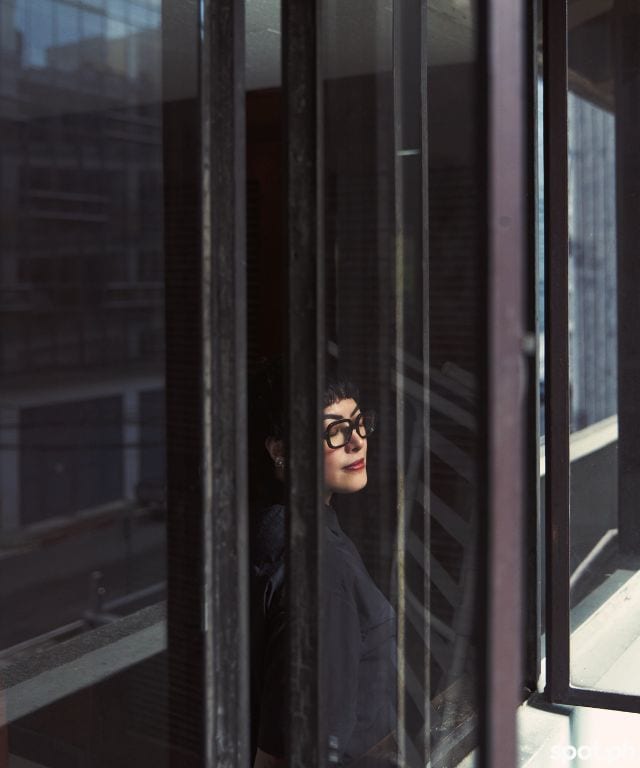
Jacque De Borja-Medestomas during Justine Arcega-Bumanlag's Prop Archive Sale. Photo by JL Javier..
More people are making matcha at home, not just drinking it. What tips would you give beginners? And if they could invest in only one tool, what should it be?
JDBM: For beginners, they don’t need to spend so much on accessories just yet, especially if they’re still not 100% sure they love matcha. I say this because some people might get turned away with the idea that they have to buy and spend so much money just to make matcha. To be honest, get started with proper matcha powder first, and you can definitely prepare it with things you may have at home like a mason jar or a jam jar to use as a shaker, or even use a milk frother.
It is kind of hard to narrow down which item one should invest in, but maybe a sieve? It helps remove the clumps, making it a more pleasant prep and drinking experience. The tea accessories you see like the chasen (bamboo whisk) or chashaku (bamboo scoop), are not necessary when your goal is to just make a good cup of matcha, but if you want to build a routine or a ritual that will elevate your experience, go for it! It does quiet the mind and gives you that moment of zen you need for the day.
What are your top matcha spots in Metro Manila? Any underrated gems you’d recommend?
To be completely honest, I don’t go out for matcha anymore since I have my stash at home. But there are a few that I always, always recommend to others. Ito Space in Legaspi Village not just serves matcha lattes, but also as an usucha. They have tea-centric flights that will allow you to discover different types of teas. They also serve matcha from my favorite company, Hoshino Seichaen.
Second, Matcha Later in Poblacion. They serve different kinds of matcha drinks and desserts, and the owner always makes sure she sources excellent quality matcha for her guests to enjoy. I only have two for now, just because I haven’t tried matcha from other places in a long time. This question gives me reason to go around!
From Jacque and Matcha to Kamai Tea
Jacque and Matcha's Matcha Latte. Photos by JL Javier.
At what point in your matcha journey did you decide you wanted to start your own brand?
JDBM: In July of 2022, I started reaching out to tea suppliers, but I chickened out to start anything. My compromise for not starting the business then was to create the Jacque and Matcha account (@jacqueandmatcha_ ) in October of 2022. The goal was just for it to be my online matcha diary of sorts. During that time, I also made sure to still learn more about matcha with the intention to start a business. In 2023, I met up with our suppliers and visited farms and their facilities, but again. I took a step back and chickened out again! And in 2024, I finally jumped the gun and got started with Kamai Tea.
Matcha was my gateway to the world of Japanese teas, and I wanted to share that same journey with others through Kamai. I’m super geeking out about it because it is another world altogether. Not just the teas, but also the teaware and accessories that are associated with each.
Matcha was my gateway to the world of Japanese teas, and I wanted to share that same journey with others through Kamai. I’m super geeking out about it because it is another world altogether. Not just the teas, but also the teaware and accessories that are associated with each.
Click to Enlarge
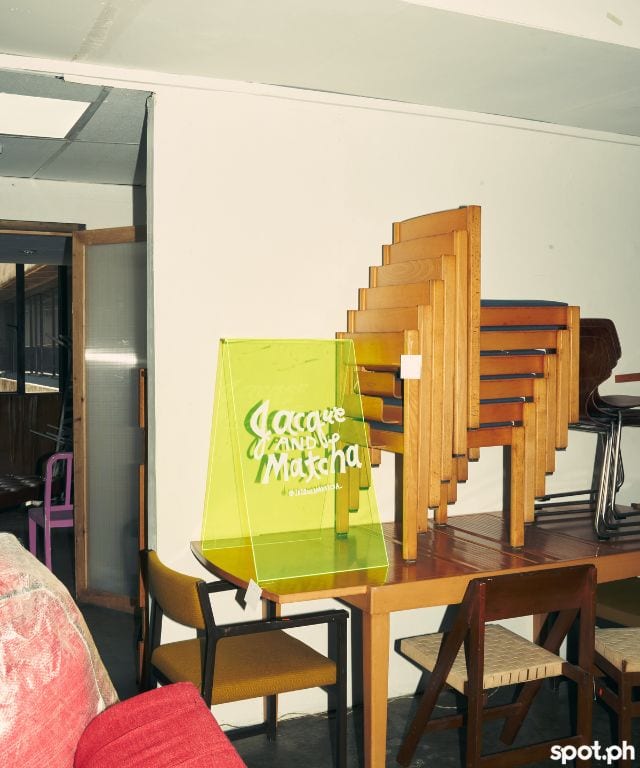
Jacque didn't really expect to go the pop-up route—but when the invites started rolling in, she asked her friend Rinka Sycip to whip up a logo on the fly. Photo by JL Javier..
How long did it take you to open the business?
JDBM: A few years, it is just moving at a slow, glacial pace. A lot of it was because of fear, and also applying for paperwork. Now there are more things happening, and the wheels are finally turning. No backing out now, as my husband and I have invested so much time and money haha!
Where did you get the name for Kamai Tea?
JDBM: Kamai was derived from the Japanese word “Kamaimasu,” which means to “to care.” And in the Filipino language, it also resembles “kamay” which means “hand.” To us, it means, “caring hand.”
It’s perfect because in tea production, the plant and leaves always go through hands at every stage, even if it’s produced commercially. With the name, we highlighted the effort and care that it takes to produce the tea they are about to consume. I wish I was the one who thought of this, but it came from our good friends from Monday Off.

Click to Enlarge
All of Jacque and Matcha's teas are manually whisked. Photo by JL Javier..
Tell us more about the teas you’ll carry.
JDBM: We will definitely have a selection of matcha, from small family farms to big producers, to cater to both retail and even B2B. I wanted to bring in a selection of koicha-grade, usucha-grade, and barista-grade for people to consume and enjoy. We will also have Japanese loose leaf teas like Hōjicha, which is roasted green tea; Sencha, which is the most popular Japanese loose leaf tea; Genmaicha, which is bancha or sencha-grade tea leaves mixed in with toasted rice; Gyokuro is one of the most special loose leaf teas and is shaded like matcha; Wakoucha, which is a black tea, and more.
Is that this year? And is there a physical shop we can look out for?
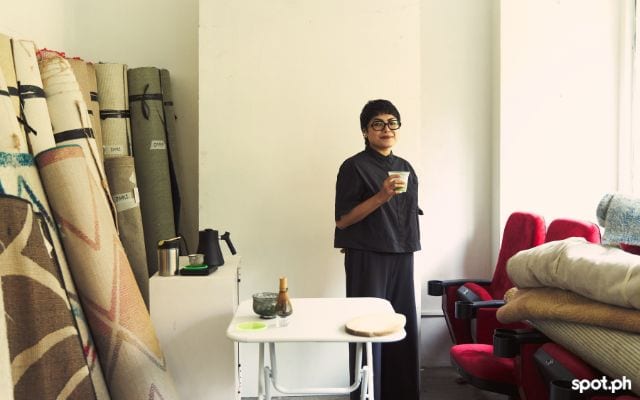
Click to Enlarge
Jacque De Borja-Medestomas during Justine Arcega-Bumanlag's Prop Archive Sale. Photo by JL Javier..
JDBM: Waaaah! Our goal is to go live this year, and this is what I said last year too! For sure, this year. We are just encountering a few delays given the matcha shortage and packaging, so we’re pushing it back a little since we can’t open a tea brand without tea.
A physical shop? That is the goal! But for now, we’ll focus on our website and retail first. But keep your eyes peeled. Saying this on record so I can commit!
Bea Faicol runs on questionable amounts of coffee.
You Might Also Like