No Passport Needed: Osaka’s Michelin Bib Gourmand Yakitori Lands in Manila
Ikoka's first-ever branch outside Osaka is now in BGC.

by Bea Faicol
Published on Oct 2, 2025
Ikoka
G/F Two Maridien Building, High Street South, 26th Avenue, Bonifacio Global City
Contact number: 0917-793-0888
Facebook: www.facebook.com/IkokaYakitoriBGC
Open from 11 a.m. to 2:30 p.m. and 5 p.m. to 11 p.m. (Monday to Saturday); and from 11 a.m. to 10 p.m. (Sunday)
(SPOT.ph) With Japanese dining establishments having multiplied exponentially in recent years, it's been a lot easier not to miss eating in Japan. Let’s be real—we’re not exactly nepo babies who can drop everything, spontaneously book a first-class flight, and slurp ramen in Tokyo while the rest are stuck in floods and traffic.
We're real lucky in that it's not just homegrown Japanese restaurants that are everywhere—so, too, are winning franchises from different parts of Japan. A newcomer on this growing list: Michelin Bib Gourmand-awarded Ikoka, a well-loved yakitori chain straight out of Osaka, and now in Bonifacio Global City.
Also read: SPOTTED: Japan's Ikoka Yakitori Is Coming to the Philippines
Osaka's Ikoka fires up the grill in Bonifacio Global City
Ikoka is a yakitori chain founded by Chef Masashi Hara in Osaka, Japan. Most of its branches are located in Japan, with branches clustered exclusively in its home city. Its first outside-of-Osaka outpost? Not Tokyo, not Kyoto, but right in Bonifacio Global City.
Ikoka's Chef Masatoshi Noda talks about a saying they have in Japan—"ichi-go ichi-e," roughly translated as "once in a lifetime." "[It] means to cherish our connection. This time, we had the wonderful encounter with the Vikings Group, and as a result of cherishing that connection, we opened in this splendid Bonifacio Global City location in the Philippines."
Poetic, sure, but in Osaka, yakitori joints come dime a dozen. So what makes Ikoka worthy of your pesos? One, it’s a Bib Gourmand-recognized brand (a Michelin nod without the starched white tablecloths—they've been awarded every year for five years since 2019, we're told); and two, it sticks to the classics and masters them to perfection.
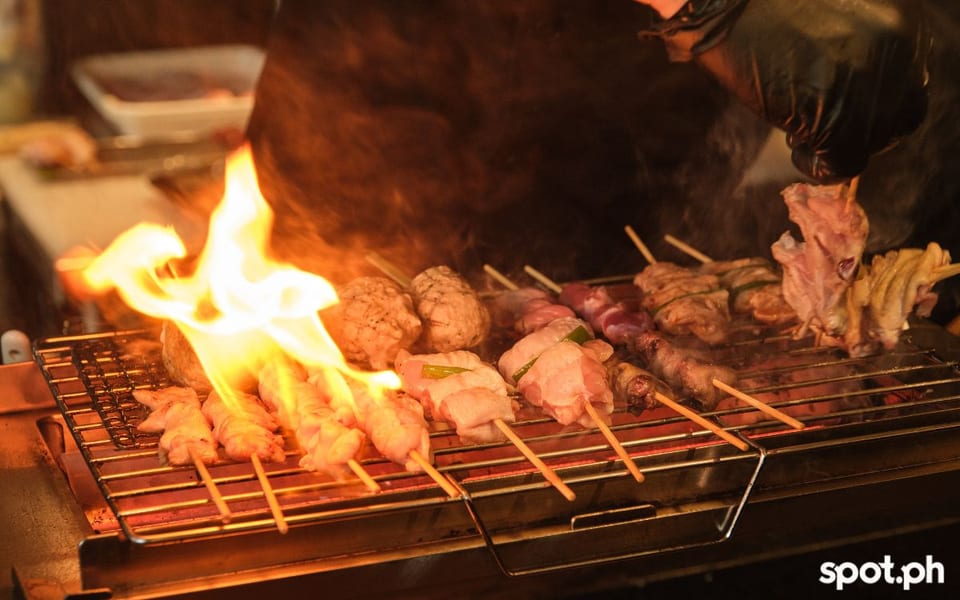
The secret weapon here? The tare sauce—a sticky, savory glaze that gets better with every drop—and the use of binchotan charcoal when grilling skewered fresh cuts of chicken to utmost perfection. Binchotan, of course, is a Japanese charcoal variety that's recognized as one of the—if not the—best in the world for its long-burning, odorless quality. According to Chef Masatoshi, though, the real magic behind their great yakitori is simpler: “It’s because all our staff members’ smiles create a comfortable atmosphere for our customers."
What to try at Ikoka Japanese Yakitori
Being a true-blue yakitori spot, Ikoka's menu is unapologetically chicken-heavy. Different cuts of the bird are skewered, grilled, and ever-generously lacquered with the same signature tare—it reminds me of how Filipinos turn every inch of the pig into sisig. The result? With over 10 yakitori choices on the menu, it boils down to one question: what are you in the mood for?
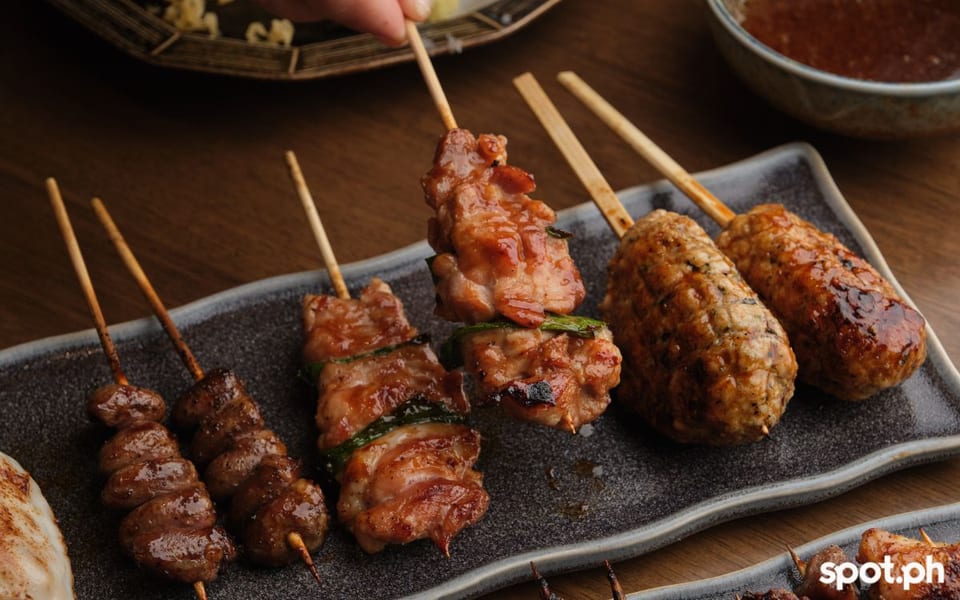
If you a purist or are simply after plain chicken meat, the best options on the menu are the Negima or Chicken Thigh and Scallion (P130), the Soriresu or Chicken Thigh Joint (P160), and Mune or Chicken Breast (P130). Let the quality of the chicken be the main highlight.
Meanwhile, for my fellow offal enthusiasts—the ones who like a gritty but creamy texture or chewy but with bite—you can order their Hatsu or Chicken Heart (P130), Sunagimo or Chicken Gizzard (P130), and Kimo or Chicken Liver (P130). If you like a bit of a contrasting texture of snappy skin and tender meat, the Bonjiri or Chicken Tail (P140) is a good option too.
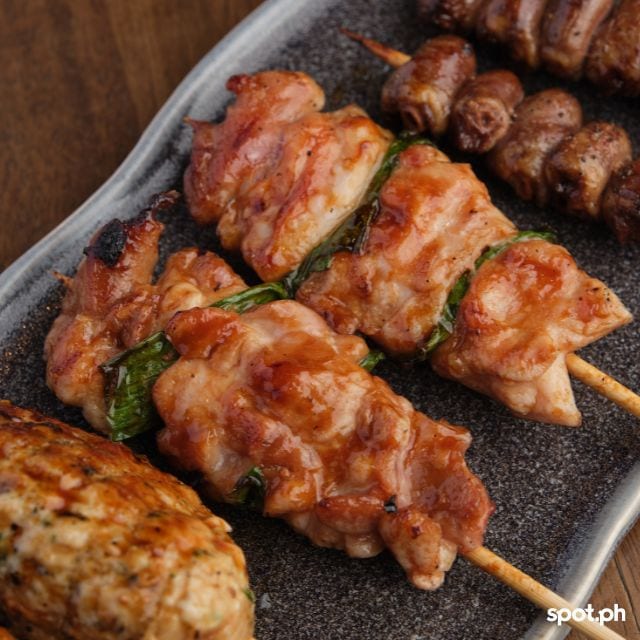
Negima or Chicken Thigh and Scallion. Photo by Hans Fausto.
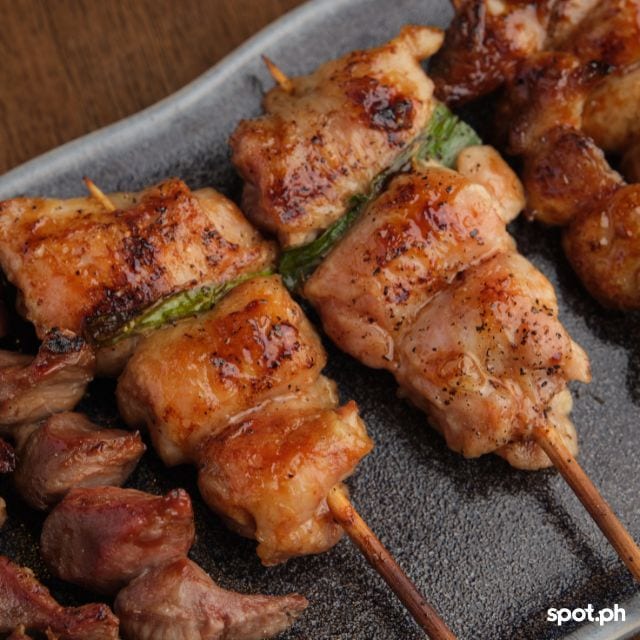
Soriresu or Chicken Thigh Joint. Photo by Hans Fausto.
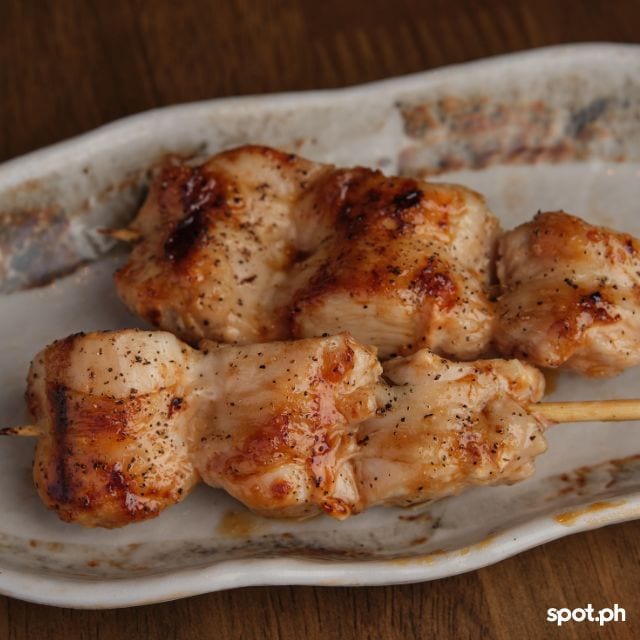
Mune or Chicken Breast. Photo by Hans Fausto.
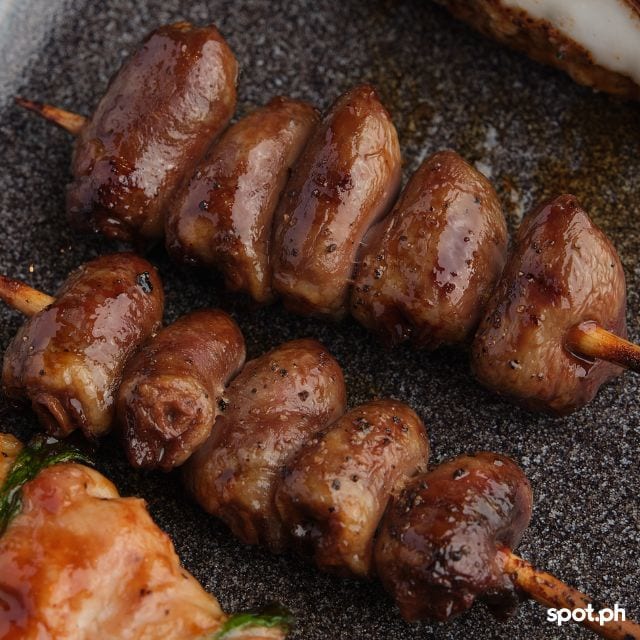
Hatsu or Chicken Heart. Photo by Hans Fausto.
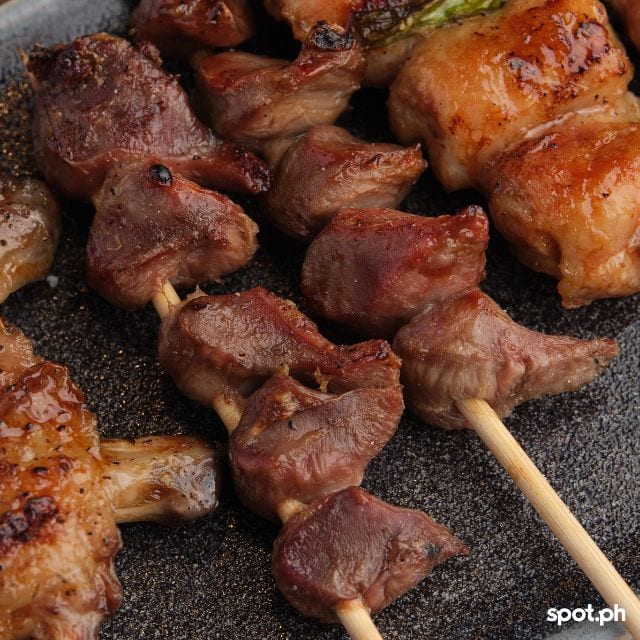
Sunagimo or Chicken Gizzard. Photo by Hans Fausto.
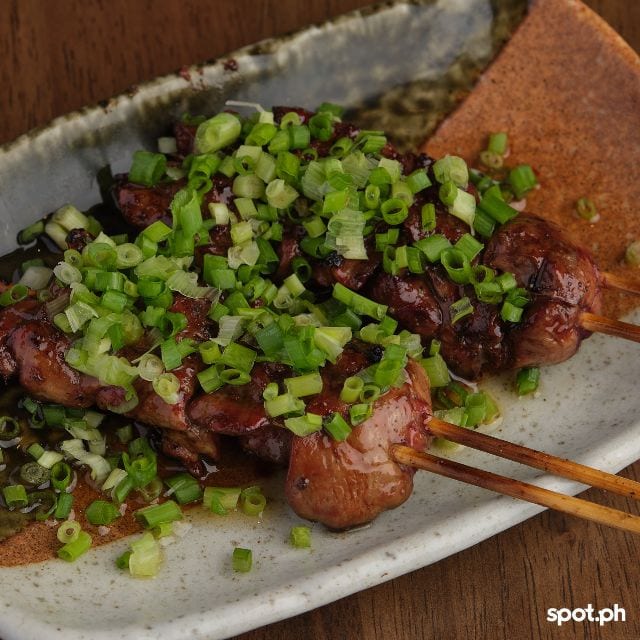
Kimo or Chicken Liver. Photo by Hans Fausto.
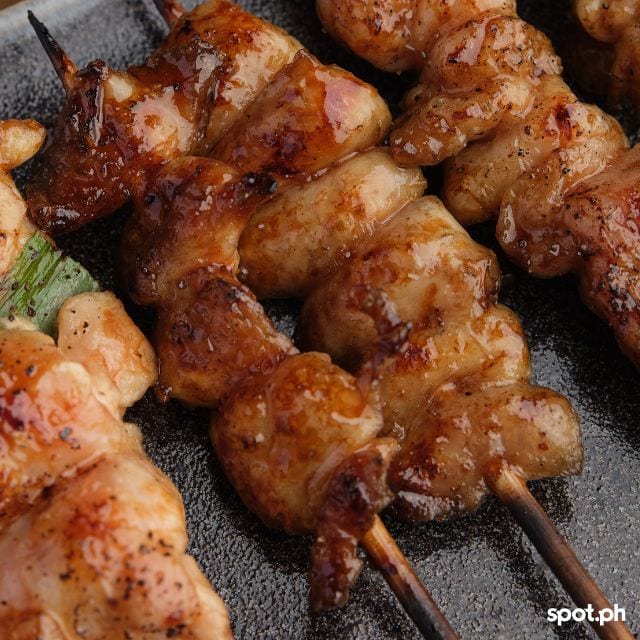
Bonjiri or Chicken Tail. Photo by Hans Fausto.
photos to expand
Then there are the guaranteed crowd-pleasers: the Tsukune or Chicken Meatball (P140), and its cheesier (literally) other half, the Chicken Meatball and Cheese (P170). Add in the crunchy Kawa or Chicken Skin (P120) and Tebasaki or Chicken Wing (P160), which, to my surprise, were easy to debone and eat. You just have to literally pluck out the two bones, which won't take you more than 30 seconds.
The wildcard (in a good way) from the poultry yakitori selection is the Uzura Tamago or Quail Egg (P110). We've all tried quail eggs—either from the supermarket or the streetside vendors, but the way they were softly cooked made it creamy, almost as if melting into a paste.
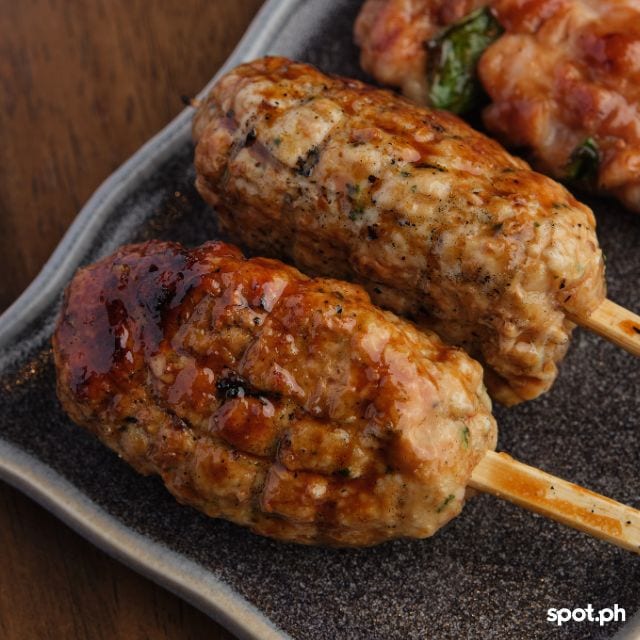
Tsukuna or Chicken Meatball. Photo by Hans Fausto.
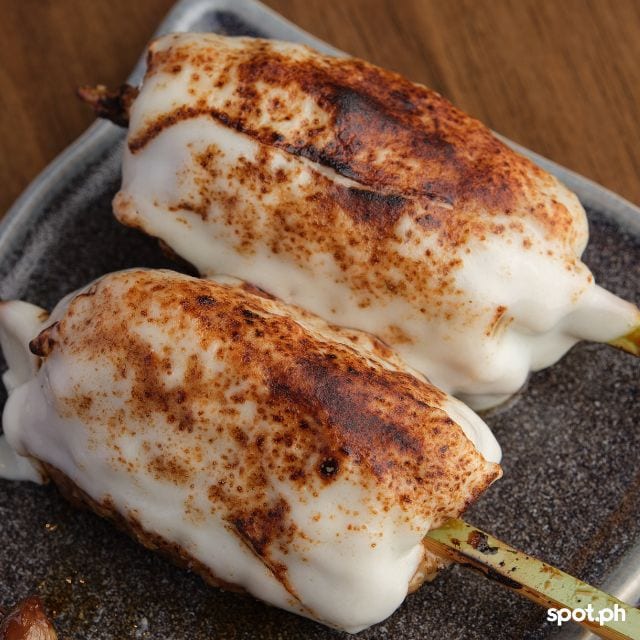
Tsukune or Chicken Meatball and Cheese. Photo by Hans Fausto.
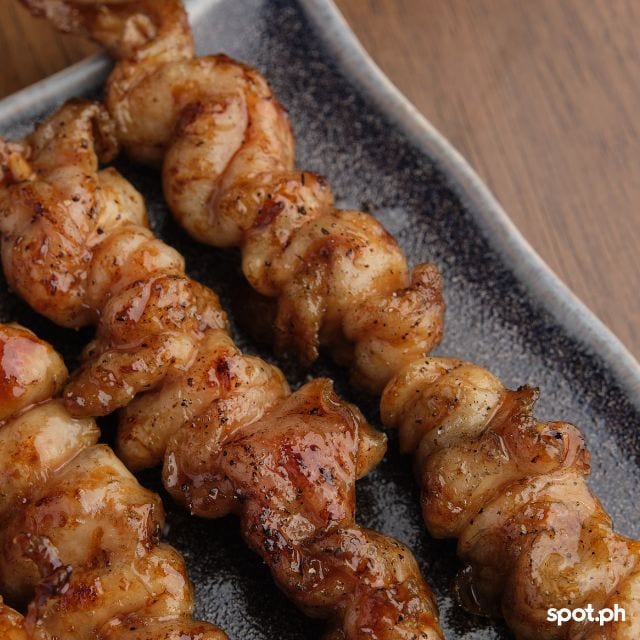
Kawa or Chicken Skin. Photo by Hans Fausto.
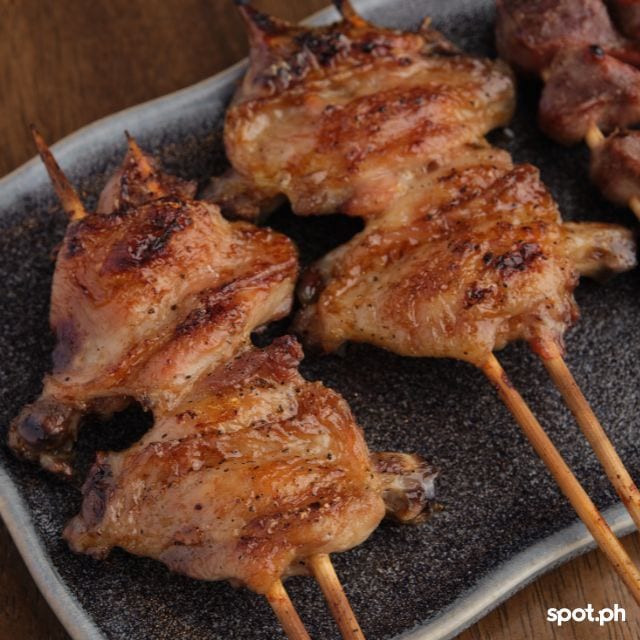
Tebasaki or Chicken Wing. Photo by Hans Fausto.
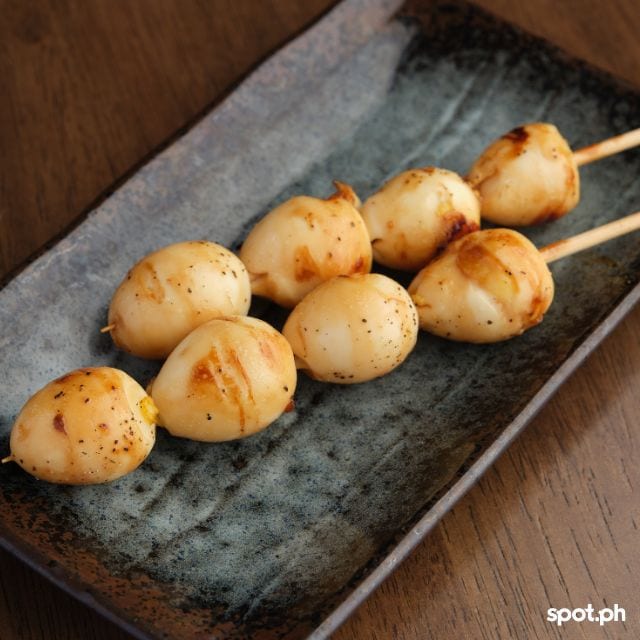
Uzura Tamago or Quail Egg. Photo by Hans Fausto.
photos to expand
And just because Ikoka's a master on the grill, doesn't mean you should skip on their other dishes. One of the nonnegotiable dishes that everyone needs to try? Ikoka's Torimomo No Karaage or the Japanese-style Fried Chicken (P310). These are huge boneless chicken bites with juicy meat and well-seasoned, crunchy skin. Don't forget to add a squeeze of lemon and order rice, or for something lighter, the Ikoka Salad (P380), which has a Korean-style dressing of sesame oil and salt.
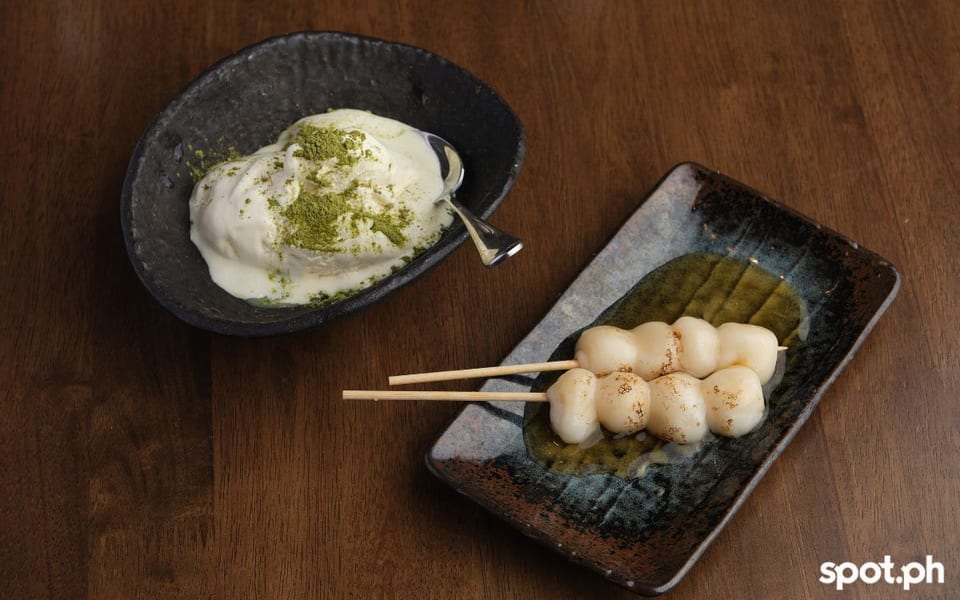
After all the savories, you can either go for the Mitarasahi Dango (P100): a Japanese dessert of glutinous rice (similar to bilo-bilo) that's skewered, charred, and coated in a sweet and savory soy sauce glaze; or you can go the sweeter route with the Shiratama Ice Cream (P120): glutinous rice balls (mochi) with a scoop of vanilla ice cream, and topped with a flavor of your choosing. The options include Chocolate, Kinako (Roasted Soy Bean), Azuki (Red Bean), and, my recommendation, Matcha (Green Tea)
And because yakitori culture is essentially Japan’s love letter to late-night eating and drinking, everything here makes the most sense with booze. Grab an ice-cold beer, or if you’re feeling fancy (or reckless), dip into Ikoka’s sake collection. Either way, this is food made for eating with one hand and raising a glass with the other, with a resounding "Kampai!".
Ikoka doesn’t try to reinvent yakitori—it's simple done to perfection. In a dining scene that’s already knee-deep in Japanese options, this kind of mastery or focus feels refreshing and reassuring. After all, “ikoka” translates to “let’s go”—and with skewers this good, you won’t need much convincing.
Photos by Hans Fausto
Bea Faicol runs on questionable amounts of coffee.