What's New
At BGC Pop-Up, Chef Sharwin Tee Reinvents the Chinoy Fare He Used to Hate Into Compelling New Dishes
Catch Tee's series of "progressive Chinese Filipino" dinners in BGC on weekends.
by Philbert Dy
Published on Jul 6, 2025
(SPOT.ph) Chef Sharwin Tee never really thought that he'd be cooking Chinese food. And certainly not the Chinese food he grew up eating. It's just not the kind of thing you find in restaurants: the kind of home-cooked cuisine that a young Chinoy might complain about after a lifetime of dinners of the same dishes served over and over again.
Anyone who grew up in a Filipino-Chinese household would know what he's talking about: the misua invariably served on birthdays, the filling but often one note kiam peng, the beef and broccoli swimming in oyster sauce. Tee went and became a chef, training in the French tradition, at least partly because he wanted to get away from the stuff that his grandmother made.
Click to Enlarge
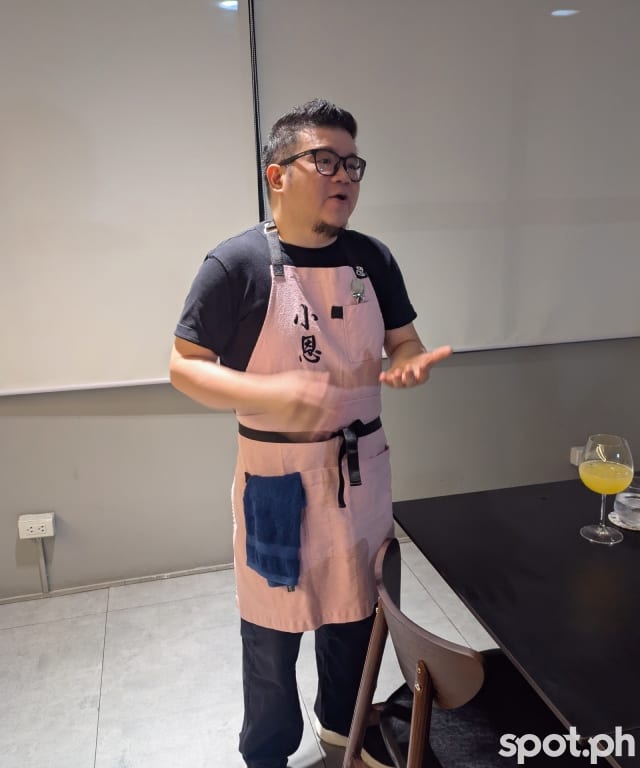
Tee, explaining the dinner to come. Photo by Philbert Dy.
But it is this food that inspires his menu at Little Grace, the concept that he's been for nearly ten months now. After a residency at the Ezra Resort in Tagaytay, Little Grace has found a new home in Metro Manila, taking up a demo space in the UP BGC Campus, on the third floor of the Henry Sy building.
The menu is called "Progress," which is partly about advancing Chinoy cuisine and placing it in the context of fine dining. But Tee admits it's also about his own personal progress in appreciating the food he grew up with.
"This is the food I used to hate growing up," he says. And he has spent considerable time researching these dishes and finding ways to add his own personal touches to them.
Little Grace pop-ups by Chef Sharwin Tee
Click to Enlarge
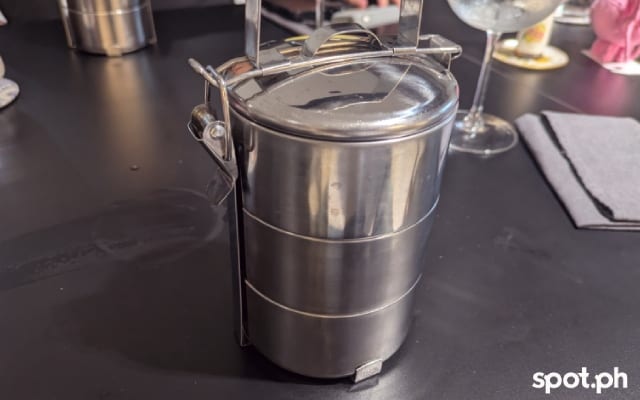
Tiam Sim, a tiffin of starters. Photo by Philbert Dy.
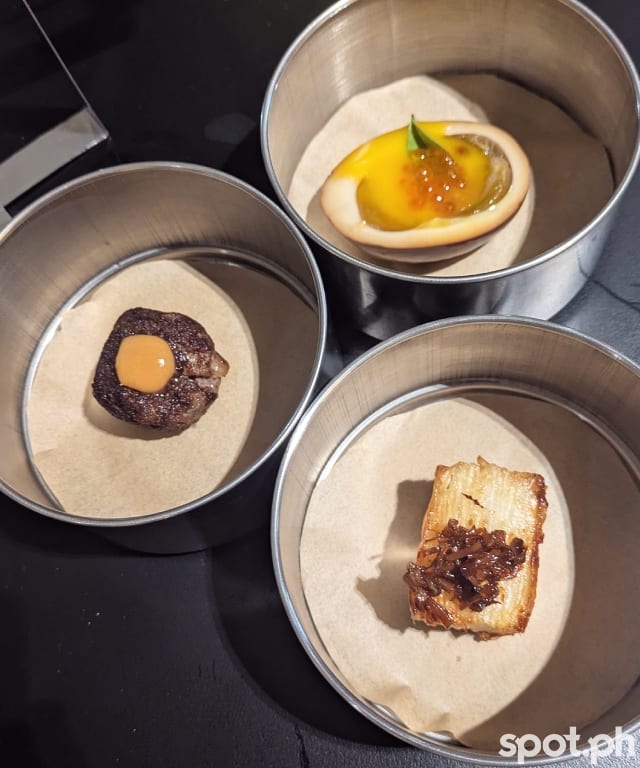
The meal starts with immediate nostalgia, with Tiam Sim—three bite sized snacks served in a tiered tiffin box, recalling the baon one might have brought to school. There is a tea egg, topped with tobiko. There is a radish cake pavé, served with homemade XO sauce. And there is a meatball, made after his grandmother's recipe, served with a dollop of homemade banana ketchup.
Click to Enlarge
Inside the tiffin. Photo by Philbert Dy.
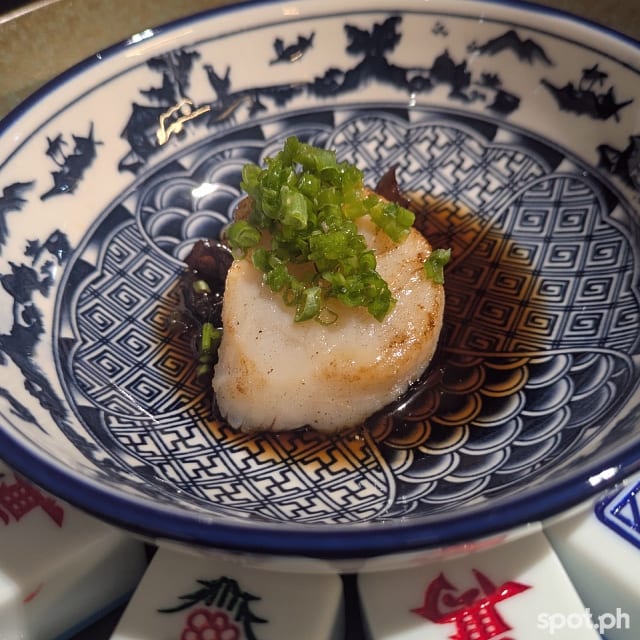
After that round of familiarity, the menu moves to something a little more exotic: Kiam Tao Din, a Taiwanese breakfast staple of hot soy milk and black vinegar, with a tender piece of scallop at the center. This may seem like a strange combination, but this course will likely be a wild revelation to anyone who tries it.
Click to Enlarge
Kiam Tao Din—seared scallop in a soy milk-black vinegar broth. Photo by Philbert Dy.
Click to Enlarge
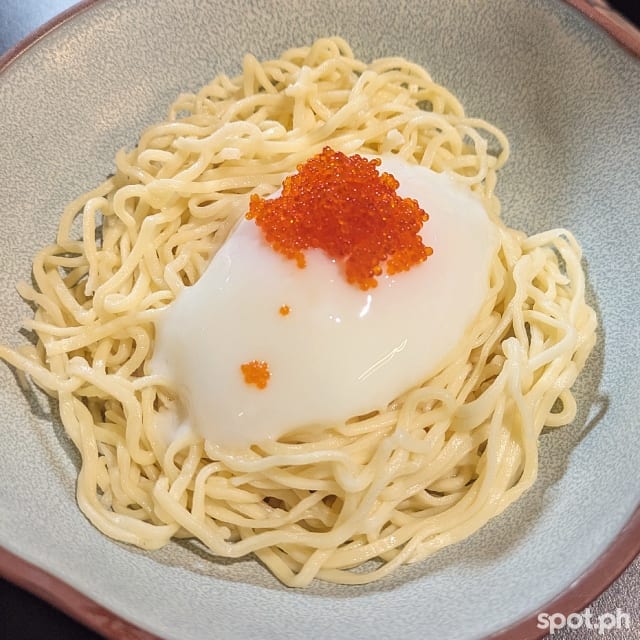
Misua, the birthday noodle staple of any Chinese household, is turned into a cold salad with homemade noodles served with a carrot dressing, a sous vide egg and a shaving of tultul salt. This dish, more than any of the others, seems to sum up the philosophy of Little Grace, remixing the components of a classic Chinoy dish to create something new and lively.
Click to Enlarge
Misua, interpreted as a cold noodle salad of homemade noodles, carrot dressing, and a sous-vide egg. Photo by Philbert Dy.
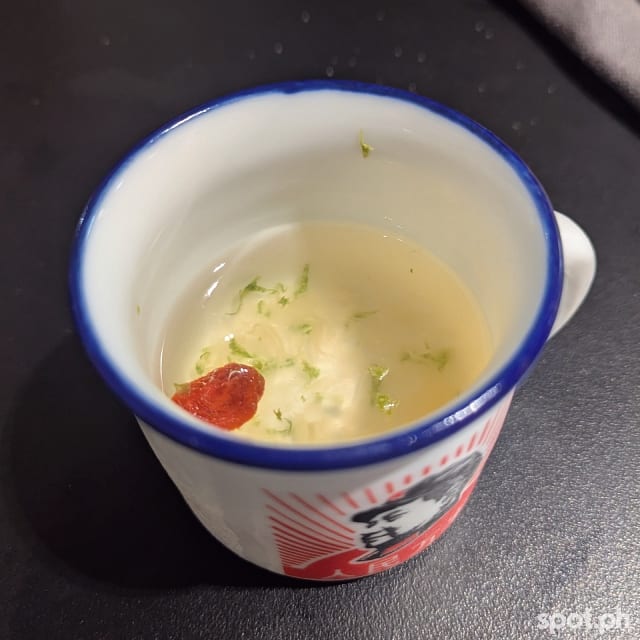
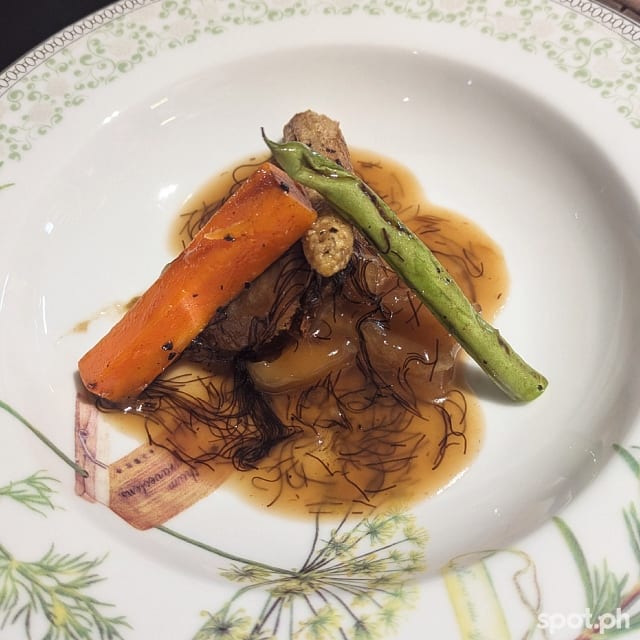
A palate cleanser of Pe Bok Ni, a sweet white fungus drink, is then followed with Tao Meng Tai, a serving of hair vegetable with the luxury ingredient that is fish maw. The main course takes after a dish most Filipinos would be familiar with: Beef and Broccoli, using Mayura Station Wagyu from Australia, and served with a version of oyster sauce made with real oysters. "Honestly it started as a dad joke," Tee says. "Oyster oyster sauce, but people really liked it."
Click to Enlarge
Pe Bok Ni, a sweet white fungus drink. Photo by Philbert Dy.
Click to Enlarge
Tao Meng Tai—a deeply savory dish of hairy vegetable and fish maw. Photo by Philbert Dy.
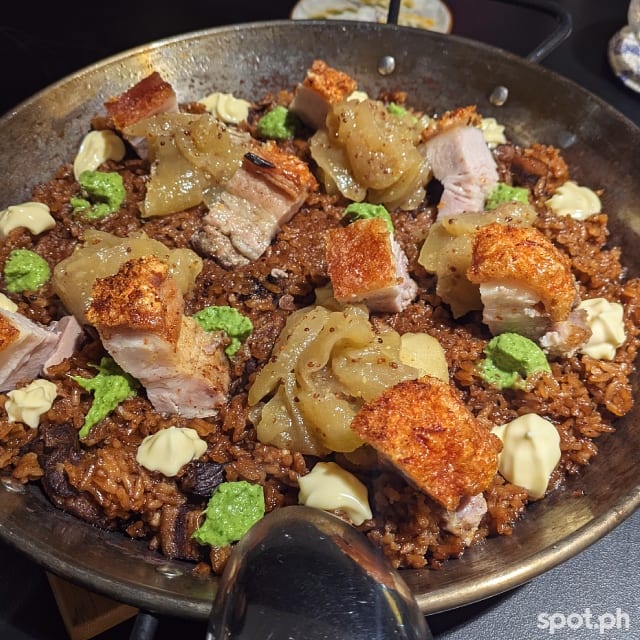
The course that likely get diners full is the Kiam Peng. Tee's version is served in the style of paella, the bottom purposefully burnt to create whatever the Chinese version of socarrat is. Topped with pork belly, Kewpie mayo and mustard pesto, this rice dish ensures that no one leaves the tasting unsatisfied.
Click to Enlarge
Kiam Peng, served paella-style and topped with pork belly, Kewpie mayo, and mustard pesto. Photo by Philbert Dy.
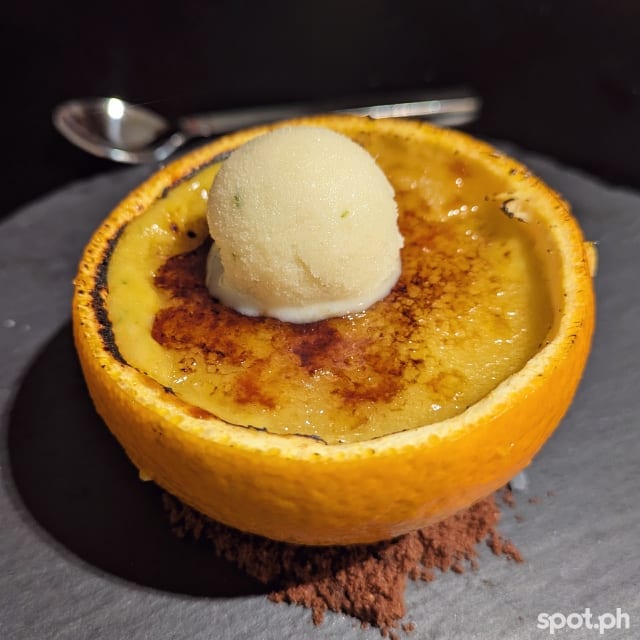
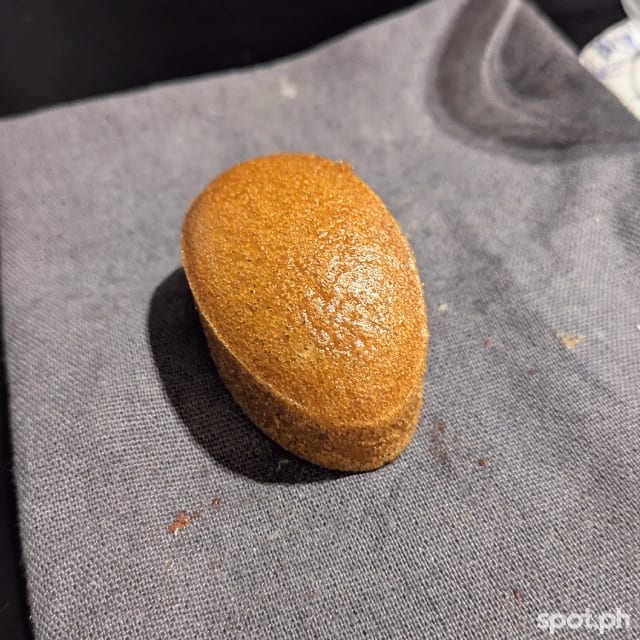
Dessert is Amah's Gulaman—bruleed orange panna cotta with pineapple, inspired by its namesake (Amah means grandmother). "[Gulaman was] the only dessert she made,” he says. The meal ends like a typical Chinese banquet, with fluffy Malay Ko (Cantonese steamed cake) served with tea.
Click to Enlarge
Amah's Gulaman—orange panna cotta in an orange half. Photo by Philbert Dy.
Click to Enlarge
Malay Ko, a piece of steamed cake that wraps ups the meal. Photo by Philbert Dy.
Little Grace is going to start serving its menu in July, with one seating every Friday, Saturday and Sunday. It's going to be an intimate affair, limited to twelve reservations per seating. The meal is priced at P5000, with part of the proceeds helping fund education-related programs for indigenous communities.
That's partly what the name “Little Grace” is about. Another part of it is that Tee learned that one of the characters in his Chinese name roughly translated to “Grace.” “I only found that out when I was thirty,” he laughs.
Little Grace is certainly a fine addition to the fine dining scene in the Philippines. Because Tee is right: this isn't the kind of food that is typically served in restaurant, much less in the context of a degustation menu. But Tee has thoughtfully explored his own feelings about the cooking he's grown up with, and applied his years of experience as a professional chef to turn these feelings into compelling new dishes.
Little Grace Dining takes place at 3/F Henry Sy Building, UP BGC, 32nd Street, Bonifacio Global City on Fridays, Saturdays, and Sundays. For inquiries and reservations, send a message to Little Grace Dining's Instagram page.
You Might Also Like