First Aid for Mental Health: This Workshop Teaches You What to Do When Someone Isn’t Okay
Participants become certified facilitators at the end of the session.

Published on May 29, 2026
(SPOT.ph) When someone you know tells you they’re not okay, the instinct is usually to help. The harder part is knowing what "help" is supposed to look like. Do you stay quiet? Do you give advice? Do you tell them to see a professional? More importantly, how do you make sure you’re not making things worse?
Conversations around mental health have fortunately become more open, but awareness does not always translate to access. According to the latest figures from the Philippine Psychiatric Association, there are only 133 psychologists and 651 psychiatrists in the country. This means there are only two psychiatrists for every hundred thousand individuals, which is way below the World Health Organization’s (WHO) recommendation of 10 psychiatrists per 100,000 people.
So while the ideal solution is always to seek professional help, the first person someone turns to is often not a psychiatrist or psychologist, but a parent, friend, teacher, coworker, partner, or pastor.
That is the gap DMR Psychological Services is trying to address through its Certified Mental Health Wellness Facilitator training program. SPOT.ph was invited to join one session so we could experience it firsthand. Here’s what happened in the workshop—and why it made a strong case for learning mental health first aid, no matter your age, sex, or profession.
Also read: What to Do When a Loved One Experiences a Psychiatric Emergency
What is a Certified Mental Wellness Facilitator?
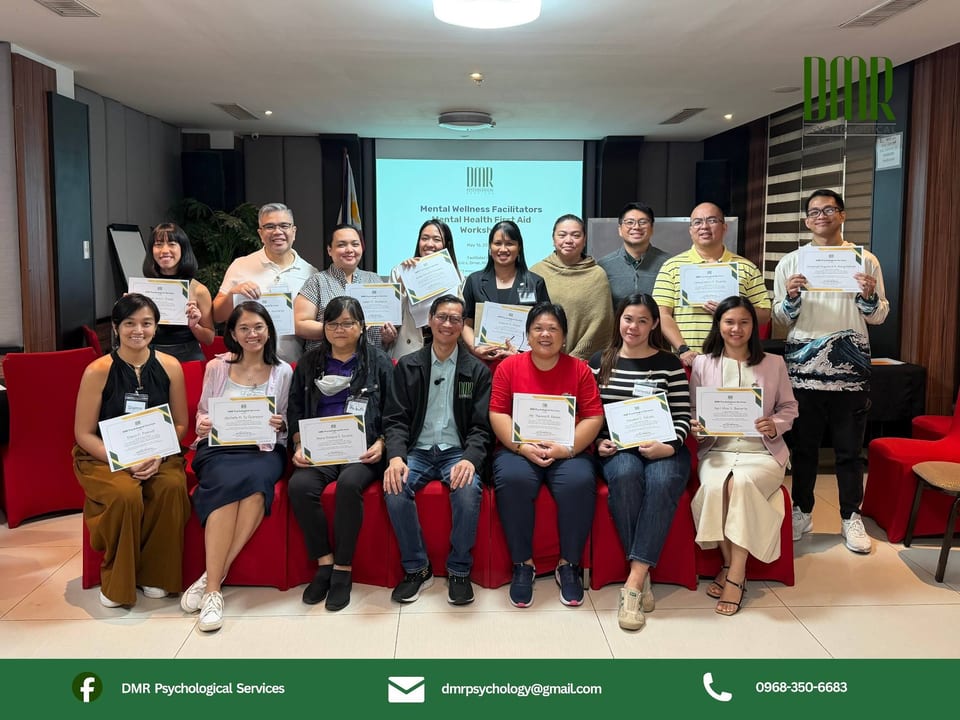
Before anything else, we should define what we're signing up for.
According to DMR Psychological Services, a Certified Mental Wellness Facilitator (CMWF) is “a trained individual who provides basic, non-clinical mental health support by listening, offering mental health first aid, and guiding individuals toward appropriate professional help when needed.”
Simply put, a CMWF serves as a bridge: someone who can offer immediate support, while knowing when it's to guide a person toward professional help. It's open to anyone 18 and above, even without a background in psychology.
The idea behind the training is not entirely new: these evidence-based courses originated from First Aid Mental Health First Aid Australia as a way to teach ordinary people how to offer initial support when someone is experiencing a mental health problem. DMR Psychological Services adapted one of these approaches for its CMWF program, tailoring it to make sense in the Philippine setting.
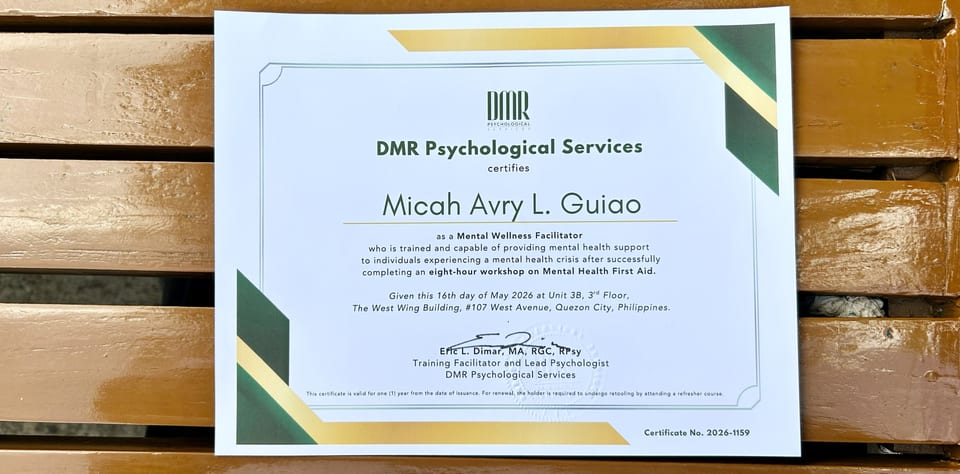
Having this certification doesn’t mean you can act as a psychologist or psychiatrist. Instead, the training is meant for people who want to support others more responsibly, whether at home, in school, at work, or in their community.
“A CMWF knows how to listen and, most importantly, when to refer,” DMR Psychological Services said in a post.
Also read: We Tried Calling Mental Health Hotlines in the Philippines—This Is What Happened
Learning how to do mental health first aid
Let’s get this out of the way: the registration fee is not cheap for the average Filipino. Onsite training costs P5,000, while the online session costs P3,500—that is a serious amount to set aside for a one-day workshop.
But for those who have the means to go for it, the training makes a strong case for the investment. You're not just there to sit through a short lecture and take a photo with your certificate at the end of the day. The training is a whole-day affair from 9 a.m. to 5 p.m., with lunch and snacks included for onsite participants.
The day starts with the basics of mental health, including how distress can show up differently from person to person. Once that foundation is set, the discussion moves into how support should look in actual conversations, then participants are divided into small groups to practice what they learned.
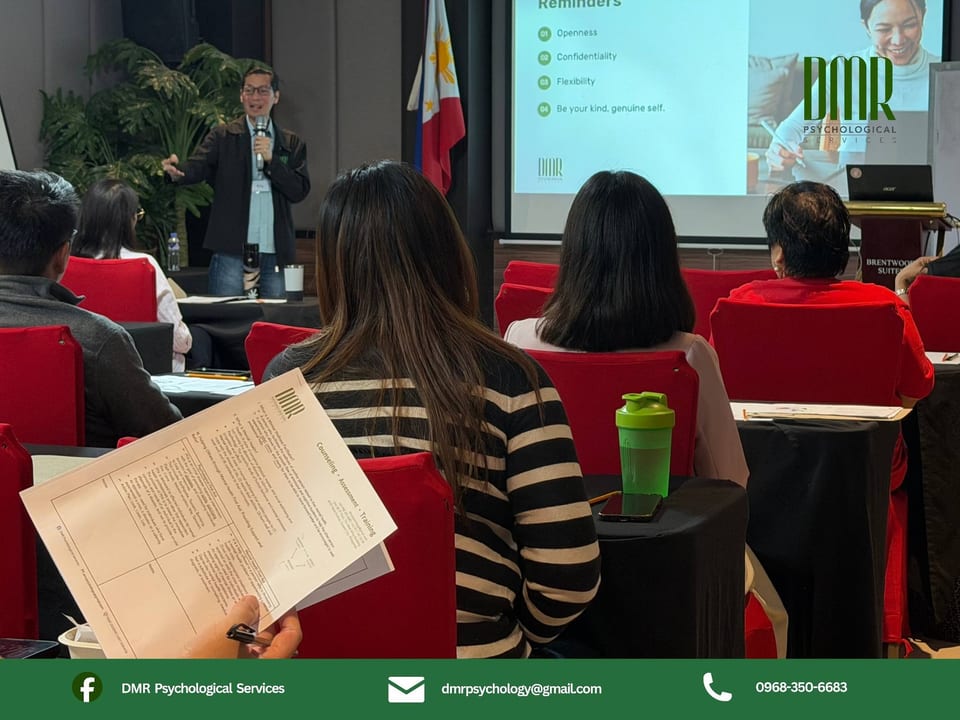
People who would probably never cross paths found themselves gathered in a hotel function room on a Saturday for the same reason: someone, somewhere, had once turned to them for help. In my batch, there were parents trying to understand their children better. Managers who have to handle workplace conflict. Government workers who deal with people in vulnerable situations. A church pastor whom people turn to for guidance. Mental health professionals who wanted to complement their theoretical knowledge with a more practical approach. People who knew what it was like to struggle themselves. One participant even flew in from the province for the training.
Without giving too much away, Eric Dimar, Lead Psychologist at DMR Psychological Services, walked us through the steps of responding to someone who may need support—how to approach someone, how to respond, and when to refer them to a professional. Even if the person in need isn't ready to open up to you, there's a way to express your concern without pressuring them to share more than they are comfortable with.
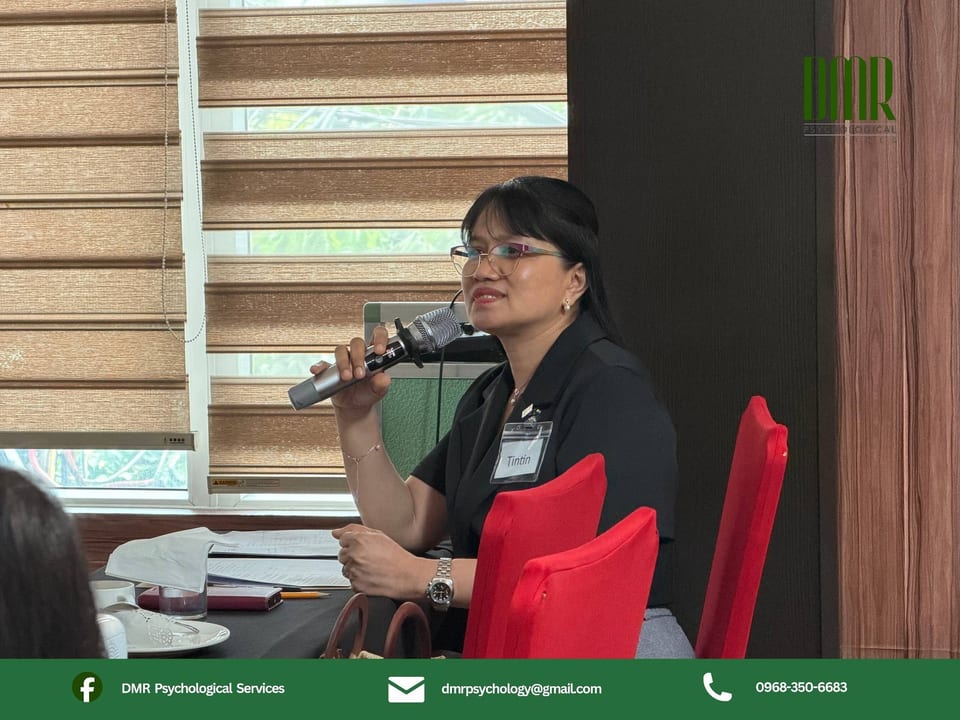
The training also tackled what not to do when offering our support to others, which is arguably just as important to know. As Sir Dimar pointed out, a lot of unhelpful responses do not come from bad intentions—they come from old habits, outdated ideas, or the belief that people should simply tough things out.
The more concrete the discussion became, the more questions came in, which made for some of the most interesting exchanges of the day. Most of the attendees in my batch were older millennials, Gen X, or baby boomers, so naturally, some points needed a little more unpacking at first. Attendees tried to connect the lessons to situations they had already encountered:
How do you sit with silence without rushing to fill it?
What do you do if you catch yourself saying the wrong thing?
How do you ask follow-up questions without making them feel interrupted?
When is it okay to share your own experience?
How do you respond when someone shares something heavier than expected?
How does support look in a workplace setting?
What do you do when someone becomes too dependent on you?
It was a room of people figuring out, in real time, how these lessons would actually play out in real life.
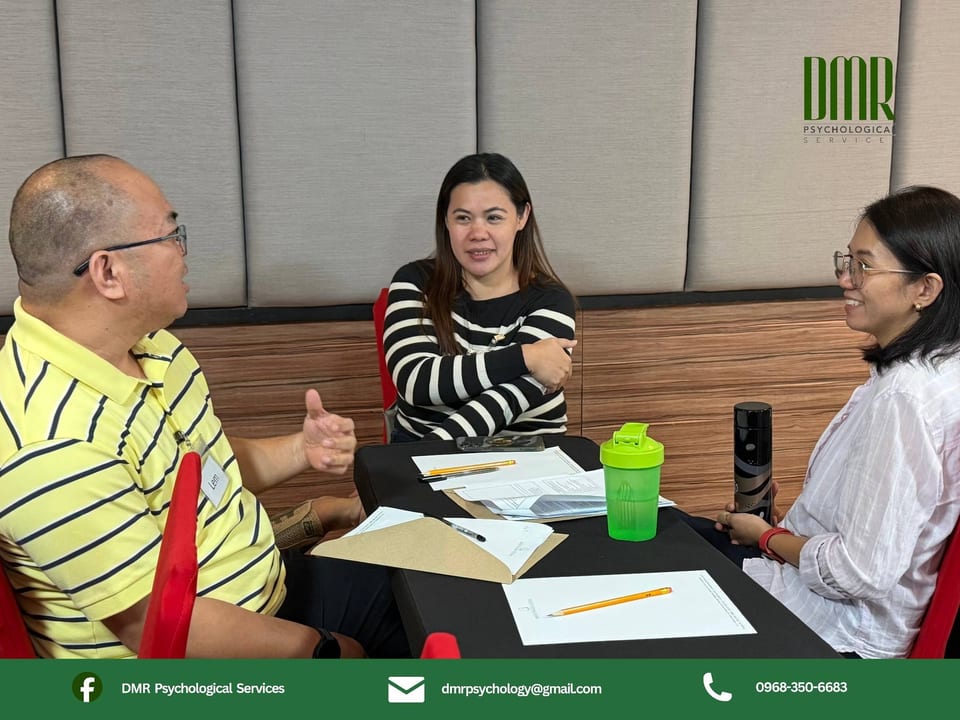
Once all the questions were answered, it was time for the small-group simulations.
Participants were divided into groups of three, with each person taking a turn as the facilitator, the person opening up, or the observer. The scenarios were based on real-life situations (you can share an old or current problem you have, it's totally up to you), which made the exercises feel more personal than expected. It allowed everyone a chance to practice active listening like a muscle—the kind of skill you only get better at by actually doing it.
Because the scenarios felt real, so did the urge to respond the way most people usually do. During the exercises, we were actively fighting the instinct to comfort too quickly, relate the story back to ourselves, or offer a solution before the person had even finished speaking. It was harder than it sounds but that's exactly where the learning happened. The point wasn't so much about getting every response right (old habits die hard, after all) as much as it is about becoming aware of the instinct to rush in before the other person has really been heard.
Some participants even finished the experience realizing they needed help themselves, too. For a workshop about responding to others, it also encouraged people to pay attention to themselves.
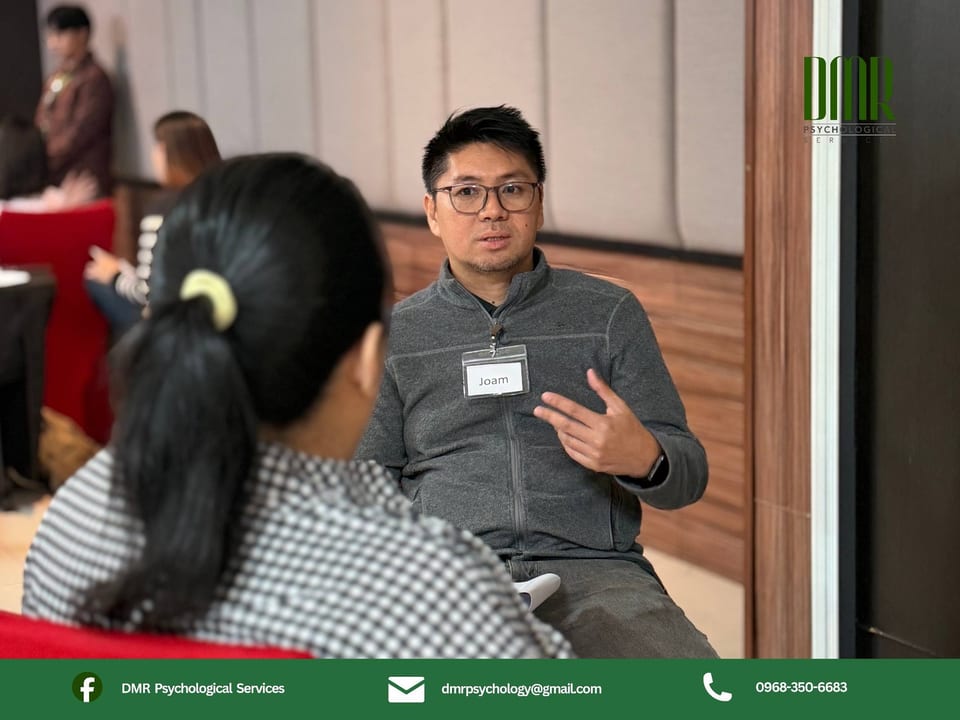
All that to say, the training isn't only for people who are new to mental health conversations. Even those who have long cared about the issue can still walk away with something useful. As someone who has advocated for mental health awareness for more than a decade, I went in thinking I already had a decent grasp of how to respond to someone in crisis. It turns out being open to learning—and unlearning—comes easy when you’re in a room full of people willing to do the same.
DMR Psychological Services' next Certified Mental Wellness Training programs are on June 20, 2026 (online) and June 27, 2026 (onsite). They hold sessions at least once every month. For more information, visit its official Facebook page.
Also read: PSA: You Can Get Free Mental Health Medications in Metro Manila
Micah believes that writing is always political. Beyond the byline, you’ll find her bruising herself on a pole or doting on her beagle. Reach her at micah@spot.ph.