PH Beachgoers Warned About This ‘Flower Urchin’ You Should Never Touch
What makes this thing so dangerous?

Published on Mar 23, 2026
(SPOT.ph) It's officially the start of dry season, which means beach days are back. The National Museum of the Philippines (NMP) has a reminder for anyone planning to swim or snorkel: Not everything that looks pretty should be touched.
The NMP warned the public about the flower urchin (Toxopneustes pileolus), a sea urchin species found in Philippine waters that comes with a pretty misleading name. It may look less threatening than the usual spiky black urchin, but this one is actually considered the “most dangerous sea urchin,” according to Guinness World Records in 2014.
That’s because its toxin can cause numbness, muscle paralysis, and breathing difficulty. For divers, that kind of reaction can be especiallly dangerous and may even lead to accidental drowning.
Also read: Did You Know There's a Plant Called Kantutan in the Philippines?
Flower urchins in Philippine waters
What makes it more concerning is how easy it is to come across one. According to the NMP, flower urchins live in shallow waters with coral reefs, sand, rubble, and seagrass beds—the same spots people tend to explore while swimming or snorkeling. Appearance-wise, the animal is covered in petal-like structures called pedicellariae, which give it that “flower” look that hides its short, blunt spines.
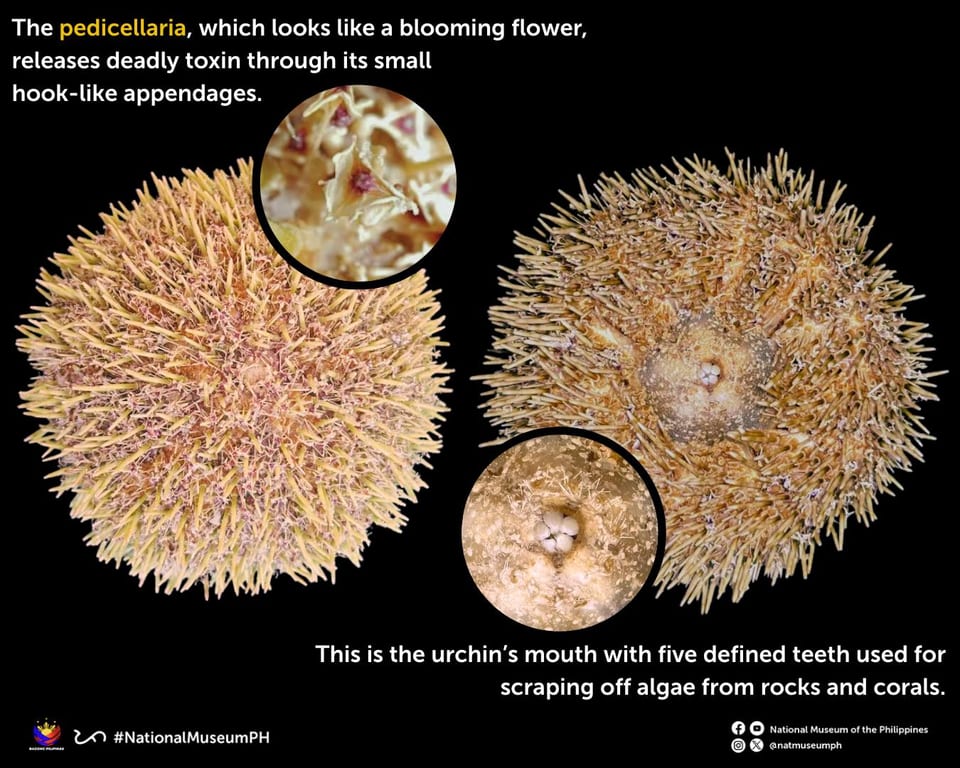
Flower urchins aren’t all that bad. They feed on algae, which actually helps keep coral ecosystems balanced, so they’re not completely villains here. Still, they’re not something you should touch, step on, or handle out of curiosity.
“Although there have been reported fatalities of swimmers who have drowned after being stung by these urchins, none have been scientifically verified to date,” Guinness World Records noted. But that’s not saying go test it for yourself.
So, what should you do if you actually touch one?
According to Divers Alert Network (DAN), get out of the water right away once you come into contact with a sea urchin. Soak the affected area in hot water—the hottest temperature you can tolerate—for 30 to 90 minutes to help with pain. Remove any spines if you can, but do so safely. Do not dig around aggressively for deeply embedded pieces (doing so may break them down into small pieces, complicating the removal process). Any signs like breathing difficulty or muscle weakness mean you should seek medical attention immediately. Don’t wait to get help.
Also read: Toxic Algae Species Found in Luzon Shellfish Farms
Micah believes that writing is always political. Beyond the byline, you’ll find her bruising herself on a pole or doting on her beagle. Reach her at micah@spot.ph.