ADVERTISEMENT
Mobility

LOOK: This Is How the MMDA Watches Over Metro Manila 24/7

Everything is recorded, reviewed, and stored here.
Micah Avry Guiao

by Micah Avry Guiao

Published on Jun 17, 2025

Photo by Micah Avry Guiao
(SPOT.ph) A van crashes into a center barrier along EDSA during rush hour. It's spotted by one of over 500 CCTV cameras across Metro Manila. Within a few minutes, a radio dispatcher alerts nearby traffic enforcers. A worker checks the camera footage for possible injuries or secondary collisions. Another team updates Facebook and X with rerouting options. All of this happens in a single room in Pasig City. 

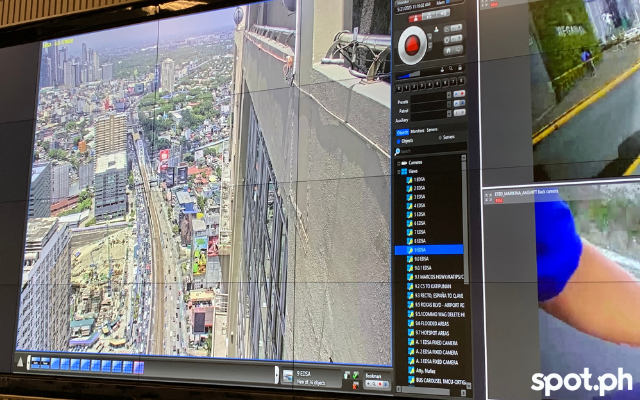
The MMDA Communications and Command Center (CCC) is a 24/7 facility that watches over Metro Manila through a growing network of CCTV cameras, radio systems, digital dashboards, and increasingly, artificial intelligence. On the screens are hundreds of live feeds—showing wide-angle rooftop shots of the city to close-up body camera footage showing exactly what traffic enforcers see on the ground. 

One can also view a data breakdown of the number of violations captured that day.
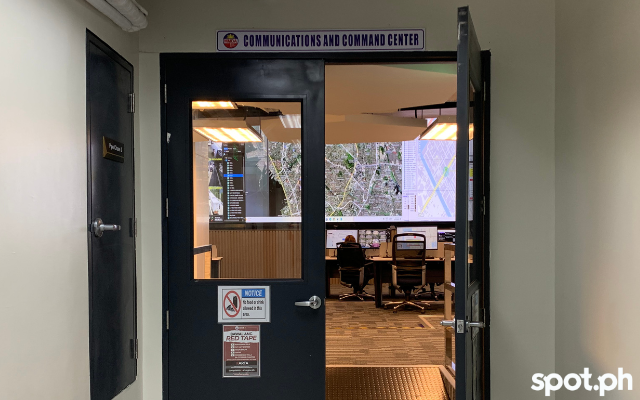
mmda communications and command center in pasig city
Click to Enlarge
Welcome to the Communications and Command Center. Photo by Micah Avry Guiao.
Don't be mistaken—the Communications and Command Center has been in operation long before the No Contact Apprehension Policy (NCAP) was re-implemented. It was inaugurated in 2023 to replace an aging facility in Makati City which could no longer keep up with the MMDA's growing operational demands (but more on that later).

So how does the Command Center actually work with NCAP in place?

It's true that AI-powered cameras have been steadily installed along Metro Manila’s busiest roads since 2024. These cameras are trained to detect a range of common violations—swerving into bus lanes, unloading in no-stopping zones, or ignoring the number coding scheme. But they're not perfect—yet.
mmda communications and command center in pasig city
Click to Enlarge
Every single computer in the room shows multiple footage at a time. Photo by Micah Avry Guiao.
According to MMDA Technical Head of the Communications and Command Center Oliver Bantog, AI-powered cameras deliver a 91% to 92% accuracy for now. That's why enforcement has shifted to a hybrid setup: Once a violation is captured, the camera locks in on the license plate, records the incident, and sends the information to a validation team for review. That team includes persons with disabilities, including members of the deaf community, who've long been part of MMDA's efforts to flag violations—even before AI entered the picture.

“Particular kami sa validation… to make sure walang magrereklamo kasi valid siya,” Bantog told SPOT.ph. 

Today, there are over 500 active cameras, with 800 more set to go live by early 2026. 

Click to Enlarge
On the left, a bird's-eye view of the metropolitan. On the right, a glimpse of a traffic enforcer's body camera. Photo by Micah Avry Guiao.

Running the MMDA Communications and Command Center

Of course, none of this would function without the teams behind the screens. The MMDA Communications and Command Center is run by multiple units working in sync to keep everything moving—literally and digitally.
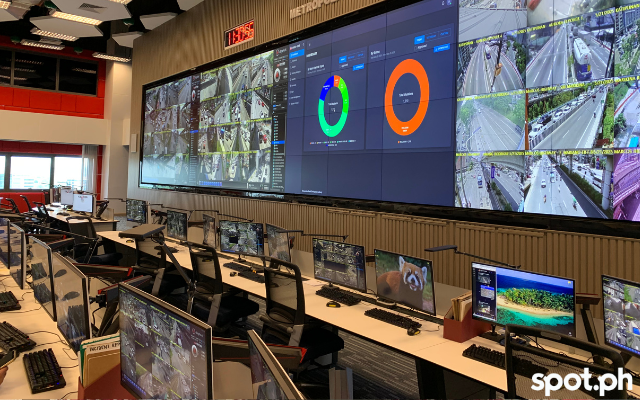
mmda communications and command center in pasig city
Click to Enlarge
A breakdown of the total number of violations that day. Photo by Micah Avry Guiao.

The Metrobase personnel oversee the CCTV feeds, operate the radio dispatch system, and answer Hotline 136—the agency’s three-digit public assistance number. They're the first to spot road accidents, stalled vehicles, or sudden congestion, relaying this information to the appropriate team. It’s not just traffic issues either—calls about fires, floods, and other emergencies are also handled on the same floor. The Philippine National Police and the Bureau of Fire Protection are among the government agencies on speed dial.
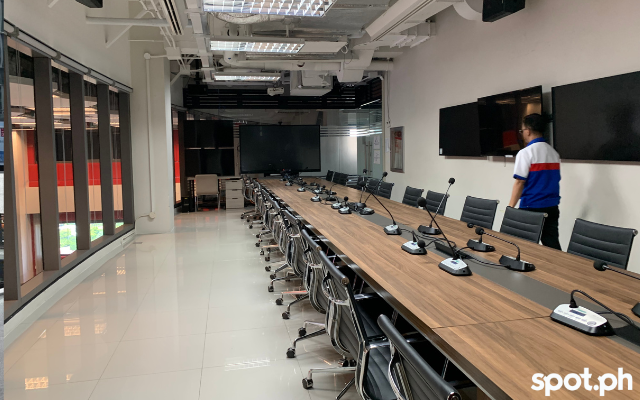
mmda communications and command center in pasig city
Click to Enlarge
Where government officials, LGUs, and other external parties gather to plan. Photo by Micah Avry Guiao.

Here's something you might not expect: Metro Manila's traffic lights? They're not always running on timers. The Metrobase team can control them remotely. If a traffic enforcer on the ground or a local government unit (LGU) requests an adjustment, the team can lengthen or shorten the time green lights are on based on what is needed at any given moment. 


Next to them sits the digital media group, the ones behind MMDA’s Facebook and X updates. They respond to the never-ending questions about number coding, clarify traffic rerouting in real time, and flag reports from the public. 
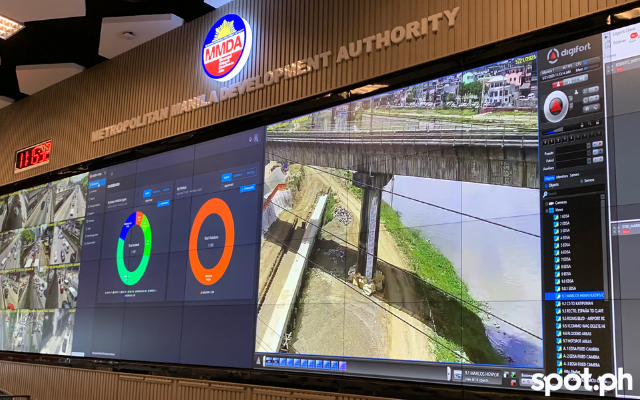
mmda communications and command center in pasig city
Click to Enlarge
That famous post in Marikina where water level is measured during floods. Photo by Micah Avry Guiao.
Traffic data is also passed on to the Traffic Engineering Center, which coordinates with news outlets and radio stations like Super Radyo DZBB to deliver live traffic updates throughout the day. When major events like elections are expected, LGU representatives head directly to the Communications and Command Center to coordinate responses in real time. 

The monitoring doesn’t stop at roads, either. Few are aware that the MMDA also keeps watch over Metro Manila’s waterways—rivers, creeks, and even coastal areas like the Dolomite Beach. That famous post showing water levels in Marikina? That comes from the agency’s monitoring points, too. Any sign of rising water is immediately relayed to LGUs. 
mmda communications and command center in pasig city
Click to Enlarge
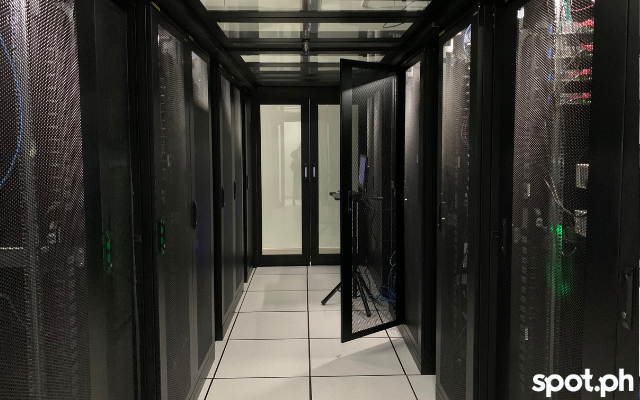
The data center is found in a backroom of the Communications and Command Center. Photo by Micah Avry Guiao.
As the MMDA continues expanding its capabilities, its Communications and Command Center has had to scale up physically as well. The amount of data flowing through the center is enormous—but you won’t see rows of CPUs in the room. You know how people say the Internet is a real, physical material? The same thing can be said of the footage. 

Everything is housed in a secure data center, a separate room where the temperature has to be kept between 18 °C and 23 °C to cool the servers. This is because servers generate heat when handling large amounts of data, and without proper airflow, they risk slowing down, crashing, or failing altogether.

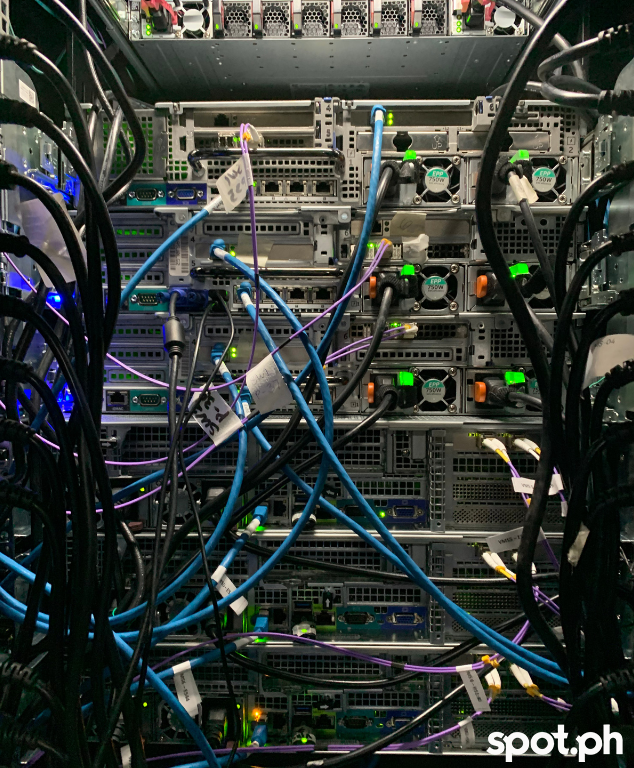
Bantog explained that camera footage is stored for 45 days before it's automatically deleted, to make room for new data, that is, unless a specific clip is flagged. If a violation, accident, or incident is detected, the relevant footage is immediately extracted and moved to long-term storage, where it is kept forever.
mmda communications and command center in pasig city
Click to Enlarge
All video data is temporarily stored in this system before it’s archived or deleted. Photo by Micah Avry Guiao.

“Kung may na-capture na accident, ine-extract na namin right away,” Bantog said. “Hindi na kami maghihintay pa ng magrereklamo or magrerequest ng video.” 


These videos are used in everything from insurance claims to police investigations and even court proceedings that can take years to resolve.
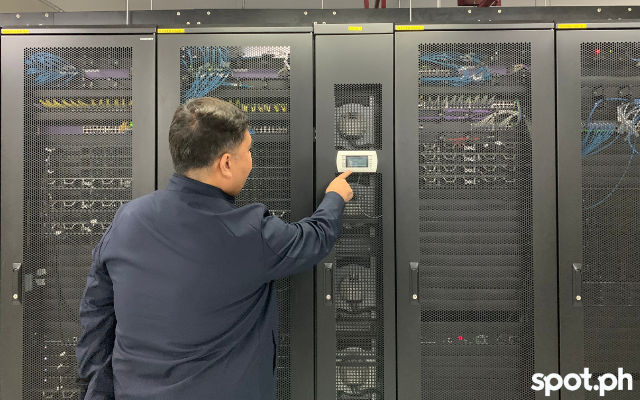
mmda communications and command center in pasig city
Click to Enlarge
MMDA Technical Head of the Communications and Command Center Oliver Bantog shows the room temperature at 23 °C. Photo by Micah Avry Guiao.

All that is to say it’s not a flawless system, but it adds some structure to a metro that rarely feels predictable. The MMDA can’t fix everything in real time—but at least there’s now a clearer record of what’s happening and when.

Micah Avry Guiao

Micah believes that writing is always political. Beyond the byline, you’ll find her bruising herself in a pole studio or napping with her beagle. Reach her at micah@spot.ph.

You Might Also Like