MRT-3 Is Set to Be Privatized in 2027: What Does It Mean for Commuters?
Here’s what we know about the privatization plan.
Published on Oct 23, 2026
(SPOT.ph) For many commuters traveling along EDSA, the Metro Rail Transit Line 3 (MRT-3) is a major transport option. Now, the railway is preparing for a huge shift: the government is moving to hand over its operations and maintenance to a private company, with a contract expected to be awarded in 2027.
But what does privatization actually mean for commuters? Will train services improve, and could fares change? Here's what we know so far.
Also read: LOOK: What Happens Inside MRT-3’s Underground Maintenance Operations
What could MRT-3 privatization mean for commuters?
It’s true that the contract terms are still being ironed out, but the DOTr’s project scope gives us a preview of what a private takeover could look like.
The operator’s main job will be to run and maintain MRT-3 without interrupting daily services. The proposed scope also includes specific technical and operational overhauls:
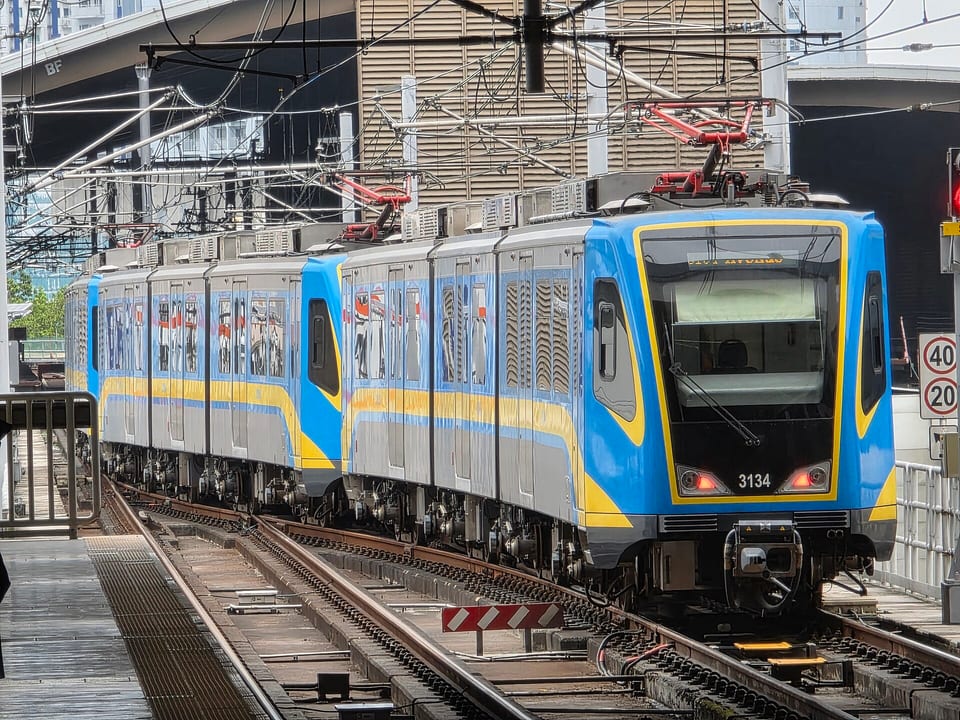
Getting the Dalian trains running: In 2014, the government purchased 48 train cars from China’s Dalian Locomotive. However, the trains remained unused for years because of technical compatibility issues. Some Dalian trains began carrying passengers in 2025, but the new operator will be tasked with introducing more of them into regular commercial service.
Adding more trains and upgrading the depot: The proposed project includes adding new trainsets, which could gradually replace aging CKD trains. It also calls for improvements to the depot, which is where trains are stored, inspected, repaired, and maintained.
Upgrading the signaling system: Signaling is basically the railway’s traffic light and safety system. It monitors train movements and manages how far apart they must stay. Upgrading this system could improve the reliability of train movements and help manage train intervals.
Managing the MRT-3 area at the Grand Central Station: The planned Unified Grand Central Station in North Avenue will connect MRT-3 with LRT-1, MRT-7, and the future Metro Manila Subway. The private operator’s proposed responsibilities include operating and maintaining the MRT-3 portion of this transport hub.
Now to the most important question on everyone's minds: Will fares go up? Not necessarily—but we can’t say for sure what the final arrangement will mean for fares just yet. Under the proposal, the operator would collect passenger fares and remit them to the government, while the government would pay the operator availability fees under the contract. The final terms will determine how the arrangement ultimately works.
Also read: Why the MRT-3 Can't Operate 24/7
Why is MRT-3 being privatized?
In a nutshell, the government wants to improve train services using private funding.
For 25 years, MRT-3 operated under a Build-Lease-Transfer (BLT) agreement with Metro Rail Transit Corporation (MRTC), a private consortium that financed and built the railway. Meanwhile, the government ran the trains, collected fares, and made fixed rental payments to MRTC.
That agreement expired in July 2025, leaving the government to pursue a new arrangement for the railway's operations and maintenance.
This time, the plan is to enter into a public-private partnership (PPP), with the goal of providing better services for commuters. In a PPP, the government partners with a private company to deliver or manage public infrastructure and services. Examples in the Philippines include LRT-1, the Ninoy Aquino International Airport, and the water concessions operated by Manila Water and Maynilad.

Former Department of Transportation (DOTr) Secretary Vince Dizon previously explained that President Ferdinand R. Marcos Jr. supported a PPP as a long-term solution for rail systems. Dizon pointed to a common problem: government budgets are limited, and procurement rules can slow down repairs and upgrades. He said a PPP could help the government complete those improvements faster.
“Iyon talaga ang pangmatagalang solusyon dahil habang ang gobyerno ang nag-o-operate nito, limitado tayo sa budget, limitado rin tayo ng ating mga procurement rules,” Dizon said. “Ibig sabihin niyan, hindi ganoon kabilis ang ability natin na mag-ayos nitong mga sistemang ito, kaya iyon talaga ang ultimate solution.”

For a real-world example of what a PPP can look like, look no further than the LRT-1. Since private operator Light Rail Manila Corporation (LRMC) took over operations and maintenance in 2015, the line has seen station upgrades, the introduction of brand-new fourth-generation trains, and the opening of the first phase of its Cavite extension. However, fare adjustments have also taken place over the years.
These changes don't necessarily mean MRT-3 will follow the exact same path, but they're a good peek at the kind of developments that can happen under a rail concession.
Also read: DOTr Eyes New Bus Lanes Along C-5, Quezon Avenue, and Ortigas
Celia Nachura writes to pay for plane tickets, tennis classes, and a pile of books she’ll never have the time to read. She is also the emotional support human to two dogs, Daisy and Nacho.