It's Official: March 20, 2026 Is a Regular Holiday for Eid'l Fitr
Long weekend alert.

Published on Mar 12, 2026
(SPOT.ph) The Malacañang Palace has officially declared March 20, 2026 as a regular holiday throughout the country in observance of Eid'l Fitr or the Festival of Breaking the Fast.
The announcement came after Ferdinand "Bongbong" Marcos Jr. joined members of the Muslim community and leaders from across the country at a Grand Iftar in Malacañang.
"The Palace extends its greetings to the Muslim community in the Philippines and around the world as they prepare to celebrate Eid’l Fitr with their families and communities," Presidential Communications Office (PCO) Undersecretary Claire Castro told reporters.
Eid'l Fitr is one of the two greatest feasts of Islam, the other being Eid'l Adha.
Since March 20 falls on a Friday, we get a long weekend without taking any leave.
Also read: LIST: 2026 Holidays and Long Weekends in the Philippines
What is Eid'l Fitr?
Eid'l Fitr is celebrated at the end of Ramadan, the ninth and holiest month in Islam. This sacred time is used to reflect and meditate, with followers abstaining from food, drink, sexual activity, and other worldly desires from dawn to dusk. As a result, Eid'l Fitr is traditionally marked with a festive feast to celebrate the end of fasting.
The reason holy dates change annually is because the Islamic calendar is a lunar calendar—and so it all depends on the moon. Religious leaders declare when Ramadan starts and ends depending on the moon's cycles. This year, Ramadan started on February 19.
Also read: What Happens During Eid'l Fitr in the Philippines?
What is a regular holiday?
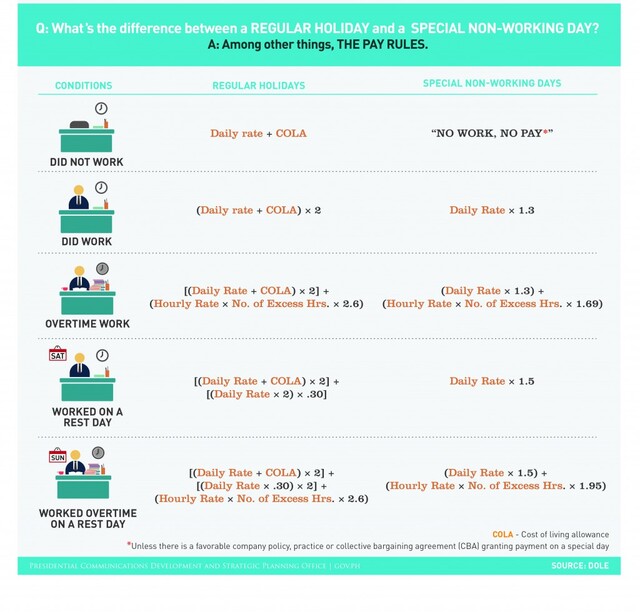
Employers are obligated to pay workers the normal daily rate on regular holidays.
If an employee reports for work on that day, they should be paid twice the normal daily rate. Overtime work will also have to be compensated with 2.6 times the hourly rate and the number of excess hours.
Those without regular employment such as seasonal workers may not be paid the required holiday pay when they are not called to work. If an employee is paid per output, the holiday pay should not be less than the employee's average daily earnings for the last seven working days before the regular holiday.
Micah believes that writing is always political. Beyond the byline, you’ll find her bruising herself on a pole or doting on her beagle. Reach her at micah@spot.ph.