
What Happens During Eid'l Fitr in the Philippines?
It's more than just a national holiday.
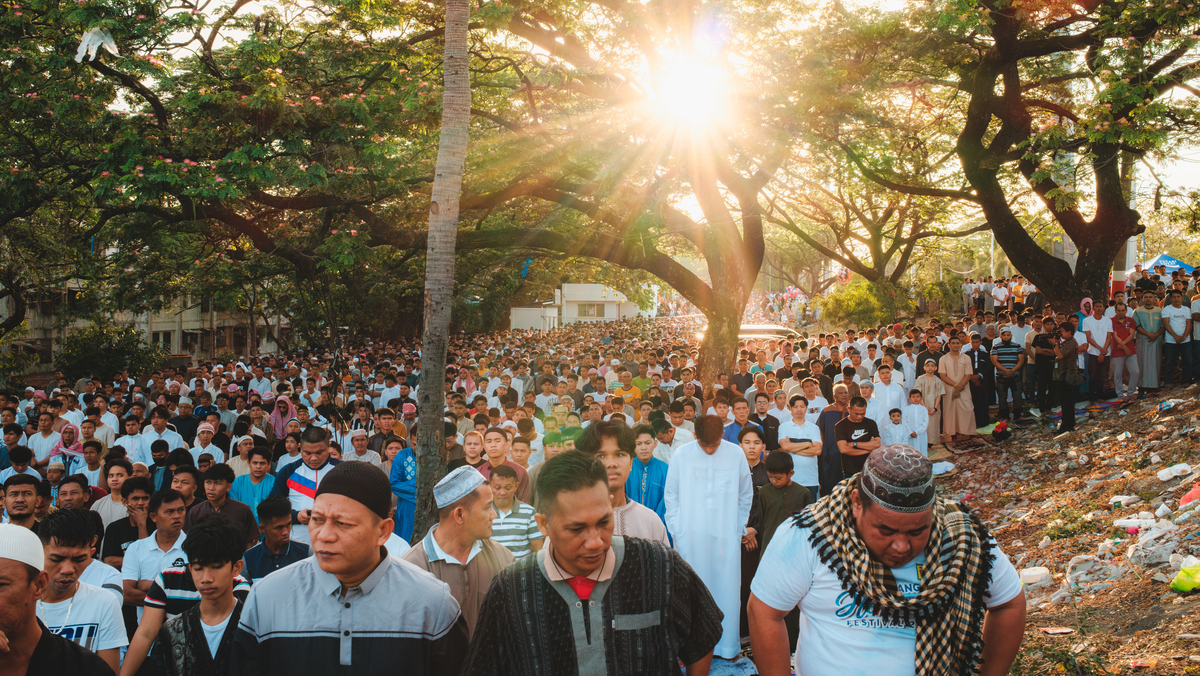
(SPOT.ph) In a country that loves its holidays, Eid’l Fitr often gets lumped together with the others—another welcome day off. But for Muslim Filipinos, it’s one of the most sacred days of the year—one they’re still fighting to be properly acknowledged.
The celebration of Eid is already on the calendar—printed in red, publicized in official proclamations—but it’s still not quite there yet. Take this year’s announcement as an example: Malacañang declared April 1 a regular holiday “to bring the religious and cultural significance of Eid’l Fitr to the fore of national consciousness,” only for the actual celebration among Muslim Filipinos to fall on March 31 after the new moon was sighted a day earlier than expected.
For Fatima Sweenee Sajili, a 26-year-old women's advocate and law student at Arellano University, this kind of disconnect is nothing new.
“It’s rare that the Palace gets it right, the holiday,” Sajili tells SPOT.ph. “For people who would need to be home, we would have to be absent or not celebrate Eid at all because of work or school. It’s a struggle to enjoy Eid because it’s not considered a time off—unlike Christmas, where no professor in their right mind would insist on meeting with you.”
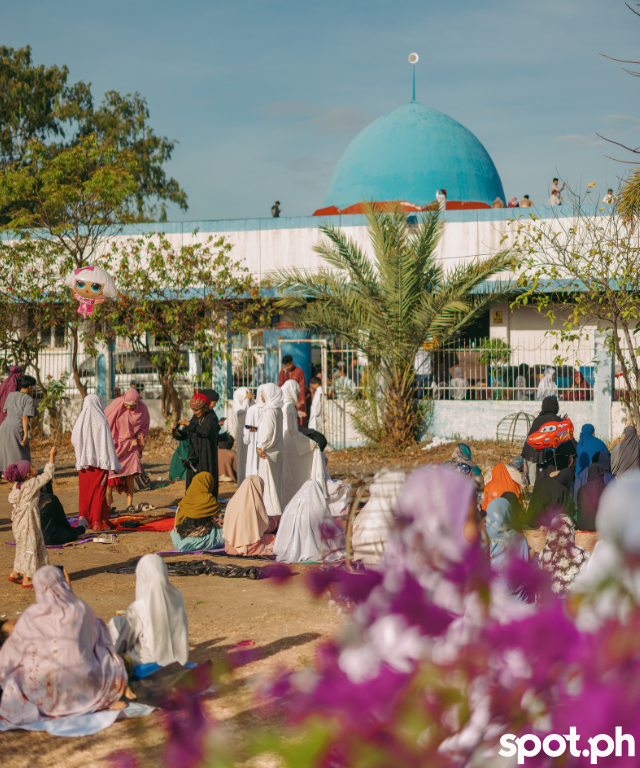
While the date mix-up is frustrating, Sajili’s words point to something bigger: the fact that Eid remains misunderstood, even as it’s officially recognized. The prayers, the food, the festivities—so much of the celebration goes unseen, even as it unfolds in homes, mosques, and communities across the country.
What does it mean to celebrate Eid'l Fitr in a country where Islam remains a minority faith? Here’s a start.
Also read: Here's Why Ramadan Falls on Different Dates Every Year
The long journey to Eid'l Fitr
No celebration without sacrifice
To understand why Eid’l Fitr is so important, you have to start with Ramadan—the month that precedes it.
Ramadan is a sacred time used to reflect and meditate, with followers abstaining from food, drink, and other worldly desires from dawn to dusk. Only two meals are to be had throughout the day: suhoor (before dawn) and iftar (after sunset). You could think of it as intermittent fasting—before science gave it a name. This goes on for about 30 days until the sighting of the new moon.
Fasting is the given, but it’s not the only form of sacrifice. It’s a lot like what Catholics do for Lent, except Muslims follow a stricter regimen—one that encourages, if not expects, a personal commitment. It could be as simple as giving up swearing, social media, or anything that a person struggles with.
“When you think of holiday, it’s a time for splurging, buying gifts, celebrating by means of feast. Ramadan is unique because it is about withdrawing from your usual bad habits. That could vary from person to person,” Sajili says. “The point of Ramadan is to show you what you’re capable of, that you’d carry those good habits throughout the year. It’s for you to unlock a better version of yourself. For that to happen, you have to take a look inwards.”
For Sajili, it’s refraining from too much coffee and extending her patience.
The spirit of generosity is especially high during Ramadan. Many halal restaurants offer free iftar meals at sundown—and somehow still manage to turn a profit during this month of fasting. Sajili calls it “Ramadan magic.”
This generosity reaches its peak during Grand Iftar, a large but optional communal meal held the night before Eid that doubles as an act of charity. It’s organized with the intent to feed those who have less, in fulfillment of zakat al-fitr, a required alms-giving that ensures the poor can also partake in the joy of Eid.
“Muslims are more generous during Ramadan because it’s part of the spiritual cleansing. We remove our egos, our attachment to money, so everyone is extra generous. It’s a beautiful show of what we can do, what we can achieve, if we work together.”
Then comes Eid’l Fitr the next morning.
Breaking of the fast
The day starts at 4 a.m., but this time, it isn’t meant for suhoor anymore. After a month of fasting, prayer, and quiet discipline, Eid’l Fitr marks the end of Ramadan with celebration and community.
“Eid is our reward for being steadfast the entire month. It’s the day we get to dress in new clothes, open our gates. Everyone is called in to eat. It’s a culmination of spiritual discipline that happened in the 30 days,” Sajili explains.
Filipino Muslims rise before dawn to prepare for Eid prayer—putting on the best clothes, applying the finest scent, and getting ready to head to the mosque by 6 a.m. Most choose to walk to the destination because it is believed that “every step you take toward the mosque is a good deed for you.”
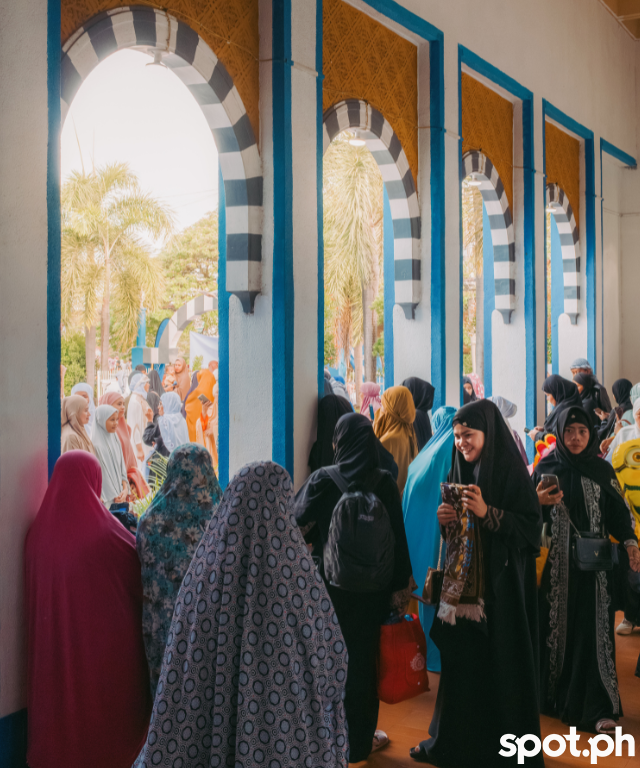
Where Eid'l Fitr is a grand celebration in the Muslim provinces, mosques are few and far between in Metro Manila—nowhere near the number of churches that dominate the city’s landscape. The famous Golden Mosque in Quiapo and the striking Blue Mosque in Taguig often come to mind, but beyond these, Muslim Filipinos have limited spaces for gathering, especially during major celebrations like Eid.
Sajili recalls trying to attend prayers at the Blue Mosque, only to end up in the parking lot—there simply wasn’t enough room inside—and this was during the pandemic. Worshippers stand shoulder to shoulder, filling rows that stretch across mosques, gymnasiums, or makeshift open spaces. It was imperative then for the government to partner with Muslim organizations to set up prayer congregations in open spaces like Rizal Park or Quezon City Circle.
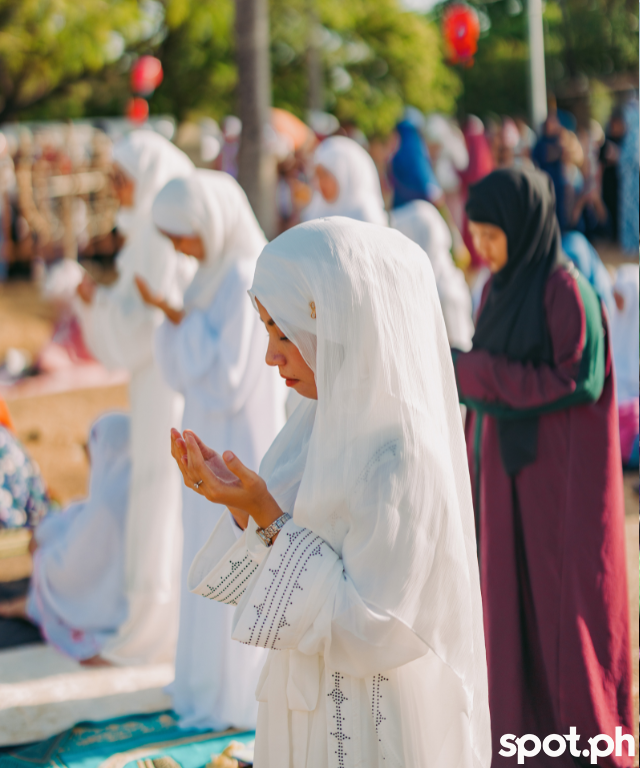
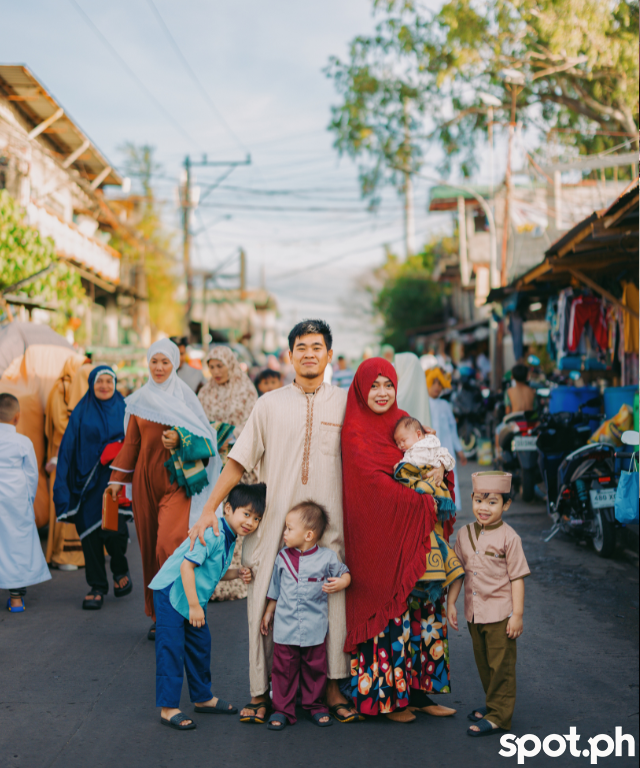
On Eid morning, the streets bloom with color: a child in a fuchsia scarf, a mother in a delicate gold thread or lace, a brother in crisp thobes (a traditional long, ankle-length robe). Every outfit tells a story: of tradition, of self-expression, of showing up in your best for a day that means everything.
“There’s actually a joke that Eid is the better Met Gala,” Sajili laughs. This is especially true in the Philippines and other Southeast Asian countries, where taking photos and sharing Eid outfits has become a fun modern tradition.
The Eid prayer usually starts between 6 a.m. to 7 a.m. It’s a short but meaningful prayer led by a religious leader called imam, with extra repetitions of “Allahu Akbar” (God is the Greatest) to give thanks after a month of fasting. The prayer itself takes only about 10 minutes, followed by a longer sermon about faith, generosity, and community. As it ends, the space bursts into life—people hug each other, shake hands, exchange greetings of “Eid Mubarak” (blessed feast or blessed festival), and sometimes hand out gifts to children.
“Then we would go home and the celebration starts,” Sajili says.
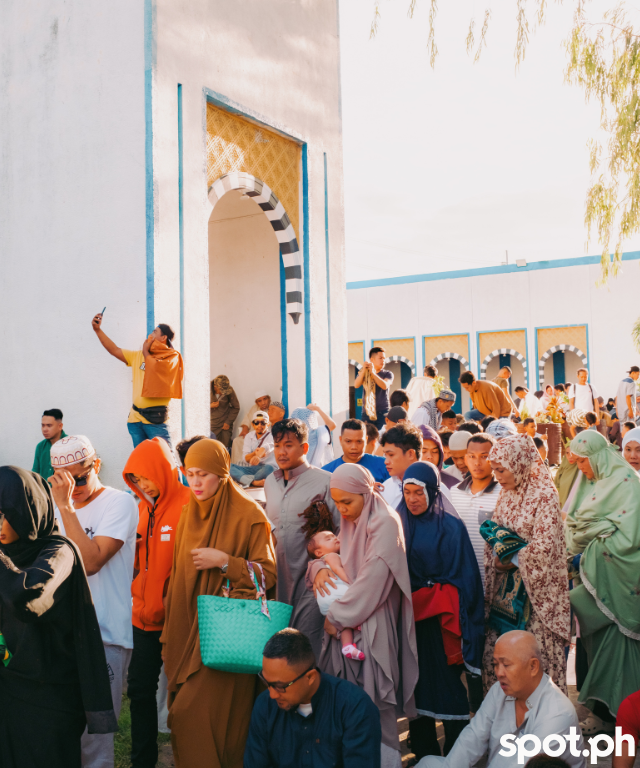
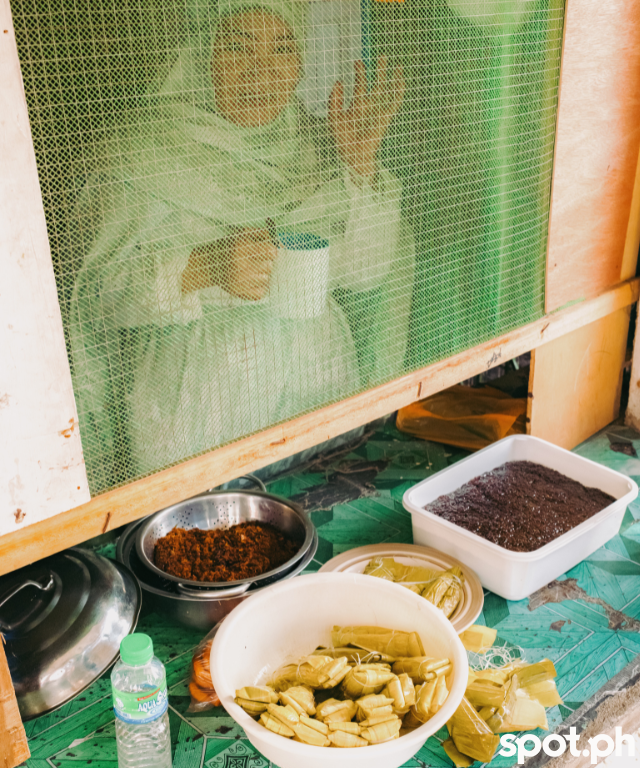
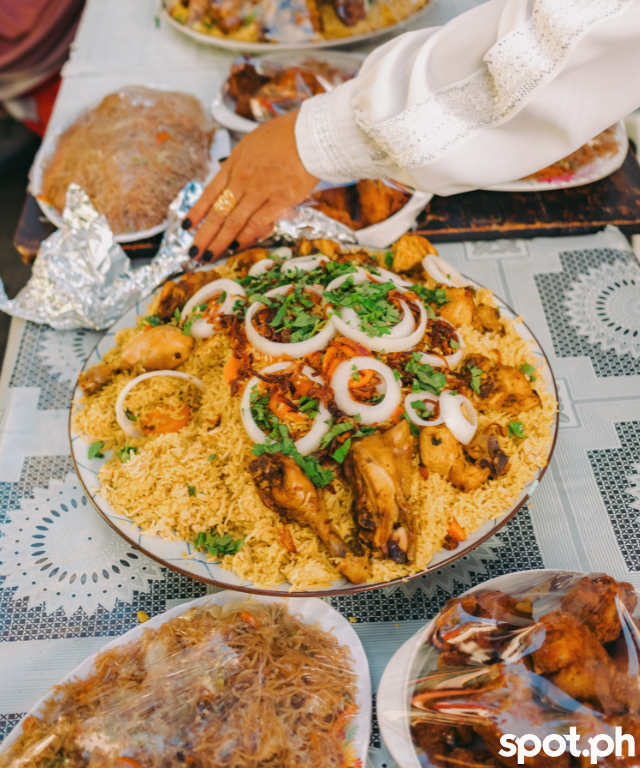
The transition from solemn to festive is marked by sudden shifts. Clothes are changed once again. Food is plated. Doors are thrown open. The house becomes a revolving door of neighbors, friends, and distant relatives. After a month of restraint, the return of food is loud, colorful, and rich. A showcase of every ethnic dish—the Tausug with tiyula itum (black beef soup) and bangbang sug (pastries), the Maranao with piaparan (chicken curry with coconut milk), to name a few.
“When you’re in the province, it’s almost a rehearsed dance. Every year, you know the drill, you know your role [in the celebration],” Sajili says. For non-Muslims, participating in Eid doesn’t require converting or knowing every religious detail—it can mean just showing up, accepting a meal, and greeting someone with “Eid Mubarak.” “This is the time for Filipinos to connect with their Muslim neighbors because we are more than happy to accommodate you.”
In some ways, Eid’l Fitr has come a long way in this country. What was once a celebration held quietly within tight-knit communities has been a nationally declared holiday since 2002. Institutions are slowly beginning to recognize the need for flexibility. Explaining the practice of fasting feels less like starting from zero. There’s undoubtedly more visibility now, but it often comes with compromise.
“The clothes are there but it doesn’t fit,” Sajili explains. “If the government really cares about the celebration, then they wouldn’t assign a date so early every year. It wouldn’t make sense to choose December 23 or 26 for Christmas when the greater population celebrates it on the 25th. If other religious holidays are based on their actual dates, why not the Muslim holidays?”
The hope is that one day, Muslim Filipinos can celebrate when it matters, without having to explain, negotiate, or be absent. After all, if the celebration isn’t aligned with the people it’s meant to honor, then who is it even for?
Also read: What is Ramadan and Why Does it Require Muslims to Fast?