How the Black Eyed Peas Came Up With "Bebot"
There’s more to the song than the viral makeup transformations on TikTok.
Published on Feb 10, 2026
(SPOT.ph) “Bebot” is one of those 2000s songs that needs no introduction. Most Filipinos already know it the second it starts, but if you’ve been on TikTok lately, you’ve probably heard it again, this time in a very specific context.
On the app, the nostalgic track found a second wind thanks to content creators using it for makeup transformation videos, cueing the opening chant to go full glam: bronzed skin, smoky eyes, thin brows, and glossy lips. The idea was to turn into a “historically accurate bebot,” the old-school Tagalog slang for “babe” or “hot chick.” What started with Filipino creators has since spread, with online users from the U.S., South Korea, and other countries joining in, even as many remain unfamiliar with the song’s lyrics or origins.
Because it sounds so Filipino, there’s a common misconception that “Bebot” came from an OPM group. It didn’t. The song was written by Black Eyed Peas members apl.de. and will.i.am for the group's 2005 album called Monkey Business. What made it stand out—even then—was that the entire track is in Filipino, an unusual move for a mainstream American pop/hip-hop group at that time.
So how did the Black Eyed Peas end up making “Bebot”?
What is the meaning of "Bebot" by Black Eyed Peas about?
It's not apl.de.ap's first rodeo with writing and singing in Filipino. By the time they were making Monkey Business, they were coming off the massive commercial success of Elephunk, which included “The Apl Song”—a personal track where apl.de.ap raps about growing up poor in the Philippines, with a chorus in Filipino. With that momentum behind them, it seemed the group had more freedom to experiment with sounds that didn’t need to be radio singles, like recording an entire song in Filipino.
apl.de.ap has previously revealed in interviews that “Bebot” was a result of his reconnection with his Filipino roots after Black Eyed Peas’ visit to the Philippines in 2004. Feeling the warmth and enthusiasm from Filipino fans inspired him to do more than just sprinkle Tagalog words into a chorus. At that time, he was practicing his Tagalog and Kapampangan again, which inspired him to write a whole song in his native language.
Most people only really remember “Bebot” for the chorus—the part you can shout even if you don’t actually know the lyrics. Once you get past his admiration for attractive girls, though, the rest of the song is doing a lot more than people give it credit for. apl.de.ap slips in bits of everyday Filipino life in the verses: growing up in a barangay, eating with your hands, tagay with friends.
"Hoy pare pakinggan niyo ko / Eto nang tunay na Filipino / Galing sa baryo sa pangbato / Pumunta ng LA nagtrabaho / Para makatulong sa nanay / Dahil sa hirap ng buhay / Pero masaya pa rin ang kulay"
apl.de.ap, whose real name is born Allan Pineda Lindo, was born in Angeles City, Pampanga and grew up in Sapang Bato, a former Clark Air Base community. He has repeatedly spoken about growing up poor with a single mother, helping with farm work and doing odd jobs to get by. In his early teens, apl.de.ap moved to the United States after being sponsored through the Pearl S. Buck Foundation, which placed him with an adoptive family in Los Angeles. It was in L.A. that he met will.i.am, eventually becoming one of the founding members of the Black Eyed Peas.
"I’m proud of who I am, where I came from, what I was born into, and I would represent that till I die,” apl.de.ap was quoted as saying. "As much as I could put in this music business, I want to involve who I am and my culture."
“Bebot” never got the full single treatment in the U.S. the way other Monkey Business tracks did. However, it was released as a single in places like the Philippines, parts of Asia, and Australia in 2006. Somehow, the song traveled even further. Over the years, people have shared stories about hearing Bebot at big weddings in India, played loud despite most guests not understanding the lyrics at all. Monkey Business went on to sell millions of copies worldwide, featuring other hits like “Pump It” and “My Humps.”
Also read: Top 10 Songs to Bring Out Your Pinoy Pride
The making of "Bebot" music video
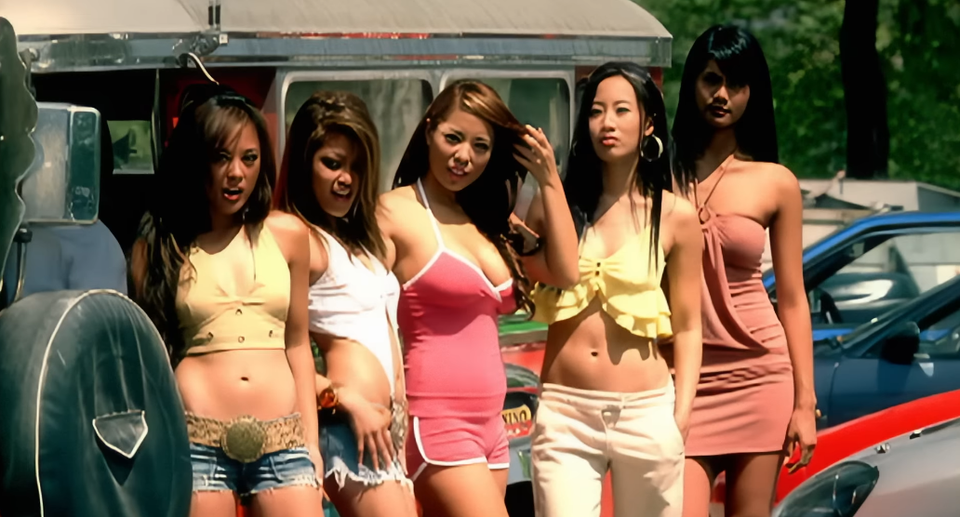
“Bebot” ended up with two official music videos released in 2006—Generation One and Generation Two—both directed by Filipino-American director Patricio Ginelsa but each with a distinct concept and setting. One was set in 1930s Stockton recalling early Filipino immigrant life, while the other was set in contemporary Los Angeles.
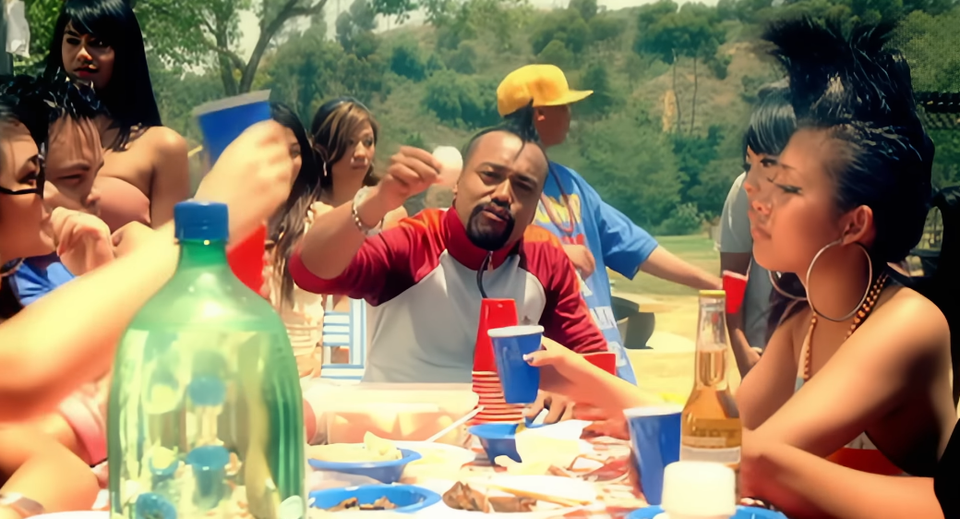
In Generation Two, the music video opens with the rest of the Black Eyed Peas members picking apl.de.ap up for a night out at a Filipino-American party, but not before they make a stop for a very Filipino pre-game with beer and balut.
Ginelsa revealed that the music video almost didn’t happen. After working on “The Apl Song” music video, he was invited back to work on “Bebot.” His original pitch was a single video that moved from 1936 to 2006, showing how Filipino Americans—across generations—still knew “how to party after a full day of work.” The label wasn’t sold on the concept and eventually dropped him.
A year later, when “Bebot” started gaining traction, Ginelsa was asked to return. He offered to make both versions of the video for the price of one.
“They only wanted one version of the video, but I was so passionate to do the other,” Ginelsa said. In the end, though, the label only approved Generation Two for public release. The visuals may have been filtered down to one version (but Generation One is actually now available on YouTube), but the song stayed intact, especially in its final lines, where apl.de.ap speaks directly to the listener:
"Kung maganda ka sigaw na, sige / Kung buhay mo'y mahalaga, sige / Salamat sa iyong suporta"
Also read: 2022 Grammys Was a 'Breakout Year' for Filipino American Artists
Micah believes that writing is always political. Beyond the byline, you’ll find her bruising herself on a pole or doting on her beagle. Reach her at micah@spot.ph.