Spring Awakening Is a 19th Century Story for the Modern Filipino Audience
With a cast this strong, it’s hard to look away.
Published on Feb 20, 2026
Trigger warning: This article mentions abuse and suicide.
(SPOT.ph) Coming-of-age stories have always had a place in theater, but one that dives headfirst into sex, shame, and suicide without sugarcoating any of them? These aren’t exactly topics you expect from a musical—let alone one set in 19th century Germany, but Spring Awakening's creators have never been interested in being polite.
For those who aren’t familiar, Spring Awakening is originally an 1891 play of the same name by Frank Wedekind, but most people know of it from its 2006 Broadway debut starring Jonathan Groff, Lea Michele, and John Gallagher Jr. The musical adaptation, with book and lyrics by Steven Sater and music by Duncan Sheik, went on to win eight Tony Awards, including Best Musical.
Now I’ve never seen the musical, but I do love the soundtrack. Walking into this production, my expectations were high—and thankfully, The Sandbox Collective delivers a version that lives up to them.
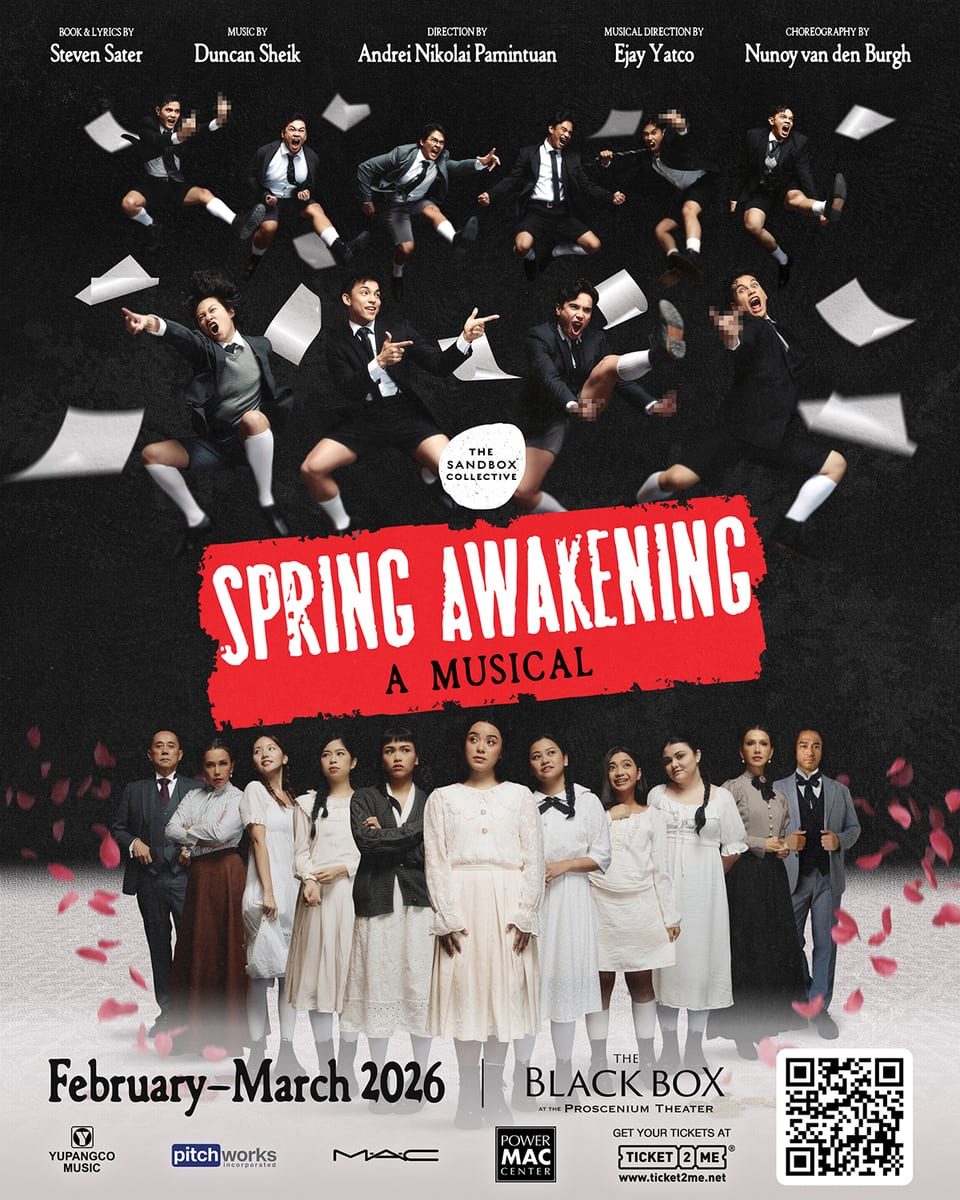
At its core, the story follows a group of teenagers stumbling into adolescence and then adulthood, dealing with puberty, strict parents, sexual curiosity, abuse, school pressure, and the consequences of being told too little, too late. The play opens quite literally with a teenage girl asking her mother how babies are made. It forces audiences to confront what adults often prefer not to see. For this reason, the play is rarely staged, and when it is, it is often controversial (schools ban it, parents walk out). So how do you present this material without turning teenage suffering into spectacle?
The Sandbox Collective tackles this question with brave intention. Staging Spring Awakening always carries a risk of romanticizing the material, but the local theater organization was able to handle the sensitive material with such care and consideration that can only come from consulting experts on the subject. There are even weekly talkbacks for VIP ticket holders on suicide prevention, grief, and sex education, so audiences can “sit with the show, unpack its themes, and process it together.” It’s a thoughtful addition that shows the production understands the weight of what it’s putting on stage.
Also read: Spring Awakening Is Set to Open in Manila
The Sandbox Collective gets Spring Awakening right
For a story set in 19th-century Germany, Spring Awakening feels almost alarmingly contemporary. Today’s teenagers may no longer be kept completely in the dark about the birds and the bees, but everything that follows hits close to home, especially in a conservative Catholic country like the Philippines where questioning the status quo is frowned upon, sex is saved for marriage, and abuse is kept secret. Director Andrei Nikolai Pamintuan understood that well.
In the fewest words possible, Spring Awakening will shock you, but only because it talks about things we still don’t talk about enough. There are no holds (or pants) barred. Coming of age in the 21st century isn’t all that different—it just calls for alternative rock music to express that teenage angst in a louder, more contemporary voice.
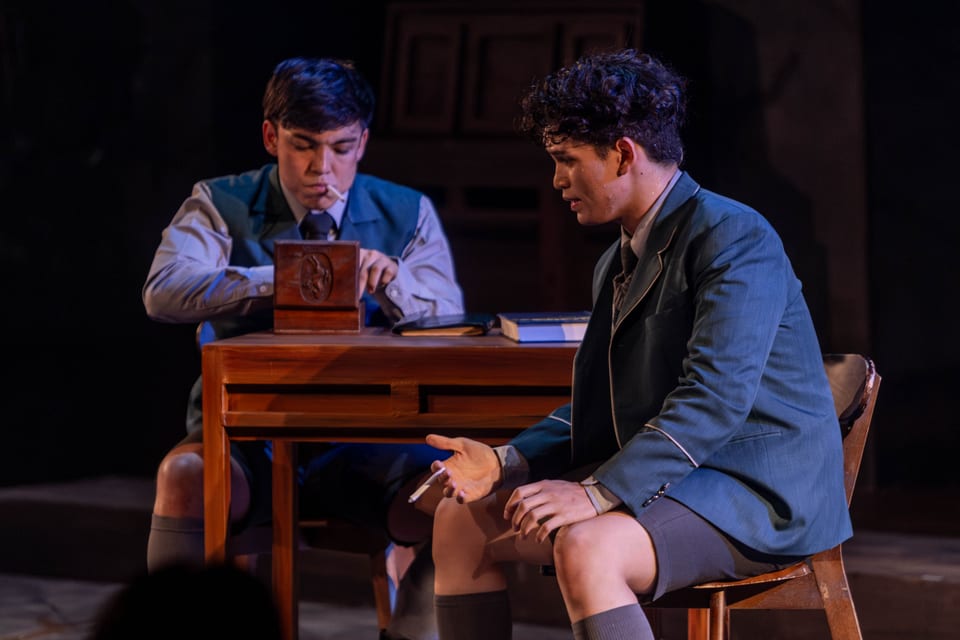
The musical’s strongest suit is not its relevance or sensitivity but the powerhouse cast. The mix of seasoned veterans and rising talents makes a strong case for just how sharp Philippine theater is right now. It doesn’t take much for Menchu Lauchengo-Yulo and Audie Gemora to switch between multiple adult roles, going from caring and concerned parents to commanding authoritative figures from one minute to the next.
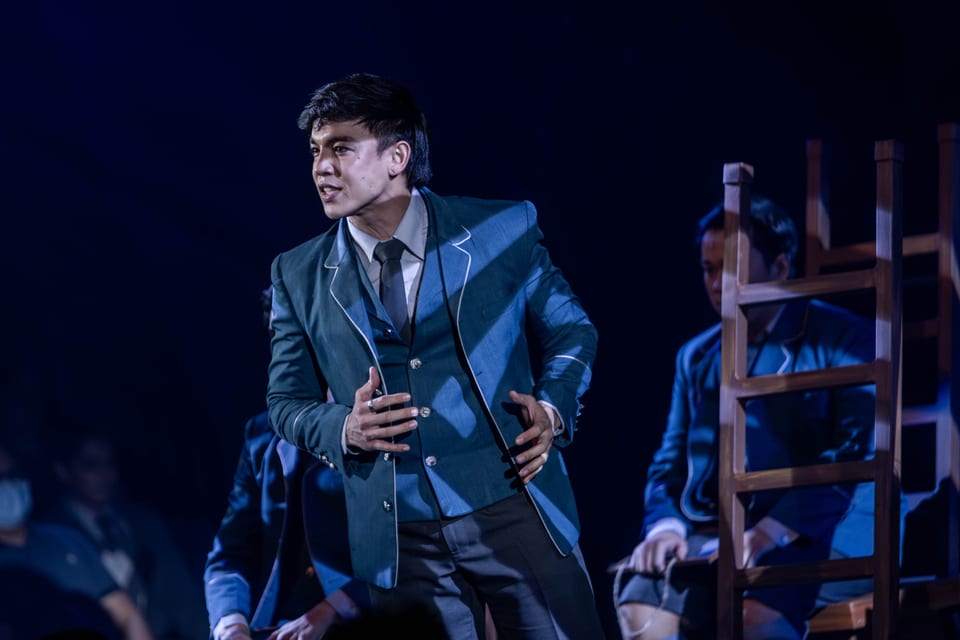
As Melchior, Alex Diaz faces inevitable comparison to Groff’s performance on Broadway. He has big shoes to fill: Groff’s voice on the original cast recording is undeniably more powerful and piercing—after all, he was nominated for Best Performance by a Leading Actor in a Musical for his turn as Melchior. Regrettably, Diaz’s vocals struggled to cut through the orchestra and ensemble. It’s a pity because “All That’s Known” is our first introduction to the schoolboys, and ultimately, our first introduction to him as Melchoir. Whether a matter of mic balance or projection, some lines felt swallowed by the music.
What Diaz lacks in vocal force, though, he more than compensates for in characterization. Diaz comes impressively close in spirit and presence. His Melchior is smart, confident, and genuinely charming, becoming the character you root for in earnest. You understand why the others gravitate toward him. I almost don't mind that I couldn't hear him properly at the start.
Meanwhile, Nacho Tambunting delivers a strong performance, imbuing Melchior with a sensitivity that makes you root for him at his best—and wince when his impulses get the better of him. There’s an unmistakable boy-next-door quality to his portrayal, making his Melchior relatable (really, a 19th-century German relatable to a 2026 Filipino), but I guess that's the magic of his characterization.
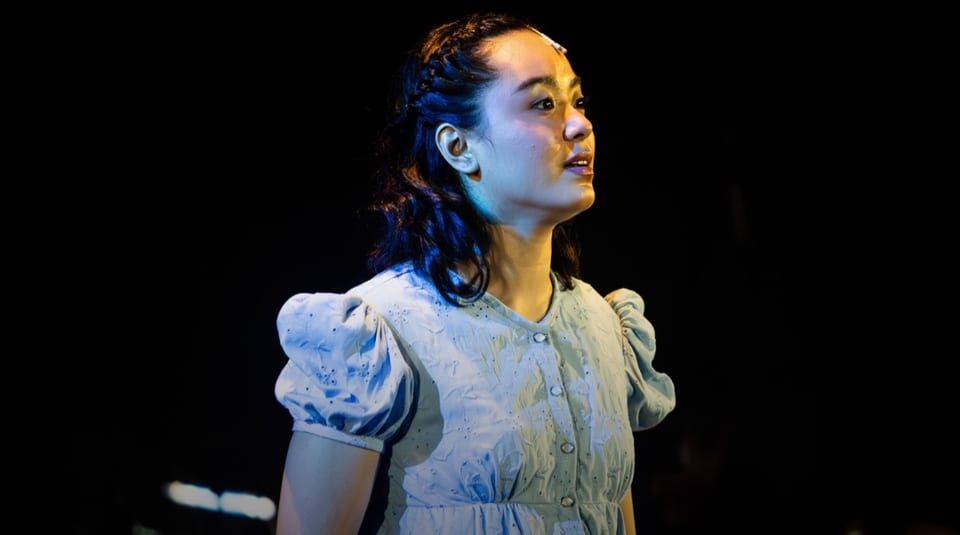
Then there's Wendla. Her character can often feel overshadowed in a cast of louder, more volatile personalities, but Sheena Belarmino shines in the role so much that it’s impossible for her to fade into the background. The boys might be the ones pushing the plot forward—arguing with authority, spiraling in frustration—but it's Belarmino's performance that anchors the show emotionally. She brings a steady presence that grounds the chaos around her, which is no small feat in a room full of rowdy boys.
Vocally, she’s one of the strongest in the cast. From her opening number, “Mama Who Bore Me,” her tone is clear and controlled. Her naive curiosity about a world that refuses to explain itself comes through, albeit with some exaggeration at the start. Every line sung is so clear, so powerful, that it was hard to picture anyone else in the role. Belarmino is a force to be reckoned with—but followers of Philippine theater won’t be surprised to hear that.
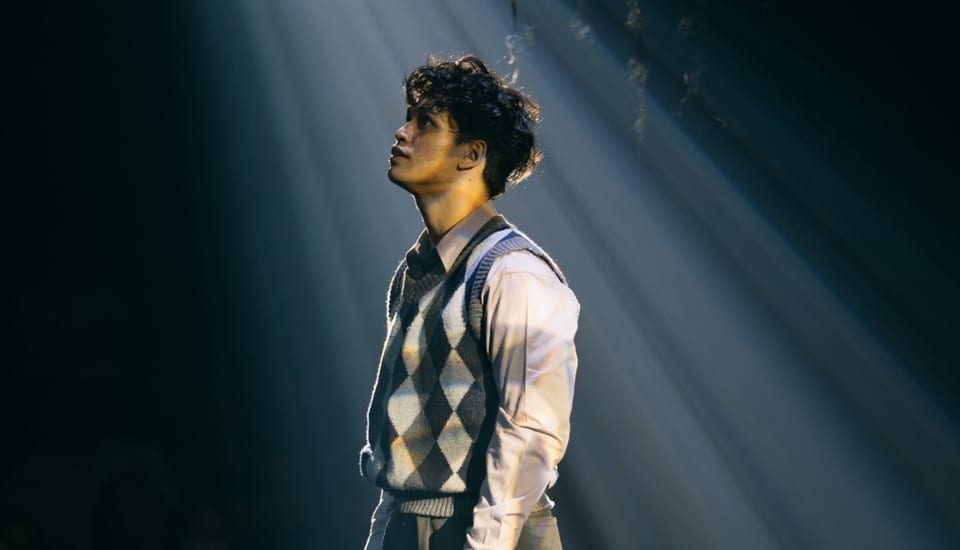
Omar Uddin as Moritz is another undeniable force on stage. The frail Moritz comes to life under his portrayal. There’s a nervous energy he carries from the start that makes you feel his anxiety before he even says much.
His visible unraveling can lean a bit too caricatured at times, but even then, Uddin manages to pull it back just enough to keep Moritz human. What’s surprising is how strong his vocals are. For someone playing the most insecure boy in the room, Uddin sings with clarity and control. In many ways, the emotional weight of the first act rests on Moritz. His downward spiral is what shifts the tone of the show—and Uddin understands that responsibility and carries it convincingly.
If you thought Nic Chien was just a nepo hire, think again. He commands the stage as Moritz, his raspy vocal texture a perfect fit for Spring Awakening’s rock-driven score. But it’s not just about the vocals. Chien throws himself into the role with startling intensity that when his character meets his tragic end, the energy of the show immediately feels emptier. In an interview with SPOT.ph, Chien remarks that he is drawn to angsty, darker roles—and boy, does it fit him.
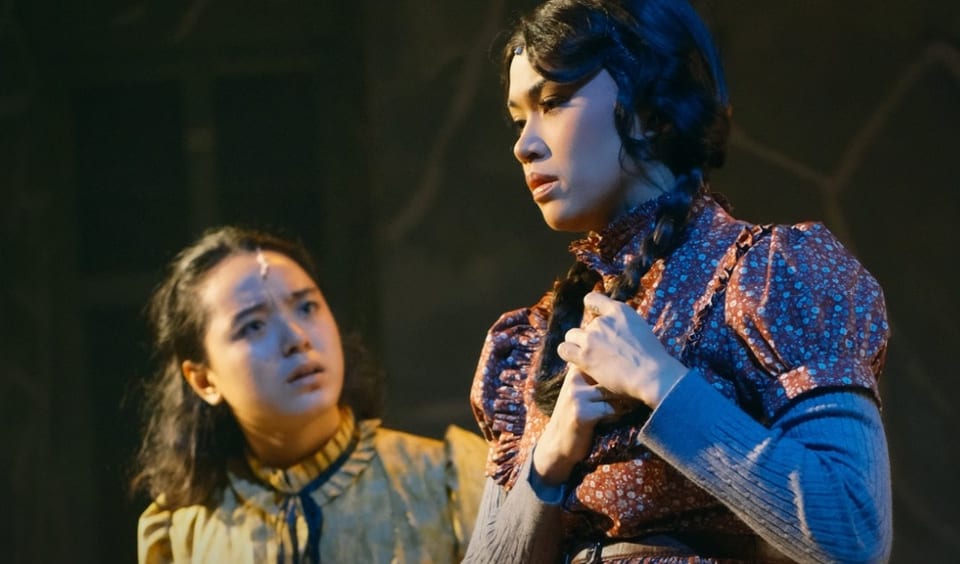
Other standouts include Angia Laurel (Martha) and Gabo Tiongson (Swing), who shine on completely different ends of the emotional scale. Laurel delivers one of the evening’s most devastating moments in “The Dark I Know Well,” bringing a raw heaviness to the song that never quite slips into melodrama territory. Her delivery is so powerful it's hard to look away. On the opposite end, Tiongson injects humor into “Bitch of a Living,” fully committing to the awkward physical comedy without losing sight of the song’s underlying frustration. Making a grown audience burst out laughing at a masturbation gag scene that should only make teenage boys laugh is truly a feat on his end. Even with limited stage time, he leaves one of the strongest impressions of the night.
Together, Laurel and Tiongson show how Spring Awakening can swing from fun to heartbreaking without losing its grip on either.
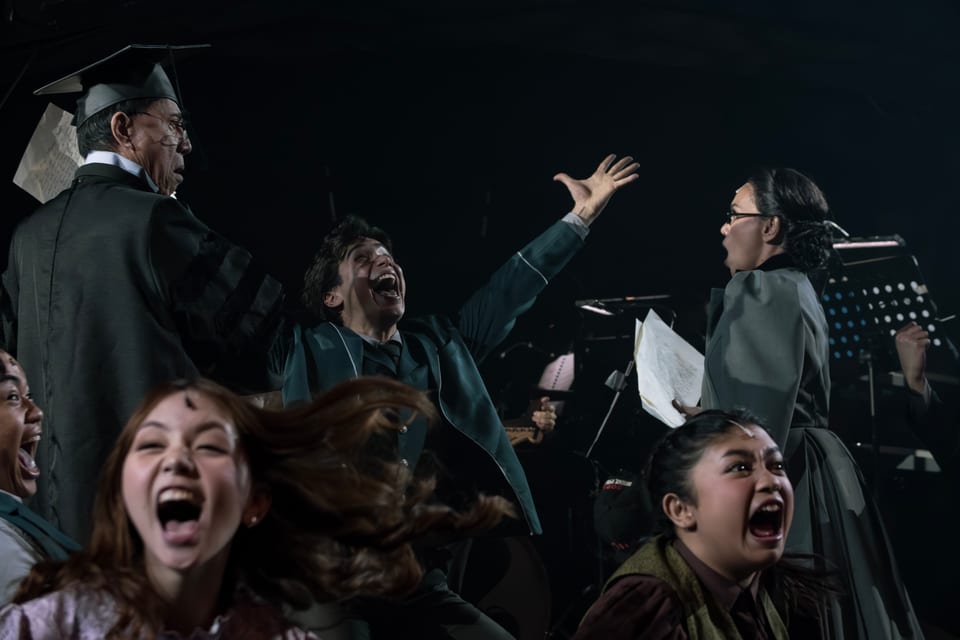
It's impossible to talk about Spring Awakening without talking about the space. The musical is the first production to be staged at the newly opened The Black Box at The Proscenium Rockwell—and it turns out to be a fitting home for a story this intimate. The venue is small but doesn’t feel cramped. No matter where you sit, from the bleachers to the VIP, you get a relatively clear view of what's happening. You get to catch every flicker of hesitation, every tremor in a hand. It enhances the sense that we are not watching from a safe distance—we are almost implicated in the process—which is quite a commentary for a show about adults who fail to listen.
The Sandbox Collective also plays with this limited space. Characters enter already in character. When it works, it pulls you in and makes the stage feel larger than it is. There are moments, though, when the visible movement along the sides distracts more than it immerses.
Visually, the staging stays largely faithful to the original Broadway aesthetic: minimal set pieces like tables and chairs, a visible orchestra, and a focus on bodily movement rather than elaborate design. That stripped-down approach works in the production’s favor—in a show this emotionally dense, simplicity is the best approach.
Unfortunately, some of the added set pieces do little to enhance the space. The pull-down stage piece, shaped like a cross, is a striking visual. It looms over the stage like a constant reminder of religion’s presence in the characters’ lives, at times even giving the set a graveyard-like feel—an ominous hint of what’s to come. Precisely because it’s so effective, it feels underused as it was only brought down during the climactic “I Believe” and “Purple Summer” numbers. The same can be said of the hanging oak tree, which obviously carries symbolic weight but isn’t touched upon in a way that feels rewarding.
 (1).jpg?fit=cover&width=960&q=82)
Still, there’s so much to love about Spring Awakening that I can’t help but recommend it to everyone I know. Ultimately, this staging reminds us why the musical continues to be performed years after its Broadway breakthrough—not because it's shocking, but because it's honest. The question is: are we ready to hear it?
Spring Awakening runs from February 13 to March 22, with shows every Saturday and Sunday at The Black Box at the Proscenium Theater in Makati City. Tickets range from P2,900 to P3,900. For more information, visit The Sandbox Collective’s Facebook page.
If you or someone you know is struggling with thoughts of suicide, help is available. You may contact the National Center for Mental Health Crisis Hotline at 0917-899-8727 or 0908-639-2672. You are not alone.
Also read: Your Ultimate Guide To Theater Shows in the Philippines in 2026
Micah believes that writing is always political. Beyond the byline, you’ll find her bruising herself on a pole or doting on her beagle. Reach her at micah@spot.ph.