What's New
This Low-Key Makati Resto Serves Seriously Good, “Casual” Plates Peppered With Asian Flavors
Expect playful but proper dishes in a place you can visit in a dress—or shorts.
Published on Sep 14, 2025
Casuals
2/F Oakridge Building, Paseo de Magallanes, Makati City
Contact: 0954-335-2795
Instagram: www.instagram.com/casuals.dining
Open from 11 a.m. to 10 p.m., Monday to Sunday
(SPOT.ph) Casual dining is serious business for Chef Rowen Amurao. He whips up playful but uncomplicated plates designed for fuss-free eating at his restaurant tucked away on the second level of Oakridge Building, one of the main establishments within Makati's bustling Paseo de Magallanes Commercial Center. If there's anything to learn from this promising spot, fittingly named Casuals, it's that uncomplicated doesn’t have to mean simplistic—or vanilla.
Click to Enlarge
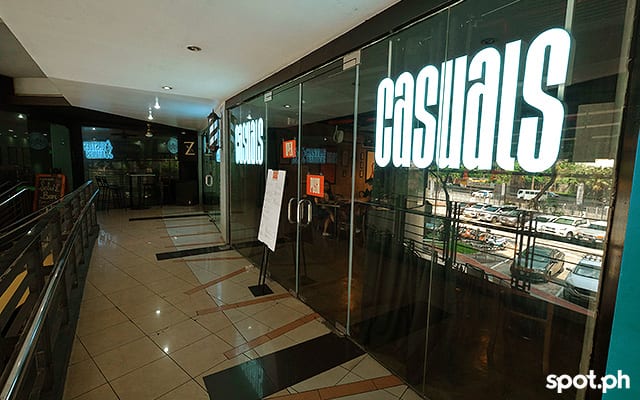
Up on the second floor of Paseo de Magallanes' Oakridge Building is Casuals. "When I saw this place and I started conceptualizing [given] how bare this place would be, I was like, the name Casuals is perfect for me!," Chef Rowen Amurao tells us of the name. Photo by Hans Fausto.
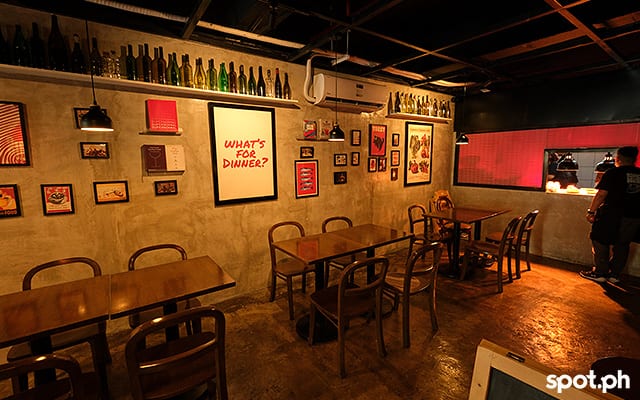
We almost never see Amurao without a smile beneath his ‘stache. His grin reaches both ends of his ears as he welcomes us inside the restaurant, which has slowly drawn in a crowd of regulars since opening in January. Cozy in size, the space flaunts a rustic-meets-industrial look where splotches of grey on the walls are met with wooden seats and tables. Minimalist backbone aside, what brings the place to life are the framed posters, recycled bottles, books, and memorabilia on one of the walls, their colors popping beautifully against the monochromatic backdrop.
Click to Enlarge
The restaurant's industrial backbone puts the spotlight on the books and posters on the walls. Photo by Hans Fausto.
On one of the hanging shelves, eye-catching in its red hue, is a copy of the Supernormal Cookbook—a token from the restaurant of the same name in Melbourne, Australia, which is one of the places Amurao worked at over the course of his seven-year stay in the country. The chef has been cooking professionally for 12 years now, graduating with a Culinary Arts degree at DLS-CSB and doing some internships in the U.S. He flew to Australia in 2017 and got to work the kitchens of several dining spots: at Hawker Hall in Windsor, a food court inspired by the hawker centers of Singapore and Malaysia; Supernormal as mentioned, an all-day dining spot that takes inspiration from the food and dining cultures of Tokyo, Shanghai, Seoul and Hong Kong; and Chin Chin in Sydney, which serves Southeast Asian fare—Thai, especially—with modern Aussie sensibilities.
Click to Enlarge
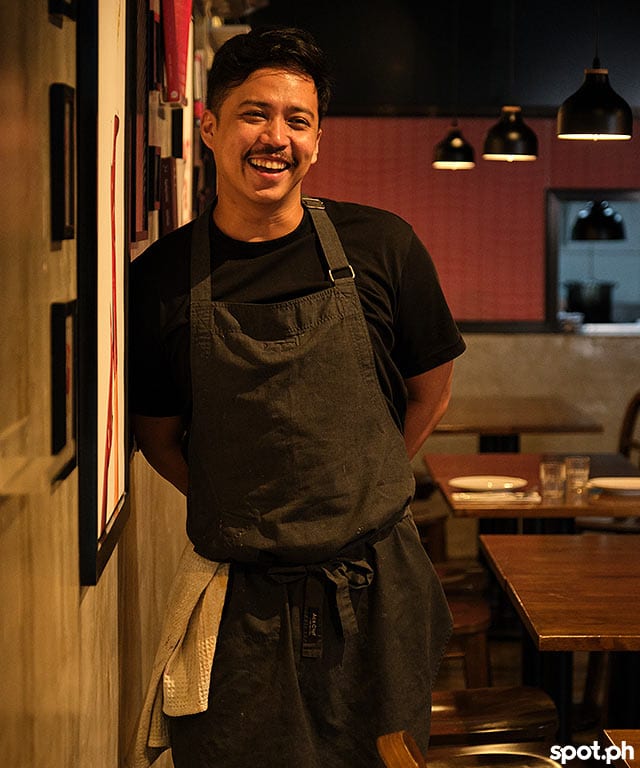
Amurao is all smiles. Photo by Hans Fausto.
Noticeably, the places mentioned draw on Asian cuisine for inspiration, in large part given the abundance of dining spots that serve them in Australia (Melbourne especially). Being home to a large migrant population, the dining scene in Melbourne is a huge melting pot, Amurao tells us. Not only is the range of cuisines vast; there are also plenty of crossovers that take place between cultures, with delicious results. “I think that's what Australian cuisine is for me,” he says. “It’s very diverse, no borders. But it always revolves around the freshest ingredients.”
Freshness continues to inspire him. In particular, he enjoys working with plants, as is hinted at by the Adolphe Millot-esque vintage posters of vegetables toward the end of one of the walls. “We’re not a vegetarian restaurant, but I think we do vegetables really well,” the chef explains. “I love the fact that we can highlight veggies in a way where it’s still fresh but intense at the same time, in terms of flavour. [It’s also about] highlighting the use of local produce in a way. And vegetables have flavour and feelings din.”
Click to Enlarge
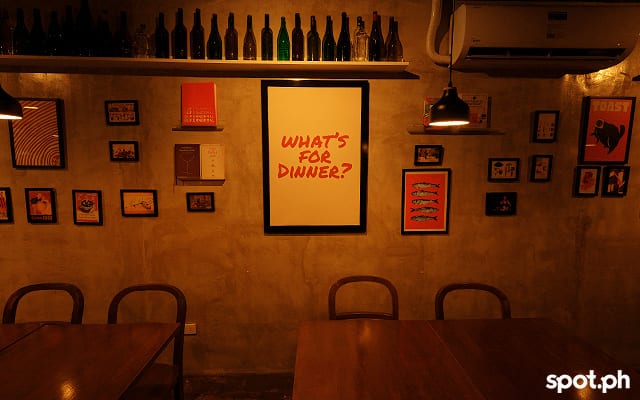
Look closely and you'll find the Supernormal cookbook, a token from a restaurant in Melbourne that continues to inspire him. Photo by Hans Fausto.
The chef admits he initially wanted to open a higher-scale restaurant that would revolve around Filipino food, and be the sort of place that’s “fine dining, but not quite fine dining.” But as he needed to stick to a budget, he realized he’d have to make adjustments to the vision. He recalled how Melbourne was full of low-key, laid-back spots (usually hole-in-the-wall places and wine bars) where you could have a great meal of well-thought out, imaginative dishes sans the pomp and pretense. "I was like, okay, I think we can still do this," says Amurao. "We can still produce really good food [in the same way]. Keep it in a way where it's very casual, the place is bare minimum... Come in wearing shorts, but enjoy really good food."
Click to Enlarge
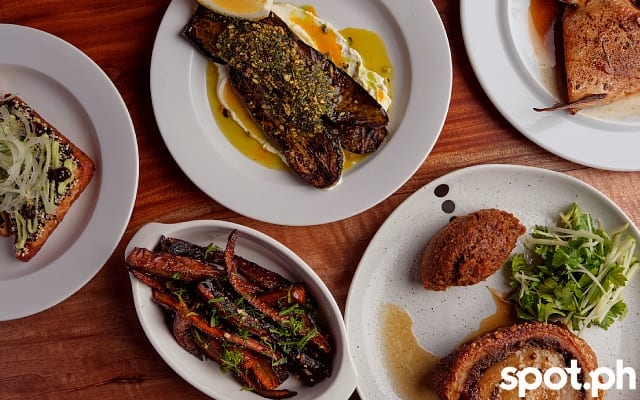
The dishes at Casuals are designed to be good on their own but also great taken in conjunction with one another, Amurao shares. Photo by Hans Fausto.
He brings the same spirit over to Casuals, which is all about food that’s, well, casual, and darn delicious for it. Familiar, sure, and just the right amount of comforting—but still inspired, occasionally mischievous, and happily balanced. There's a composedness to the plating, but it's kept relaxed overall: "'Pag rustic 'yung pagkain, I feel masarap siya i-share," he quips. Amurao's more traditional Western culinary training comes out in his use of classic cooking techniques, yet his lineup is peppered with Asian flavors and elements, drawing from his own flavor palate and experiences. "For example, the pâté that I have—it's very French. It's a pâté. But there is adobo jus [in it]." Of course, he’s more than happy to rewrite the rules or make his own where it applies.
Casuals Dining at Paseo de Magallanes, Makati
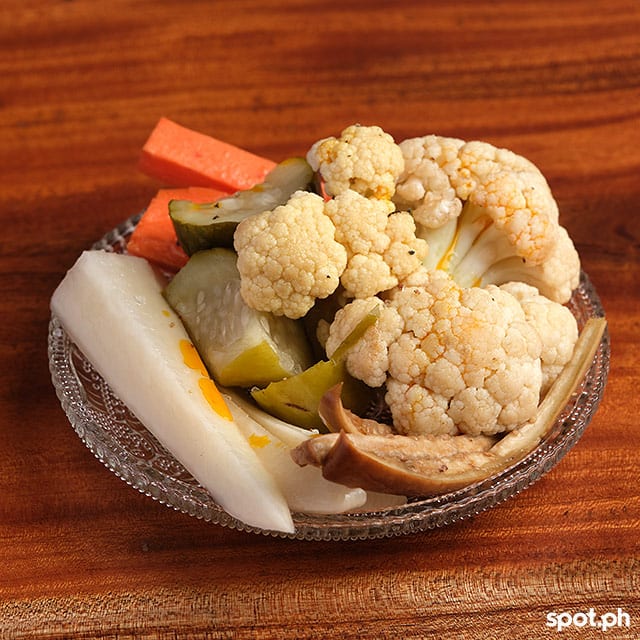
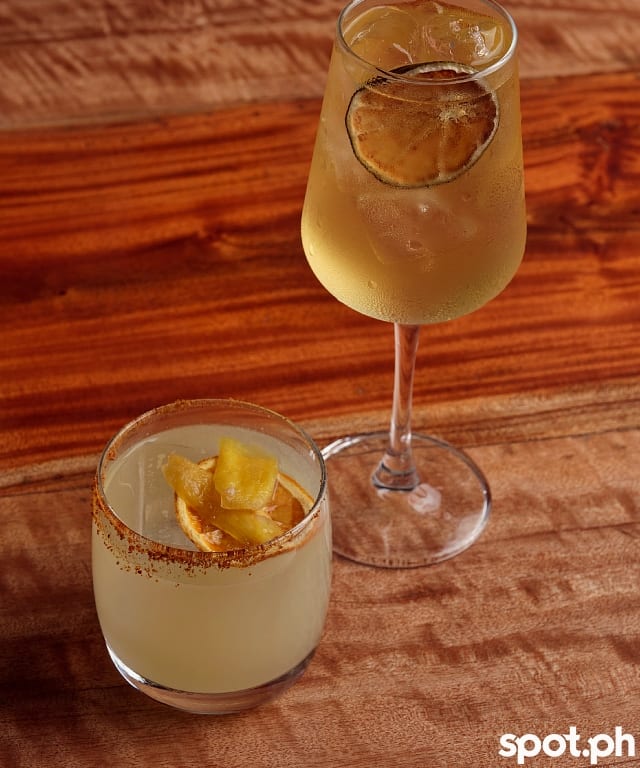
There are bites, great for nibbling on while conversing with your companions—try the House Pickles (P110) utilizing the veg of the season (cukes, carrots, cauliflower, and jicama in our case), pickled in spiced vinegar but kept satisfyingly crunchy. “We try to highlight different textures of veggies,” Amurao tells us. They’re especially fantastic when alternated with sips of the Langka Lemondrop (P500), a vodka-based cocktail that stars tropical-tasting jackfruit.
Click to Enlarge
House pickles—seasonal veg, pickled in vinegar but made to retain their crunch. Photo by Hans Fausto.
Click to Enlarge
Langka Lemondrop and Ana y Clara Mojito, two of the signature cocktails on their lineup. Photo by Hans Fausto.
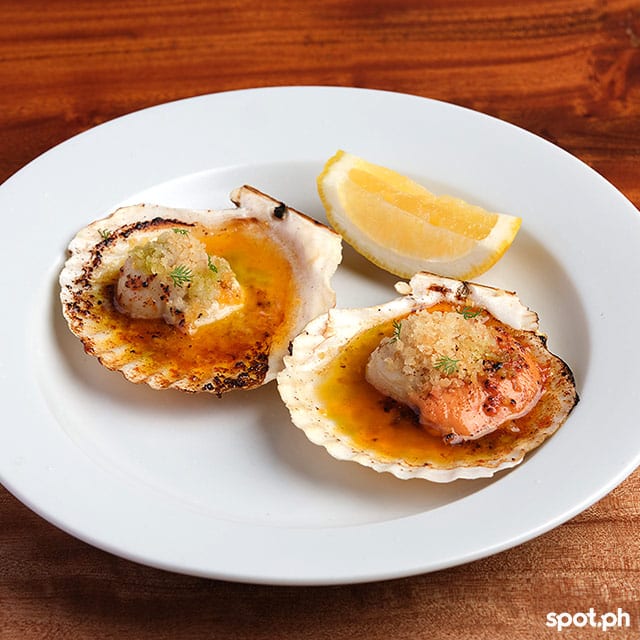
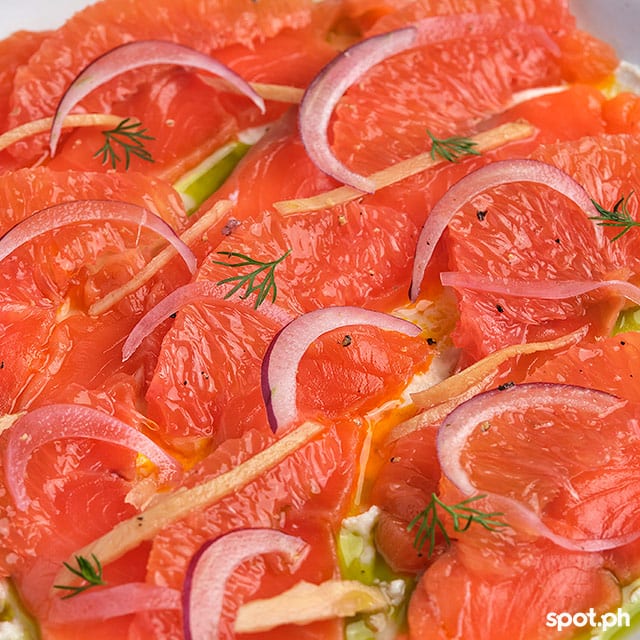
Still light but a touch more substantial are the “Smalls” or small plates, of which the Scallops (P380) are a fun choice. Amurao presents the seafood in a smoky light here, cooking it just briefly at a high heat so it maintains its juicy interior, then drizzling over burnt chili butter and cilantro oil for a hint of zip that doesn’t overpower the scallops’ delicate taste. Once in a while, Amurao adds specials to the menu; on our visit he brought out the Gravlax (P520), which starts on a sunny note with pickled ginger, ricotta, and juicy orange wedges—that is, until Amurao flashes a sly smile and dollops Lao Gan Ma over the mix. The chili oil brings a hint of pungency and slight kick that’s more than welcome here, its raspiness met by the uplifting tang of the citrus.
Click to Enlarge
Scallops in burnt chili butter and cilantro oil, plus a sprinkling of pangrattato. Photo by Hans Fausto.
Click to Enlarge
Gravlax, adorned with onions, pickled ginger, ricotta, orange, and (drum roll please...) Lao Gan Ma. Photo by Hans Fausto.
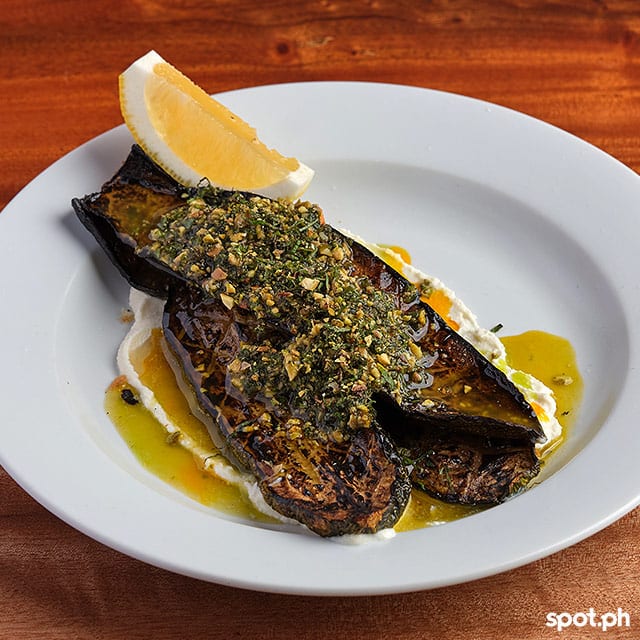
Plants, as mentioned, aren’t just relegated to being sides here, but treated as main stars in their own right. This is best exemplified by the Zucchini (P450), described by Amurao as a great gateway dish for the less readily veggie-inclined. It involves its namesake, simply seared and flaunting a glossy, browned surface; pistachio salsa, whose nuttiness and zest brings out the caramelized note on the zucchini; in-house made ricotta, for creaminess sans too much heft; and a drizzle of honey that rounds out all the other parts.
Click to Enlarge
Zucchini, dressed in pistachio salsa and perched over homemade ricotta. Photo by Hans Fausto.
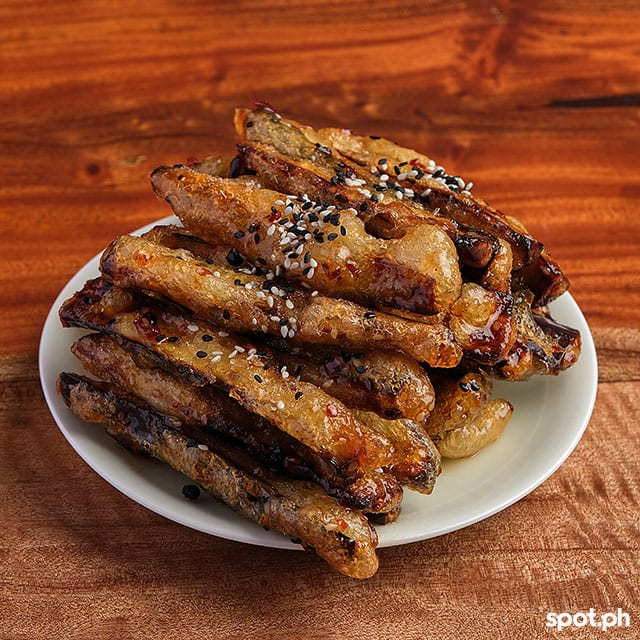
More feisty are the Eggplant Fries (P250), inspired by a similar dish Amurao once had in Australia, where matchsticks of the eggplant are coated in a batter of rice and tapioca flours and fried. It’s then coated in a Szechuan chili sauce—a sweet, sour, subtly floral counterpoint to the tender eggplant within. Don’t be surprised by the bigger pieces of Szechuan peppercorns dotting some of the fries, which Amurao leaves in by design as he enjoys the subtle crunch they contribute.
Click to Enlarge
Eggplant Fries in a Szechuan sweet chili sauce. Photo by Hans Fausto.
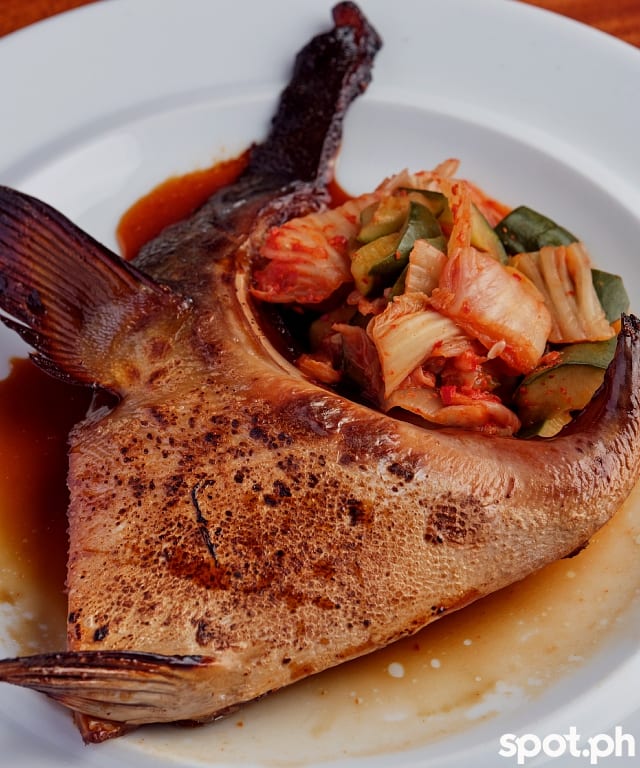
Amurao describes the Hamachi (P780)—one of their big plates, with teriyaki-glazed hamachi collar simply grilled so that the meat yields effortlessly from the bone—to be “very Supernormal” in style. “This is my ‘thank you’ to Supernormal as well,” he says. A salad of cucumber and kimchi makes for a punchy side, and there’s a wad of karashi (Japanese mustard) you can dab on (in small doses) for zip.
Click to Enlarge
Hamachi, gone feisty with kimchi, cucumber, and karashi. Photo by Hans Fausto.
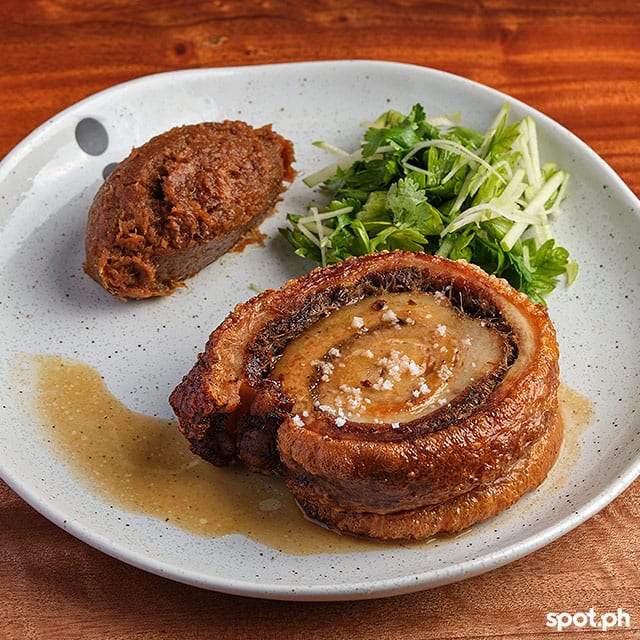
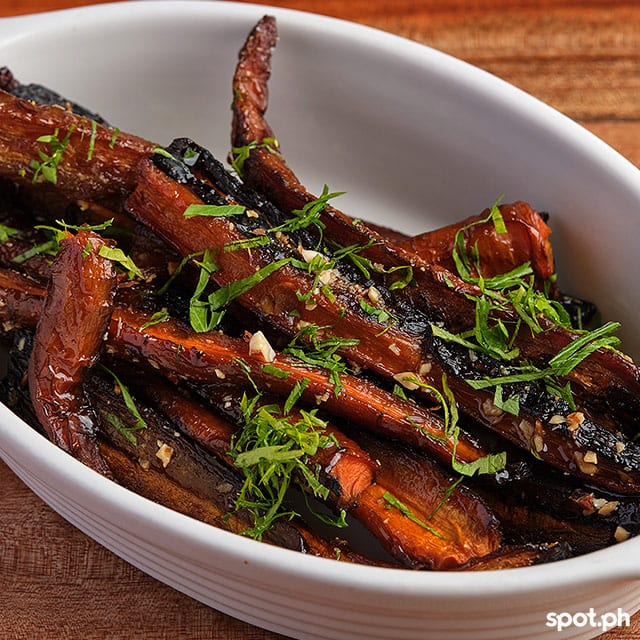
There’s also the heftier Porchetta (P1,100), a slab (roughly one an a half inches thick) of rolled pork belly roasted low and slow, rendering the skin crackly-crisp while keeping the meat succulent. A fist-sized scoop of spiced, roasted pineapple jam makes for a Christmas-y combo, while a side salad of fresh herbs keeps the overall ensemble grounded. To keep the holiday feels going, you’ll want to order a plate of the Roasted Carrots (P180) on the side—the roasting process brings out the natural sweetness of root veggie, which is then emphasized by burnt honey and cumin.
Click to Enlarge
Porchetta, kept company by a crisp herb salad and spiced, roasted pineapple jam. Photo by Hans Fausto.
Click to Enlarge
Roasted Carrots, its natural sweetness brought out by burnt honey and cumin. Photo by Hans Fausto.
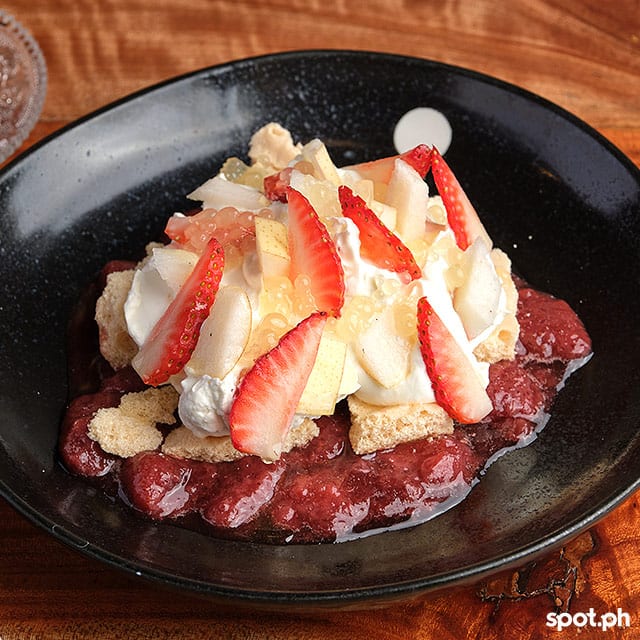
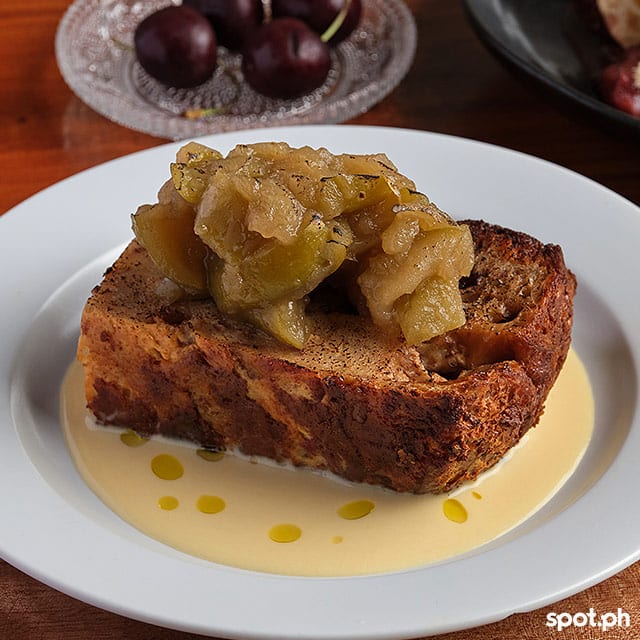
For dessert, it doesn’t get any more quintessentially Aussie than Pavlova (P320)—Amurao keeps his fairly simple, topping meringue and cream with macerated berries and seasonal fruit (cherries, in our case). His Bread Pudding (P400) maintains much of the nostalgic charm of classic versions, with added textural contrast from its toasty top layer. Stewed apples and lemon custard are precisely the fruity, tangy companions to take the edge off the richness of the pudding.
Click to Enlarge
Pavlova, simply topped with macerated berries and seasonal fruit. Photo by Hans Fausto.
Click to Enlarge
Bread Pudding, Casuals-fied by stewed apples and a pool of lemon custard. Photo by Hans Fausto.
Easygoing nature of his food aside, Amurao remains thoughtful yet experimental in his approach. Clearly, the young chef has a lot of fun designing the dishes then bringing these ideas to life, highlighting the flavors of his time Down Under and using local, seasonal ingredients in the process. The result? A spectrum of dishes that are effortless pleasers, all with personality as cheeky and creative as Amurao himself.
Photos by Hans Fausto
For Trish, food is as much a source of pleasure and fuel as it is an outlet for creativity; a medium by which stories can be passed on; and a way to connect with others.
You Might Also Like