Wagyu Bolognese Noodles Is the Star of Jorge Mendez’s Buzzy Japanese-Meets-Italian Makanai
The chef pays tribute to Chef Margarita Forés with crowd-pleasing remixes on Japanese favorites.

Published on Sep 22, 2025
Makanai
Unit 1B West Gallery Place, 9th Avenue corner 28th Street, Bonifacio Global City
Contact: 0968-125-3808
Instagram: www.instagram.com/makanaiph
Open from 5 to 11 p.m., Monday to Sunday
(SPOT.ph) Chef Jorge Mendez has always been known to let his imagination run wild—whether he’s introducing novel textures to classic Thai fare (as he does at Some Thai), fashioning a neo-Japanese tasting menu inspired by origami and tattoos (like in Modan), or building a bowl of ramen with unconventional ingredients like laksa paste and crab (case in point: Mugen Ramenya). His latest venture Makanai, which he recently opened with CIBO, is a bit of the three and then some more. Here, he flips Japanese cuisine on its head, presenting a bolder yet more casual, free-spirited take on the cuisine that’s unmistakably his.
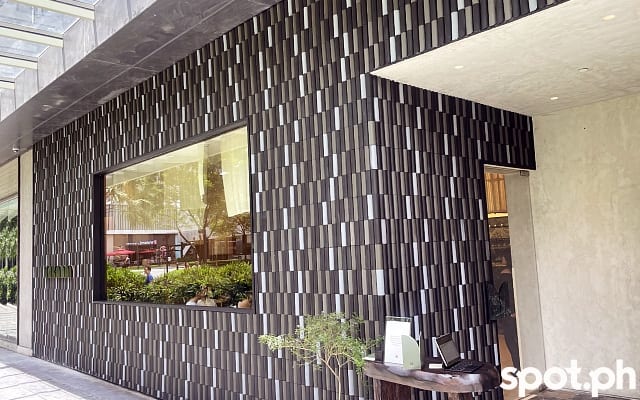
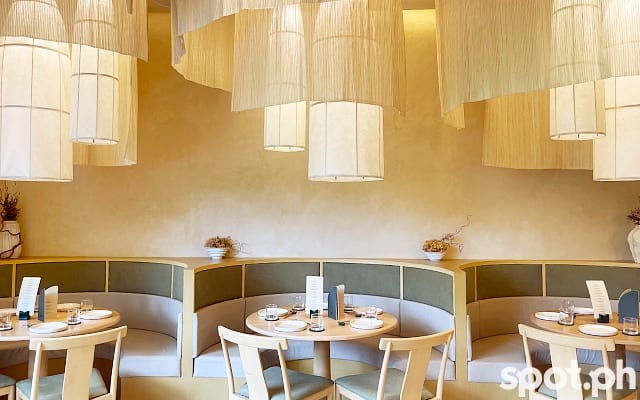
Bricks in shades of grey make up Makanai’s exterior. The inside on the other hand is airy and spacious, with wide glass windows that allow the natural light to flow in the earlier hours. Designed by Studio Ong, the interiors are primarily Japanese in look with dominant use of wood and mellow color palette of creams and pale greens. But look closer and you’ll see Filipino materials in use: pineapple paper that functions as a shade around their lamps; handwoven ceiling panels crafted in Cebu, with short pineapple linen curtains arranged in waves that resemble wisps of smoke; ceramic plates by Tahanan Pottery as vessels for Mendez’s range of dishes. It's meant to mirror Mendez's love for all things Japanese, we're told, given a touch of Filipino warmth.
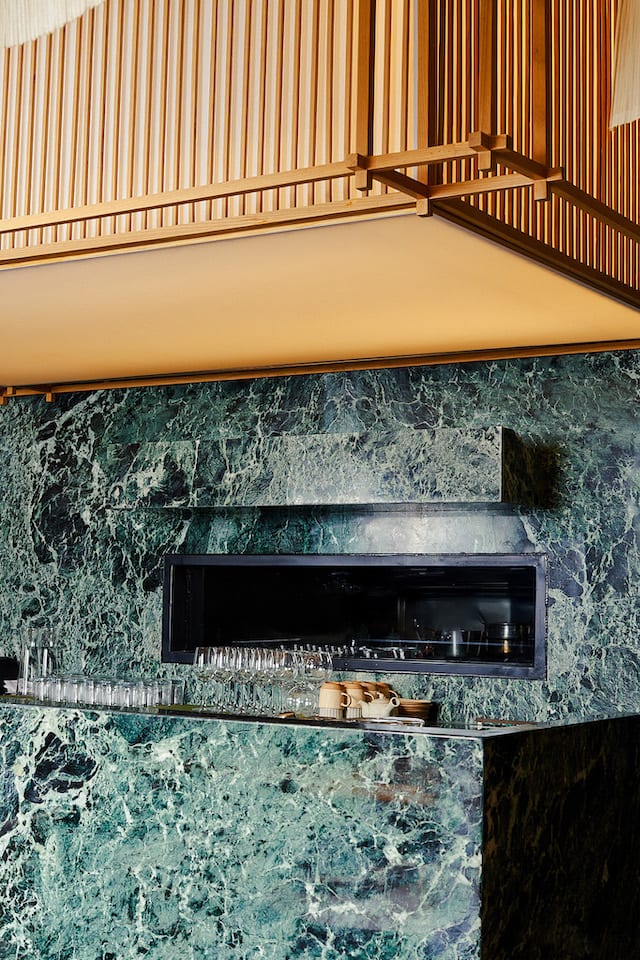
At the center of the space is a marble bar counter, glossy on the surface and a deep emerald green in color—it strikingly resembles the stone accents at Lusso, the French-Italian salon-style restaurant owned by the late Chef Margarita Forés. “This is the Margarita corner,” Mendez says with a laugh. “Margarita wanted me to create the space based on my vision, so Studio Ong provided me with a questionnaire to gather all my ideas for Makanai's look. One of the elements I chose was the stone we used for the bar. When I saw the design, I approved it without hesitation, and Margarita was pleased as well!”
Mendez had, after all, worked extensively with the 2016 Asia’s Best Female Chef over the course of his career (for more than 10 years!), and even considered her to be his mentor. And it was while he was working for Forés at Ascott BGC that Mendez first encountered the term makanai, referring to staff meals prepared at restaurants by and for their team members. “It’s usually something made from whatever ingredients are on hand,” Mendez explains. “Simple, comforting, made with care.”
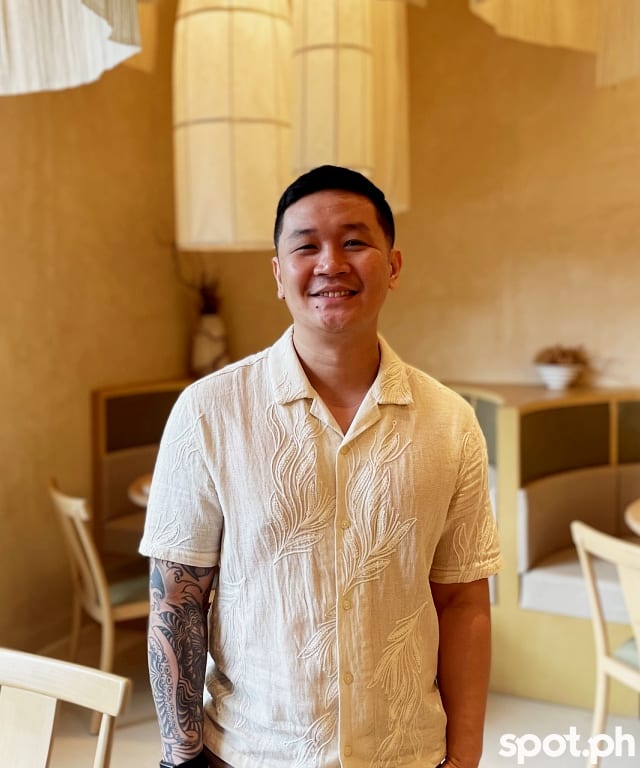
He channels the same spirit of togetherness at the new restaurant, serving “reimagined” Japanese fare with combos that are inventive but familiar and bound to please a crowd. “So technically we’re using different kinds of ingredients that are not [necessarily] Japanese, but [they] end up tasting Japanese,” Mendez tells us. Long-time faves are remixed such that they take on different formats, or get added pizzazz from new flavors and textures mingling with more traditional constituents. You could think of it as Modan gone casual—but with the occasional influences from Italian and Southeast Asian cuisines, it really is its own entity.
Also read:
Wagyu Ramen + More: Some Thai's Chef Opens a Superb Ramen Bar in Maginhawa
Amado Forés Continues Chef Margarita's Legacy, Leads the Way at Cibo
Chef Jorge Mendez Reveals the Secret Ingredient to Making Food People Love
Ivatan Salted Pork, Puttanesca With Yuyuno Fish: Catch Batanes Specials at Grace Park This Month
"Reimagined Japanese" fare at Makanai in BGC
There are plenty of quirky entries on the menu: the Sweet Corn Chowder (P250) is given an umami-rich sprinkle of gyofun (dried fish) croutons and katsuobushi; Chicken Karaage (P390) is kept company by lumpfish caviar. More refreshing (and almost Thai in flavor profile, evoking that of Some Thai) is the Watermelon Sunomono (P750), where katsuo-dashi ponzu makes for a punchy dressing to sweet, juicy cubes of the fruit.
Mendez has a strong hand on raw, ceviche or crudo-type dishes; if you loved the ones at Some Thai, you’ll want to bookmark his versions here at Makanai. In the Kanpachi Crudo (P850), succulent slices of yellowtail are given a sprightly uplift with yuzu milkis as its leche de tigre, while aromatic dots of jalapeño kosho and nira oil round out the euphony. There’s the Salmon Crudo (P700), where the fish gets a tinge of fruity heat with Szechuan ponzu and capsicum aioli. The Gyoza Tartare (P900) is an especially fun one with the soul of gyoza in a fresh format, coming as beef tartare topped with wasabi foam, parmesan shavings, and rayu honey, all meant to be scooped onto seaweed chips.
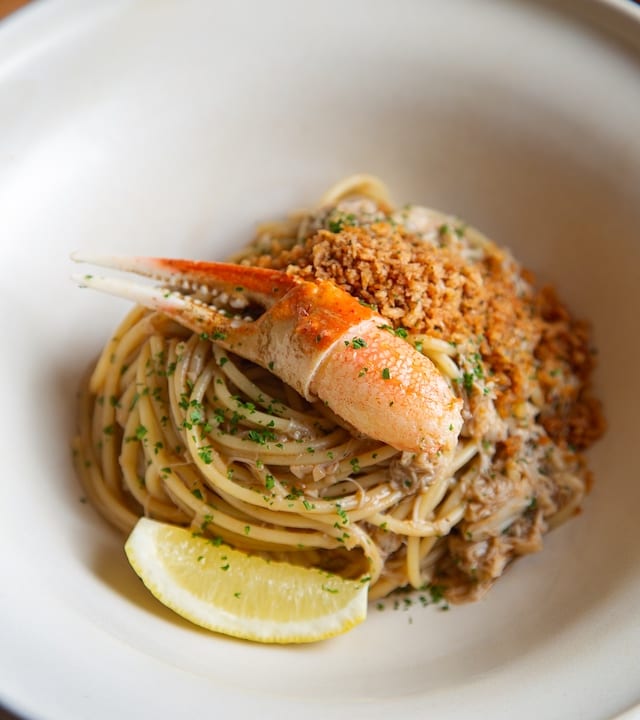
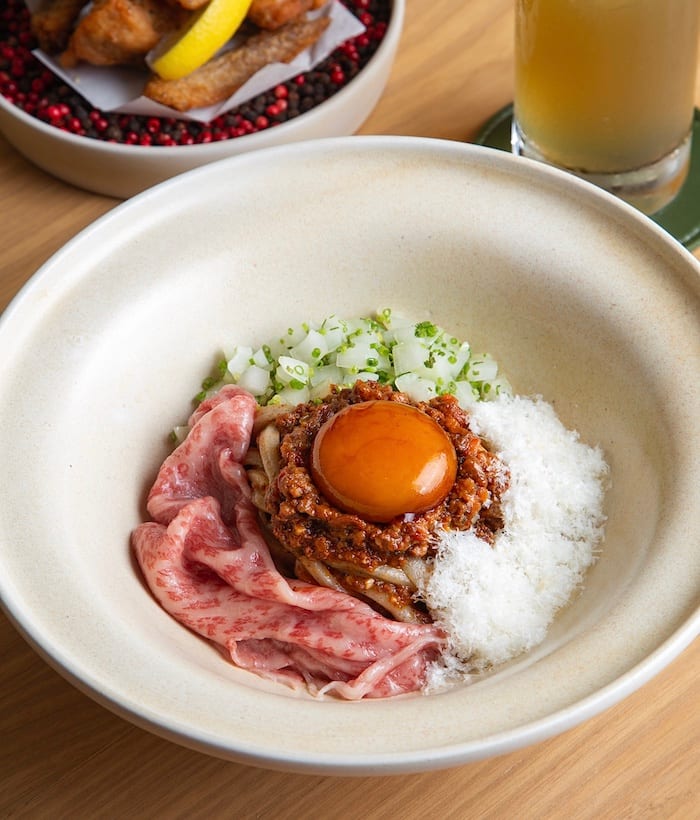
There are pasta dishes that bring in Italian flair to the mechanism of Makanai. The Crab Aglio Olio (P1,200) is understated in its elegance, the star of the plate being juicy snow crab claws served over al-dente spaghetti slick with garlic-kissed olive oil and tinged with lemon. More decadent is the Wagyu Bolognese Maze-Soba (P1,400), inspired by a similar dish they had at Harajuku’s Menya Hanabi restaurant. Here, a proper, hearty bolognese sauce coats thick, al-dente maze-soba noodles; they’re then topped with buttery slices of A5 Wagyu that just about melt into the meat sauce underneath, and a soy-cured egg yolk that makes for even more unforgettable forkfuls.
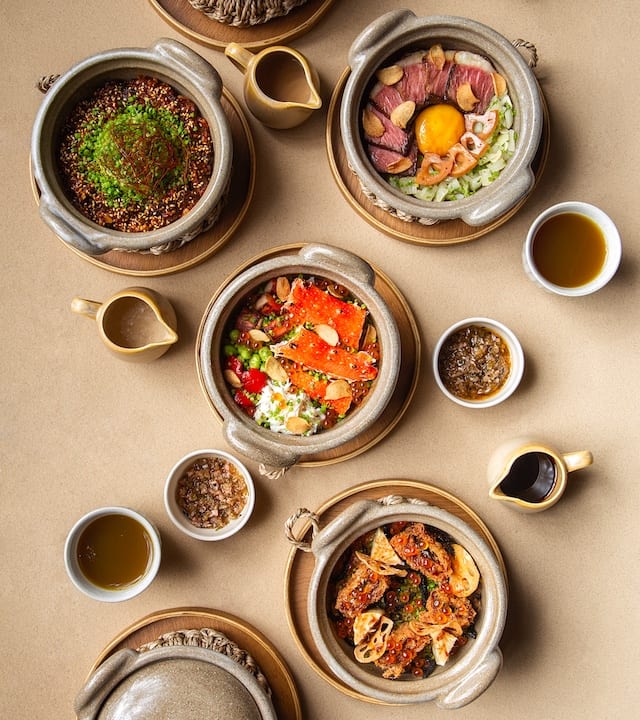
The donabe rice dishes command your attention with the theatrics involved in their presentation—an old art we are all for bringing back. These are finished tableside, with the servers rolling out a cart from which they uncover the clay pots of rice; layer over meats and other toppings; and mix everything together, scraping the crispy bits from the bottom of the pots while they’re at it. Currently there are four variants available, each available in small and medium sizes (good for one and good for two to three, respectively): Wagyu Shortrib (P1,750/small, P2,000/medium) with the beef, sukiyaki lotus root, and shoyuzuke egg yolk over truffle chahan; King Crab Claw (P2,300/small, P3,600/medium) with crab, ikura, and buttered edamame over paella chahan; and Unagi Fish and Chips (P950/small, P1,600/medium) with eel crusted in youtiao (Mendez's way of introducing crispiness to typically all-soft unagi—hence the "fish and chips" bit in its name), katsuobushi, and tamagoyaki over egg chahan. All of their nabe come with a relish of fermented onions and sushi vinegar as a piquant counterpoint, similar to how Filipinos would serve atsara with heftier eats for balance.
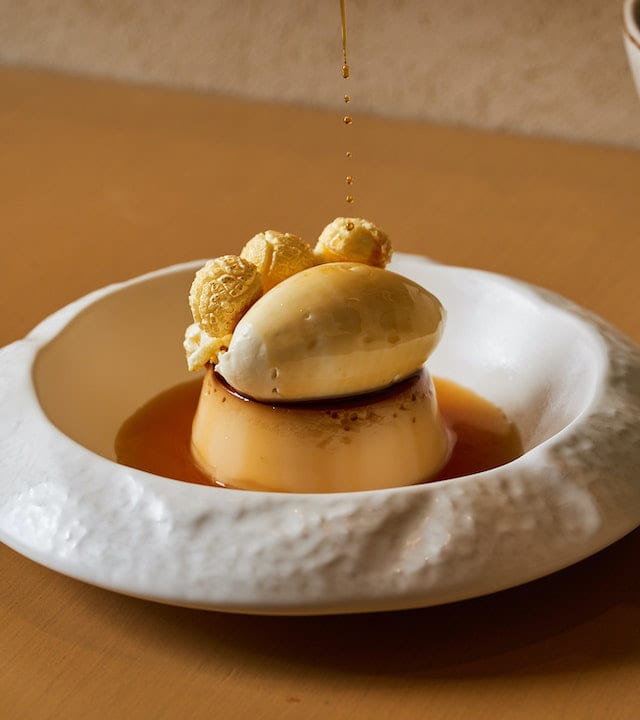
Things are equally whimsical in the drinks department. There are non-alcoholic sips like Nori Iced Tea (P290) with seaweed and sencha, as well as the uber-refreshing Yuzuade (P320). Cocktails are available too: try the Tamago Sando Flip (P450) with vodka and burnt toast milk, or the Edamame Milkis (P450) highlighting their house-made edamame milk spiked with soju. Whatever you do, don’t forget dessert—options include the eccentric-delish Popcorn Purin (P250) where jiggly, not-too-sweet Japanese pudding caramel is met with salted chantilly cream, crispy caramel corn, and burnt sugar syrup; and the earthy-bittersweet Matcha And Dark Chocolate Cake (P390) drizzled with velvety chocolate ganache.
Mendez describes the making of Makanai to be “deeply personal” to him. “[Learning about the concept of makanai] led to us traveling the world to cook, and in every restaurant where we collaborated, no matter where we were, there was always a version of [a staff meal]. Margarita would have me cook adobo and kinilaw, she would make sure that we had the right ingredients tucked away in her maleta.”
“[Opening Makanai] is a full circle moment because Margarita and I always dreamt of opening something together," Mendez continues. "It's a tribute to those moments, and to everything Margarita and I have shared in and out of the kitchen.”
For Trish, food is as much a source of pleasure and fuel as it is an outlet for creativity; a medium by which stories can be passed on; and a way to connect with others.