What's New
Modan's Latest Tasting Menu Is a Daring Exploration of Neo-Japanese Cuisine's Possibilities
Dubbed "Freehand," the new menu is Chef Jorge Mendez's most adventurous yet.
Published on Jun 8, 2025
(SPOT.ph) Anyone who’s dined at Modan will have noticed the slew of tattoos imprinted on Chef Jorge Mendez’s right arm—a masked figure with antlers, an octopus tentacle, and a bird with an orange beak, to name a few. All of his tattoos are done by Jorge’s brother, who skips the typical inking step of drawing over a stencil outline and instead goes at it “freehand.” “I usually have a concept in mind, and he always knows how to work with it. [But my brother] never used stencils,” Chef Jorge tells us.
The chef was eventually struck with the idea of taking that same philosophy, and applying it to his own craft—and the result is Freehand, the newest tasting menu at Mendez’s private-dining restaurant in Cubao.
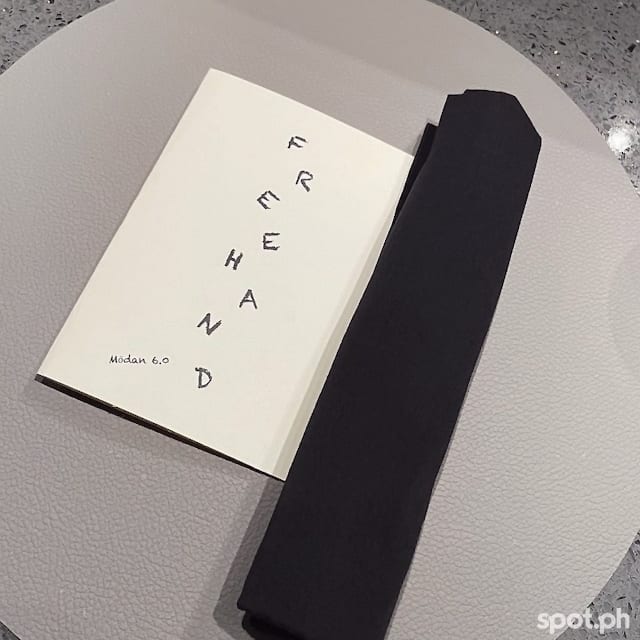
Click to Enlarge
A shot of the menu cover. (Photo by Patricia Baes).
The Freehand tasting menu at Modan, Quezon City
Chef Jorge happily lets his imagination take the steering wheel in his latest degustation, priced at P7,500 per head. Similar to previous lineups, he and his team largely take inspiration from personal memories and experiences, and maintains the progressive Japanese underpinnings they’ve come to be known for—perhaps stronger now than his previous Global menu, as he brings back his focus to Japanese cuisine here. But their execution of these ideas is more adventurous than previous lineups, with the team exploring new formats and ways of bringing out the best of all sorts of ingredients. Most of the ingredients they use this time around are local, too.
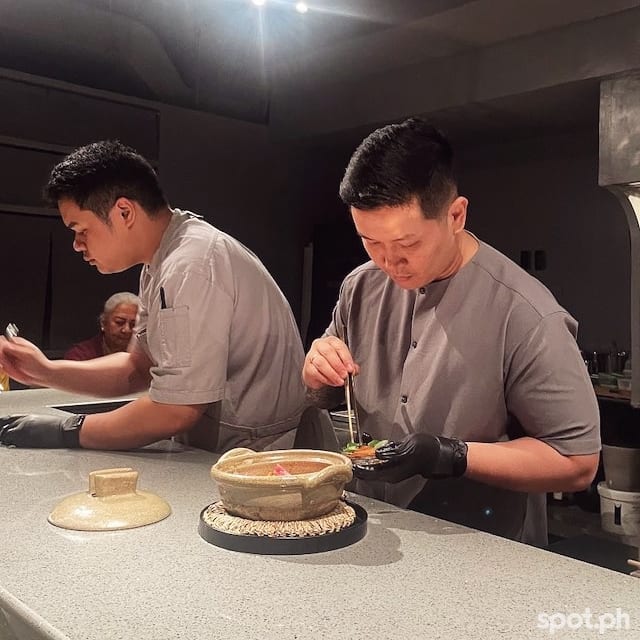
Click to Enlarge
Chefs Jorge Mendez (right) and Aaron Ramirez, in their element. (Photo by Patricia Baes).
A soup of smoky roasted eggplant, mayu oil, and radish “stars” sets the scene for what’s to come. Following this are bites, individually small but impactful, and a beautiful buildup taken in succession: Tamago, a cube of sweet tamagoyaki blanketed by A5 Wagyu, crowned with Nomad caviar; Hotate, with Hokkaido scallops (dry-aged for five days) dressed in dill and fermented apple oil, served over ube crackers; and Ebi, a tiny tartlet of citrus-dressed botan ebi, uni mousse, and a bright yuzu “veil” in a crisp shell tinged with beetroot.
The beginnings of the Freehand journey: a roasted eggplant soup; Tamago wrapped in A5 Wagyu striploin; Hotate, dry-aged for five days and spooned over ube crackers; Ebi and uni mousse in a crisp beetroot shell. (Photos by Patricia Baes)
Freehand this may be, but Modan keeps some of their degustation mainstays on the roster—in especially memorable variations. Their Tebasaki, for example, is most distinctive in this round, with Modan splitting down the grilled chicken wings (now stuffed with sushi rice) and presenting two expressions of it. One half gets a smidge of wasabi, egg yolk sauce, and a succulent strip of toro, while the other is crowned with zingy negi toro and caviar. Like before, this is followed by Modan’s Japanese-style focaccia—a denser and cakier strip than Italian versions, sprinkled with fish powder (made using local fish, we learn!) and paired with lush, velvety ankimo butter.
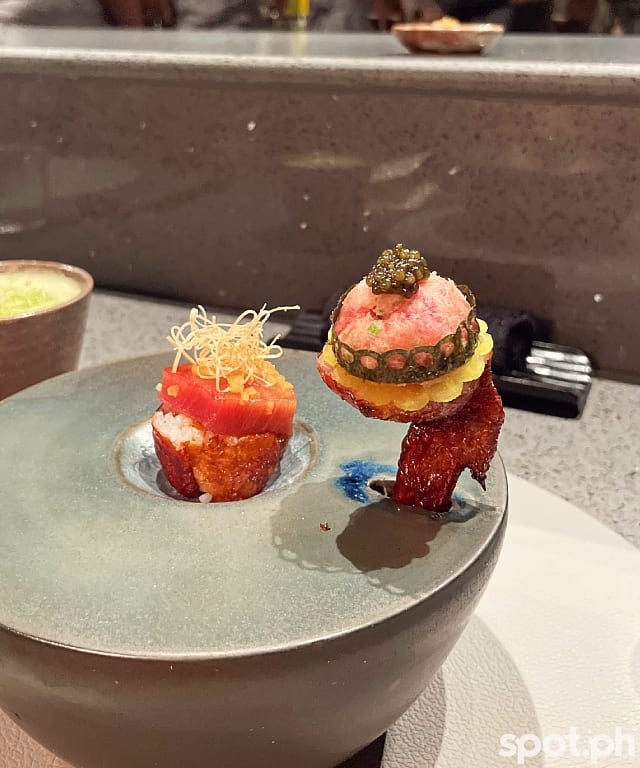
Click to Enlarge
Tebasaki—probably the most distinctive version of their chicken wings, split into two and used as a vessel for two toro (fatty tuna) combos. (Photo by Patricia Baes).
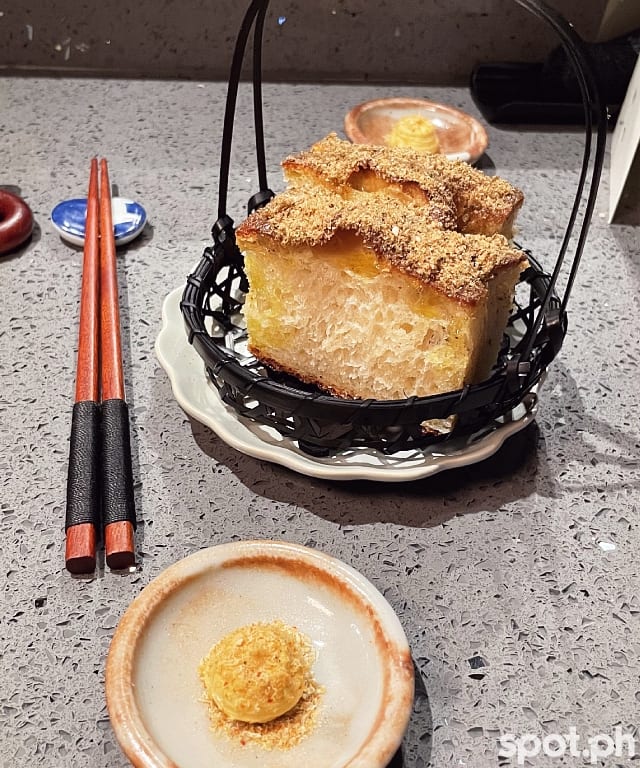
Click to Enlarge
Modan’s Japanese-style focaccia paired with ankimo butter. (Photo by Patricia Baes).
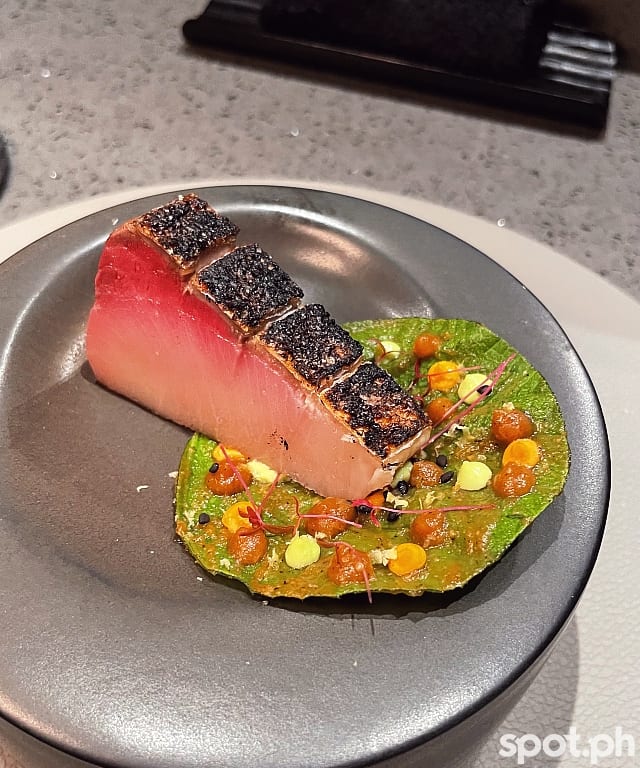
We’re then treated to the Amberjack. It stars its namesake, better known as hamachi, with the team aging the fish for 20 days for a meatier texture. The flesh is kept raw, while its skin side is grilled until crisp and charred; that way, you get to see two personalities of the fish—succulent and meaty on the raw side, smoky and rich on the grilled side. Joining the party are dots of roasted pineapple miso, wasabi, and pimiento mayo; the whole thing is wrapped in a minty shiso leaf, for you to hold like a taco before digging in.
Click to Enlarge
Amberjack, starring its namesake (better known as hamachi), aged 20 days before its skin side is grilled to a charred finish. (Photo by Patricia Baes).
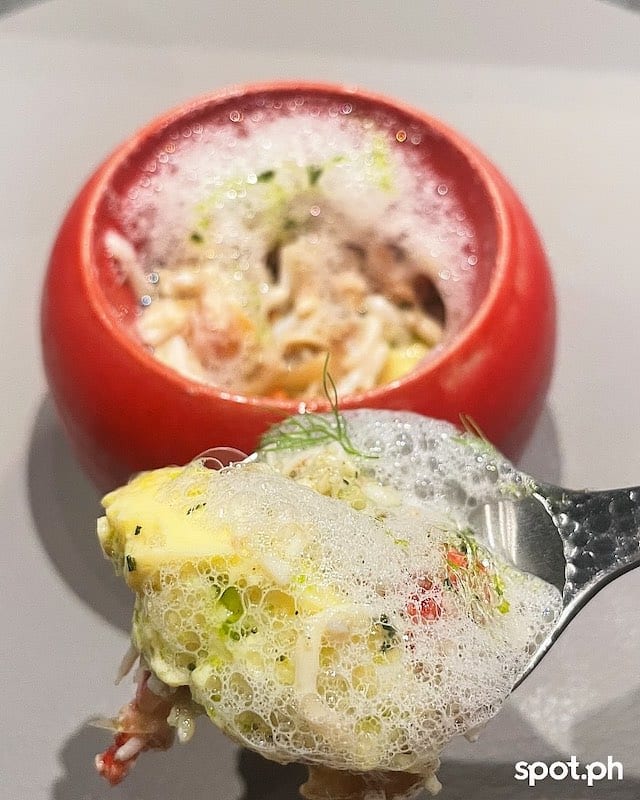
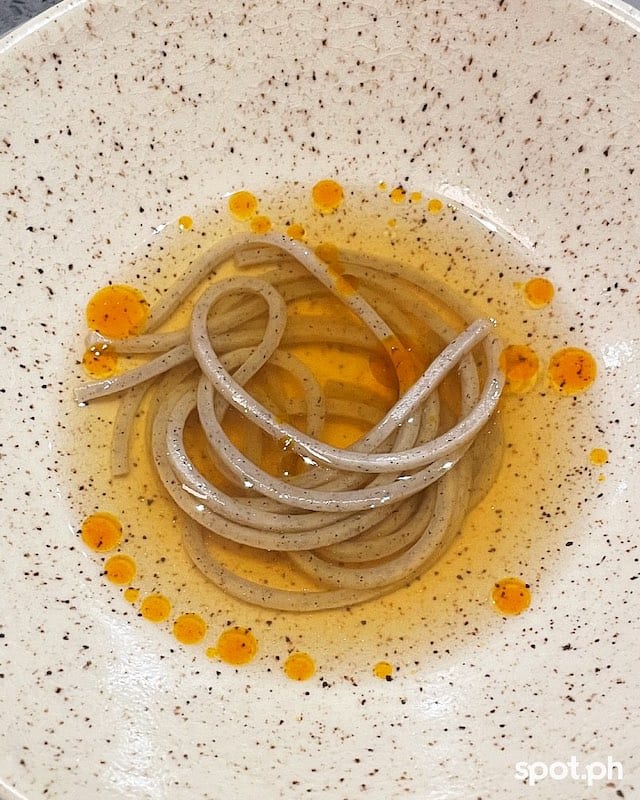
Following the fish, a small bowl dubbed King Crab offers sweet-seafoody familiarity: at the bottom is sweet, juicy Alaskan king crab meat, followed by a layer of corn purin (pudding), and finally, katsuobushi milk foam. A palate cleanser goes next—one with a deceptively translucent broth infused with corn, inspired by a canned version the team found comfort in during a trip to Osaka. Their version uses a whole three kilos of the plant, and its cooking liquid is reduced to just a half-liter to really concentrate the flavor—resulting in an intense dose of corn that’s the perfect base to Modan’s nutty, al-dente buckwheat soba (made in-house!).
Click to Enlarge
King Crab—a compact bowl holding sweet, juicy Alaskan king crab meat; a layer of corn purin; and katsuobushi milk foam. (Photo by Patricia Baes).
Click to Enlarge
A palate cleanser of a clear broth (with an *intense* dose of corn) and house-made buckwheat soba. (Photo by Patricia Baes).
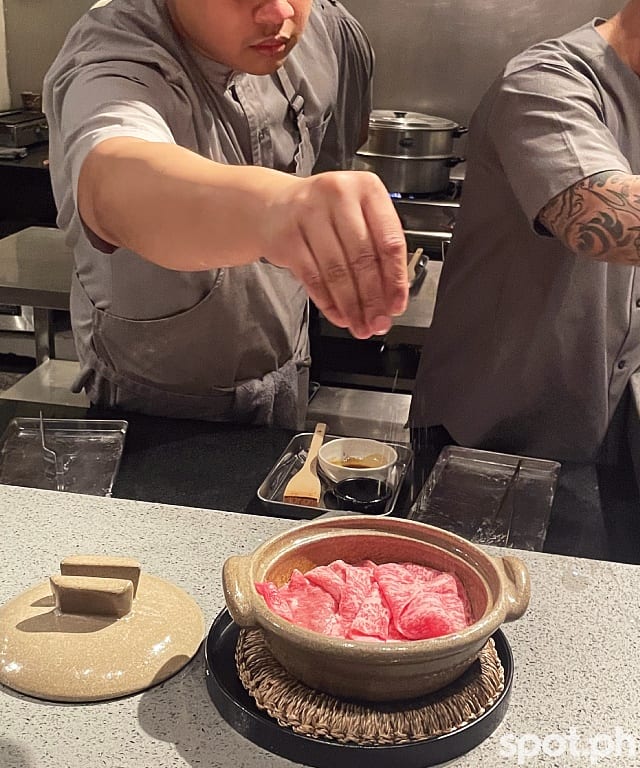
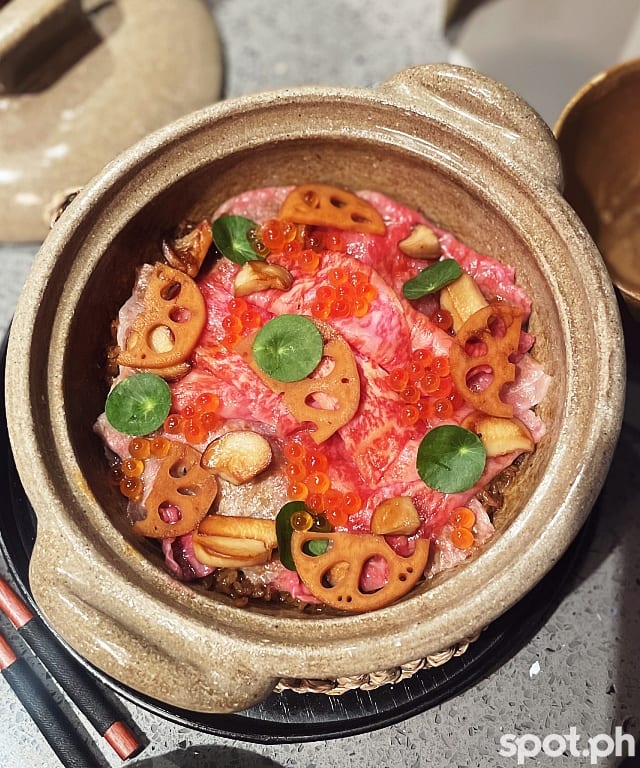
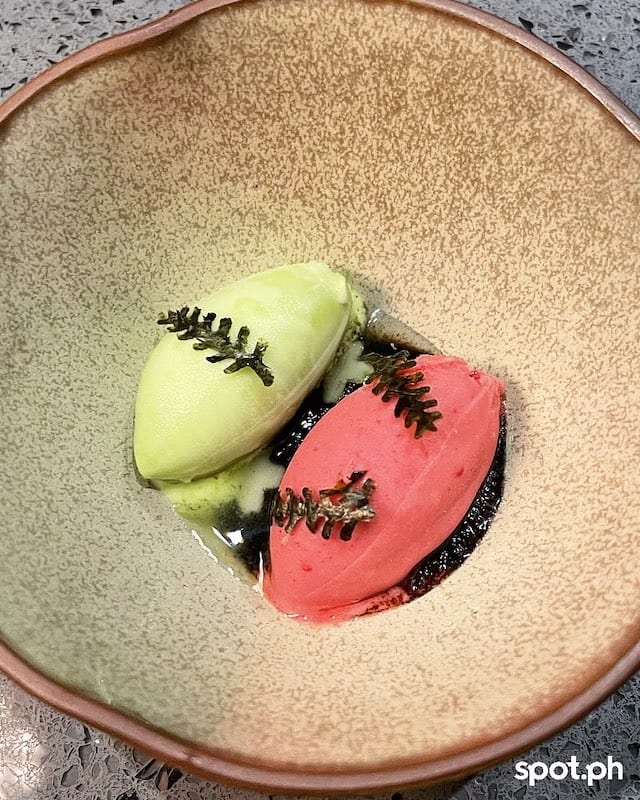
Now we’re at the Modan staple that is Nabe, this time centered on Mendez’s belief that “anyone can cook—just as long as you have the courage to put something on the plate.” The star of this version? Buttery strips of A5 Hitachi Wagyu (from Ibaraki Prefecture), which gradually cook as they’re mixed into the hot rice studded with sukiyaki lotus, king oysters, and ikura. Consider this a sophisticated take on the classic, savory-umami flavor combo of soy, mushrooms, and beef. Neutralizing our palates afterwards is a transition piece of sorts—a savory-sweet, refreshing number of raspberry and kiwi sorbets, nori coulis, and cucumber, inspired by temaki.
Click to Enlarge
Ramirez layers strips of A5 Wagyu over the hot rice....
Click to Enlarge
...And the result is this stunning Nabe. (Photo by Patricia Baes).
Click to Enlarge
A temaki-inspired palate cleanser of raspberry + kiwi sorbet, nori coulis, cucumber. (Photo by Patricia Baes).
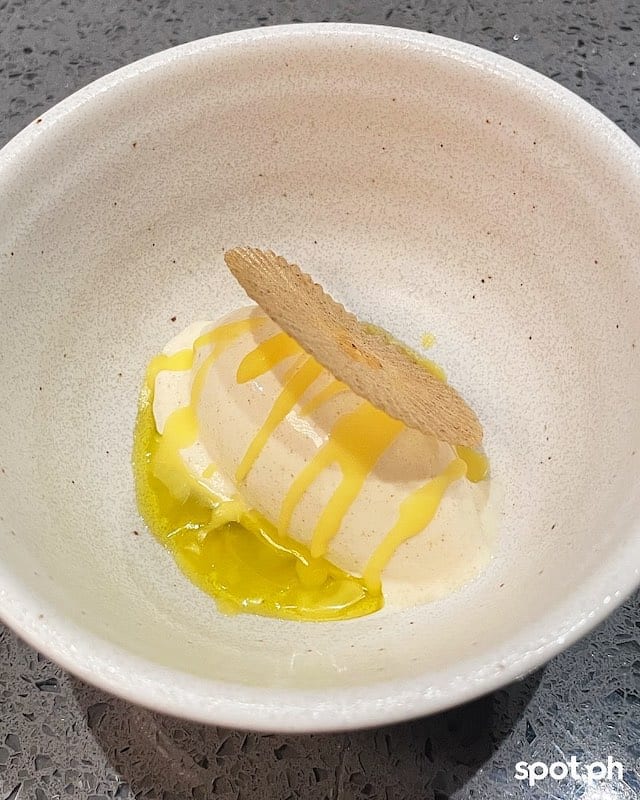
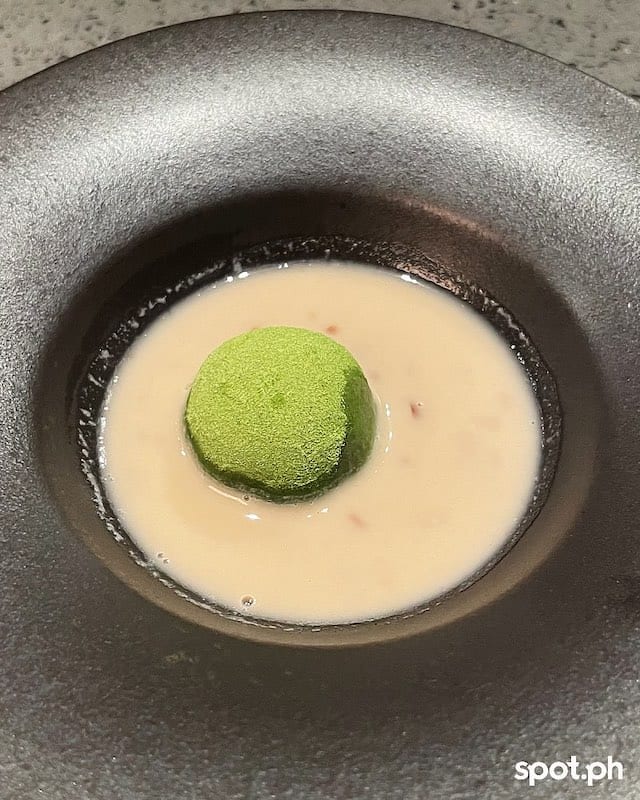
Chef Jorge recalls more of what he loves about Japan in the following desserts. There’s Shokupan, where the Japanese milk bread infuses a silky scoop of ice cream along with browned butter and drizzle of olive oil. Rich stuff, this is. Wrapping up the degustation is Zenzai, Modan’s take on the Japanese dessert soup of the same name, with azuki mochi rolled in matcha powder, bathed in a warm, sweet blend of azuki beans and macadamia milk.
Click to Enlarge
Shokupan ice cream (infused with the bread!), browned butter, and olive oil. (Photo by Patricia Baes).
Click to Enlarge
Zenzai—Modan’s take on the Japanese dessert soup of the same name. (Photo by Patricia Baes).
The arrival of this more experimental menu couldn’t have come at a better time, Chef Jorge explains. We’re just shy of three years since Modan first opened, with their early days being more centered on honing the basics and honoring the past. But at this point, Mendez is focused on cementing Modan’s “true identity” with the Freehand lineup—much like the tattoos on his arm have become a part of him. “This is Modan now. Kasi if we don't start it now, I think we will not be able to get the full potential… the true identity of Modan.”
Modan is at Unit 5, L/1 Escalades East Tower, 20th Avenue, Cubao, Quezon City. For inquiries and reservations, visit Modan's online reservation page. For more information, check out Modan's Instagram page.
For Trish, food is as much a source of pleasure and fuel as it is an outlet for creativity; a medium by which stories can be passed on; and a way to connect with others.
You Might Also Like