Trending
NCDA Calls Out Starbucks For Tagging Customers' Cups With Disability
Starbucks PH has also released their official statement on the incident.
Published on Jul 23, 2025
(SPOT.ph) The use of PWD (Persons with Disability) cards in the Philippines is a kind of constant elephant in the room, with incidents ranging from restaurant owners calling out the use of fake PWD cards to customers being interrogated by restaurant staff about their ID's authenticity. Due to the sensitivity of the topic and the high stakes on both sides, interactions where these cards are involved can quickly go viral; recently, one such Facebook post has garnered enough traction to merit a statement from the National Council on Disability Affairs (NCDA).
The Starbucks Festival Mall Incident, as told on Facebook
On July 21, 2025, Facebook user Marivic Cruz posted a photo of her and her husband's orders from Starbucks Festival Mall in Muntinlupa City. The cups, which Starbucks employees usually label with the customer's name, were both labelled "Speech," and before each cup Cruz neatly laid their respective PWD cards—which both clearly bore the user's name, Marivic, and her husband's, Daniel.
According to Cruz, her husband, who had a speech and language impairment, was the one who ordered the drinks. "When he came back to our table, nag iba yung aura nya. Then he showed me the name written on his cup," Cruz writes. On the cups were written "Speech," presumably after the type of disability on the husband's PWD card.
Furthermore, Cruz reports that the staff actually called out her husband using the erroneous "names" on the cups. "This is truly disappointing," she writes of the experience.
Cruz then adds an update, explaining that the manager approached her and her husband and apologized on the employee's behalf. However, the damage has been done, as Cruz expresses, "But still, part of us—especially my husband—was humiliated by what happened. He rarely approaches people, and now it seems like he’s starting to feel traumatized even just by ordering at other restaurants. Knowing that I also have a social disability, this is just too much."
ADVERTISEMENT
NCDA's statement calls the incident an act of 'public ridicule'
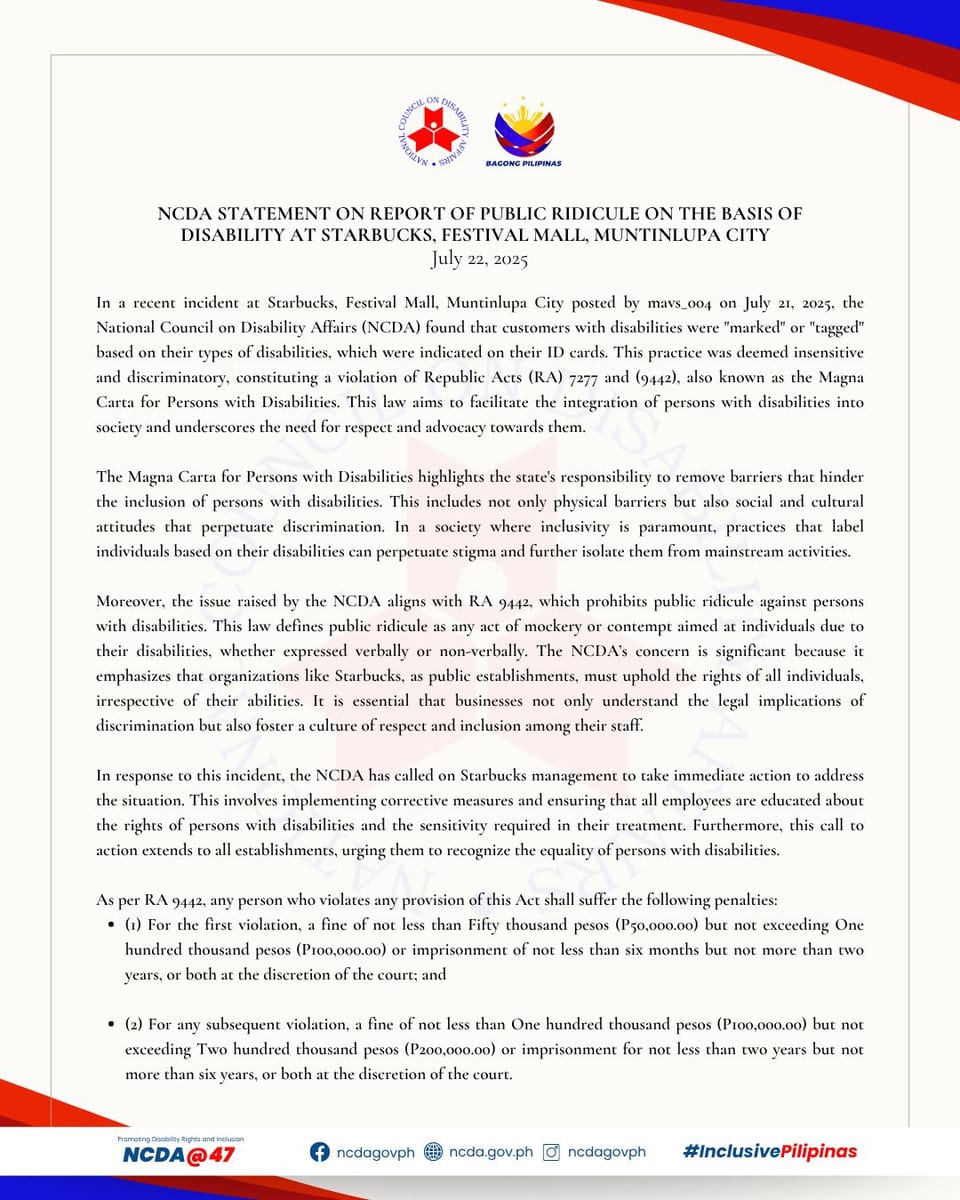
On July 22, 2025, just a day after Cruz's Facebook post, the National Council on Disabiliy Affairs (NCDA) released a statement condemning the "tagging" of Cruz' and her husband's cups with their disabilities as "insensitive and discriminatory, constituting a violation of Republic Acts (RA) 7277 and (9442), also known as the Magna Carta for Persons with Disabilities."
The Magna Carta for Persons with Disabilities is a law that advocates for persons with disabilities; particularly, it aims to protect persons with disabilities from discrimination and "remove barriers that hinder the inclusion of persons with disabilities."
The NCDA further states that their "concern is significant because it emphasizes that organizations like Starbucks, as public establishments, must uphold the rights of all individuals, irrespective of their abilities. It is essential that businesses not only understand the legal implications of discrimination but also foster a culture of respect and inclusion among their staff."
Click to Enlarge
Photo by Facebook/ National Council of Disability Affairs.
In the statement, the NCDA states that it has since called on Starbucks management to implement corrective measures, including "ensuring that all employees are educated about the rights of persons with disabilities and the sensitivity required in their treatment."
The NCDA closes their statement with a reminder of the penalties that any person who violates RA 9442 may incur:
However, it is not clear whether any Starbucks Festival Mall employees involved in the incident were indeed penalized.
ADVERTISEMENT
Starbucks PH has also released an official statement on the incident
On the other hand, SPOT.ph has reached out to Starbucks PH for their side of the story. Here is Starbucks PH's official statement:
ADVERTISEMENT
The Good, The Bad, and The Netizens' Reactions
As of this writing, Cruz's post has garnered some 121,000 reactions, over 5,000 comments, and over 32,000 shares. Her experience has largely garnered sympathy from netizens who have commented on the original post, and conversely Starbucks Festival Mall has earned their ire. While many have called out Starbucks Philippines, some have even advised Cruz to sue:
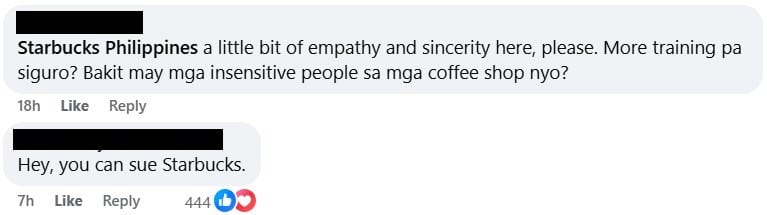
Click to Enlarge
Screenshot from comment section of Facebook/ Marivic Cruz.
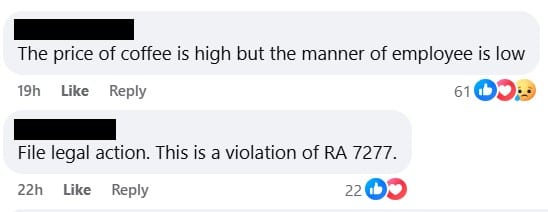
Click to Enlarge
Screenshot from comment section of Facebook/ Marivic Cruz.
And while a few have suggested that the employee could have made an honest mistake, citing a lack of attention due to the busy nature of the job:
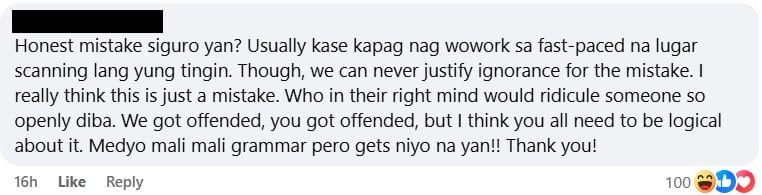
Click to Enlarge
Screenshot from comment section of Facebook/ Marivic Cruz.
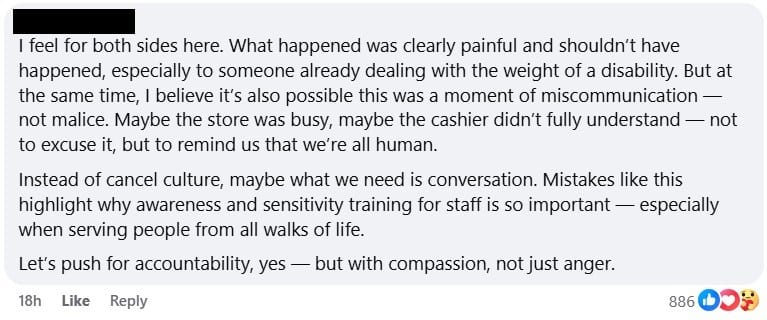
Click to Enlarge
Screenshot from comment section of Facebook/ Marivic Cruz.
Others are certain that the tagging of the cups with the customers' disability was an intentionally malicious act:
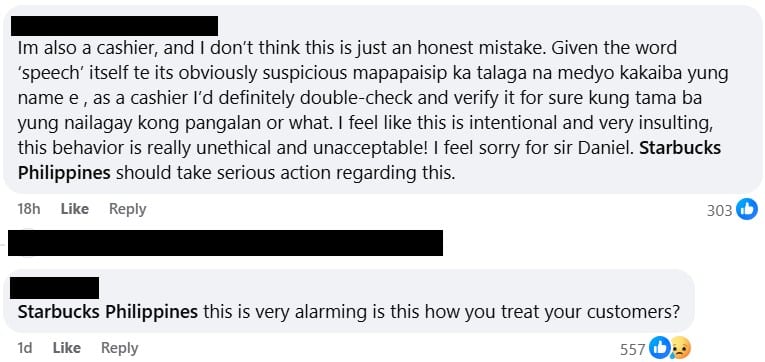
Click to Enlarge
Screenshot from comment section of Facebook/ Marivic Cruz.
The road to resolving PWD card issues remains rocky
When the orders have been served, insult has been added to injury, and all's been said and done—now what?
The use of fake PWD cards not only poses a threat to the health of one's business or livelihood, but is also indicative of a wider systemic issue: It is often the restaurant that shoulders the cost of these discounts, although that is not supposed to be the case. Employees who depend on these businesses may allow anxiety to blur the lines between fake PWD card users and actual persons with disability.
However, these fears are not relevant in an incident that is, essentially, a matter of dignity. Customers presented their cards which bore their names, and though it may have been an honest mistake, the employee referred to one of them primarily by their disability. And while we can commend the manager for taking accountability, the general consensus also agrees that perhaps the apology would have been more meaningful if it had been delivered by the offending employee.
At the very least, the response to this disability-tagging incident from netizens and government agencies alike has sparked conversations we need to have not only about improving the PWD card system, but how we can do better as human beings—regardless of whether we're working behind the counter or not.
You Might Also Like