
Published on Sep 20, 2026
(SPOT.ph) Driving through the narrow streets in the town center of Liliw, Laguna isn't for the faint of heart—especially when you're in a ten-seater van. Parking is doubly difficult (though we managed), and we'll spare you the details of the many five- and six-pointed turns we had to make every time we got lost in this little town. But what it lacks in space, Liliw more than makes up for in what it has to offer: slippers and shoes that are a testament to Filipino craftsmanship, pastries like uraro cookies that offer more than just a rich, buttery bite—they’re also a taste of heritage—and cozy, family-run bistros that are worth the drive for their thoughtfully curated spaces and hearty, delicious dishes.

In this edition of Spot Out of Town, we explored Liliw, Laguna, and found a treasure trove of restaurants and delicacies—local institutions built over decades that generations of Liliweños have loved and are rightly proud of. Liliw has more to offer than world-class footwear, and you don't have to look far or long to find not just great eats, but also pasalubong that will intrigue and impress those who receive them.
Guide to Restaurants in Liliw, Laguna


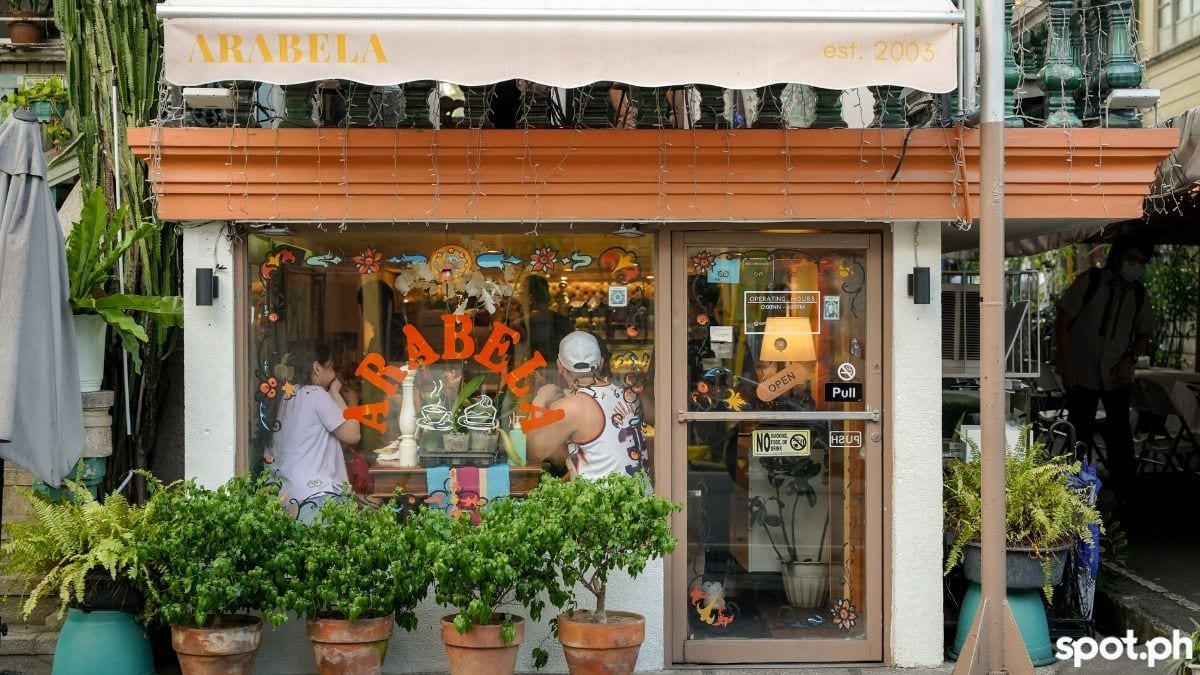

If entering Arabela feels like stepping into someone’s home, that’s because it practically is. Family is at the heart of this cozy Italian bistro, from its name to the space itself. Owned and operated by Bobby and Antonette Camello, the restaurant is named after their daughters, Ara and Bela, and the space used to be the family’s shoe store—hence the low ceiling. But the quirks of its former life only add to Arabela’s charm, giving the restaurant an intimate, lived-in feel that makes you feel less like you’re dining out and more like you’ve been welcomed into someone’s home.
In 2003, the Camellos opened a stall along Gat Tayaw Street where tourists and guests could snack on simple pasta and pastries, starting with baked macaroni, beef lasagna, and brownies. Eventually, as they gained more confidence from the popularity of their food, they decided to open a restaurant in their ancestral home and what used to be their shoe store. Twenty years on, this homey restaurant has become a Liliw institute, with locals and tourists alike filling the space with laughter and lighthearted chatter even on weekdays.
.jpg?fit=cover&width=960&q=82)
Arabela serves Italian dishes that make you feel like you're eating home-cooked meals. Their Burrata Salad (P505) and Toasted Ravioli (P355) make great appetizers and build the excitement for the mains. Their Vongole (P500) is a refreshing plate, with fresh, mildly sweet clams balanced with garlic and the bright tang of lemon, while their Spaghettini al Amatriciana (P500) is a hearty serving of pasta tossed in a delicious pomodoro sauce, punctuated by the saltiness of pancetta and a bit of heat from the chili flakes. If you're looking for a bit more protein, though, our favorites were the Frenched Pork (P495), which features a tender, bone-in pork chop that's served with a sweet-savory hickory barbecue sauce and fluffy, creamy mashed potatoes, and the Chicken Milanese (P415), which is a grilled chicken dish that comes with a gorgonzola cream sauce that will keep you wanting more.
They also have a comprehensive drinks list, but we couldn't get enough of their Mango, Grapes, Strawberry (MGS) Shake (P195), and we thought the Queso de Ube Cheesecake (P195) was the perfect, Tita-approved, not-too-sweet treat to end the meal.
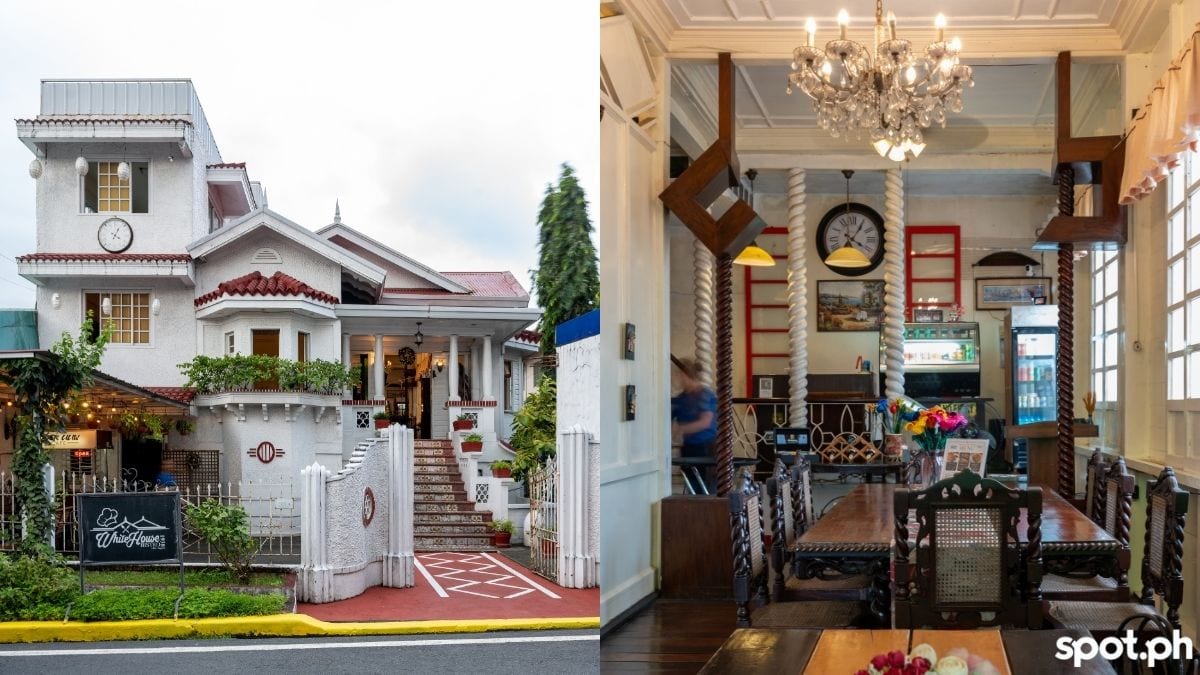
1938 White House Bistro is as beautiful on the outside as it is on the inside, and their Filipino dishes taste just as exquisite. Owners Marianne and Christian Polistico kept the naming process simple: 1938, the year the house was built, and White House, how anyone would describe the building. Fun fact: it's also chef and owner Christian's ancestral home. His wife, Marianne, is no stranger to converting ancestral homes into restaurants either: she's actually cousins with the eponymous Ara and Bela of Arabela. But while their cousins have mastered an Italian menu, 1938 White House Bistro leaned into Filipino (particularly Liliweño) cuisine, and they've done it so well that photos in and around the aesthetic house are just the cherry on top; the main attraction is the food.

They serve the usual fare you'd find at any Filipino restaurant, like their seriously crispy-on-the-outside, tender-and-juicy-on-the-inside Crispy Pata (P900), and their classic Pork Sisig (P260). But they also offer less common dishes like Sinantolan (P240), made by cooking minced santol and pork in coconut milk; it has that ginataan flavor, paired with the unique sweet-sour taste of santol and savory pork. There's also Pancit Lucban (P280), a hefty serving of perfectly seasoned pancit canton topped with Lucban longganisa that's fried to the perfect crisp. But if you're there for a light snack, you can't go wrong with their Ukoy (P200), fried just right to be crunchy without being dry. Best thing about it? You won't get poked in the mouth by a stray shrimp head, because they use small enough shrimp for clean, painless, delicious bites.

For the adventurous eaters, you'll want to try their Ginataang Kalabaw (P380), which really is just tender carabao meat stewed in gata; it's suprisingly not gamey at all and passes for beef if you didn't know it wasn't. Liliw is also known for their suso or snails, which you'll enjoy at 1938 White House if you get their Ginataang Suso (P240). Our favorite new dish, though, has got to be the Kulawo Labong (P190). Labong is bamboo shoots, while kulawo is a cooking method where coconut meat is seared before it's soaked in hot water and squeezed for coconut milk. The result is coconut milk that's infused with the charred flavor from the searing, and when it's used to cook the labong, you get a smoky, creamy, tender bite that's got a bit of tang.

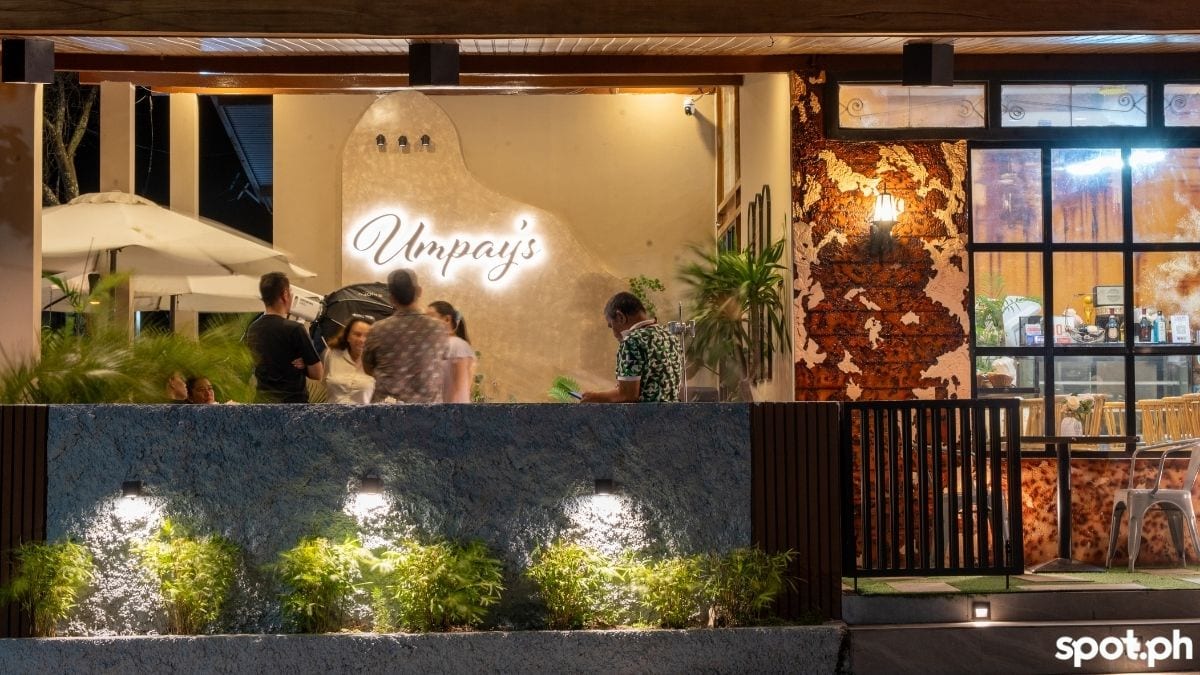
If you're traveling in a big group and you can't quite agree on what to eat, you can't go wrong with simply walking into Umpay's. It's got a little bit of everything: American, Italian, Japanese, Middle Eastern, and Filipino, with owner Tagumpay "Lucky" Moneva's own twists. The global fusion menu makes sense when you find out what inspiration was for his restaurant: it's the food markets that popped up in Maginhawa in the early 2010s, where you might find Middle Eastern snacks in one stall and then Japanese in the next.

As comprehensive as their menu is, you can't go wrong with pizza at Umpay's—it's one of the first items they developed and one of our favorite bites. The Four Cheese Truffle Pizza (P435) is a solid choice for cheese lovers, while the Wagyu Cheeseburger Pizza (P635) is a fun take on a cheeseburger, and mind you, they're generous with the wagyu. The Apple Sage Porkchop (P565) is juicy, tender, and is topped with caramelized apple slices that meld well with its herby glaze, while the Buttered Chicken Tikka Masala (P325) is mild on the heat but impeccably spiced, and served with warm pita bread that's perfect for dipping in all that tikka masala gravy.
Liliw locals also swear by the Loin Tapa Kabayo (P255), which is served with garlic rice and a sunny-side-up egg, silog-style. You read that right: it's made with horse meat, which the restaurant makes into tapa themselves. The result is a soft, vinegar-marinated, garlicky bite that isn't gamey at all. To end the meal, you must order the Pistachio Cheesecake Knafeh, which is served like a deconstructed cheesecake, but don't let its looks deceive you: the cheesecake itself is creamy and carries the pistachio flavor well, while the crust is buttery and crunchy, and the whole thing is tied together by the gooey chocolate topping.
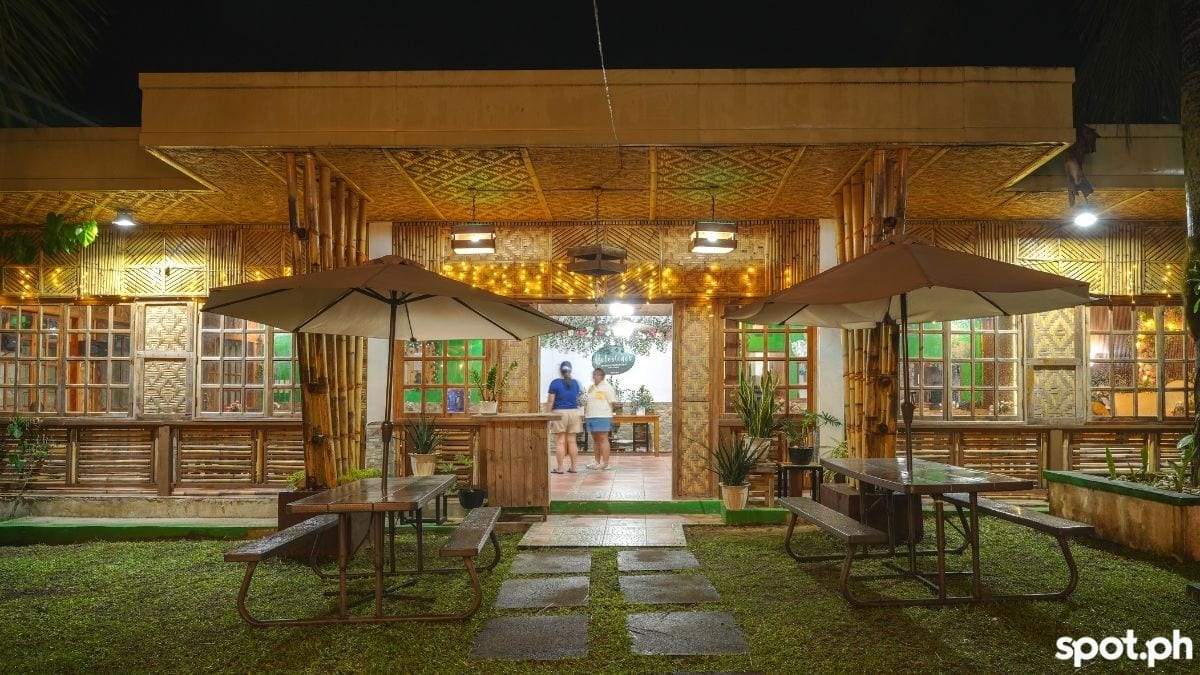
Celestine's Home of Boodle Feast Restaurant used to be a dampa-style restaurant, where guests could "shop" for fresh seafood and ask the staff to cook it the way they want. And while the restaurant has since changed hands, they still serve fresh seafood, grilled meats, and Filipino ulam, but they're served in a different, more uniquely Pinoy way: as part of a boodle feast. Of course, you can still order the dishes à la carte or served family-style on plates, but where's the fun in that?

You can order the Kasalo Boodle (P750), which serves two and comes with grilled liempo, pork barbecue, grilled and stuffed squid, fried talong, boiled or salted egg with tomato, rice, fresh fruit slices, and iced tea. Or you could amp it all the way up with the Seafood Boodle (P3,199) for groups of up to 10. Order this, and you'll get a giant boodle tray loaded with buttered shrimp, buttered crab, calamares, crispy salmon belly or fish fillet, fried bangus, fried tilapia, fried talong, kangkong, ensaladang pako, boiled or salted egg with tomato, pancit guisado, fresh fruit, and a tower of iced tea. It's generous even for something meant for a group as big as 10, and trust us: the seafood dishes are fresh and well-seasoned, the grilled meats are juicy and deliciously charred, and everything really hits the spot.
The best part: you can customize your boodle by adding other items from their menu. The Beef Kare-kare (P380), for example, was a welcome, hearty addition, adding a savory, peanut-y sarsa to our bites, while the Lumpiang Shanghai (P120) made the whole boodle feast, well, more festive.
Oh, and Celestine's also delivers their boodle feast sets, so even if you're staycation-ing around Liliw and are too lazy to go out for a meal, you can still experience this unique way of sharing a meal wherever you're staying.
Guide to Pasalubong in Liliw, Laguna
By Gonzales - Home of Gonzales Uraro
Address: 15 Mabini Street, Brgy Masikap, Liliw, Laguna
Opening Hours: 8 a.m. to 8 p.m., Mondays to Sundays
Mobile: +639228162108

Did you know that uraro cookies are called that because they're made with uraro—a local tuber also known as arrowroot? These days, the uraro cookies most pasalubong centers carry are made with cornstarch, which gives them that signature powdery texture that clings to your teeth, but at By Gonzales, the cookies are still made with yuro, or arrowroot starch. The difference is starch—err, stark—because while yuro still makes the uraro cookies powdery enough to cling to your teeth, it does so far less overwhelmingly, in a good way; each bite hits you with the buttery flavor and flaky texture of the cookies.
Pair them with hot coffee or hot chocolate (or just any hot beverage, actually), and you're in for a really good treat. The uraro cookies are made fresh weekly, and if you're lucky, you can catch the ladies running the bakery making them fresh. You can get them in a Big Pack (P170, about 21 pairs) or a Small Pack (P115, about 16 pairs), but believe us and do yourself a favor: get several big packs.
Liliw Bakeshop
Address: 316 Gat Tayaw, Liliw, Laguna
Opening Hours: 9 a.m. onwards, until stocks last

If you happen to be walking along Gat Tayaw Street in Liliw at the right time, you might find yourself floating towards Liliw Bakeshop, like a cartoon character catching a sniff of something delicious. They bake their famous cake rolls and pianono fresh every day, and whether you've got a sweet tooth or not, it's hard not to get curious about the mouthwatering smells wafting from their bakery.

Must-tries include their Caramel Roll (P300 whole, P150 half, P25 per slice), which is fluffy and generously topped with an irresistibly nutty, not-too-sweet caramel icing that's reminiscent of yema or dulce de leche. Meanwhile, the Chocolate Roll (P320 whole, P155 half, P25 per slice) is velvety, and the chocolate flavor carries something nostalgic about it; something about it is reminiscent of childhood birthdays or afternoon snacks. Their Pianono (P150) is also a Filipino bakery staple that Liliw Bakeshop does so well: it's light and fluffy, rolled in white sugar, and filled with a gently sweet, creamy custard.
Lourdes Olivar's Puto Palabok
Address: Pin Liliw Fire Station
Opening Hours: By appointment only for order pick-ups
Mobile/ Viber: Junessa, +639935470614

Necessity is the mother of invention, and when Lourdes Olivar needed to find another source of income for her family, what she created was this unique kakanin that no one else in Liliw (or anywhere, really) could recreate: the Puto Palabok (P500 for a 15-inch bilao). It's neither puto nor palabok, but a delicious amalgamation of both: a palabok-flavored rice cake that's more savory than you'd think. Na Lourdes, as she's called around these parts, still makes them herself, and when she invented the Puto Palabok decades ago, she used to schlep it along with other homemade kakanin around Liliw, and people bought directly from her. These days, Na Lourdes makes her kakanin by order only, and lately too it's mostly the Puto Palabok that her regulars call in for.
But what does it taste like? Think of the best palabok sauce you've had: garlicky, just the right level of salty, and tempered with the mild sweetness of rice cake, all in one bite. Puto Palabok also contains peanuts—allergen warning—which add a bit of bite and a change in texture as you savor it.
.jpg?fit=cover&width=960&q=82)
In the Olivar family, the Puto Palabok wasn't just a source of income; on lean days, it also doubled as survival food. They eat it with hot rice, like ulam. We were skeptical of this combo at first, but when we picked up our order and struck up a conversation with Na Lourdes and her daughter Cherry, they offered to let us taste it... and we couldn't get enough. The puto palabok, having been prepared ahead of time, was room temperature. But paired with the hot rice, it transformed into something like a fluffy, palabok-flavored cloud, tempered with a very mild sweetness from the rice. Add a bottle of cold soda, and you've made yourself a hearty meal.
Another pro tip? Pair the puto palabok with chicharon, available at the Liliw Pasalubong Center. The crunchy, savory chicharon adds a different texture, and it makes for a filling snack.
Lourdes Olivar's Puto Palabok is available by advance order only. To order, call Na Lourdes' granddaughter Junessa (+639935470614) at least three days in advance. To pick up your order, pin Liliw Fire Station and ask around for Lourdes Olivar's house. Na Lourdes loves chatting with her customers, so make sure to make a bit of time for her!
Pro tip 2: The Puto Palabok comes in a 15-inch bilao, so if you're splitting it with friends, bring Tupperware and utensils to portion it. It contains coconut milk, so the shelf life isn't very long. It will last one to two days if kept somewhere cool, slightly uncovered, or three to four days refrigerated.
Check out our other Spot Out of Town Food Guides:
Spot Out of Town: The Best Places to Eat in Lipa, Batangas
SPOT Out of Town: The Best Places to Eat in Antipolo
Spot Out of Town: Where to Eat In Nagsasa Cove + Delicious Detours Along the Way
SPOT Out of Town: The Best Places to Eat in Los Baños, Laguna Right Now
SPOT Out of Town: The Best Places to Eat in Clark, Pampanga Right Now
Editor-in-chief: Jerome Gomez
Managing Editor/ Producer: Camille Georgia Uy
Associate Editor: Michiko Manalang
Associate Publisher: Monique Espiritu
Things to Do Editor/ Producer: Leana Vibal
Photographer: Paul Sugano
Cover design: Warren Espejo
Video Producer: John Henry Mariano
Video Editor: Jaybelle Mataro
Shoot Assistants: Almarc Rico, CJ Gabaleo
Special thanks to: Isagani Moneda Jr. and Liliw Turismo
Camille Georgia Uy is Spot.ph's Managing Editor. When she's not managing Spot's day-to-day operations, she's managing her loved ones' next food trip or vacation, and you can bet she's got a Google sheet for those, too. Georgia believes good food is made better when you're eating with great company, and that most problems can only be solved on a full stomach.