Spot Out of Town: Discover the Best Things to Do in Liliw, Laguna
From shopping for the famed Liliw Laguna slippers to various outdoor adventures, here's why Liliw is a must-visit.

by Leana Vibal
Published on Sep 20, 2026
(SPOT.ph) Marikina may be the Shoe Capital of the Philippines, but it's hardly the only place to find high-quality footwear in the country. Down south in Laguna, Liliw has carved out its own niche. Unlike Marikina, whose claim to fame lies in its leather shoe industry, Liliw focused on something else—slippers. This humble town took the bare tsinelas and turned it into a colorful mishmash canvas of color, abaca, and other textiles.
And while slipping into a new pair of flip-flops and sandals should definitely be in any Liliw tour itinerary, it's not the only thing you could do in this humble town. Located in the foothills of Mt. Banahaw, Liliw, Laguna offers plenty of outdoor and culinary experiences.
For this edition of Spot Out of Town, we're taking a two-hour road trip down South. From chasing waterfalls and glamping to eating your fill of local delicacies and shopping at mom-and-pop shops, here's why Liliw, Laguna is worth the drive from Metro Manila.

Table of Contents
What to do in Liliw, Laguna
Shop for locally made shoes and slippers

If there's one thing you absolutely cannot leave Liliw without doing, it's going shoe shopping—the town is the tsinelas capital of the Philippines after all. But if you're thinking that you don't need another pair of flip-flops, well, the tsinelas in Liliw are hardly just another pair of everyday slippers.
In Liliw, you'll find a variety of sandal styles, from basic rubber-soled everyday pairs to elaborate, fashionable espadrille-like special-occasion pairs. Most shops are along Gat Tayaw Street, the town's main road. They even have a local trade building where most of the brands have set up shop. And while Liliw has plenty of great shoemakers, you can't go wrong with a pair from Jhaz Footwear or Ai-She Fashion.
Ai-She Fashion

Ask anyone about unique, Liliw-made shoes and Ai-She Fashion will likely be one of the first names you hear. Established by Corazon Coligado in 2008, Ai-She is a proudly Filipino brand that uses sustainably sourced local materials to create its shoes while working intentionally with local artisans to bring its designs to life.


From mules and Mary Janes to wedges and heels, Ai-She’s colorful designs incorporate indigenous Filipino textiles like Yakan from Basilan and woven abaca, giving traditional materials a distinctly modern spin. Its craftsmanship has even earned the brand the distinction of being the official footwear of Binibining Pilipinas.

But Ai-She doesn’t take Pinoy pride too seriously. Its playful embroidered shoes pay homage to everyday Filipino icons, from Divisoria and taho to balut. Now, these distinctly Filipino designs are heading to New York as part of FASHION Philippines New York 2026, where Ai-She is among the select Filipino brands invited to showcase their work to the international fashion community.

Jhaz Footwear

Alongside Ai-She Fashion, Jhaz Footwear has become synonymous with modern Liliw footwear. Owned by husband-and-wife team Nepthali and Elvie Moneda, the brand officially began in 2006 to support their growing family.
Nepthali grew up around the family shoe business and had previously made a living buying and selling footwear. Armed with his knowledge of the trade, an eye for what sells, and a determination to build a brighter future for his children, he and Elvie decided to carve out a name for themselves in Liliw’s shoemaking scene. And so, Jhaz Footwear was born.
Elvie designs most of the brand’s footwear, drawing inspiration from global fashion trends as well as the everyday sights and imagery around her. Nepthali, meanwhile, handles the technical side of things, developing new forms and making small but thoughtful tweaks to existing designs to make them more comfortable for long hours of wear.

Their collection spans everything from flats to high heels, using materials such as woven abaca and hand-carved wooden heels from Paete—one of the brand’s signature details. Jhaz also collaborates with local artisans, including barong maker Berches, incorporating piña fiber and hand-embroidered details into their designs.


The result is a fresh take on the classic Liliw sandal: proudly Filipino, thoughtfully made, and modern enough to keep up with the times.
If the names sound familiar, that’s because both Ai-She Fashion and Jhaz Footwear are regulars at local fairs and markets around Manila, including MaArte Fair and ArteFino. Both also have a strong social media presence, where you can browse their catalogs and place orders from the comfort of home.
Still, nothing beats shopping for their shoes in Liliw. At their brick-and-mortar stores, you can try on different pairs, see how they fit, and discuss customization options with the makers themselves. And while both brands occasionally set up shop at Metro Manila fairs, you might be surprised by just how many more designs, colors, and variations you’ll find in their hometown stores. Buying directly from the source may also mean getting them at a lower price.
Pro tip: Planning to buy shoes in bulk for a wedding entourage, a group trip, or simply because you and your loved ones enjoy a good matchy-matchy moment? Message Ai-She Fashion or Jhaz Footwear ahead of your visit. You may be able to arrange a trip to their workshops, meet the designers and shoemakers, and discuss specific requirements or custom orders. It’s also a great opportunity to see how Liliw’s famous footwear is made, so don’t be shy about asking if they can accommodate a quick workshop tour.
Hike to Kilangin Falls

Adventurous travelers will have a field day in Liliw, thanks to its hidden waterfalls. Tucked at the foot of Mount Banahaw, Kilangin Falls is easily one of the town’s best-kept secrets.
At around 15 to 18 feet high, Kilangin Falls may not be the tallest waterfall out there, but its lush rainforest setting makes you feel like you’ve stumbled into an untouched tropical paradise. Water from Mount Banahaw flows through a crevice in the mountain, feeding a crystal-clear pool before cascading down into smaller pools below, creating a picturesque two-tiered waterfall.
The falls are particularly beautiful after a good bout of rain, when increased water flow makes the cascades even more dramatic. But don’t worry if you visit on a drier day—Kilangin is still worth the trek. Unlike other waterfall pools that can dry up when there’s little water flowing from above, Kilangin’s main pool is continuously fed by an underground spring. The result is a year-round, crystal-clear swimming hole with water temperatures hovering around 20°C.

The main pool at the top tier is around 13 to 15 feet deep and is where the water from above first cascades down, so it can be trickier to swim in when the current is strong. If you’d rather take it easy, head downstream to the second pool, which is slightly shallower at around 8 to 10 feet deep.

Fair warning: The hike to Kilangin Falls is not for the faint of heart. The falls are about 1.8 kilometers from the main jump-off point, just past the Kilangin Tourist Information Center. But don’t let the distance fool you. Getting there means trekking up a winding, steep trail through Mount Banahaw, and depending on your pace, the journey can take anywhere from 45 minutes to an hour one way.
Trust us, the incline is no joke. Take your time and stick to a comfortable pace—the waterfalls aren’t going anywhere, even if it takes you an hour or two to get there.
Most of the trail is cemented and regularly used by vegetable farmers, but you’ll still encounter sections of dirt trail and a stairway of more than 370 steps along the way. Some portions can be particularly challenging, with tree roots pushing through and unevenly disrupting the steps. So wear proper footwear, watch your footing, and save the rushing for the waterfall itself.

Despite the challenges, the trek to Kilangin Falls is an experience in itself. As we mentioned, the trail winds through Mount Banahaw, and you’ll be surprised by just how much flora and fauna you can spot along the way.

Don’t worry about getting lost. The local government requires all groups heading to Kilangin Falls to have a guide, and chances are you’ll be paired with someone who knows the trail like the back of their hand. Along the way, they can point out interesting plants such as giant ferns, coffee trees, local figs, and more. They’ll also keep an eye out for snakes, bees, and other wildlife you might encounter, helping you navigate the trail safely.
Before heading out, all tourists must stop at the Kilangin Tourist Information Center to register and pay the P20-per-person environmental fee. You’ll also need to hire a guide for P400 per group of up to five people. Planning to swim? Life vests are available for rent at P50 each. Larger groups will be accompanied by additional guides to help keep everyone safe on the trail and in the water.

Soak in the cool waters of Liliw Resort
We’ll admit it: hiking up to Kilangin Falls and taking a dip in its crystal-clear pools isn’t for everyone. But that doesn’t mean you have to miss out on Liliw’s cool freshwater pools. Just a short drive from the town proper, you’ll find Liliw Resort, a rustic little spot where the water—not the amenities—is the main attraction.
Don’t come here expecting posh swimming pools, plush facilities, or five-star service. Liliw Resort is refreshingly no-frills, with just a handful of huts, cottages, picnic tables, and basic toilets. But at just P50 per person for the entrance fee, you’re really paying for access to its clear, cool waters that spring from a natural underground pool. The bare-bones setup is part of the charm.
Pro tip: Bring your own food. There are no restaurants or stores in the immediate area, so it’s best to pack your own snacks and drinks. Just keep in mind that bringing in certain beverages may come with an additional corkage fee, ranging from P10 to P100 depending on the quantity. Still, hardly a budget-breaker.
So if all you really need is a place to take a refreshing dip, spread out a picnic, and escape the heat for a few hours, Liliw Resort gets the job done.
Pause and reflect at St. John the Baptist Church

Like many small towns in the countryside, Liliw has a church that serves as a defining feature of its skyline. This is especially noticeable here, where the town’s narrow streets are largely free of tall buildings. But beyond simply towering over the town, St. John the Baptist Church has long served as Liliw’s spiritual, social, and historical anchor.
ICYDK, a town often starts with its parish—and Liliw is no exception. Originally part of Nagcarlan in the late 1500s, Liliw became a town of its own in 1605, when the first Franciscan parishioners were assigned here. The church began as a humble wooden structure in 1620 before being converted into a stone church in the 1640s.
That stone church, however, isn’t the one you see today. Like many historic churches across the Philippines, Liliw Church has been rebuilt and reconstructed over the centuries. The present-day structure dates back to 1885, after a massive earthquake in 1880 destroyed the old stone church.
Today, this Baroque-style church is hard to miss. Its striking red-brick facade easily makes it one of the prettiest buildings in town, particularly on a sunny day when the bricks take on a vibrant, almost glowing red. Step inside and you’ll find stained-glass windows that cast colorful light across the sanctuary, giving the space an almost otherworldly, well, "holy" glow. Three altars finished in gold leaf add another layer of grandeur to this historic house of worship.

Catch a mass here before you leave, or simply take a moment to sit inside the quiet sanctuary. After wandering Liliw’s streets, it’s a peaceful pause before you head back out into the chaos of the real world.
Buy local delicacies to bring home at the Pasalubong Center

If you’re the type to bring home pasalubong for everyone, then a trip to the Liliw Pasalubong Center is a must. Sure, slippers and sandals are must-buys, but buying a pair for everyone you love can quickly make your wallet cry. And don’t even get us started on proxy shoe shopping—you need the right size, the right fit, and the right style, which is a lot to ask when your only reference is, “Basta ‘yung kasya sa akin. "I'm a size X."
Luckily, there are a ton of local snacks from in and around Liliw that you can bring home, and the Pasalubong Center is the place to shop. Located in an alleyway along Gat Tayaw Street—right beside Arabela and the 1938 White House Bistro—this spot has everything from crunchy snacks like fish crackers, kropek, and chicharon to sweet-tooth favorites like macapuno, espasol, and puto seko.


Aside from local snacks, there are also a bunch of fresh fruits, live snails and crablets, and a whole lot of pako. You can even grab a bottle of local vinegar, homemade atsara, and a whole lot of other pantry must-haves.

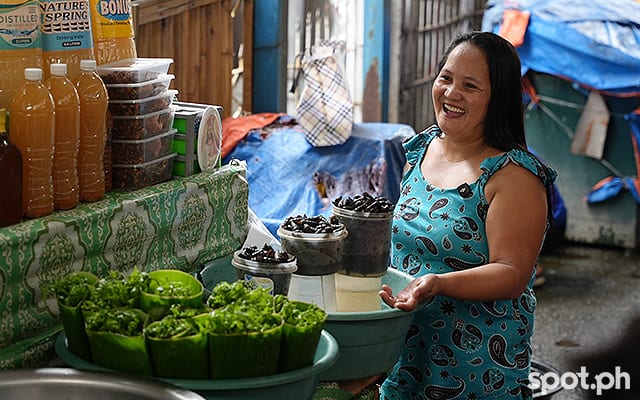
Try the OG Uraro (that still makes use of the actual root crop) from By Gonzales

If there's one snack people from Liliw are proud of, it's their uraro cookies, or uraro for short.
Uraro is a lot like butter cookies: made with flour and butter, these treats have a crisp, crumbly texture that makes them a perfect partner for an afternoon coffee break. They get their name from arrowroot, a root crop milled into a flour mixed with regular flour when making the cookie.
We'll tell you now, there are a lot of shops and sellers offering uraro cookies around Liliw, but if there's one you absolutely have to try, it's the ones from By Gonzales.

Located on Mabini Street and a stone's throw from the Pasalubong Center, Homemade by Gonzales has been selling its uraro cookies since 1945.
But beyond its long history, what keeps people coming back is that By Gonzales doesn't scrimp on the arrowroot. They're one of the few uraro makers who still use a yuro or arrowroot starch in their recipe—something they're incredibly proud of. The result is a more flavorful and buttery cookie that'll have you reaching for more.

By Gonzales makes these cookies by hand every one to two weeks to ensure that every pack of uraro they sell is as fresh as it can be. If you're lucky especially if you visit on a weekday, you might just catch them making the cookies. Peek into their window, and you'll see them mixing the flour, rolling it out, and shaping the cookies to the familiar uraro log.
You can always count on By Gonzales having a batch of uraro ready to sell, however, if you want to bulk order, say to give away for the holidays or at a company outing, we recommend ordering ahead through their Instagram so they can make sure there's enough stock when you drop by.
Grab Sweet Treats from Liliw Bakeshop

If you have a sweet tooth, there’s one local joint you shouldn’t skip. Tucked along Gat Tayaw Street, just a few meters from the Pasalubong Center, is Liliw Bakeshop, a humble, unassuming neighborhood bakery that has earned a following for its cake rolls and pianono.
Just ask around Liliw, and you’ll likely hear the same recommendation: if you’re looking for something sweet to pair with coffee, tea, or hot chocolate, this is the place to go. Start with the Caramel Roll (P300 whole, P150 half, P25 per slice) and Chocolate Roll (P320 whole, P155 half, P25 per slice), both featuring fluffy, not-too-sweet cake that tastes instantly familiar and comforting. Think of the simpler birthday cakes of your childhood, before fondant, elaborate frosting, and all the bells and whistles entered the chat.
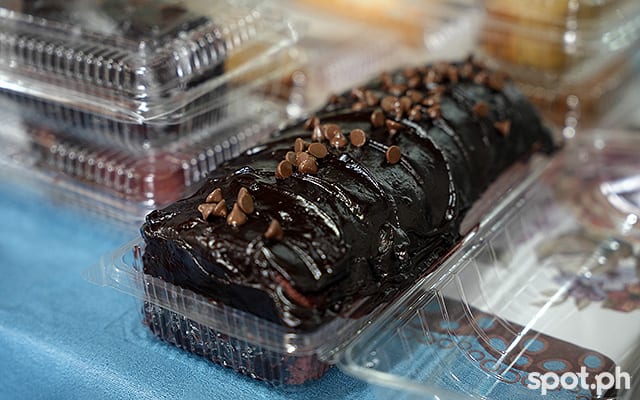
But don’t sleep on the Pianono (P150), either. Liliw Bakeshop specializes in this classic bakery staple, rolling its light and fluffy cake in white sugar and filling it with creamy custard. It’s sweet, sure, but never to the point of being sickeningly so.
In fact, it comes with this Tita’s seal of approval. The first thought that came to mind after taking a bite was, “Ay, masarap sa kape”—a sentiment our teammates and other certified titos and titas at SPOT immediately seconded.

Where to eat in Liliw, Laguna
Liliw may be a small town, but its dining scene is anything but. There’s no single flavor, dish, or ingredient that defines its culinary landscape. Instead, the town takes the familiar and gives it a distinctly local touch. Here, you’ll find restaurants serving everything from comforting Filipino favorites to Italian, Mediterranean, and other continental fare.
What makes the experience even more special is that many of these spots are family-owned, with recipes shaped by years of shared meals, passed-down traditions, and plenty of fond memories around the table. In Liliw, eating out often feels less like dining at a restaurant and more like being welcomed into someone’s home—where every dish comes with a little bit of history and a whole lot of heart.
Here are some of the must-try restaurants around Liliw, Laguna.


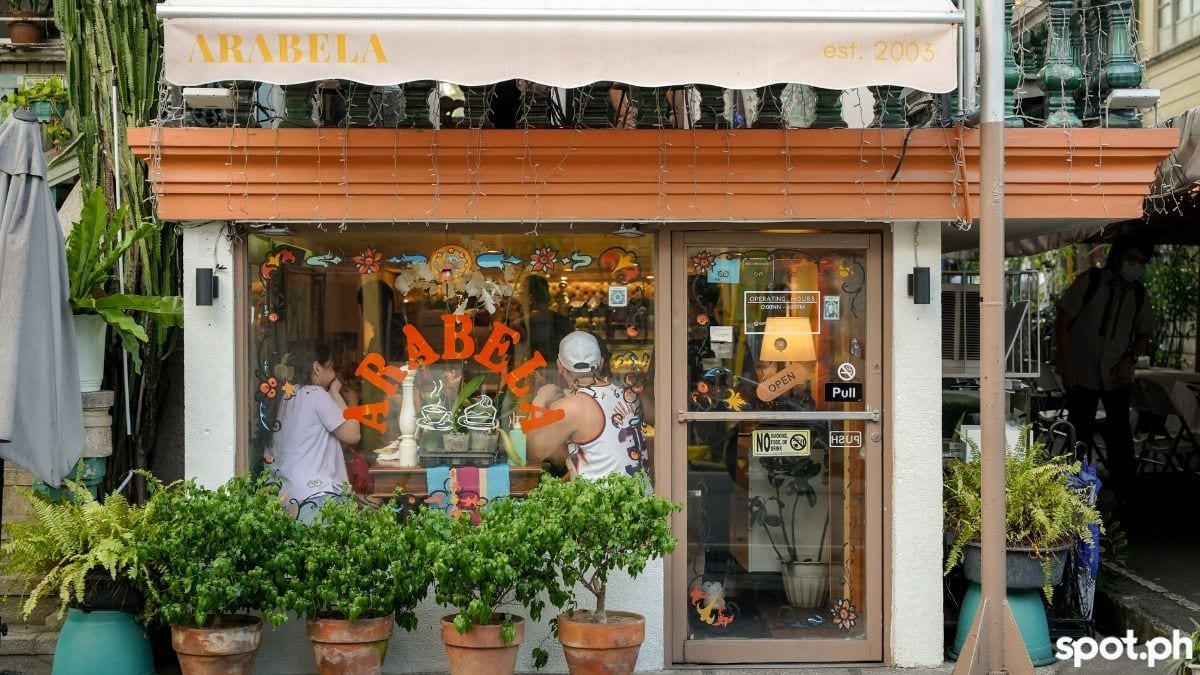

Entering Arabela feels like walking into someone's home. The low ceiling, warm yellow lights, and tchotchkes scattered around make the space feel lived-in, like you're walking into someone's childhood home—and you would be right.
Arabela is the brainchild of Bobby and Antonette Camello, who named the restaurant after their daughters, Ara and Bela. The building itself has been part of the family for years, formerly serving as both their family shoe store and ancestral home.
While the Camellos are very much Filipino, Arabela’s menu leans Italian, serving cozy dishes inspired by the food the family loved ordering whenever they ate out. Over the years, their matriarch put her own spin on those favorites, turning them into the comforting, family-style dishes now served at Arabela.
You can't go wrong ordering their Vongole (P500) if you're after a refreshing plate of mildly sweet clams with a zing of fresh lemon, or, if you want something tomato-based, try their mildly spicy Spaghettini al Amatriciana (P500).

But you won't just be carbo-loading in Arabela; in fact, you'd be missing out on their best if you don't get their meaty mains. Without a doubt, go for the Frenched Pork (P495). This tender, bone-in pork chop is served with a sweet-savory, smoky barbecue sauce and the fluffiest, creamiest mashed potatoes. It may look like a lot, but trust us, you will be fighting for the last bite. Alternatively, if pork isn't your thing, try the Chicken Milanese (P415); this grilled chicken swimming in gorgonzola cream is light and filling at the same time, perfect lunchtime fare.
.jpg?fit=cover&width=960&q=82)

Pair any of these with their Mango, Grapes, Strawberry (MGS) Shake (P195), and you'll have the perfect meal you'll be thinking about for weeks.
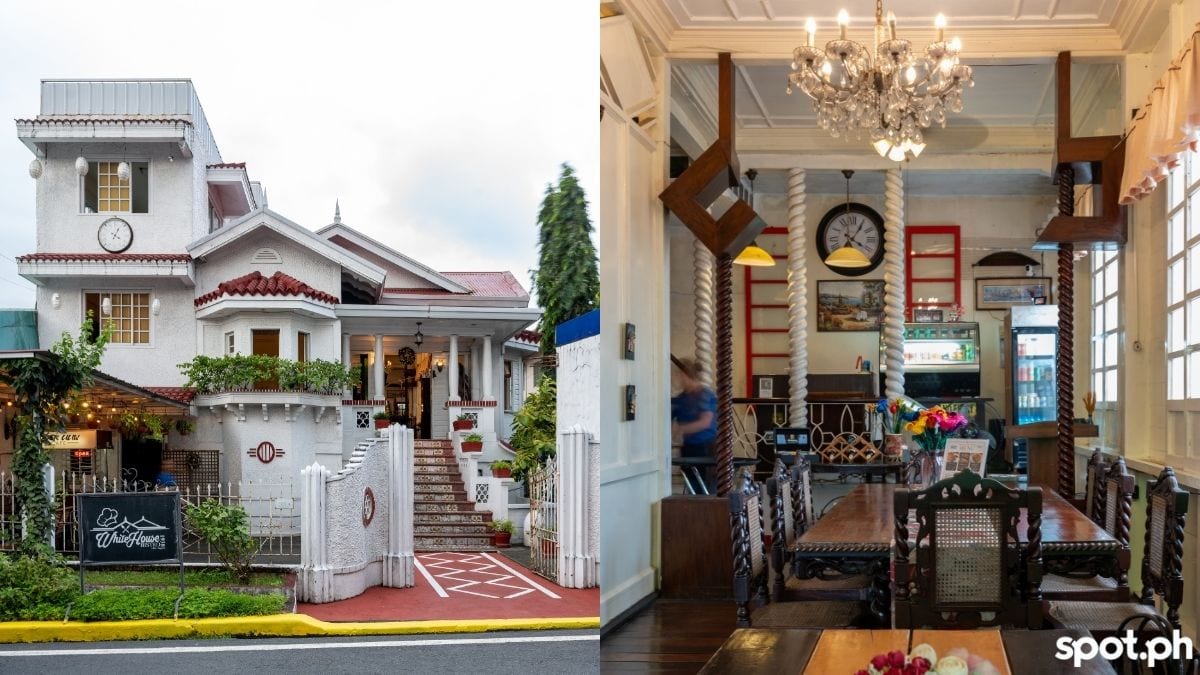
Right behind Arabela is another Liliw dining staple, 1938 White House Bistro. Don't let its striking white facade intimidate you from heading in. Inside, the 1938 White House Bistro feels homey, and its food proves it.
Owned by husband-and-wife Marianne and Christian Polistico, this family-run restaurant serves classic Filipino dishes with a Liliweño touch. Try local favorites like the Sinantolan (P240), a minced santol and pork dish in coconut milk, the Ginataang Suso (P240), and the Kulawo Labong (P190), a creamy and tangy bamboo shoot dish made by infusing the shoots in coconut milk squeezed from charred coconuts.
Trust us, don't leave the restaurant without trying the Kulawo Labong. It may not look like much at first, but it's a unique, flavorful, and great representation of the type of familiar yet uniquely Liliweño flavors you can get here at the 1938 White House Bistro.
Pair these dishes with seriously crispy-on-the-outside, tender-and-juicy-on-the-inside Crispy Pata (P900), and their classic Pork Sisig (P260).


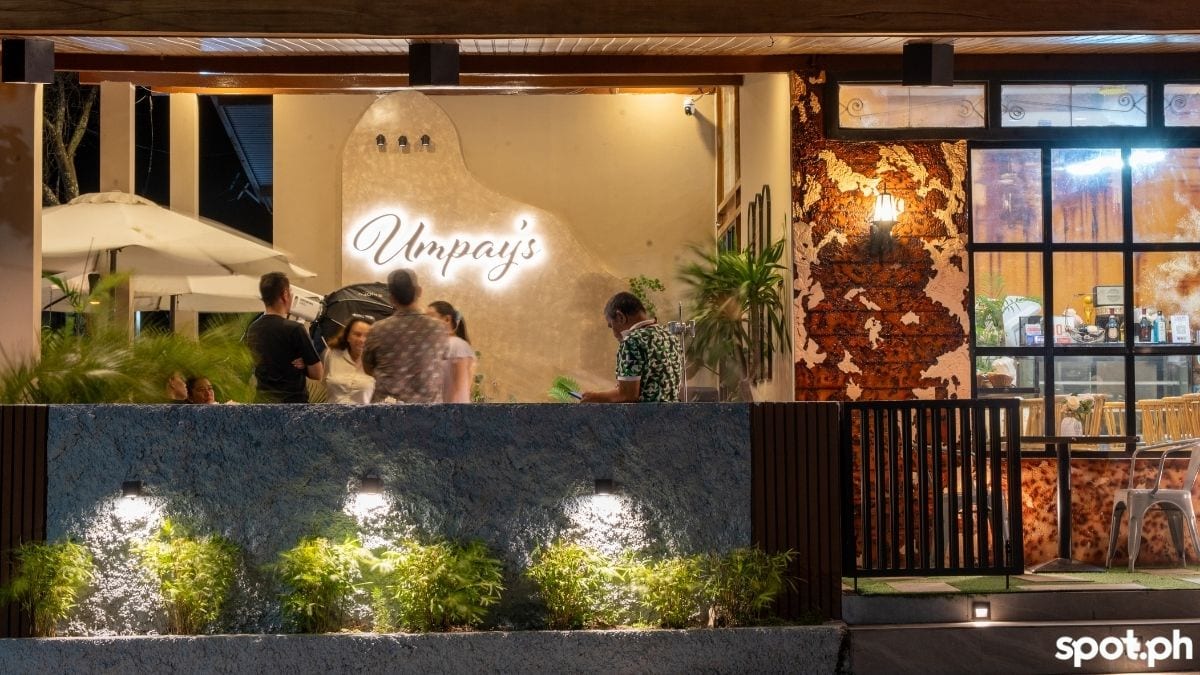
If you're unsure what you want to eat or you're traveling with a big group with lots of opinions, Umpay's menu might have what everyone is looking for.
This restaurant has a little bit of everything: American, Italian, Japanese, Middle Eastern, Filipino—you name it, they probably have it. Its global-fusion menu takes inspiration from owner Tagumpay “Lucky” Moneva’s love for food parks, those anything-goes dining destinations that offered a dizzying variety of cuisines and dominated the dining scene in the 2010s.
At Umpay's, you get that same variety, just with a touch of refinement for the 2026 diner. Their menu can get overwhelming, but you can't go wrong with their pizzas, especially their Four Cheese Truffle Pizza (P435) and their Wagyu Cheeseburger Pizza (P635). Their Apple Sage Porkchop (P565) is impeccable, with its caramelized apple slices that meld well with the pork's herbed glaze.

Something more local that you shouldn't miss is the Loin Tapa Kabayo (P255). Yup, this horse meat tapa is marinated and seasoned by the restaurant themselves, resulting in a tender, garlicky bite that doesn't taste gamey at all. It's served with garlic rice and a sunny-side-up egg, which sounds perfect for brunch, but tbh, you can have it anytime, and it would still be good.

End your meal on a sweet note with their Pistachio Cheesecake Knafeh, which you could think of as a deconstructed nutty pistachio cream cheesecake with a buttery, crunchy crust tied together with a rich chocolate topping.
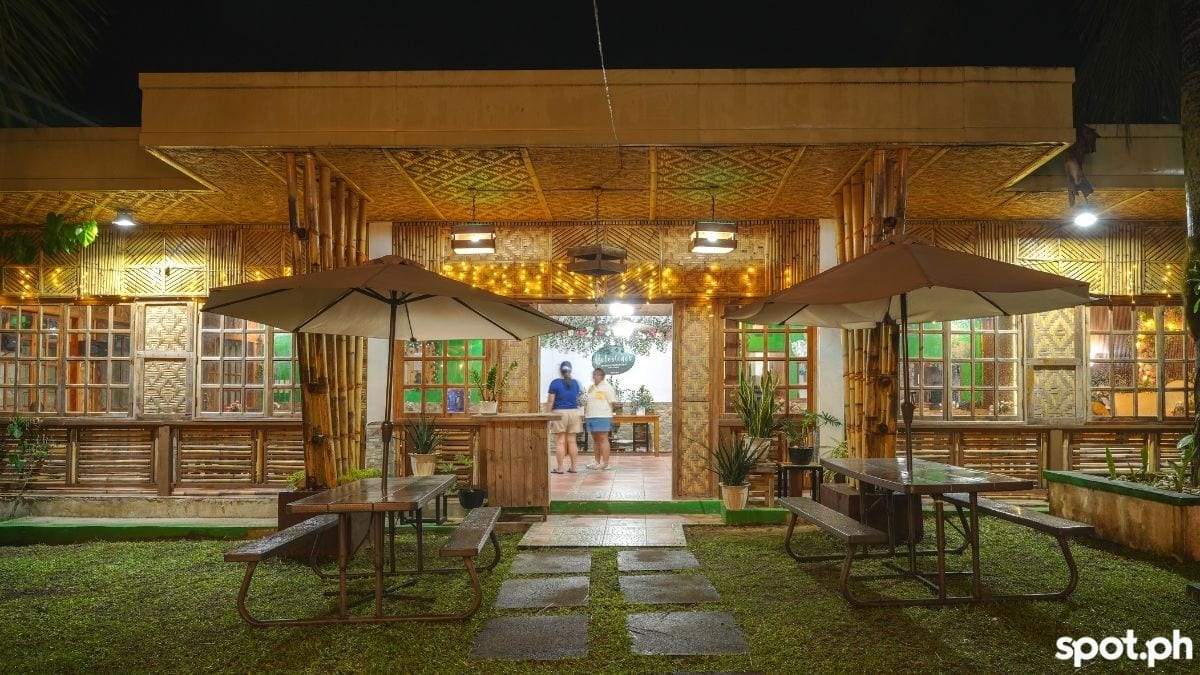
Nothing pairs well with an outdoor adventure or a swimming staycation weekend than a boodle fight. Think about it: a vast array of seafood and grilled eats served on banana leaves, eaten by hand and shared with the whole crew—that's the quintessential Pinoy bonding experience. That's also exactly what you'll get at Celestine's Home of Boodle Feast Restaurant.
At Celestine's, you can choose from a variety of boodle bundles for any group size. They have the Kasalo Boodle (P750), which is good for two, and is served with grilled liempo, pork barbecue, grilled and stuffed squid, fried talong, boiled or salted egg with tomato, rice, fresh fruit slices, and iced tea. Or, for bigger (hungrier) groups, you could get their generously loaded Seafood Boodle (P3,199). This bundle is a giant boodle tray loaded with buttered shrimp, buttered crab, calamares, crispy salmon belly or fish fillet, fried bangus, fried tilapia, fried talong, kangkong, ensaladang pako, boiled or salted egg with tomato, pancit guisado, fresh fruit, and a tower of iced tea.

But aside from their pre-built boodle bundles, you can also customize your own set by adding items from their à la carte menu. Worthy additions include their Beef Kare-Kare (P380) and their Lumpiang Shanghai (P120), which really just complete the fiesta vibes.

If you're staying around the area, here's a pro tip: you can have boodle bundles delivered to your accommodations. Now that's a fun way to punctuate a weekend of Liliw fun.
Where to stay in Liliw, Laguna
Esmeris Farm
Esmeris Farm is a popular tourist attraction in Liliw. It's best known for its many photo spots with views of nearby coconut plantations and mountains.
While a day trip to Esmeris Farm is enough to enjoy its facilities, spending the night lets you slow down and experience Liliw’s highland countryside at a different pace.
Esmeris Farm offers overnight stays with accommodations ranging from wagon tents to larger glamping yurts.
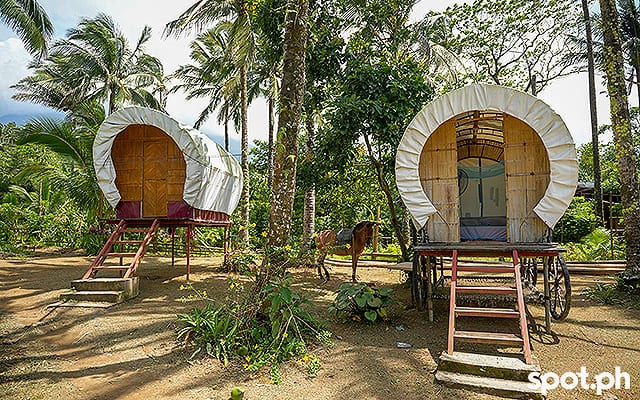
Feeling a little more adventurous? You can also pitch your own tent and spend the night at their campsite

And if you’re traveling with the kids but would rather skip the logistics of camping or glamping with the youngins, the farm also has two air-conditioned family rooms available for rent.

The accommodations are pretty bare-bones, but honestly, that’s part of the charm. The sprawling green spaces, fresh mountain air, and wide-open views more than make up for the lack of frills.


Esmeris Farm also has its own restaurant, snack bar, and café, so you won’t have to trek back down to town every time hunger strikes. That said, if you do want to explore Liliw’s dining scene, the town center is only about 15 minutes away.
Beyond camping and enjoying the views, in-house guests can also arrange special tours around the larger agricultural property. These include vegetable-picking activities, treks to the nearby river or Kilangin Falls, and even lambanog tastings. Yes, this massive coconut plantation also produces its own lambanog, with different infusions for guests to sample.
These activities come at an additional charge, must be booked in advance, and are available exclusively to in-house guests. So if your idea of a good time involves sleeping under the stars, wandering around a working farm, and maybe ending the day with a little lambanog, consider staying the night at Esmeris Farm.
Stays at Esmeris Farm start at P500 for tent camping (inclusive of entrance fees) or P1,500 for lodging (inclusive of breakfast for two and entrance fees). Day use of facilities requires a P50 entrance fee. For more information, visit Esmeris Farm, a.k.a. Daang Hari Campgrounds' official Facebook page.
The Bali Farm
If you want to escape the bustle of the town proper and spend the weekend surrounded by a little more greenery, The Bali Farm is worth checking out. Located about 15 minutes from the center of Liliw, this cluster of tropical-inspired villas makes for a peaceful home base for a countryside getaway—and yes, your four-legged companions are welcome, too.


The property has several accommodations, including a larger three-bedroom villa that sleeps up to 10 guests and three smaller cabins suited for couples and smaller groups. As its name suggests, The Bali Farm takes its cues from luxe tropical garden villas, with thoughtfully designed interiors that balance comfort and style. The rooms are simple yet cozy, fully air-conditioned, and equipped with Wi-Fi and smart TVs. Bonus: each accommodation also comes with its own bathtub.


Staying in one of the smaller rooms comes with breakfast, so you can start your day without having to worry about where to find your first meal. Those staying in the big villa, meanwhile, can make use of the fully equipped kitchen to whip up their own meals—perfect for families and groups who prefer to add meal prep as a bonding activity.
There’s plenty to keep you entertained without leaving the property, too. Shared amenities include a swimming pool, basketball court, pickleball court, billiards table, air hockey, darts, and even an outdoor cinema. There’s also plenty of open space and greenery where you can slow down, breathe in the fresh rural air, and fully embrace the probinsya vibes. The property is currently working on a view deck overlooking the surrounding farms, which should make those countryside views even better.


Stays at The Bali Farm start at P5,500 per night and varies depending on group size and villa choice, with additional charges for pets. Book your stay through their official Facebook page.
How to get to Liliw, Laguna

Commuting to Liliw, Laguna
Unfortunately, no direct bus or van routes go to Liliw, Laguna, from most of Metro Manila. But don't worry. You can reach it through the nearby towns of San Pablo, Calamba, and Sta. Cruz.
Liliw via Sta. Cruz
Ride a bus bound for Sta. Cruz, Laguna from PITX, Cubao, or Buendia. Your best bet is buses from JAC Liner, DLTB, Lucena Lines (LLI) and HM Transport. Alight at their respective terminals in Sta. Cruz and from there board a jeepney bound for Liliw.
Liliw via Calamba
Alternatively, you can take a bus to Calamba, Laguna, from Cubao, Buendia, and One Ayala. JAC Liner, DLTB, and HM Transport operate these buses. You can alight at SM Calamba. From there, you can take a van directly to Liliw.
Liliw via San Pablo
Another option you can take is to connect through San Pablo. To do this, you can board a bus bound for Lucena from bus lines in PITX, Cubao, or Buendia. Ask them to drop you off at SM San Pablo. Once at the mall, you can look for jeepneys or tricycles bound for Liliw.
Driving to Liliw, Laguna
Liliw, Laguna is about 96 kilometers away from Metro Manila. It takes roughly two to three hours (depending on your starting point) to get to most of the spots in this guide. Driving to Liliw will require you to pass through the South Luzon Expressway (SLEX) and exit through Calamba. If you're coming from the North, or from parts of Manila, you might also consider taking the Skyway to avoid traffic.
Toll fees from SLEX Magallanes to the Calamba exit will set you back around P255 one-way. If you take the Skyway from the North (Balintawak) all the way to Calamba, that number would jump to about P565 one-way.


The drive to Liliw, Laguna is quite scenic. It's got long, winding roads leading up to the mountainside. But fair warning: once you get to the Liliw town proper, the roads get very narrow, just enough for one car to pass through. That is, many roads in Liliw are one-way, so be vigilant when you drive.
We also recommend using Google Maps over Waze when navigating. But truth be told, Google Maps does not account for the one-way roads, so just be aware of the traffic flow when driving around.
Most of the attractions on this list are near each other, especially those along Gat Tayaw Street. The best way to get around? Park your car at your accommodations and just take a tricycle or walk around the town to explore the different attractions.
A trip to Liliw may begin with the intention of taking home a pair of well-made shoes, but it won’t take long to realize that the town has much more in store. Beyond its famed footwear, Liliw, Laguna, invites you to chase waterfalls, swim in cool ponds, explore Mt. Banahaw's mountainside, and stumble upon charming mom-and-pop shops that have carried on for generations. Give yourself a weekend—or perhaps a little longer—to take it all in, and you may soon find yourself intentionally singing the misheard words to a familiar ode: Oh, Liliw ko… miss na miss kita.
Check out our other SPOT Out of Town guides and itineraries:
SPOT Out of Town: Discover the Best Things to Do in Clark, Pampanga
Spot Out of Town: Discover the Best Things To Do in Los Banos, Laguna
Spot Out of Town: Exploring Nagsasa Cove in Zambales
SPOT Out of Town: Rediscovering the Best Things to Do in Antipolo
Spot Out of Town: Discover the Best Things to Do in Lipa, Batangas
Editor-in-chief: Jerome Gomez
Managing Editor/ Producer: Camille Georgia Uy
Associate Editor: Michiko Manalang
Associate Publisher: Monique Espiritu
Things to Do Editor/ Producer: Leana Vibal
Photographer: Paul Sugano
Cover design: Warren Espejo
Video Producer: John Henry Mariano
Video Editor: Jaybelle Mataro
Shoot Assistants: Almarc Rico, CJ Gabaleo
Special thanks to: Isagani Moneda Jr. and Liliw Turismo
Leana is Spot's go-to for Arts & Culture and Things to Do. On any given day, she’s either glued to her screen—or gliding underwater like the mermaid she swears she is. Contact: leana@spot.ph