
The Day Ambeth Ocampo Toured Us Around Jose Rizal's Binondo
The 'Noli' era comes to life when your tour guide is the foremost Rizal expert.
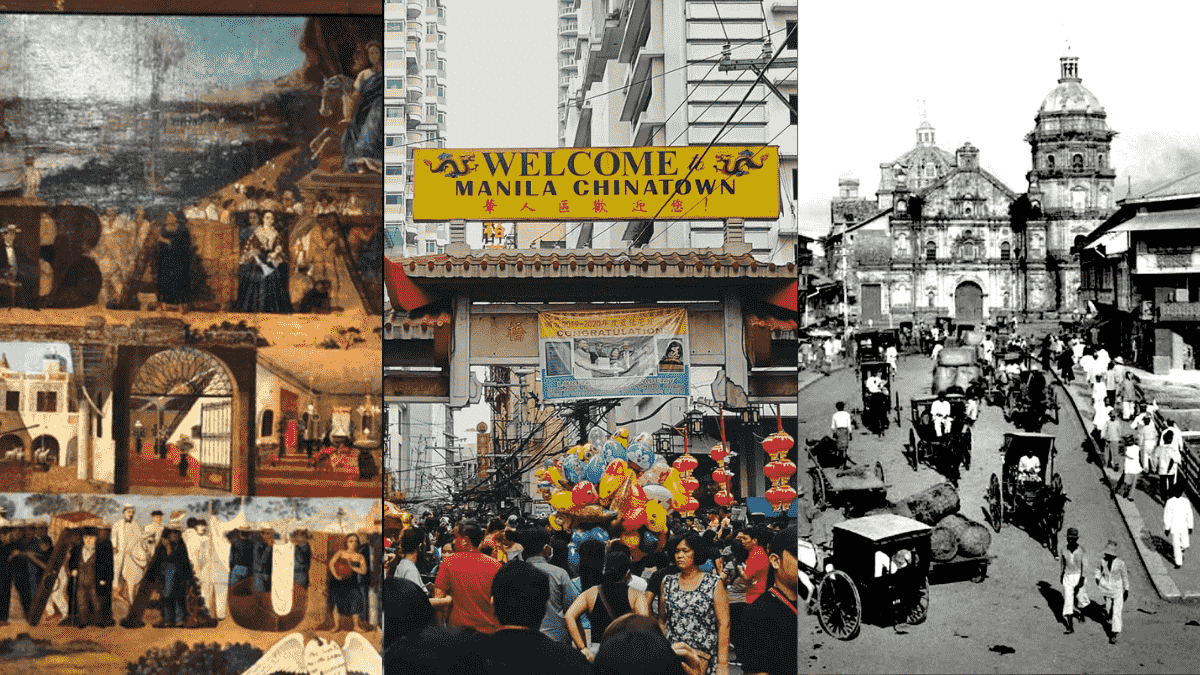
(SPOT.ph) Binondo may not be the first place that comes to mind when thinking of Jose Rizal but Ambeth Ocampo, foremost Rizal scholar, convinced us recently that one can find significant traces of the national hero in the streets and corners of Manila’s Chinatown. If only one knows where to look. And certainly if one has Ocampo himself as tour guide.
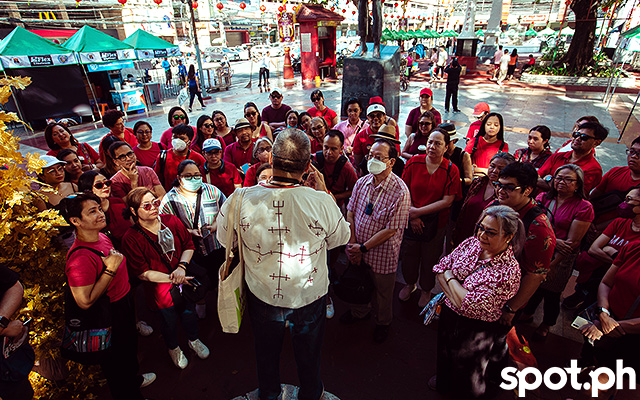
I got to tag along in his “Jose Rizal’s Binondo” tour earlier this month, where he was joined by his friend and noted Binondo tour guide Ivan Man Dy of Old Manila Walks. While Man Dy offered bits and pieces of amusing and helpful information on the district he grew up in, Ocampo, author of more than 30 books on the nationalist, novelist and revolutionary, regaled us 60 or so turistas with history lessons and trivia on the man he’s most associated with, and introduced us to the spots where scenes from Rizal’s novel Noli Me Tangere were set.
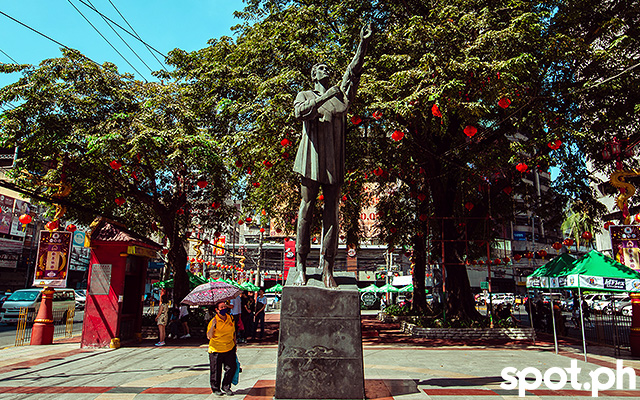
While most of the tour’s chosen structures no longer exist and had been taken over by modern buildings, 19th century Manila seemed to come alive right before our eyes—with lots of help from the imagination, of course— thanks to Ocampo’s engaging stories sprinkled with juicy tidbits and funny asides. It was a cool Sunday morning in what’s known as the world’s oldest Chinatown. There was a slight breeze in the streets and alleyways, and save for the sound of firetrucks rushing somewhere during the morning briefing at the plaza across Binondo church, it was a quiet, pleasant beginning of a day.
When Ambeth Ocampo was introduced to Jose Rizal's Binondo
It was in 1986 or 1987 when Ocampo went around Binondo at the invitation of the Spanish historian Pedro Ortiz-Armengol. Ortiz-Armengol was once a young diplomat who in the 1950s came out with Intramuros de Manila, at the time the definitive book on our very own Walled City. With a map of 1872 Manila with him and a Spanish version of the Noli Me Tangere, he was ready to show his friend Binondo from the lens of Rizal’s first novel.
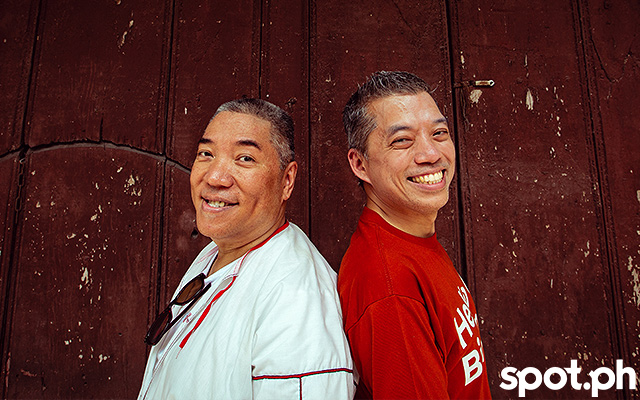
“When you go to a city, any city in the world," Ocampo recalled the Español telling him, "the street names may change, the look of the city may change, but the general outline of the city does not change.” And so despite the obvious shifts in the landscape brought about by time and progress, I imagined there was much confidence in Ortiz-Armengol’s tone when he told the Rizal scholar, “I will show you Rizal’s Manila.”
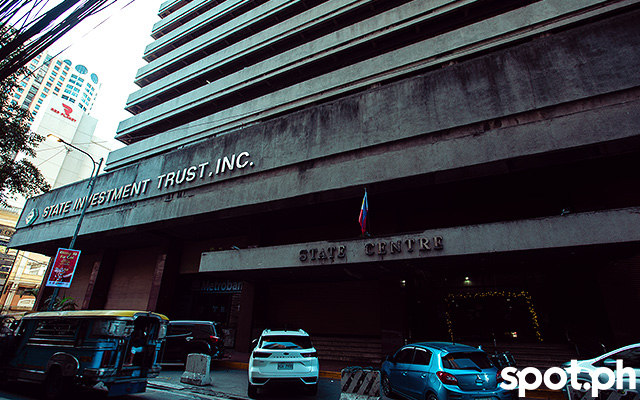
Aboard Ocampo's car, the two friends began their adventure on Juan Luna Street, or what is formerly known as Calle Anloague where the Noli begins: the welcome dinner party of Santiago “Kapitan Tiago” Delos Santos in his home, in honor of Crisostomo Ibarra, the fiancee of his daughter Maria Clara. The inspiration for Kapitan Tiago's house, we are told, does not exist anymore. In its place now stands the State Investment Building.
It used to be that people thought Kapitan Tiago’s house was only a product of Rizal’s imagination, said Ocampo, but in the memoir of Jose Alejandrino, a Rizal friend, it is said that it was based on the house of Balvino Mauricio, a rich merchant exiled after the events of 1872 in the Philippines. A letras y figuras painting that spells Mauricio’s name, by the renowned practitioner of the art form Jose Honorato Lozano, shows a portion of the house that matches Rizal's description of Tiago’s residence in the novel.
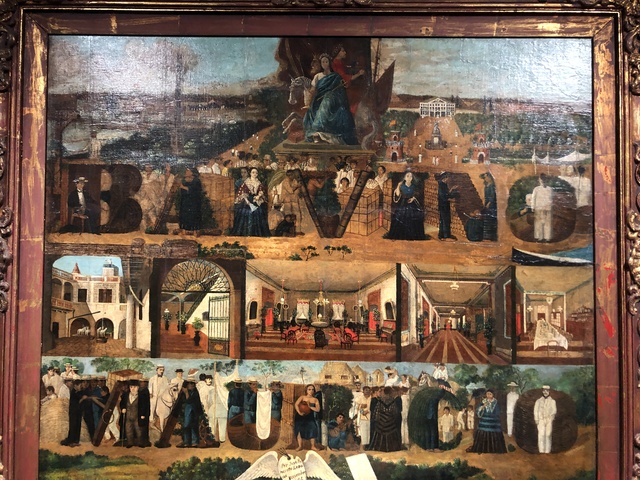
What Rizal's Binondo consists of
Ortiz-Armengol and Ocampo then went searching for the hotel Ibarra was staying in, which was also in the area: “The clue is [according to the novel] from Ibarra’s hotel room, he could hear and see the party,” said the Rizal scholar, “so that means his hotel room was facing the estero and Tiago’s house.” The hotel was the Fonda de Lala.
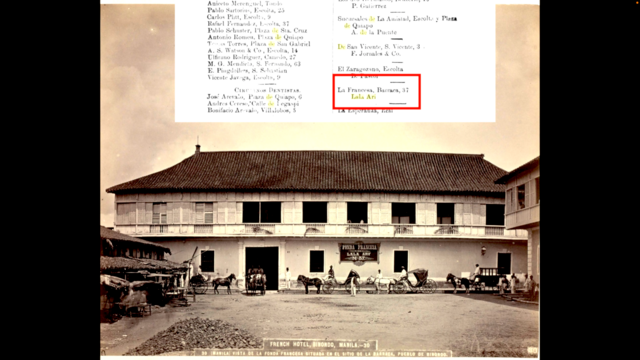
Ocampo writes down Ibarra’s route in his recent column for the Philippine Daily Inquirer: “Ibarra left the house on Calle Anloague and walked toward the Binondo Plaza (formerly Plaza de Binondo, Plaza Calderon de la Barca, and is now Plaza San Lorenzo Ruiz), he turns right, crosses Calle Rosario (now Quintin Paredes) and walks by the side of the church on Calle Sacristia (now Roman Ongpin Street), and on till the corner of Calle San Jacinto (now Tomas Pinpin Street) where he takes a horse-drawn taxi back to his hotel on Calle Barraca, the ‘Fonda de Lala’ (Lala’s Hotel) in the Noli that was known by its full name ‘La Fonda Francesca de Lala Ary’ (French Hotel of Lala Ari).”
During the tour, Ocampo also showed us a map of Manila’s suburbs during that time—Sta. Cruz, Quiapo, Binondo. In the map, Tiago’s house is marked by a blue star, a yellow marker traces Ibarra's walking path, and a red line shows the route Ibarra’s taxi took all the way to Fonda de Lala. When we stopped by one of Binondo’s esteros, our esteemed guide said that in late 19th to early 20th century writings on the Philippines, Manila is described as a Little Venice. “Chinatown was built on many esteros, or little canals,” said Ocampo, and it was when we started to erect buildings on top of these bodies of water and cover them with roads that our present day flood problems began.
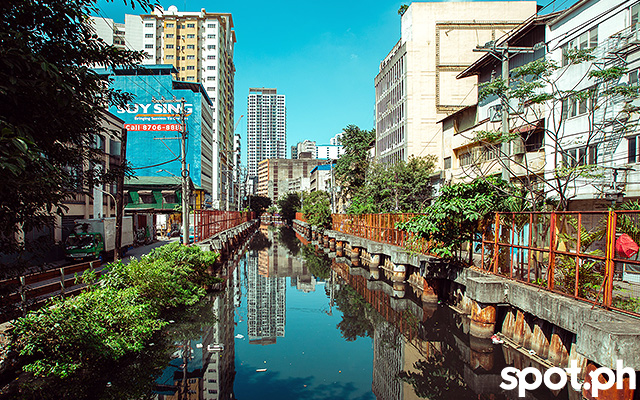
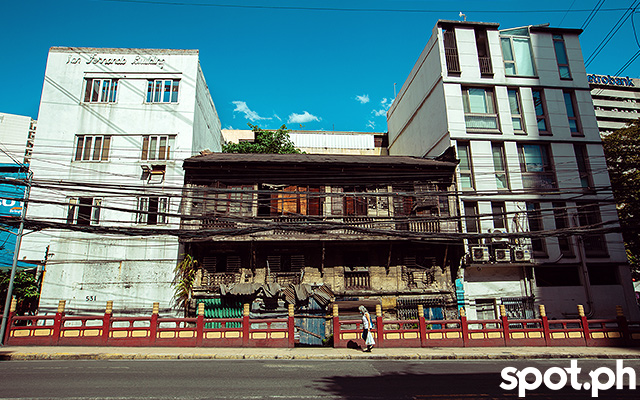
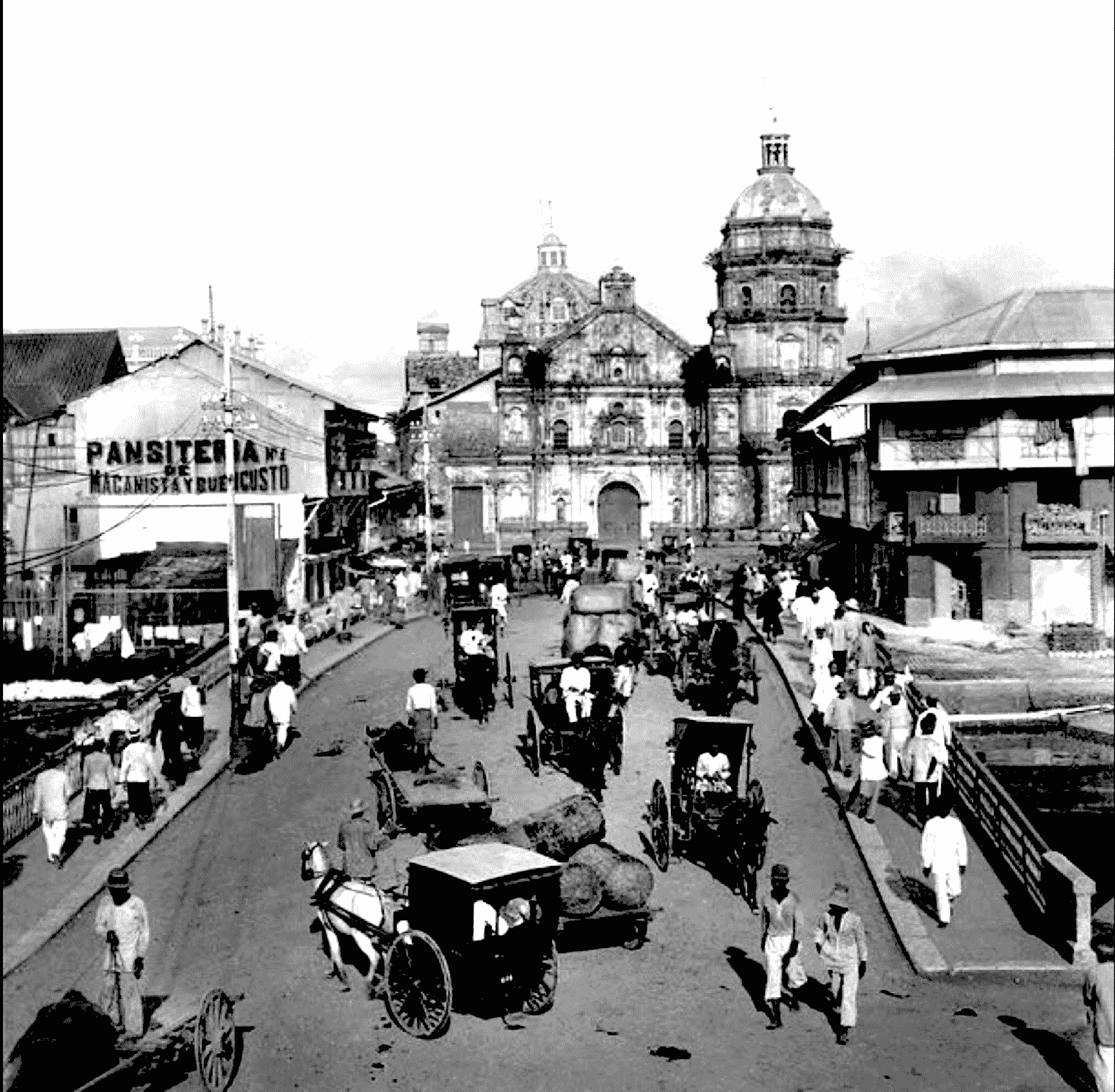
Another tour stop was the area by a bridge, believed to be the location of the Pansiteria Macanista de Buen Gusto, which is mentioned in El Filibusterismo. In Rizal's second novel, a party of 14 students gathered in the noodle house to mock the friar Padre Irene and they were served pansit langlang, lumpiang Intsik, tortang alimango and pansit guisado. During last Sunday’s tour, the turistas couldn't help but stare at a sorry-looking, soot-colored structure by the bridge, perhaps wishing it was Pansiteria Macanista de Buen Gusto, with its capiz windows and covered ventanillas (we were on our fourth stop and we had yet to have a picture taken with a heritage structure!)—but alas while it’s been identified in a 2020 report as the historic eatery, Ocampo and Man Dy said it’s not.
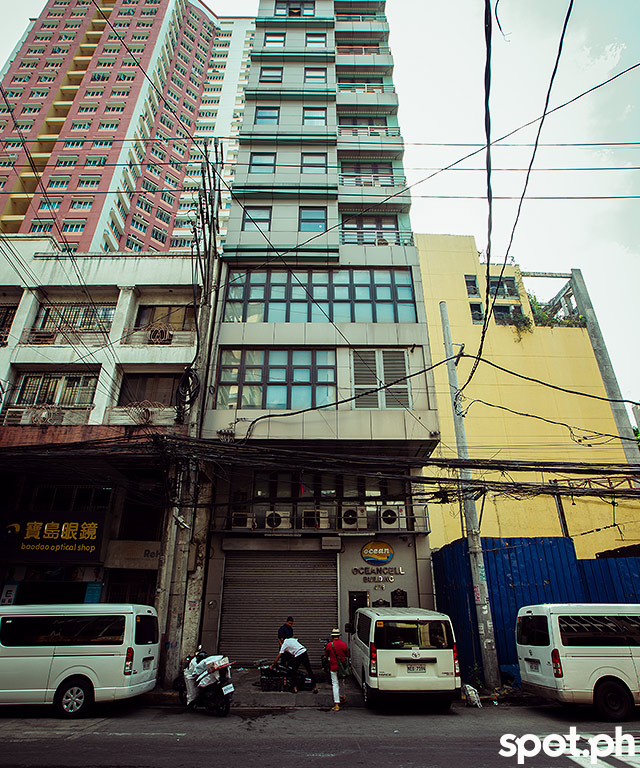
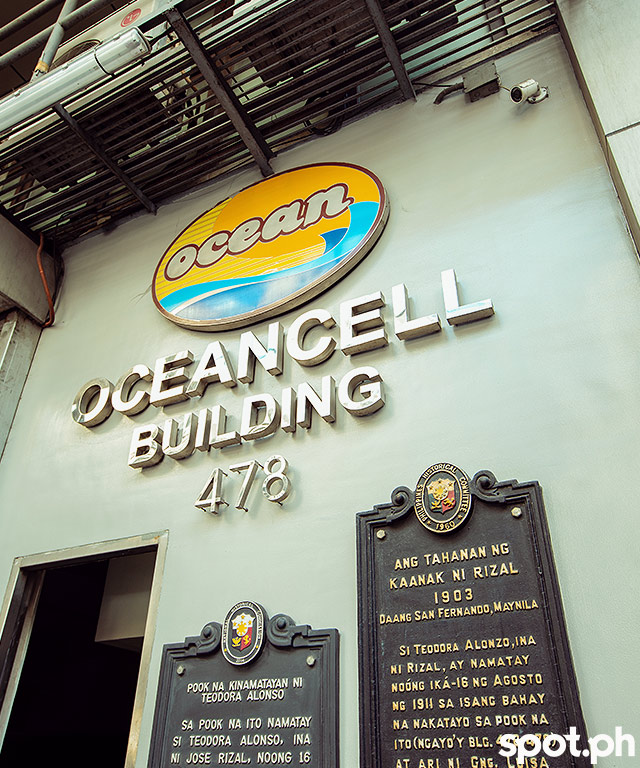
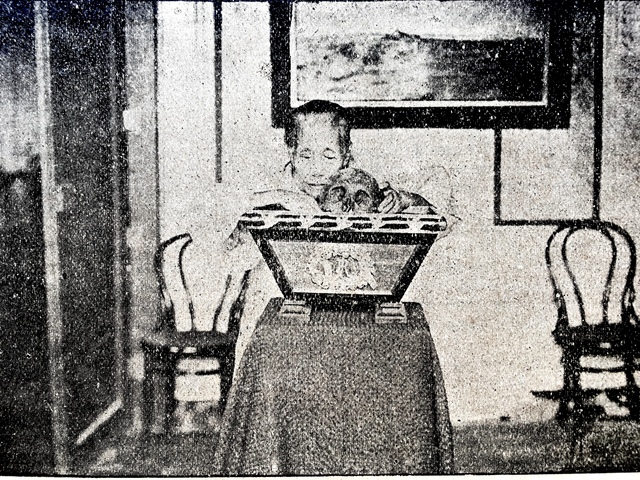
One more stop where a Rizal-related structure no longer exists is 478 Elcano Street in San Nicolas where Rizal’s mother, Teodora Alonso, died in August 1911. What stands there now is a building called Oceancell. So perhaps to add more value to the stop, apart from the presence of a couple of markers that honor the lady that perished in the site, Ocampo took out a photograph of Alonso taken inside the old Binondo house, holding the skull of her son.
After his execution, it is said Rizal’s remains were dug up in Paco and brought to his mother’s house, placed in a wooden box. When people visited the matriarch, the story goes, over merienda she will talk about Rizal, recite the Mi Ultimo Adios, “and then if she’s in a good mood, she will open the box and show you the skull of her son,” said Ocampo. “We find it macabre today but that’s what happened.” One of the most popular postcards before the war featured a photo of Rizal’s skull, Ocampo added, which people liked to send to their mothers on Mother’s Day.
Ambeth's Binondo
Ocampo had been coming to Binondo since 1975, back when he was still in grade school. "[In high school] We would come here every Saturday, take the Love Bus”—which had three stops: Ali Mall, Escolta and Ayala. “We would rent a calesa and go around the whole afternoon looking at old houses and old streets.” Later on, in the 1980s, he had the ambassador E. Aguilar Cruz as companion, and they would restaurant-hop, ordering a single dish per establishment—“Which you can still do today,” said Ocampo.
It's clear the columnist continues to have a soft spot for Manila's Chinatown. He gets his favorite black chicken here, likes to visit the Chinese drugstores and check out the curious things they sell, knows which Eng Bee Tin to avoid when he’s not in the mood for a crowd. One will never run out of things to discover in Binondo. “When you come here," he said, "you feel like a tourist in your own country.”
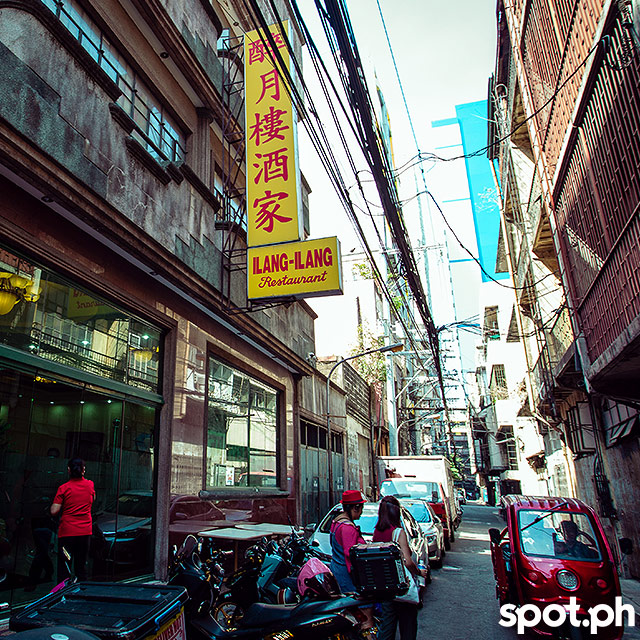
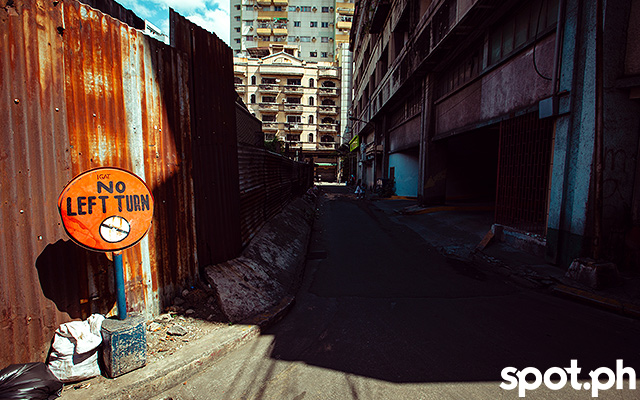
Our tour ended with lunch at a restaurant called Café Ilang-Ilang, in Ilang-Ilang Street, also in San Nicolas, “the oldest part of the city,” the more quiet side of Binondo. But before we entered the establishment, Ocampo pointed us to a little nameless eskinita near it. He reminded us that towards the end of the Noli, the previously prosperous-looking Kapitan Tiago is seen walking aimlessly on Sto. Cristo, looking like a beggar, distraught over his daughter entering the nunnery. Tiago, the once influential businessman, in his depression, would go into an opium den in Fumadero Street which, Ocampo discovered after checking an old Manila map, is the very eskinita right in front of us. A collective gasp was heard among the day's group of tourists.
And then it was finally off to lunch. Ocampo noted that Café Ilang-Ilang, the 1910-established dining haunt—not to be confused with the Manila Hotel Café Ilang-Ilang—is not the usual restaurant his tour partner Man Dy would include in his food tours. It serves Hokkien food, or what the author describes as “lutong bahay na Intsik, simple fare, nothing fancy.” Still, I enjoyed the food here: we had chami, a flavorful buttered chicken, siomai, and fish. My tablemate, who works in the area, gamely shared her favorite takeout orders in the cafe: the rice wine spare ribs is a favorite, and the rellenong hipon, the lomi. I asked why she had to join the tour when she’s already familiar with the area. She said that while she does move about the place almost everyday, she hasn't really made an effort to take a pause and learn about its history. Which reminded me of what Ocampo said earlier that morning: “We go through life, we see things but we do not notice. And one of the things that makes life worthwhile is that we are able to notice.” That Sunday was a good day to take notice.
For information on tours by Old Manila Walks, message them on Facebook, or email fun@oldmanilawalks.com.