

National Artists and The Tools of Their Trade
Ever wondered what it's like to stand in Fernando Amorsolo's studio?
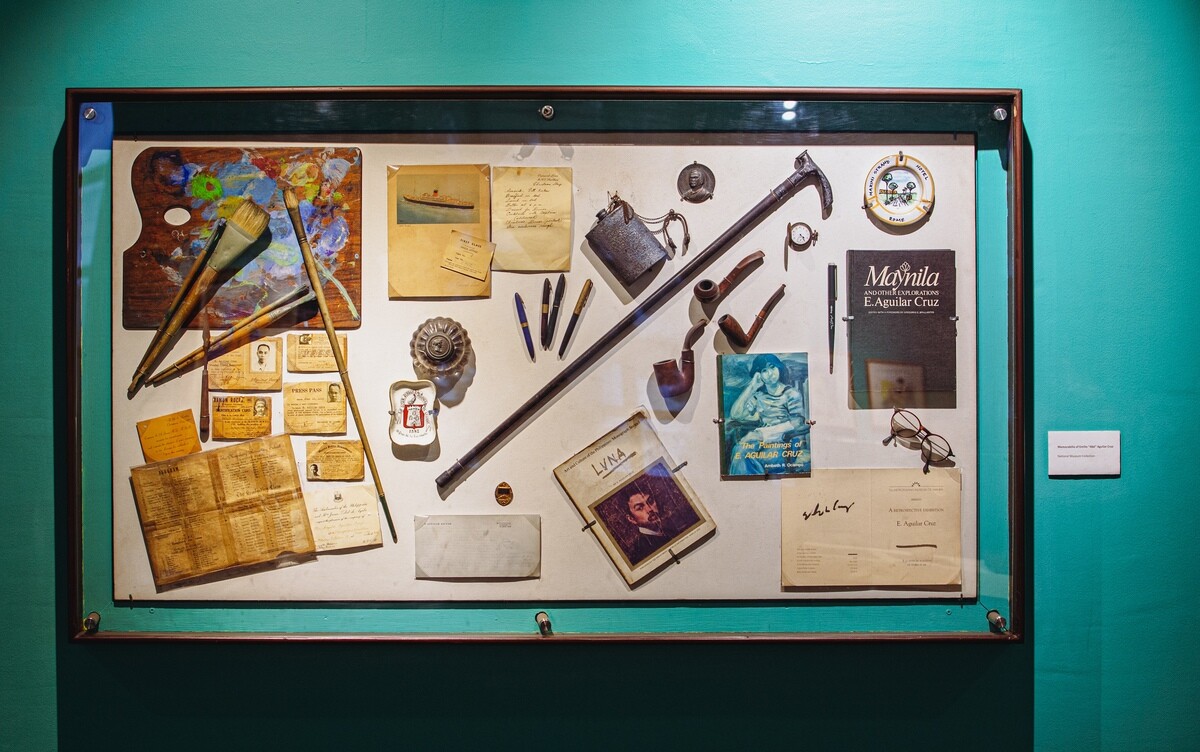
(SPOT.ph) From the streets and commercial shopping malls to galleries and fairs both sosyal and crafty, art is something you’ll find everywhere in the Metro. However, few spaces for art have quite the gravitas of the National Museum of Fine Arts in Ermita—which is not just a mandatory stop in nearly every Metro Manila kid’s education, but also a repository of one of the biggest collections of works by the country’s leading artists throughout history.
When we think of the National Museum of Fine Arts, we think of its showstoppers. Of course, there’s Juan Luna’s grim, larger-than-life Spoliarium framed with chains, as well as his famous pieces Parisian Life and Portrait of a Lady. You could also be thinking of Carlos “Botong” Francisco’s monumental Filipino Struggles Through History up in the Old Senate Session Hall, or the entire gallery full of Amorsolo portraits and paintings.
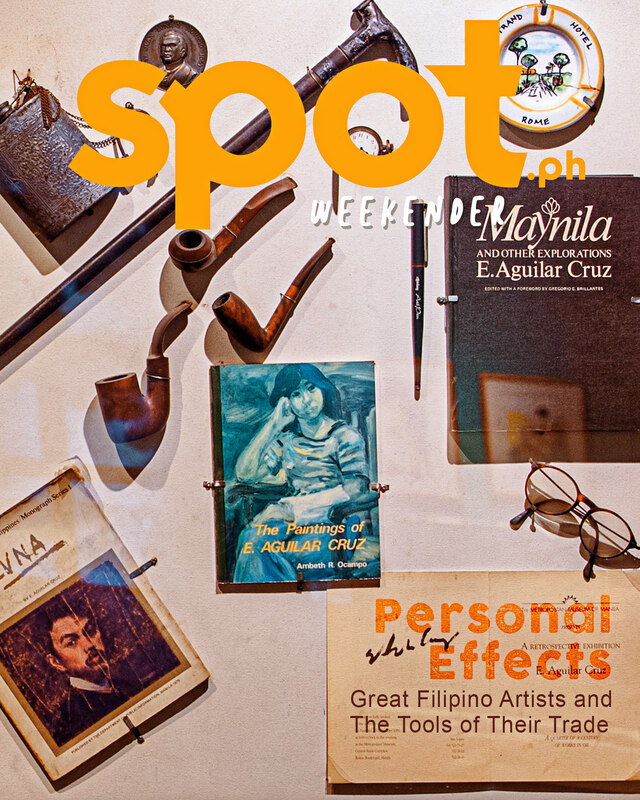
But beyond simply displaying pieces by important artists, one of the most unique things about the National Museum of Fine Arts is the perspective it lends on history. There are artworks and masterpieces from different eras of the Philippines past—and perhaps even more uniquely, the entire museum has small, often-overlooked displays containing memorabilia from the artists whose work makes us feel things about what it is to be Filipino.
Glimpses into National Artists' creative processes
“As the National Museum, we are deeply interested not only in the finished works of artists but also in their artistic and creative processes,” says Caroline Duque, Curator and Officer-in-Charge of the Fine Arts Division of the National Museum of the Philippines, which develops all exhibitions promoting and conserving Philippine art throughout National Museums branches in the country.
“This is why we often collect memorabilia and tools from artists' studios, and in some cases, we even recreate their studios within our galleries.This approach allows our audience to experience firsthand the environment in which these artists worked.”
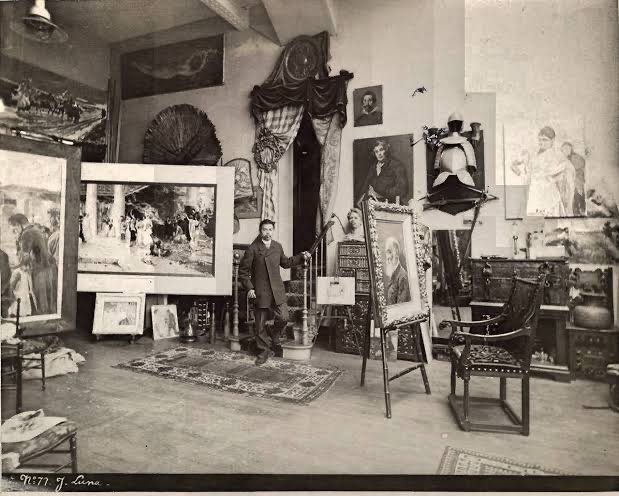
Scattered across the museum, you’ll find photos of prominent artists at work, as well as an assortment of their tools of the trade. In the gallery dedicated to the works of storied (and controversial) painter and activist Juan Luna, you’ll find a photograph of the artist in his elaborate Paris studio, standing right next to his long-lost, but recently-rediscovered magnum opus “Hymen, Oh Hymenee!” that won him the bronze medal at Exposition Universelle of 1889.
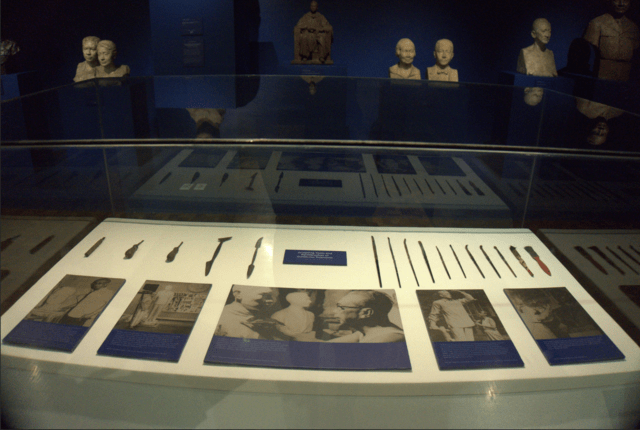
In the Security Bank Hall, you’ll find many shots of National Artist Guillermo Tolentino at work on his detailed sculptures in a simple sando, alongside his tools, paintbrushes, and even his awards and medals.
Meanwhile, painter Emilio Aguilar Cruz’s works and memorabilia also include photos of him working as he preferred: outdoors and in the company of other artists. One photograph even captures Cruz painting outdoors in Angeles City along with some of the country’s leading artists at the time, including Vicente Manansala and Mauro “Malang” Santos!
From palettes and brushes to shot glasses
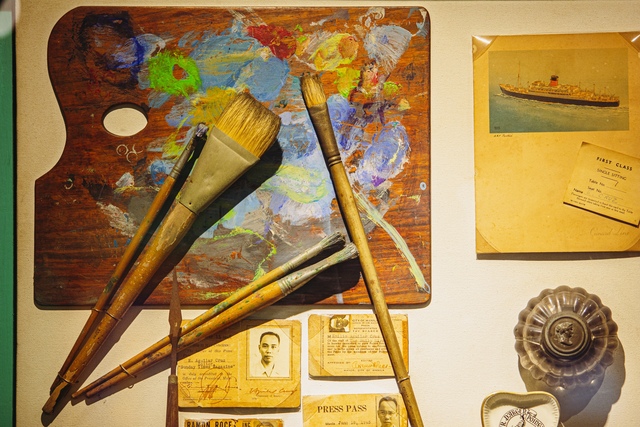
But while the saying goes that a picture is worth a thousand words, there’s plenty to learn about artists from what they used. “It’s quite fascinating to observe how different personalities and techniques are reflected in something as simple as the artist’s palette and brushes,” comments Duque.
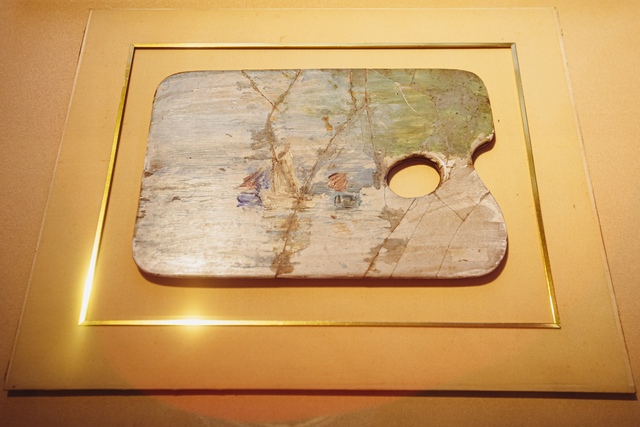
Take for example Felix Resurreccion Hidalgo’s traditional wooden palette, which is completely covered in oil paints in the softer colors he often used for his works—and in itself, could be mistaken for an impressionist landscape.
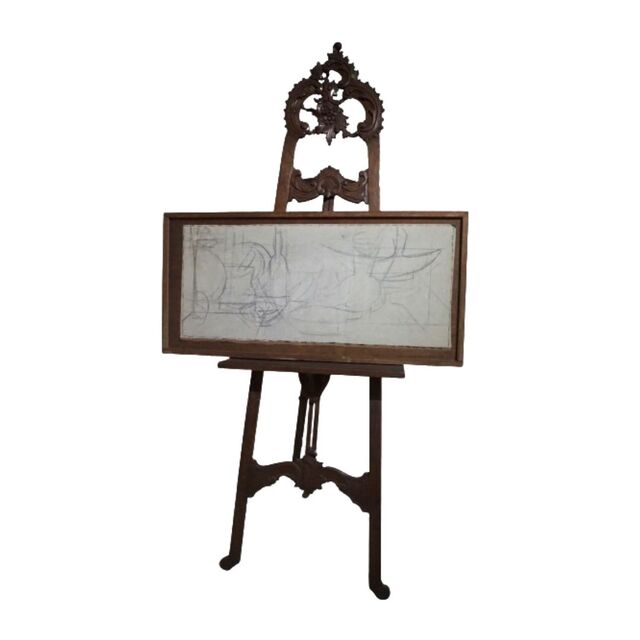
Meanwhile, Vicente Manansala’s palettes are the complete opposite: you’ll find barely a trace of paint on them, because the artist would painstakingly scrape and scrub them clean every single time he was finished using them. The same precision can be seen in the effortlessly neat lines on the preliminary drawing on display on his own easel, hinting at his long years of academic training.
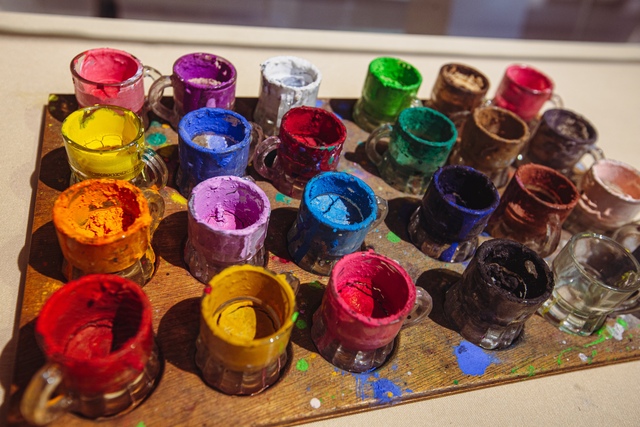
And then you have the artists who didn’t bother with conventional palettes at all. Visual artist Arturo Luz would use newspapers and yogurt containers to mix his paints, while Benedicto “BenCab” Cabrera prefers waxed paper plates (yes, the kind you’d find at kiddie parties and office pakain alike). Meanwhile, Mauro “Malang” Santos kept his paint in shot glasses!
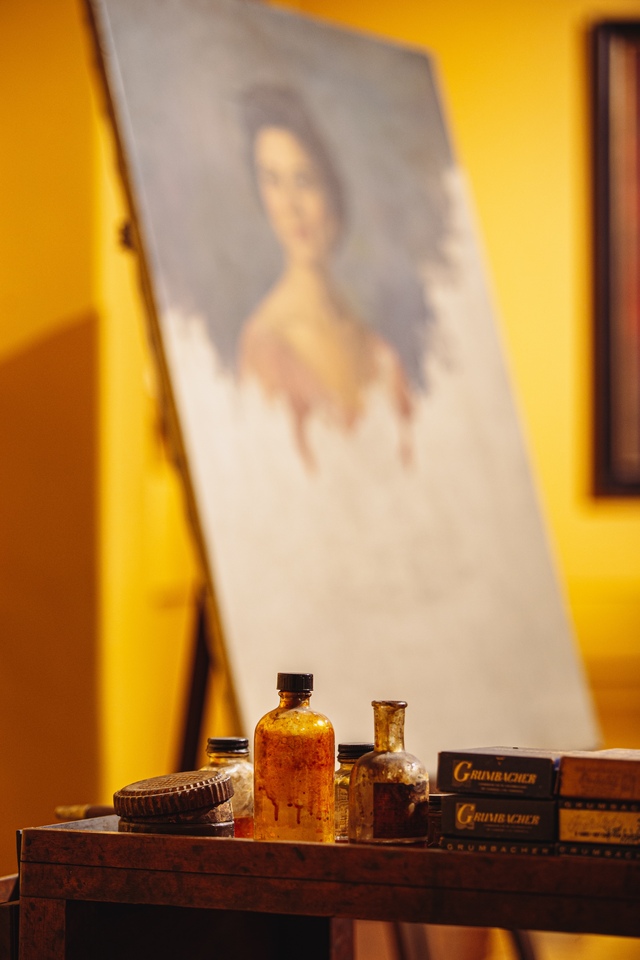
But no display is quite as immersive as the mini-recreation of National Artist Fernando Amorsolo’s studio located in the Early 20th Century Philippine Portrait Hall in Gallery IX. It includes not just his chair and work table—where his personal collection of oil paints and brushes are carefully arranged—but also his easel, which still holds the unfinished oil portrait believed to be the last piece he worked on before his death in 1972.
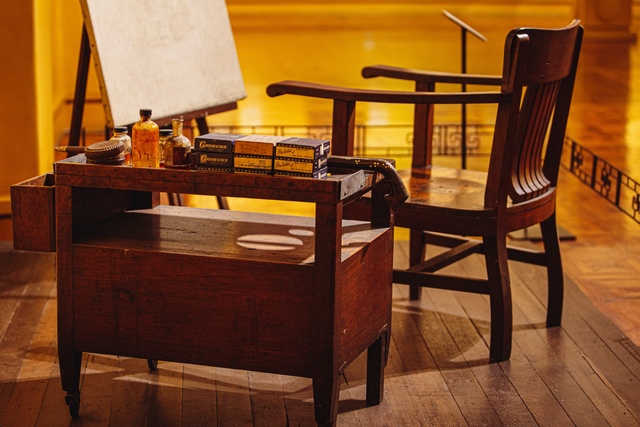
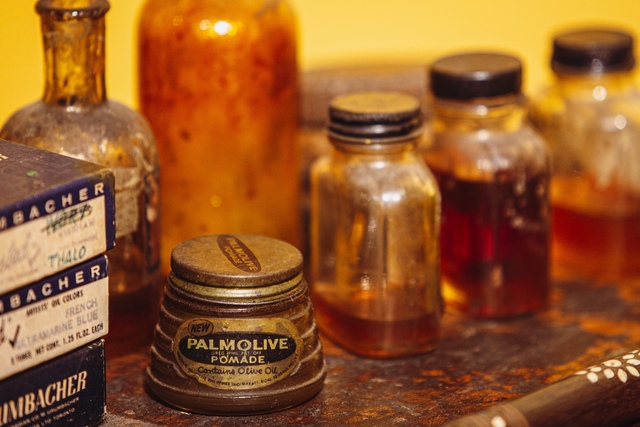
“It offers an intimate glimpse into Amorsolo’s creative process, inviting visitors to ponder what the artist might have envisioned for this unfinished work,” describes Duque. “The inclusion of his chair adds a personal touch, making it feel as though Amorsolo himself might return at any moment to resume his work.”
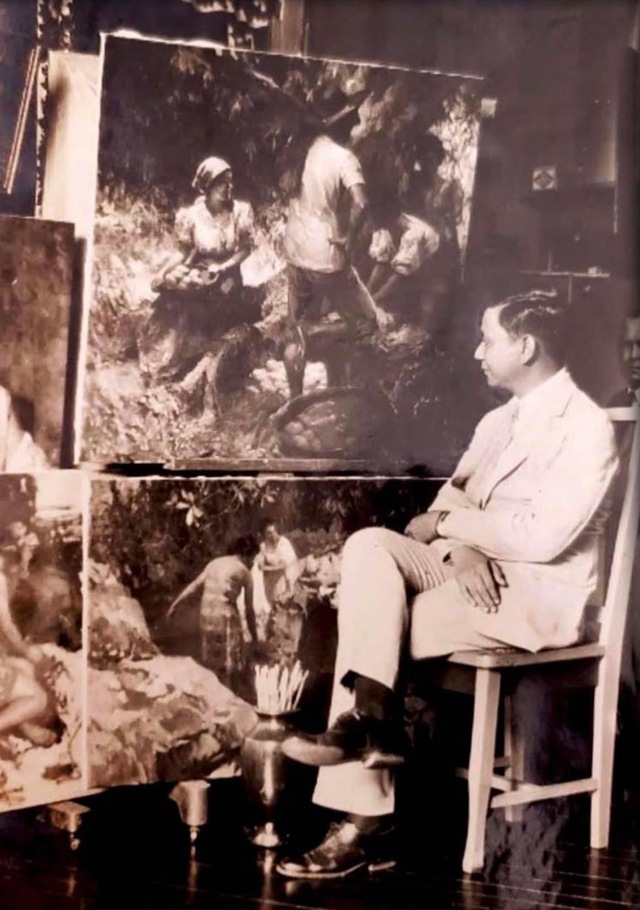
Almost like easter eggs, you’ll find artist memorabilia across different exhibitions throughout the Museum of Fine Arts—and it’s a glimpse of all the different ways art has been and can be created, from minds that created iconic images and forms seared into our memory.
“Each of these items tells a unique story about the artist’s approach to their craft,” says Duque, “making the creative process itself an integral part of our narrative.”
The National Museum of Fine Arts is located along Padres Burgos Avenue in Ermita, Manila (across from the National Museum of Anthropology). Open 9:00 a.m. to 6:00 p.m. Tuesdays to Sundays. Entrance is free, and free guided tours are available every Sunday at 10:30 a.m. and also upon request. For more information for your visit, follow the National Museum of the Philippines on Facebook and Instagram, or visit its official website.