
The K-Zone, Total Girl Editors: Where Are They Now?
The editors of K-Zone and Total Girl look back on those totally awesome days.
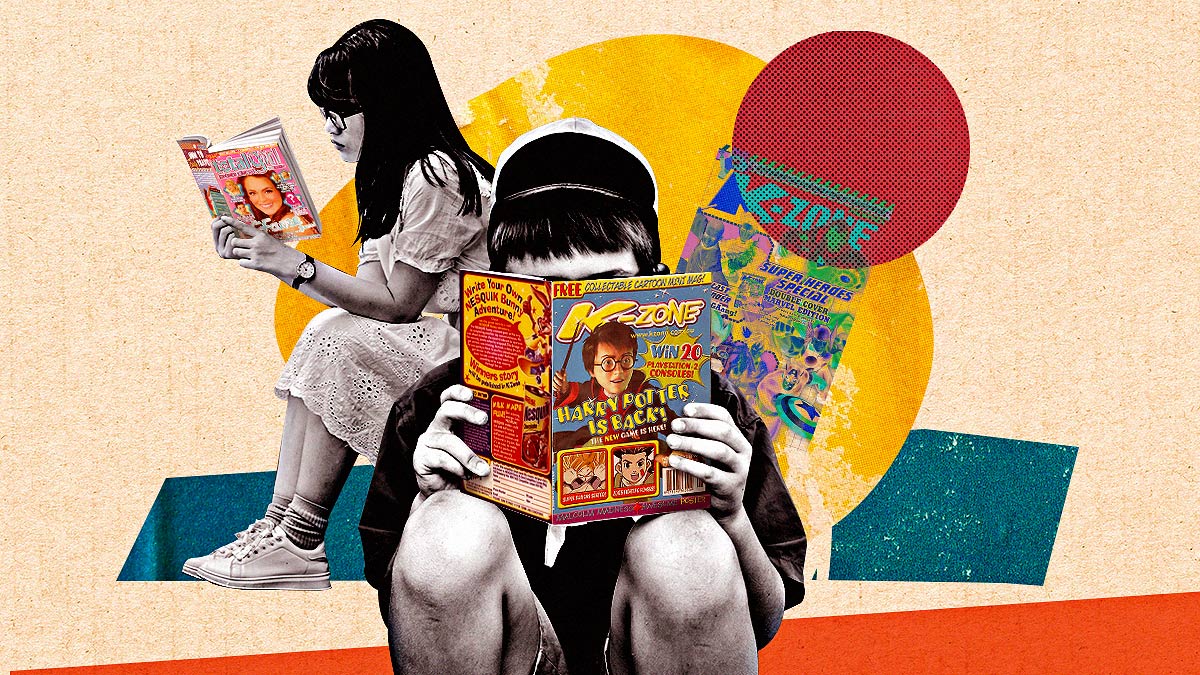
(SPOT.ph) Was there ever a better time for kiddie media in the Philippines than in the 2000s to the mid-2010s?
For 2000s kids, that period conjures up fuzzy pop culture memories that may or may not involve fighting over the remote to watch things on the family TV. It was a time before social media and on-demand television— the golden age of childrens’ networks Nickelodeon, Cartoon Network, and the Disney Channel, and the dawn of the blockbuster movie franchise (remember when each Harry Potter release was An Event? Or when Marvel’s Iron Man marked a cultural reset?).
In 2002, Summit Media founder and SPOT.ph boss Lisa Gokongwei-Cheng saw this boom as an opportunity, forging a deal with Australian publisher Pacific Publications to bring a kids-centered magazine title to the Philippines.

“It was really the time when Summit [Media] wanted to bring in all these different magazines from abroad and K-Zone was different because there was no other magazine like that, [even] in the US,” shares founding editor Ines Bautista-Yao. Yao had already left Summit at the time, but got a call from Gokongwei-Cheng asking her to come back and head K-Zone. “We're gonna launch this magazine and it's so perfect for you,” Yao, now a Young Adult and contemporary romance author and editor of Jesuit magazine The Windhover, recalls of her conversation with the Summit chief.
K-Zone Philippines launched in October 2002 with the tagline “Where Kids Rule!” And rule it did.

The editorial team was trained by someone from the original Australian title. “We went through the issues and how they did the pages, what each one was about,” recalls Yao. Campaign Asia wrote that the 100-page launch issue attracted advertisers like Warner Bros., Nissin, and Richwell. Covering the spectrum of kids’ interests ranging from TV shows and movies to video games and toys, the magazine was in the top five of Summit’s bestselling titles until the company halted print operations in 2017.
Two years after K-Zone launched locally, Summit brought in Total Girl to hit the “tween” demographic – the segment that wasn’t quite old enough for its teen title Candy. Also originally from Pacific Publications, Total Girl launched with a neon pink cover featuring Lindsay Lohan and contained content such as a quiz “revealing your princess personality” plus a feature on the Olsen twins.
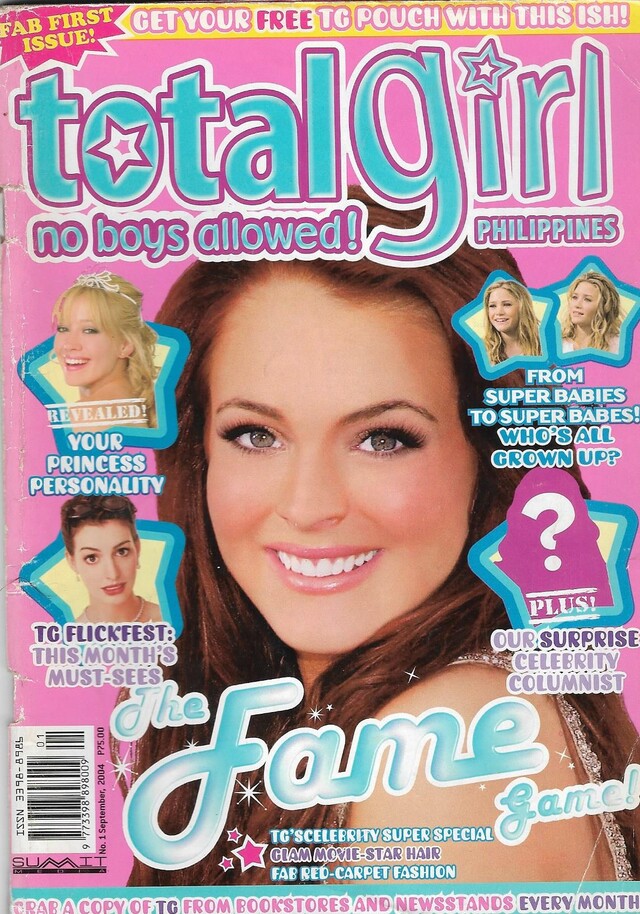
Total Girl would go on to dispense the type of advice you’d expect from a cooler, wiser older sister (its editors had readers refer to them as “Ates” after all). The title folded in 2016 after a 12-year run.
These magazines were bought with saved-up baon, were passed around in class and read from cover to cover (sometimes they were even confiscated by teachers), the articles and quizzes the subject of many a barkada’s recess conversation. With many ‘00s kids still figuring out how to navigate the internet, K-Zone and Total Girl were their connection to what’s happening out there.
"The best education you could have as a magazine editor"
Each issue of K Zone and Total Girl looked like a riot of fun and a half but they entailed serious work.
Total Girl’s last editor-in-chief, Mimi Tiu, says the nature of the job — one that had them interacting with kids and helicopter parents regularly — taught the staff how to deal with people. “You'll get to meet so many different kids, trying to bring out their personalities for the shoot, letting them smile naturally. You don't really learn those things in a corporate set-up,” she says.
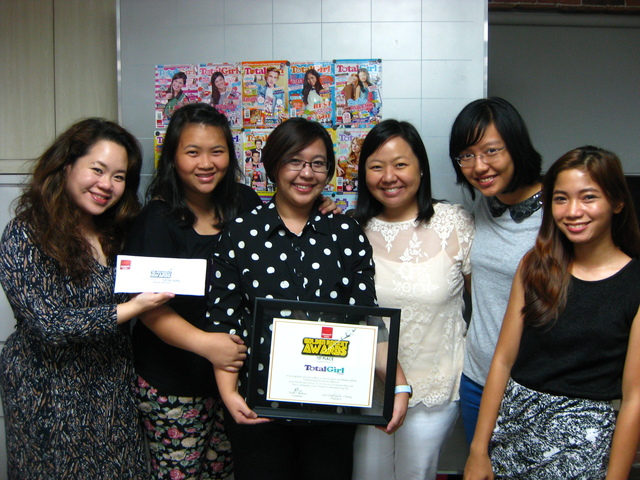
For former K-Zone managing editor Lio Mangubat, working at K-Zone was “the best education you could have as a magazine editor.” Mangubat still works at Summit as the EIC of Summit Books, and hosts the history podcast The Colonial Dept.
“In K-Zone, the image and the text and the design have to be compacted in this very efficient tight space and you really have to let go of your writing ego,” he says. “Other magazines that we've worked on for example, if you're an editor, if you're a writer, you're focused on the words. Working in a kids magazine teaches you the craft of magazine editorship that I don't think you would have picked up easily in any other title that was out there [at the time].”
One of Mangubat’s favorite memories involves working on a packed December toy issue. The idea for a particular year’s toy special was to shoot 50 toys and have them “interact” in a house for a comic book-style editorial. “That time, eight of them were LEGO toys, which I love but they're a pain to prepare,” says Mangubat. The editor then had to stay overnight at the office pantry, building the toys and finalizing the editorial storyboard. It’s not something he would do again, he says, but seeing the finished product was worth it.
“There's a high level of accountability when you're working in a print magazine,” says MM de Mesa, Total Girl’s last managing editor. Joking that she’s a master at spotting double spaces now at her current role as associate creative director for copy, she says that working for a kids magazine was also how she learned to come up with out-of-the-box ideas. “Kasi there's so many things you can do with print, right?” she says. “We had paper dolls, cut-outs, stickers. So in a way, it kind of inspires me also when I'm stuck in a creative rut.”
More is better
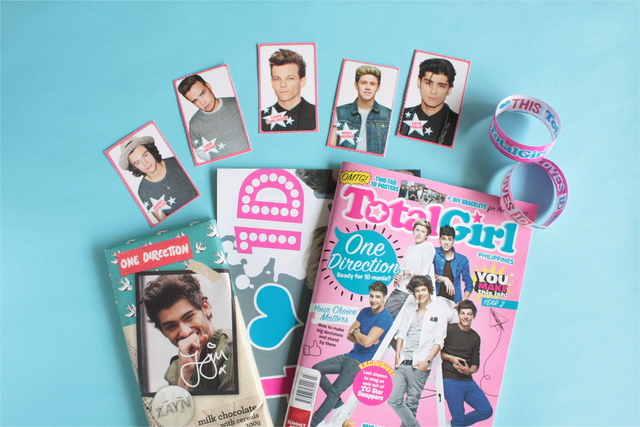
Lately, the Y2K and 2000s aesthetic trend has shown how the Total Girl and K-Zone look have endured visually.
At 9 x 6.5 inches, the magazines were smaller than their contemporaries on the newstand, but to their audience they always packed a punch content-wise. The editors maintain this was because they wanted their readers to always feel like they got their money’s worth each month.
Design-wise, it was always a matter of “more is better” for the two magazines. The thinking was that kids like it when there are a lot of things going on on a page. Since the mags were franchises from the Australian publisher, the team followed the basic layout from their counterparts, but added their own flair to it.
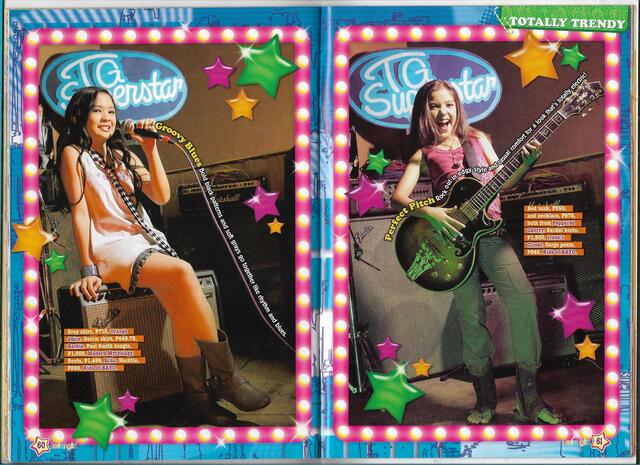
If you haven’t noticed yet, the scrapbook quality of Total Girl is something we’re seeing more of today — just look at the textures and layers on the promos for BINI’s album Talaarawan. Former art director Katsu Modomo and editor-in-chief Shiloa Matic-Ma are the ones to credit for bringing that design direction to life. “When I entered, there was this [digital] folder that Shiloah called ‘borloloy,’” shares Modomo. The folder had png files for all sorts of elements, from rainbows to cupcakes and the like.
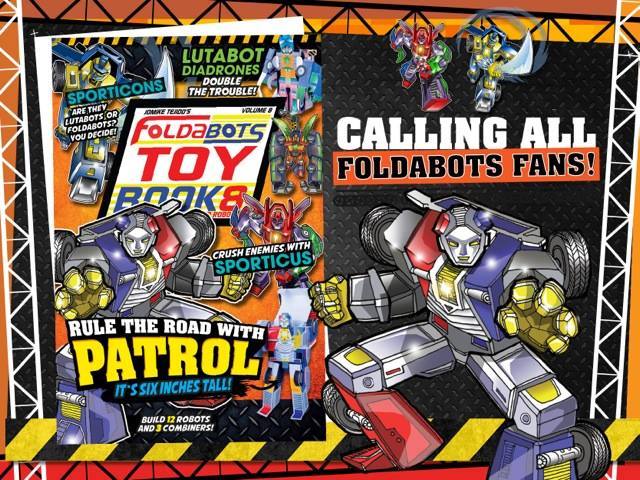
K-Zone, meanwhile, became a sort of incubator for artists looking to publish their work. The artist Jomike Tejido got his start illustrating for children through the magazine’s cut-out Foldabots freebies (and later, comic series), and comic book creator Elbert Or began his journey in comics in K-Zone through his series Bakemono High.
"Let's entertain the kids"
Flipping through an issue of K-Zone now, or Total Girl, not only leads us on a nostalgic trip but provides a look at kids’ media during what many consider the golden age of magazines in the Philippines. No small thanks to members of the editorial teams who gamely shared recollections.
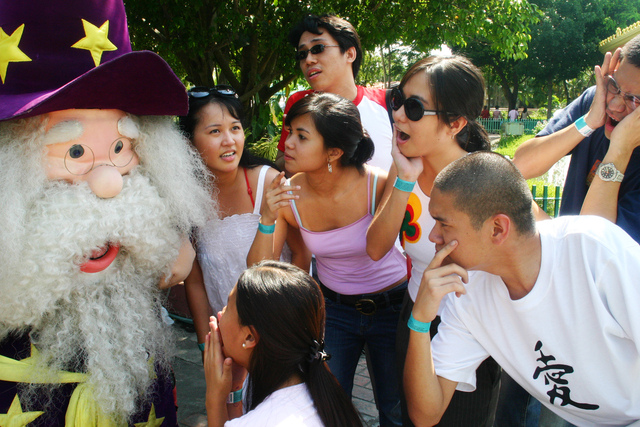
Behind the wacky shoots and informative articles were staff members who took their jobs to entertain very seriously, but not without having the kind of fun you’d expect after seeing the type of content they’d churn up for each issue.
Koko Ko, Summit’s former publisher for kids titles, remembers how the work never really felt like work. “On weekends, we would attend events, or kunwari when I found myself in SM, I would go to Toy Kingdom – I wanted to immerse myself and I didn't mind doing extra work for the magazine,” she says. Ko is now based in Denmark as a licensing professional for The LEGO Group.
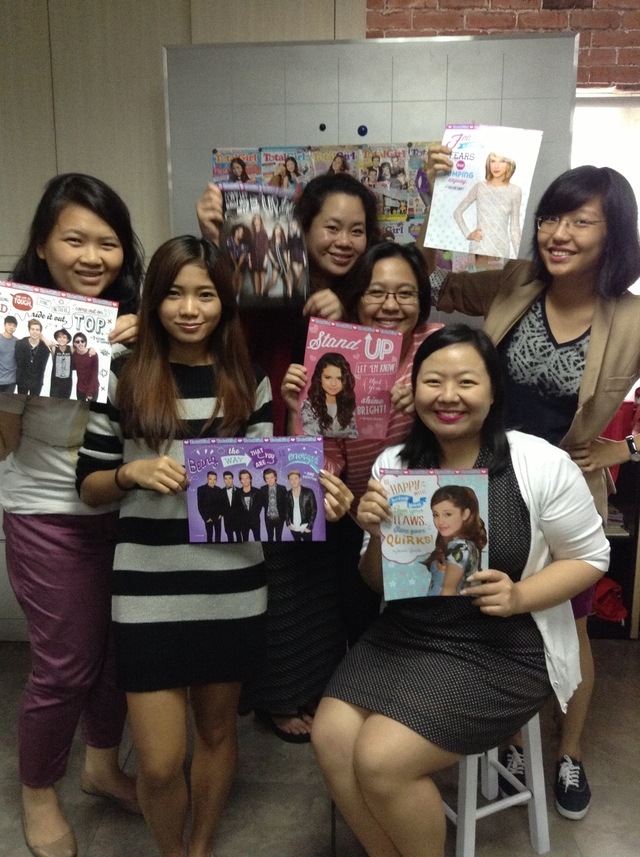
“We were just thinking, ‘let's entertain the kids, let them have fun,’” shares Maggie Adan, who took on the reins when Yao left K-Zone in 2006. She’s now the Korean content lead for a major international streaming service’s Philippine office.
It was only after the publication folded that Adan says the former team members truly realized its impact. “I'd get messages like, ‘I became an illustrator because of K-Zone,’ ‘I do art now because of K-Zone,’ ‘I'm a writer because of K-Zone,’” says Adan. “I joke that I raised a generation of kids. You don’t expect that years later, to get these messages. It's heartwarming that you made an impact that you didn't expect,” she adds.
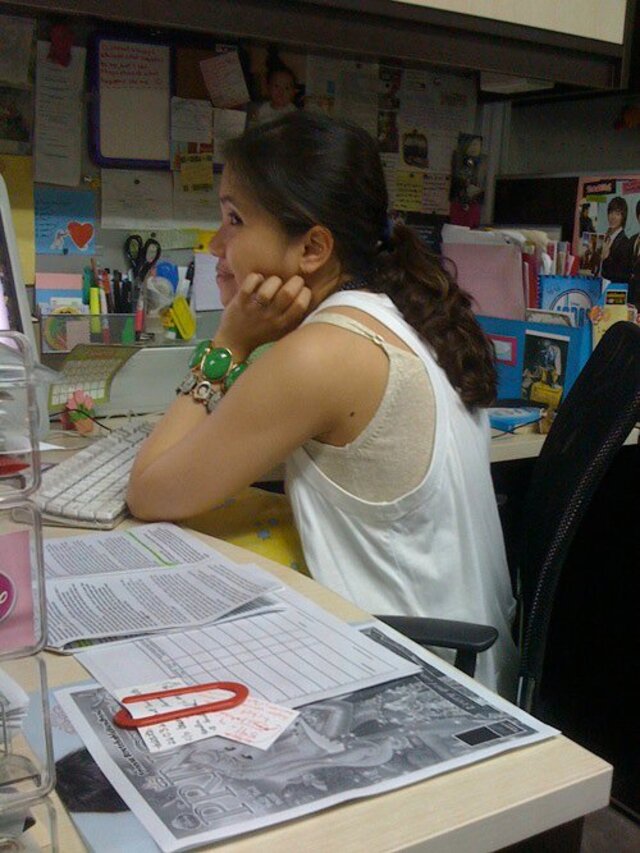
Maita de Jesus, former managing editor at Total Girl, says the main goal at the time was for the magazine to be a positive influence for young Filipina girls. “And not the toxic positivity [kind],” she clarifies. “We weren’t parents – we were ates. The smarter, more caring ate. It was always meeting the tweens where they were.”
De Jesus started out as an editorial assistant at Total Girl. She went on to use what she’d learned in TG as the editor-in-chief of Disney Princess magazine before moving on to managing editor stints at Hinge Inquirer and Summit’s Good Housekeeping. The magazine’s positive influence was something de Jesus looked for too after leaving publishing. “I would think, how would this help other people? How would this positively influence them?" she adds. "Ayoko lang na just to put something out there that I'm not happy about, that I'm not proud of."