Follow us!
© 2026 Spot.PH

NPC Seal of Registration

Spot.ph has been granted the NPC Seal of Registration in recognition of the successful registration of its DPO and DPS

BIR Registered - Bureau of Internal Revenue

Fabric of Life: Why This Indigenous Weave Connects the Hanunuo Mangyan’s Past With its Future


Published Jan 7, 2025

(SPOT.ph) San Jose, Mindoro is a little more than an hour’s flight from Manila. Not exactly the buzziest of travel spots, it is however known to be a choice destination for those who like their beach vacations peaceful and away from the crowds. The islands of Ilin, Manadi, and Ambulong offer the necessary sun, sand and sea escape. For scuba divers, San Jose is where you land so you can proceed to make your way to the minerals-rich municipality of Sablayan, gateway to Pandan Island and Apo Reef, which is home to 285 species of gorgeous marine life.

While already considered the busiest part of Occidental Mindoro, having the biggest share of banks, dining spots, and other commercial establishments in the province, San Jose still has parts that are not just quiet and relaxed but also steeped in heritage. It is around two hours from Mansalay, Oriental Mindoro, where one can find the Hanunuo Mangyan, who makes the beautiful indigenous fabric called Ramit, a popular material for bags, fashion wraps, and table runners that one can find in artisan bazaars and specialty stores.
spot weekender
PHOTO BY Jar Concengco

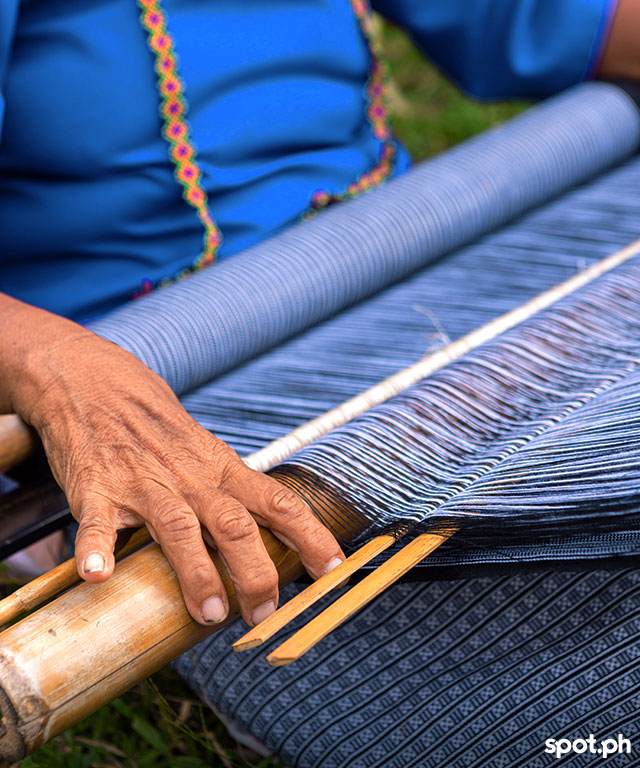
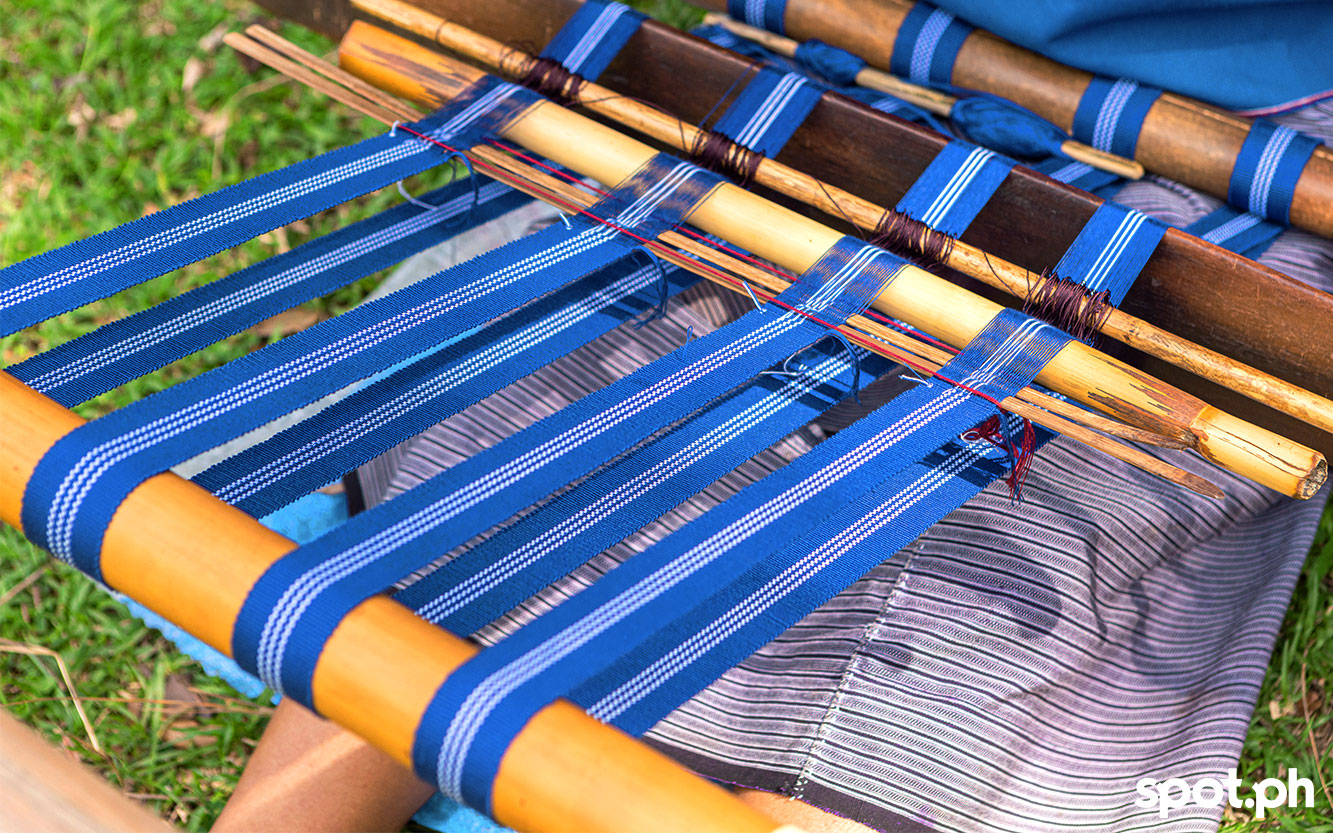
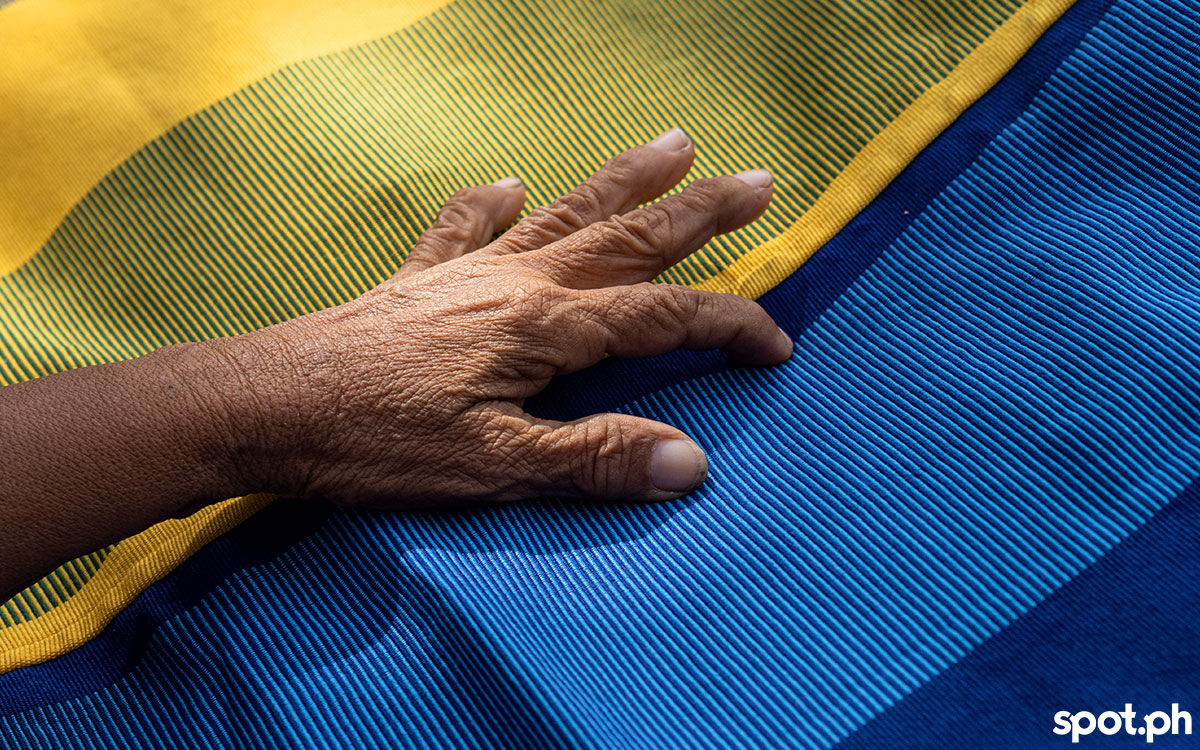
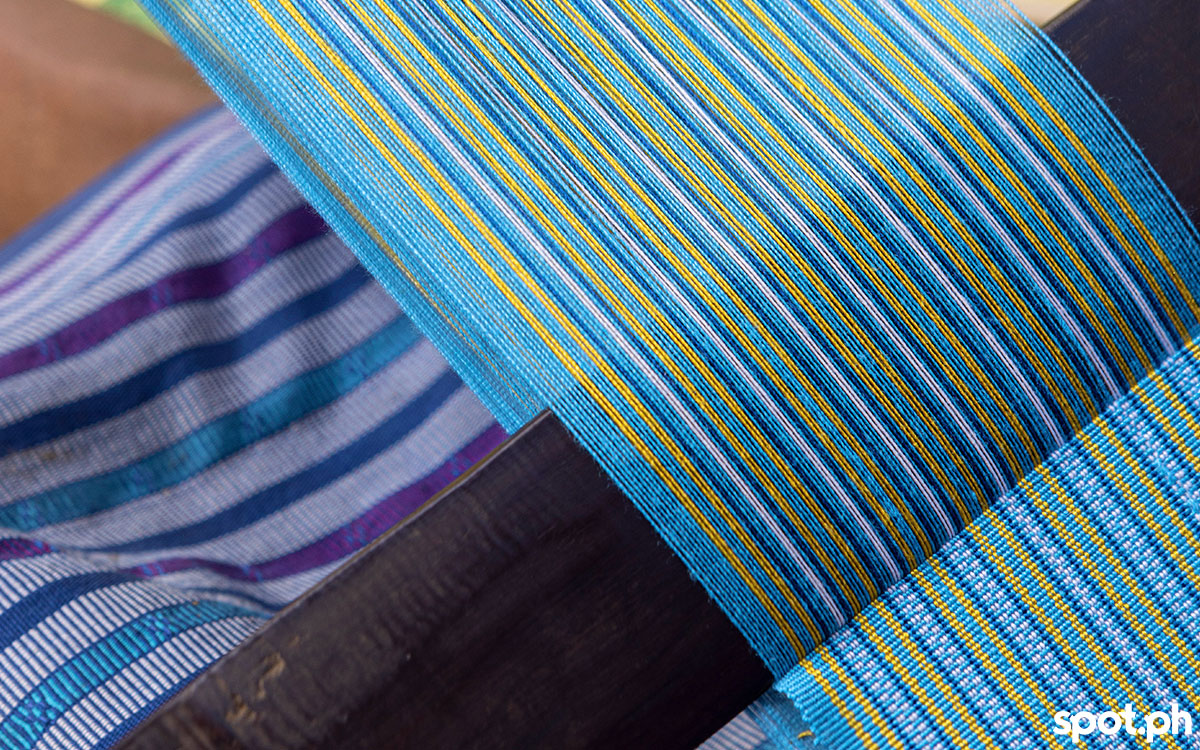
The Ramit is a rich, tightly woven textile originally made of cotton seed materials and natural dyes, assembled on a backstrap loom. To make it more accessible to everyone, the more commercial threads from big garment producers are used to make Ramit.

Article continues after this ad.
ADVERTISEMENT - CONTINUE READING BELOW

Cebu Pacific has partnered with the Department of Science and Technology - Philippine Textile Research Institute to give weaves like the Ramit the attention it deserves. The airline believes that every local destination has a story to tell, part of which lies in its cultural heritage.

"We believe that supporting our rich cultural heritage like this not only helps preserve these traditions but also connects us more meaningfully with the communities we serve," Michelle De Guzman, Marketing Director of Cebu Pacific. "It’s a way for us to share these stories with our passengers, whether they’re Filipinos rediscovering their roots or international travelers experiencing something uniquely Filipino. It’s all about celebrating the Philippines, which we proudly represent, while uplifting the communities behind these traditions."

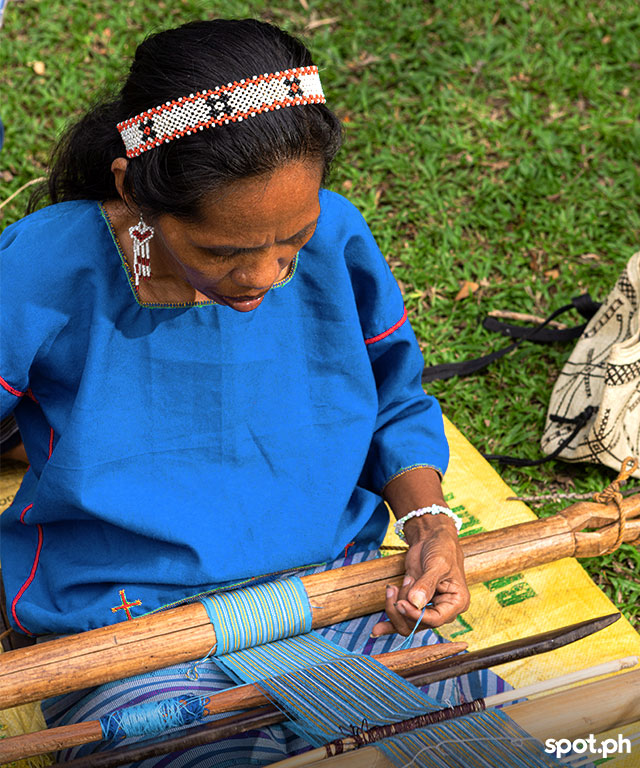
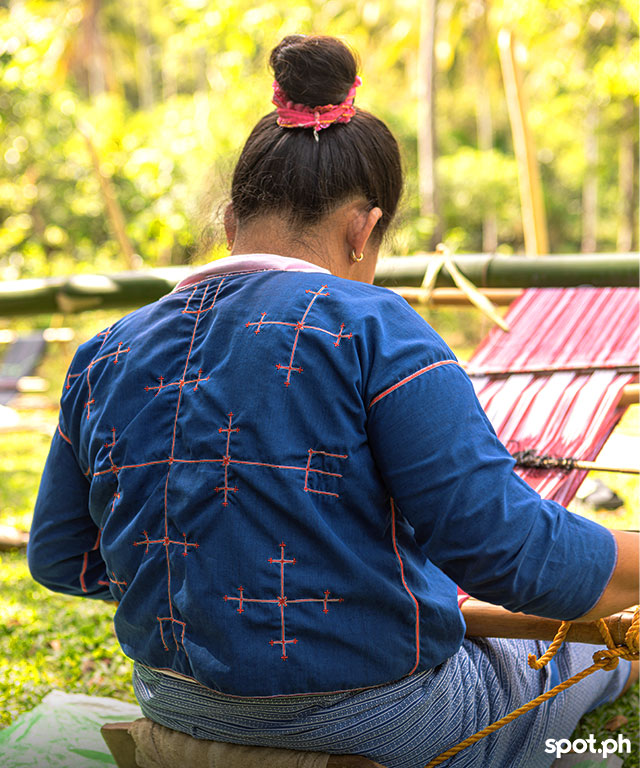
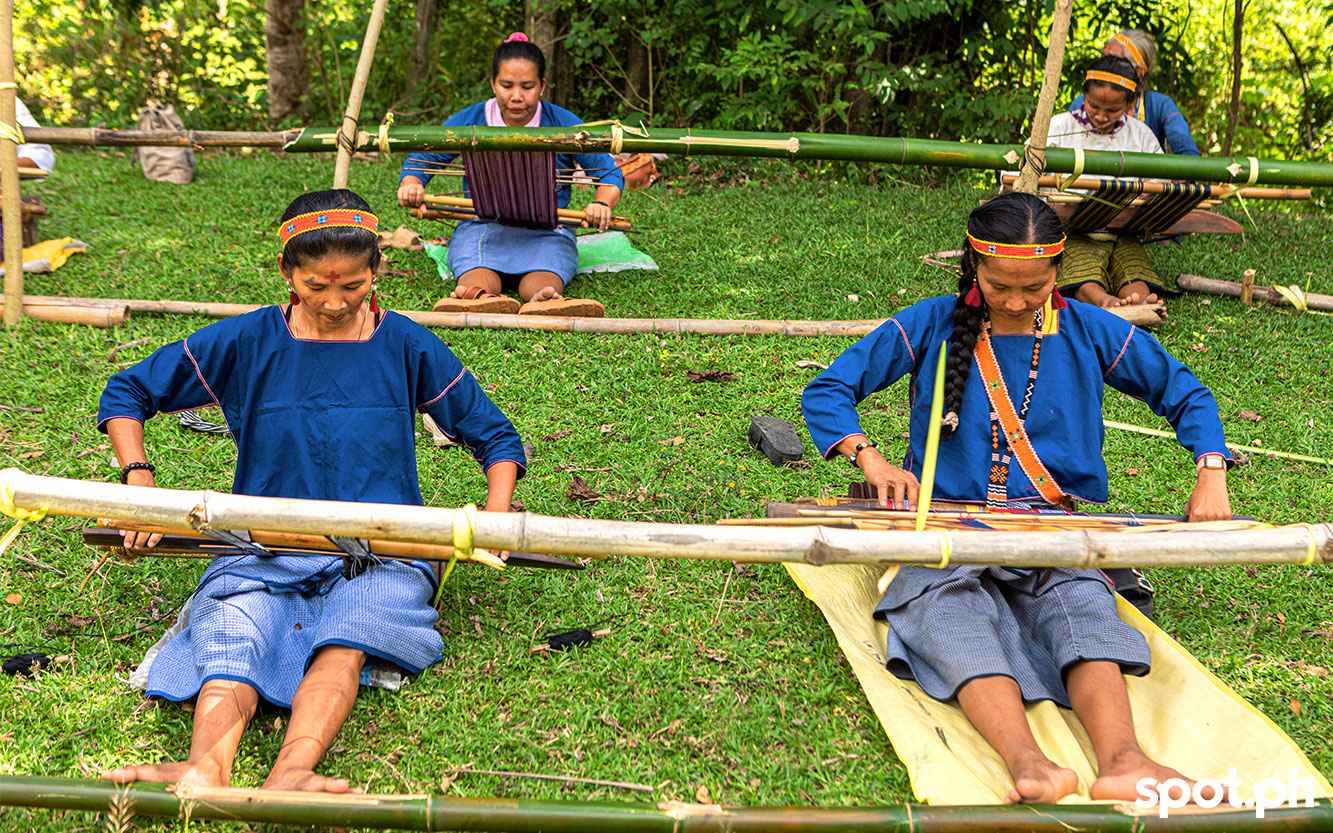
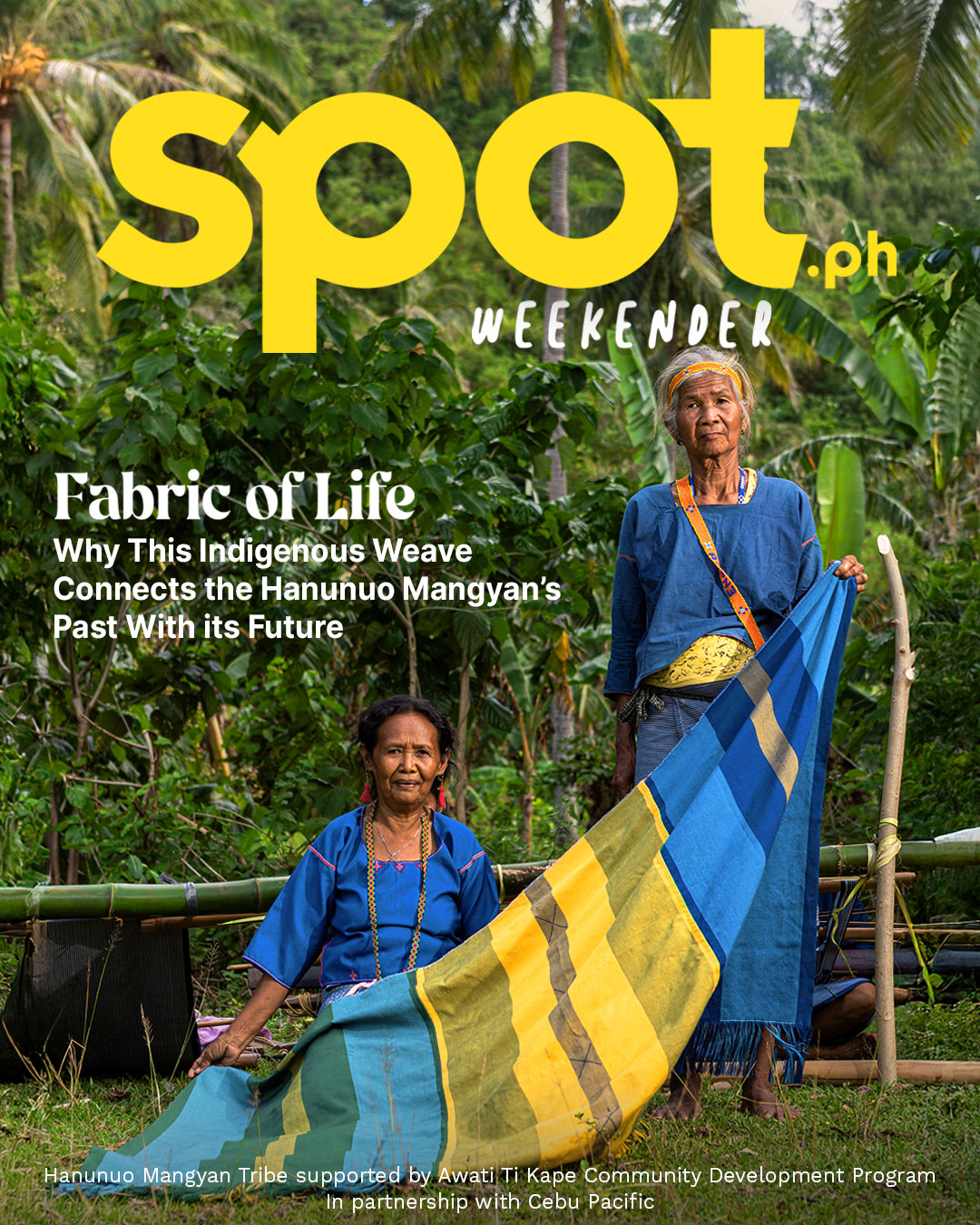
We met several Hanunuo Mangyan tribe weavers when we visited Mansalay in early December. Some of them live nearby, but some traveled from the forests and up the mountains. They sport a blouse called balukas, which come in electric blue or dirty white, and embroidered with crosses in red. The Ramit is then worn as their skirt the way one would a tapis or a wrap. The crosses appear not only on their tops or their skirts but on their faces as well, this last one in a kind of lipstick form. “Para daw pampatakot, kung (naglalakad) ka sa madilim,” says one of the older women, “pampatakot sa masamang espirito.”
hanunuo mangyan weaving cloth
PHOTO BY Jar Concengco
Article continues after this video.
ADVERTISEMENT
watch now
weaver working
PHOTO BY Jar Concengco
woman hanunuo mangyan working on a weave
PHOTO BY Jar Concengco

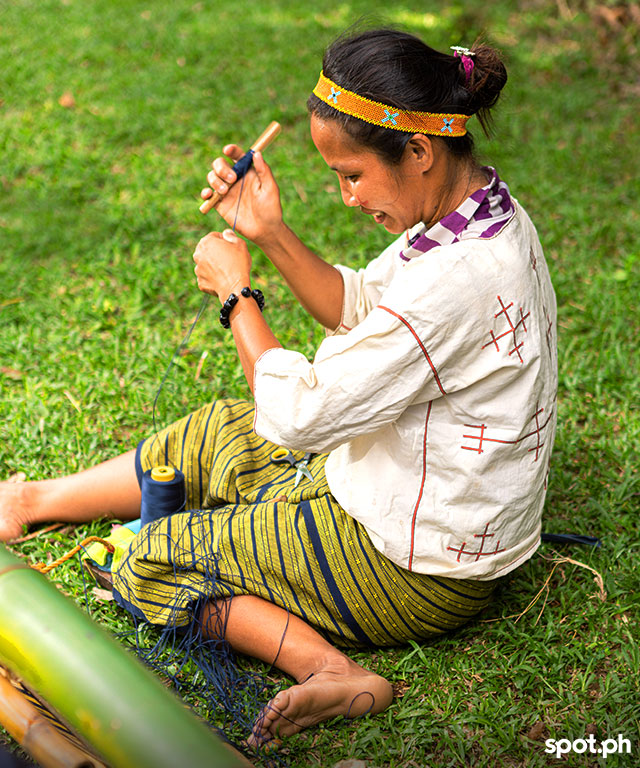
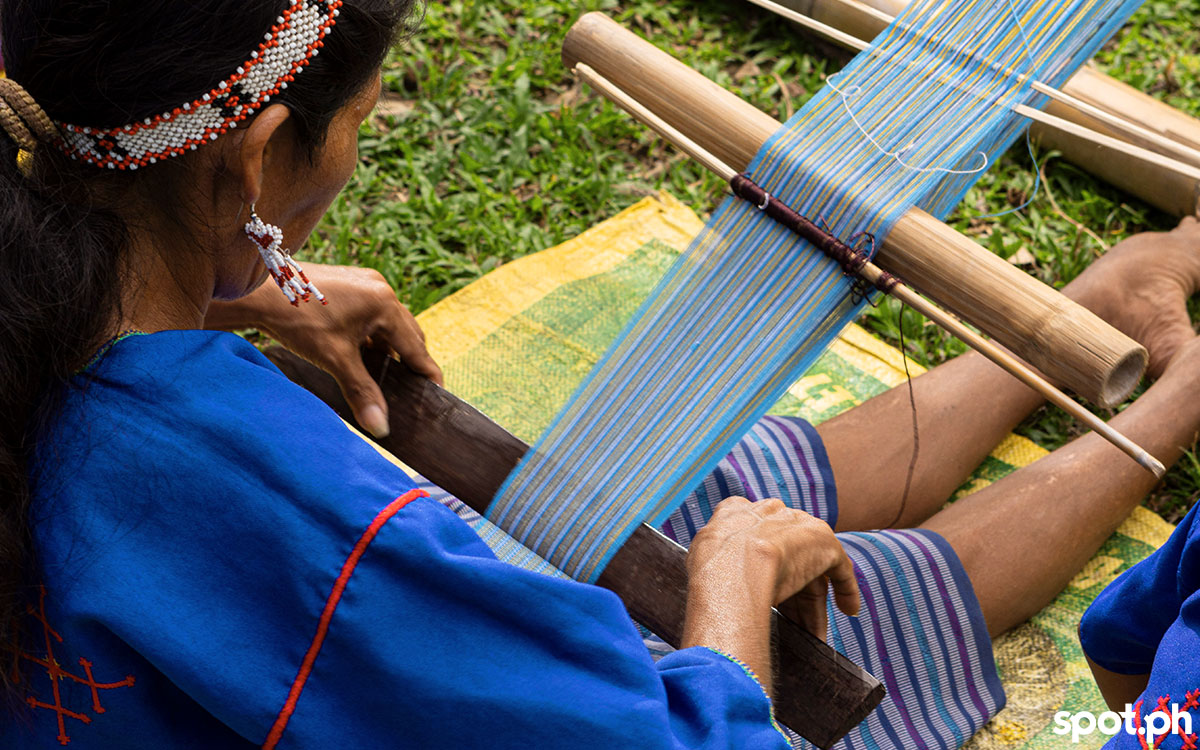
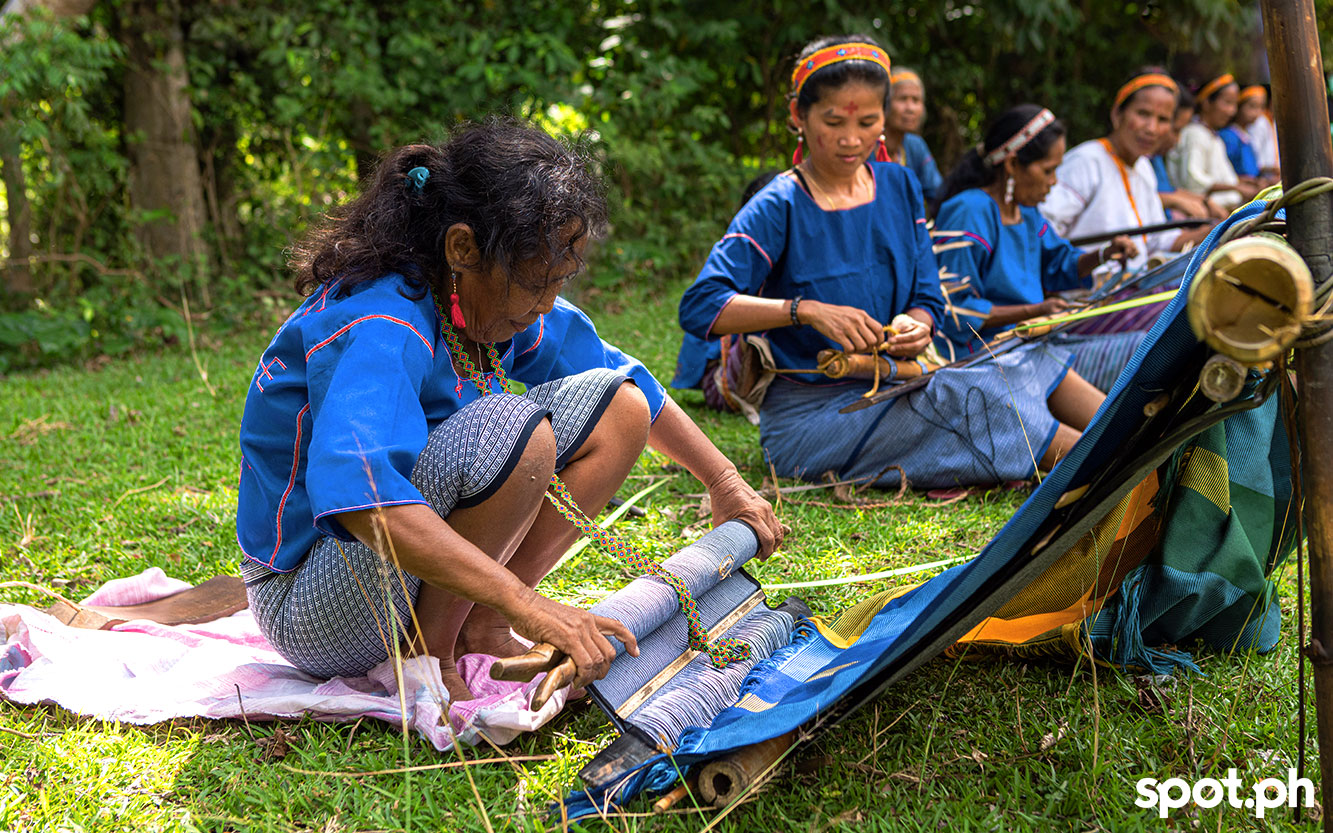
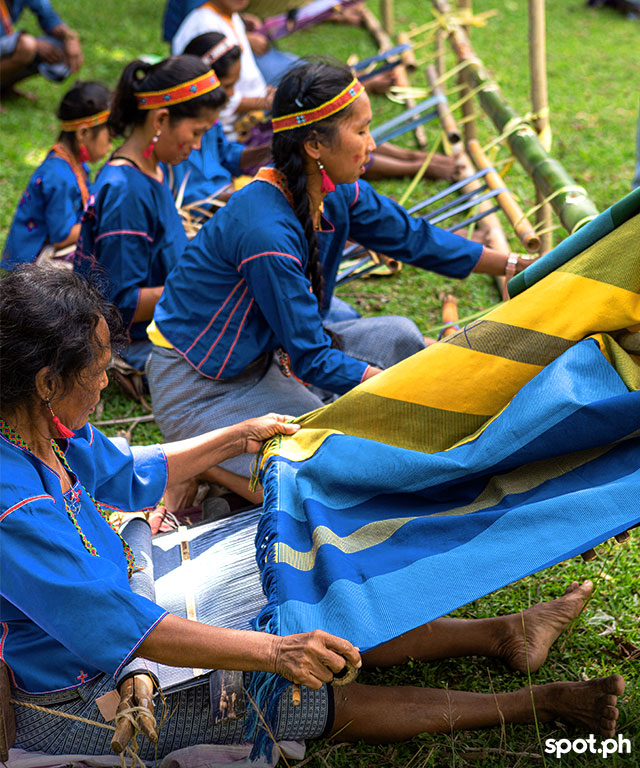
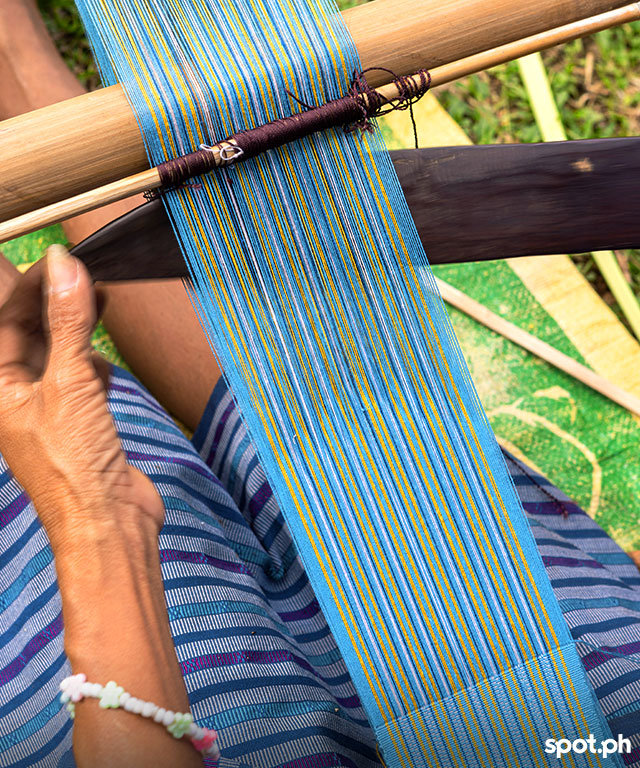
When looking at these mothers and daughters at work on their fabrics, hunched on their chairs and strapped in their contraptions of wood and thread called harablon, one can be quick to dismissed them as mere skilled artisans: quick with their hands, patient in following predetermined patterns, diligent in seeing a textile to its completion. But they’re artists, too, and are no different from the painter who spends hours, days working on a canvas. Each weaver creates the textile design herself, deciding on its color combinations, conjuring geometric patterns based on their own tribes’ iconographies.
Article continues after this ad.
ADVERTISEMENT - CONTINUE READING BELOW

PHOTO: Jar Concengco

“Nakadepende sa akin kung anong gusto kong design,” says Nayhan Husing, who is 66 years old and has been weaving since she was 10. Like most women in her tribe, she learned to weave from her mother, who, in turn, learned the art from her own mother. “Pag naggagawa ang nanay ko, naggagawa din ako. Pinagsasabihan lang ako pag mali. ‘Hindi ganyan, anak, ganito.’”

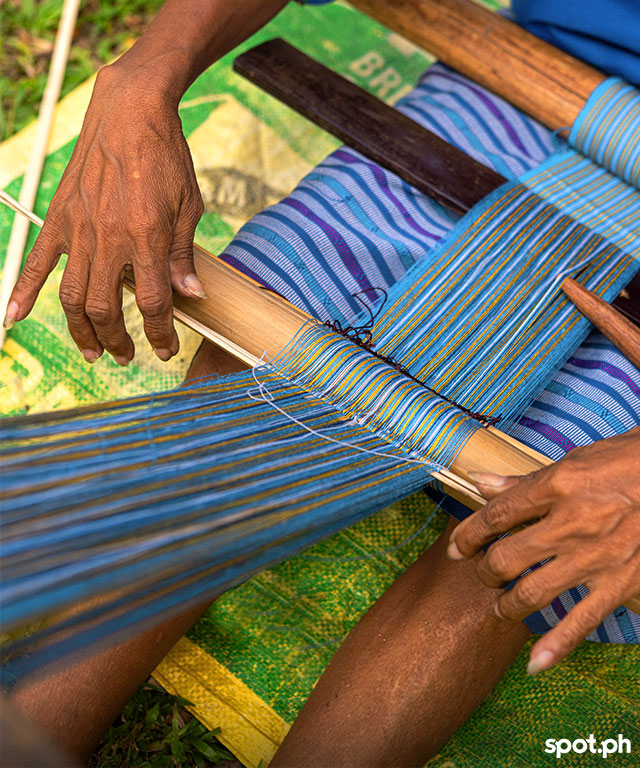
At the stunning Oriental Mindoro Heritage and Cultural Center in Mansalay, they describe the process of making Ramit thus: “A Hanunuo weaver consumes a whole day of paghahanay before they transfer the spun thread to the ‘parabwat’, the collective term for the set of backstrap loom used for weaving the Ramit. It is comprised of at least a dozen parts made of either wood, bamboo or string, each with different functions and all significant in the weaving process.”

closeup of a weave
PHOTO BY Jar Concengco
woman's hands working on a weave hanunuo mangyan
PHOTO BY Jar Concengco
Article continues after this ad.
ADVERTISEMENT - CONTINUE READING BELOW
hanunuo mangyan weaver
PHOTO BY Jar Concengco

Ramit weaving has been passed on from generation to generation. “Nawala noon ang paghahabi,” says Nayhan Husing, adding that there wasn’t much need for it at that time except when they’re making clothes for themselves. But the renewed interest in indigenous textiles in the last decade or so helped revive the tradition. “Binalikan uli namin kasi may mga umo-order, bumibili.”

PHOTO: Jar Concengco

Ramit weaving is a way of life for this tribe. Some of them get to it as early as after having their morning coffee (“Kung meron”) and boiled kamote; some do it in between their kaingin chores; and some work on their weaves till late in the evening when demand is high. It’s not just a piece of clothing they put on, Ramit is an artistic expression, and a source of extra income that can improve their lives. Ingga Uybad, who is now 90, still plops herself down a chair and straps herself in the harablon to make Ramit. She was able to send two of her 14 children to college from the money she earned selling her weaves in Kalapan—and the two finished their courses too.

Three of Ingga Uybad’s daughters are also Ramit weavers. “Yung mga apo ko 15 pa lang marunong na,” she adds.

hanunuo mangyan woman working on a weave
PHOTO BY Jar Concengco
weaving
PHOTO BY Jar Concengco
weavers from the top view
PHOTO BY Jar Concengco

The tribe members say weaving makes them happy, and they’re happier when orders for Ramit come in. This means they will have extra income, which, in turn, means they can put rice on the table, or maybe even fish or some kind of meat—something different from their usual diet of saging, ube bundo, or kamote. “Masaya kami na maraming nagtatangkilik ng product namin, worth it ang trabaho,” says LotLot, 34.

“Masayahin ang Hanunuo kasi kuntento na kami kung ano pong mayron,” says one of Ingga Uybad’s daughters. “Pag may kinakain lang, masaya na kami, basta sama-sama kami magkakamag-anak.”

“Kahit pagod na pagod na ang mga Hanunuo, nakangiti pa din,” offers the 22-year-old Jeanya, who started taking weaving seriously during the pandemic but was already familiar with it much earlier. “At masisipag din kami—pag hindi marunong maghabi, magkakaingin.” There’s always something to make one’s hands busy: some make earrings, or bracelets, while others make broomsticks or walis tingting.

two weavers working
PHOTO BY Jar Concengco
hanunuo mangyan women weaving
PHOTO BY Jar Concengco

Some also teach like LotLot’s sister, who walks for an hour every day to get to her class at Anahaw Elementary School up in the mountains. “Kung nasa bundok na po kami,” she says, “mas bundok pa yun.”

Jeanya laments the fact that there are still people who discriminate against them, who look at Mangyans and say they’re uneducated and untidy—which is the complete opposite really of what she is, this very mild-mannered young lady, who speaks clearly and elegantly, wears her traditional garb of balukas and Ramit skirt regally, and is in fact enrolled in school and studying.

PHOTO: Jar Concengco

There’s something to be said about a group of people who wear only what they make, and will make only when resources are available. At a time when mindless consumption rules and seems to be the hand that keeps the world turning, the Hanunuo tribe reminds us that it’s possible to live happily with very little; and that we can survive without excess. By just living and putting into practice what their mothers and ancestors taught them, the Hanunuo tribe is keeping an indigenous group’s heritage alive. The Ramit is their connection to the past, an assertion of their identity, an expression of creativity, as well as a way to honor and remember the mothers who taught them an art that will sustain them for life.

Discover Mindoro (San Jose) and fly direct from Manila with Cebu Pacific. Learn more about local weaves like the Ramit by scanning the QR code above. Follow Cebu Pacific on Facebook and visit the website for more information.

This article was created by Summit X in partnership with Cebu Pacific.

Comments

Latest Stories

Load More Stories
Close