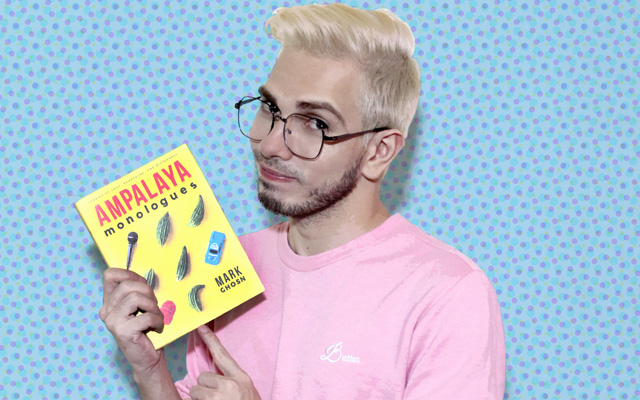
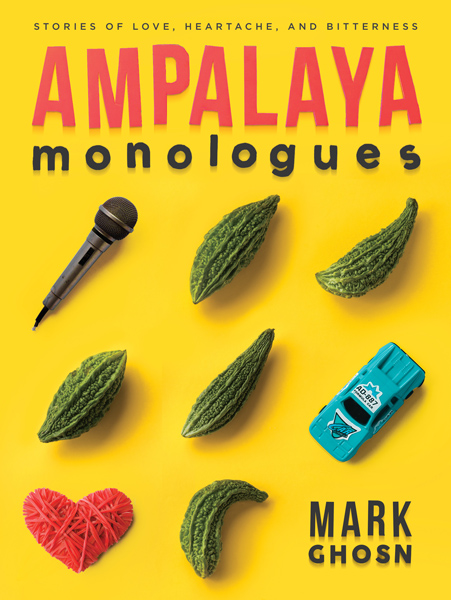
(SPOT.ph)Spoken word has become so popular these days that it has been performed in all kinds of spaces—local cafés, dive bars, parking lots, and even national television (remember On the Wings of Love?). You can now also read your favorite pieces in book compilations such as the recently released Ampalaya Monologues, a collection of 27 monologues about love, heartache, and bitterness written by Mark Ghosn. In other words, hugot—definitely a crowd favorite among millennials.
The stories vary from the bitter queen who gets dumped, the boy next door who was friend-zoned, the LDR couple, the friend who's forever a third wheel, the womanizer who gets cheated on, and much more. No matter what your version of bitterness is, there's an Ampalaya Monologue for it. The pieces were originally staged by the performance art collective Theater in Alternative Platforms, Ghosn's theater outfit. Various shows have been produced in the past such as the Halloween-themed #OneMoreTime, Christmas-themed #SingleBells, and an anti-Valentine's Day Show called #AmpalayaDay. You may have seen one or two (or all).
Article continues after this ad.
ADVERTISEMENT - CONTINUE READING BELOW
Before the big book launch on August 5, SPOT.ph sat down with the author himself to find out about the bitterness he's been putting into words.
SPOT.ph: How did Ampalaya Monologues start?
Mark Ghosn: I started writing it in 2013. I have a theater group, TAP - Theatre in Alternative Platforms, and supposedly 'yonsanaang first production. At that time, kulangakosa support from the members that I have, so na-shelf siya. Then in 2015, angtagalnakasi two years na, di ba? I wanted namag-push namagkaroon na ng production. Wala kasikaming budget. Ang pinaka-ideal lang na production napwede naming magawa is may minimal lang na set. But still, theatrical pa rin dapat.
Na-inspire akosaVagina Monologues [by Eve Ensler] and I thought that instead of women empowerment, why not mga bitterness—stories of people na broken-hearted. I came up with Ampalaya Monologuesperoiniba ko nasiya. This time, mas comedy-drama. That's how it started. I approached my friend Yan-yan and he helped me out with getting a bar where to present it.
The Ampalaya Monologues book has 27 stories. Is that the number of your monologues or you have more?
At the time when we were just starting, limalang. Then because the first show was a success, nadagdaganna nang nadagdagan. Right now it's about 50 so the ones in the book are just half of it. Like the first volume.
Was it really intended that other people would perform the pieces?
Yes. Kasi I can't perform din. Although saVagina Monologues, siyalahat. Angunang idea gano'n. Pero sabi ko, I cannot kasimay mga characters talaganaiba. I also want to get different characters kasi, I think, doontalagaang forte ko. 'Yong mag-create ng boses ng iba-ibang distinct characters. I want each character to be different than the other.
Article continues after this video.
ADVERTISEMENT
watch now
Would you call your pieces as poetry, spoken word, or monologue?
In a way, it's still under spoken word but not poetry. Akin 'yong monologue.
How would you differentiate these?
Spoken word poetry is a poem that's written to be performed in front of people. Medyo mas madaming rules pag poetry—rhythm, elevated language, and all that. For monologue, it doesn't really have to be that. It just needs to have a character with an objective and conflict on how they'll achieve that objective.
How did you get into theater?
I started with theater in college, that's more than 10 years. I studied Mass Communication but I also have theater classes. In college [University of Perpetual Help – Las Piñas] kasi, we have theater orgs. Nagtuloy-tuloyna 'yon.
Na-introduce lang akosa spoken word when Ampalaya Monologue became a success. First timeko nakapanood ngspoken word saAmpalaya Monologues. Akala ng mga tao, I do those. So I get invited to perform in spoken word events. Unlike other artists who do open mic, ako parang napilitakomagingspoken word artist because of Ampalaya Monologues. So sige, aralin ko nanga lang din 'yongspoken word poetry.
Why do you think spoken word became popular?
Because ang generation na 'to, ma-emotional tsaka ma-arts. And not the mainstream type of art. Ang gusto nila indie, gusto nila underground kaya may gano'ng culture na nag-boom. Hindi natin siya nakikita before. Before Juan Miguel [Severo] naman, hindi ganito. Then, biglang nag-iba. Mas naiintindihan na ng ordinary people.
Do you think that's a good thing compared to approaching literature in a technical manner?
'Yon ang risk. It's being appreciated by many people but then kailangan pa rinalagaan 'yong technical part. 'Yon angisasamgapino-promote ng talagang active sa spoken word. As a beginner, it's okay for you to experiment and learn. In a way, mababaw 'yong pieces. Pero sana as you immerse into the scene, you evolve and become more technical with your writing.
Article continues after this ad.
ADVERTISEMENT - CONTINUE READING BELOW
It's similar to this trend where people go to galleries to take selfies.
Exactly. So we're torn between consumption and education. Balance of two siguro.
Are your stories based on personal experiences?
I try to insert my own experiences in each piece but I only have limited experiences. I haven't even been in an official relationship, laging “almost” lang ako. (Laughs.) The stories are from people that I know peronilalagyan ko rin ng sa akin. Even though hindinamantalagaakonagkaroon ng actual relationship, I have been in love and I felt bitterness and heartaches. In a way, parang mixed siya.
Do you think your hugot will run out?
That's why, as a writer, dapathindi puro sarili mo lang. I think gifted ako that I have that skill to step in sa shoes ng ibangtao and I can see things from their perspective. That's why I was able to write these 27 characters differently from each other. 'Yong skill na'yon ay naaralko so hindiakomauubusan ng hugot. Kung gaanokadami 'yongtaosamundo, gano'nkadamiangkuwentona kaya kong isulat. Kasi kaya kong makita 'yongmgabagaysapaninginnila. Even as a poet or any kind of writer you are, it's not just all about your experiences but about the experiences of other people.
Do you think you would write about topics that are not about love and relationships?
I would love to. I tried before. I have plays that tackle different issues. One of those is Mga Multo ni Mang Roque, it's a dark one. It tackles being a celebrity and 15 minutes of fame, and how it can affect a person's lives. I've also written political, satirical comedies that tackle Martial Law and fake news. In the future, I have projects lined up that's not about heartache and bitterness.
Article continues after this ad.
ADVERTISEMENT - CONTINUE READING BELOW
I also try to insert it saAmpalaya Monologuesminsan, but not too much—domestic abuse, discrimination within the gay community, mgagano'n. Kaya lang kasi may brand naangAmpalaya Monologues which is "Love, Hearthache, and Bitterness." Kaya nahihirapan din akongmagpasok ng ibang issues aside from love. Rather than doonkosiyagawin, gawana lang akongibang play at doonkona lang i-tackle ang issues na 'yon.
What can we expect from your book?
I was reading it and parang ibakapag book na. Iba pagpinanood mo, may visuals before momarinig 'yong message. Dito, you just have the story, the character directly talking to you, alone. Kung gaano 'yong feels doonsa stage, mas intense 'yong feels ditokasikayongdalawana lang ng character angnandito. Ikaw na lang 'yongkinakausapniya, audience niya. The intensity of the emotions is heightened and the comedic parts of it are also heightened. Na-doble 'yong intensity niyakasikayongdalawa and you have your own imagination of it.
In one word, how would you describe Ampalaya Monologues?
Therapeutic.
Ampalaya Monologues (Summit Books) is available in newsstands, bookstores, convenience stores, and supermarkets nationwide for P250. The book launch is on August 5, 5 p.m. at Buku-Buku Café, SM Soutmall, Las Piñas.
We use cookies to ensure you get the best experience on Spot.ph. By continued use, you agree to our privacy policy and accept our use of such cookies. Find out more here.