

Kisapmata: Tyranny, Taboos, and the Ghost of Nick Joaquin
Does the stage adaptation improve on the 1981 Filipino film classic?
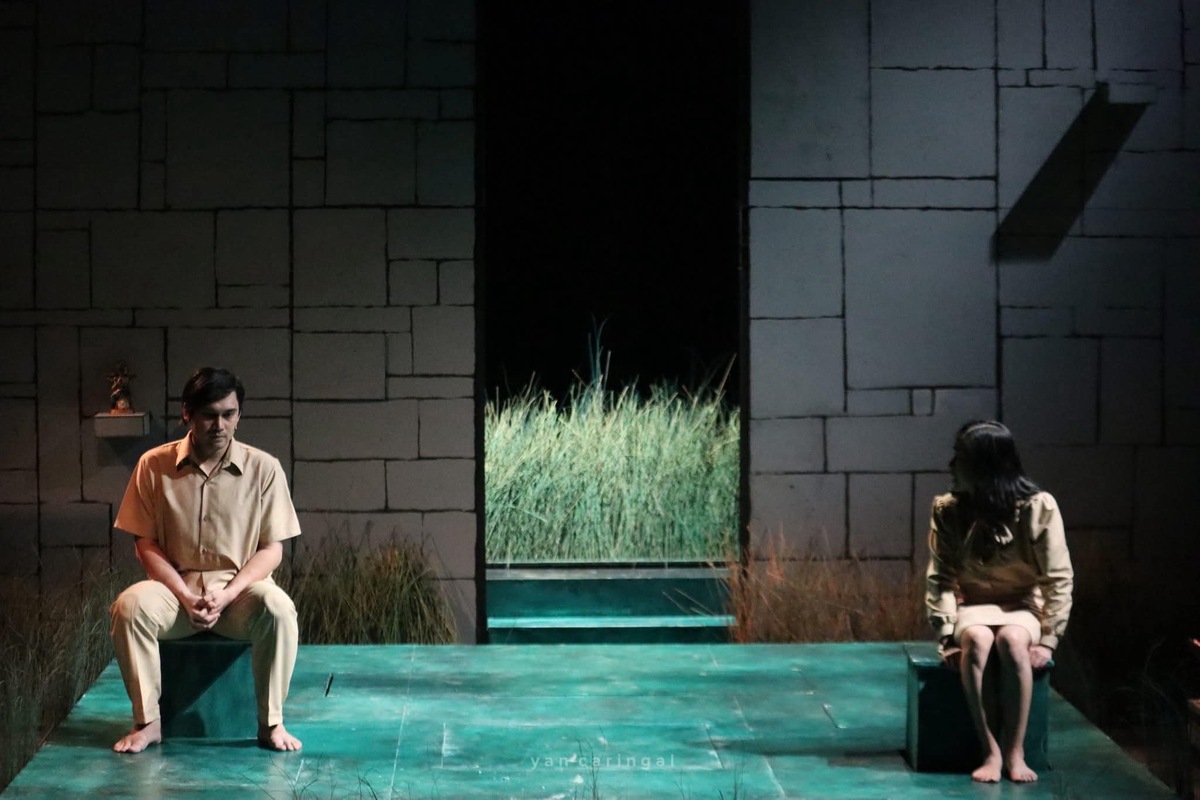
(SPOT.ph) In Kisapmata, writer-director Guelan Varela-Luarca adapts for Tanghalang Pilipino (TP) the acclaimed 1981 psychological crime tragedy by master filmmaker Mike de Leon. The film, about a retired policeman’s obsessive control over his daughter, was widely seen as a veiled critique of martial law. Forty-five years later, amidst a fraught political backdrop, Kisapmata has seen renewed relevance.
In 2020, the film was restored by Italy’s L’Immagine Ritrovata with the cooperation of De Leon and cinematographer Rody Lacap. Streamed widely during the COVID-19 lockdown—one of the world’s harshest—it was met with critical acclaim.
This revival has paved the way for a fresh reimagining of Kisapmata, a dark tale of obsession and bloodshed.

Back to the source
Varela-Luarca and TP’s adaptation returns to the film’s original inspiration: “The House on Zapote Street,” Nick Joaquin’s 1961 true-crime article, first published in the Philippines Free Press. Writing as Quijano de Manila, Joaquin chronicled the horrifying real-life case of Pablo Cabading, a domineering retired Manila policeman who exerted suffocating control over his daughter Lydia. Isolating her within their Makati home, he dictated her every move. When she married Leonardo Quitangon, a mild-mannered doctor, Cabading imposed rigid conditions, forcing the newlyweds to live under his roof.
Leonardo soon realized the entire household revolved around Cabading’s authority, with even Lydia’s mother silenced into submission. When Lydia finally tried to escape, her father reacted with extreme violence, culminating in a shocking act of murder-suicide.
De Leon, working with writers Clodualdo del Mundo Jr. and Raquel Villavicencio, adapted Joaquin’s reportage into the Kisapmata screenplay, changing names and professions for legal reasons. TP’s stage adaptation retains these alterations, including the detail of the father’s eerie pastime—cultivating earthworms for extra income in retirement.
Since theatergoers are likely already familiar with the film, there’s little need for spoiler warnings. At its core, Kisapmata is a harrowing portrait of how retired policeman Dadong Carandang’s iron grip over his daughter Mila turns their lives into a nightmare. When Mila announces her pregnancy and plans to marry Noel, Dadong manipulates the couple into staying in his house. His obsessive control escalates into madness and, eventually, murder.
Also read: Nick Joaquin's Classics Get Korean Translations
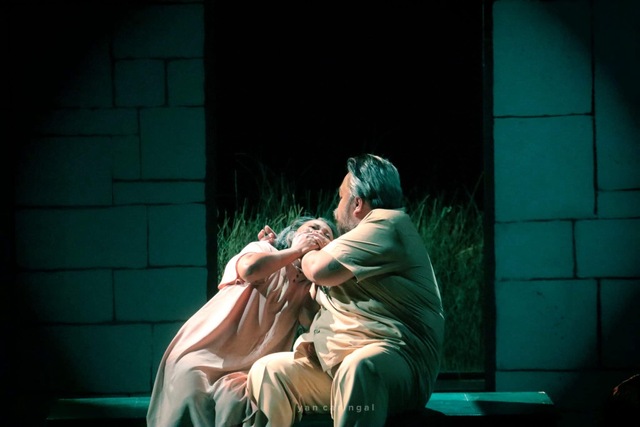
When Kisapmata premiered at the 1981 Metro Manila Film Festival—where it swept the awards—it stunned audiences with its shocking insinuation of incest. Joaquin had only subtly suggested the taboo in his original article, describing the house as “the relic of an ambiguous love.”
Breaking taboos, expanding themes
More than 40 years later, the stage adaptation does not shy away from this dark implication. In fact, it pushes further, incorporating other unmentionables: misogyny, domestic abuse, and psychological violence. An audience advisory is issued before the show, warning of its disturbing themes.
Does the stage adaptation improve on the film?
The play has its strengths, particularly in its portrayal of Mila (Lydia Cabading) and her mother as women with agency. Unlike in conventional melodramas, they are not entirely helpless victims. If they remain trapped under Dadong’s rule, it is, to some extent, by choice—whether through fear, resignation, or a lifetime of manipulation.
However, one wishes that TP had been more ambitious with its production design. One of the film’s greatest achievements was Cesar Hernando’s claustrophobic set, which visually conveyed Lydia and Noel’s entrapment. The stage adaptation, by contrast, opts for a minimalist approach, reducing the house to mere silhouettes—almost indistinguishable from the rest of the austere stage.
This is an unfortunate oversight. Joaquin, a master dramatist whose Portrait of the Artist as Filipino remains one of the Philippines’ greatest plays, used the house in “The House on Zapote Street” as a potent dramatic trope. Even before the film, the story seemed tailor-made for a chamber-drama production.
In his article, Joaquin meticulously described the house as a split-level suburban structure typical of the 1950s and early ‘60s, where a half-story overlooked the living area from a balcony. This layout allowed Cabading to constantly monitor the upstairs bedrooms, reinforcing his oppressive control over his daughter.
Moreover, the house’s pastel-colored facade and curved piazza belied its sinister role as a prison—a space of patriarchal tyranny and psychological entrapment. It was, as has been mentioned, “the relic of an ambiguous love”—a place where love and domination blurred into something grotesque.
The ghost of Nick Joaquin, wandering through the Ignacio Jimenez/CCP Black Box Theater, might well ask: “But where is ‘The House on Zapote Street’”?
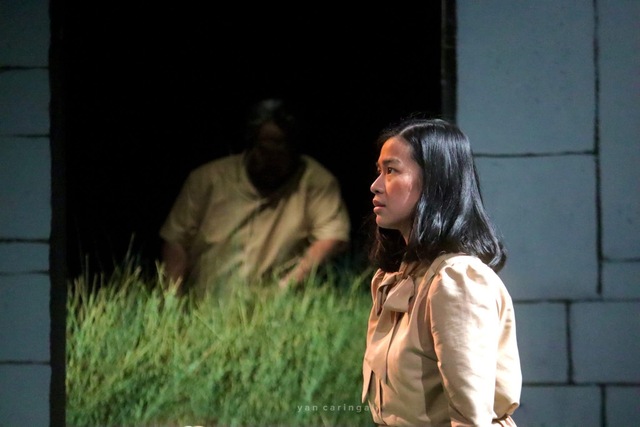
Yet, the TP production redeems itself with one poignant touch: it acknowledges the wild undergrowth that once surrounded Zapote Street. This nod to the past evokes the contrast Joaquin drew between Makati’s lost pastoral landscape and the human tragedies that modernity wrought.
In “The House on Zapote Street,” Joaquin wrote of how the land was once filled with “the sighing of the ripe grain” and “the crying of birds.” These natural sounds have since been replaced by “human sorrow”—the moans and whispers of uprooted souls.
This underlying tension—between an idealized past and a violent present—adds depth to the play’s exploration of power and oppression.
A worthy reimagining
Aside from that fine flourish of wild undergrowth as visual aesthetics by Joey Mendoza, also enhancing the production are D Cortezano’s lighting design, and Arvy Dimaculangan’s evocative sound and music. The cast delivers a gripping ensemble performance: Jonathan Tadioan (Dadong), Lhorvie Nuevo Tadioan (Dely), Toni Go-Yadao (Mila), and Marco Viaña (Noel) inhabit their roles with chilling intensity.
Overall, Tanghalang Pilipino’s Kisapmata contributes meaningfully to contemporary Philippine theater. It builds upon the film’s legacy while expanding its themes of toxic familial control, psychological manipulation, and the devastating consequences of possessive love—elevating them to urgent socio-political allegory.
Tanghalang Pilipino's Kisapmata runs for two more weekends at the Tanghalang Ignacio Jimenez, CCP Complex, Manila. For schedule and ticket info, click on this link. For tickets to the March 22, Saturday, 3 p.m. performance, contact 09175112110.