
Spot Shelf: A Human-Eating Fish, Falling in Love with a Sea Creature + More in Nap Arcilla III’s Maqueda
Maqueda won the 22nd Madrigal Gonzalez Best First Book Award.
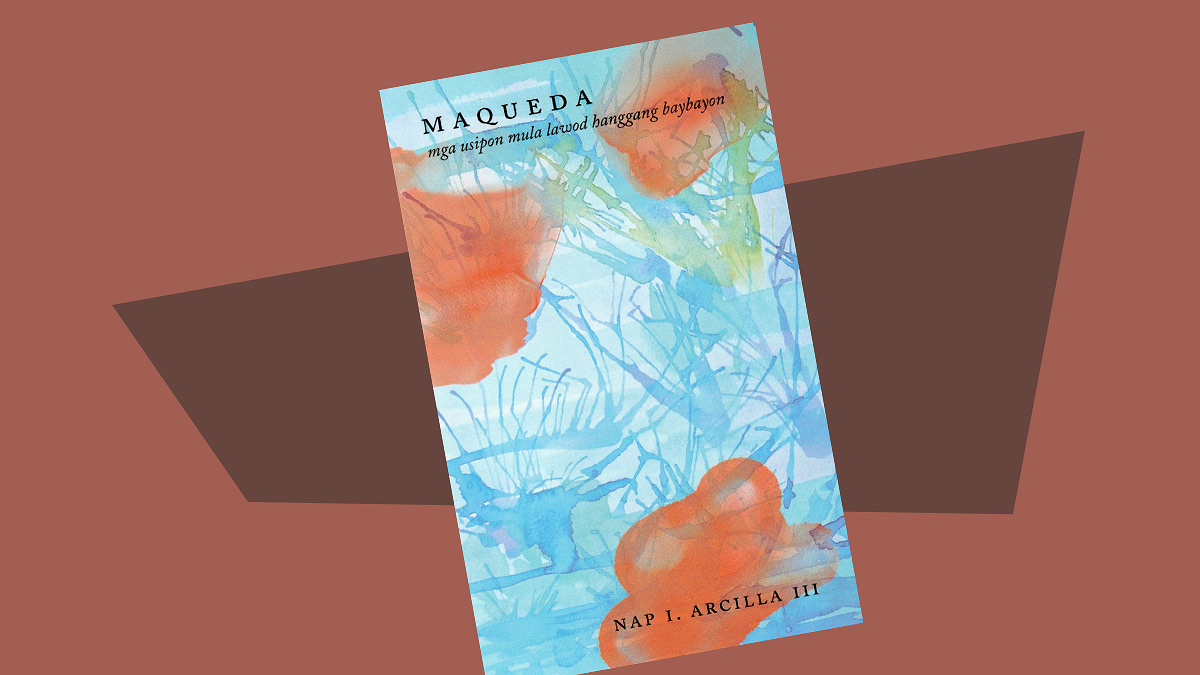
(SPOT.ph) Emotions run deep like a vast ocean. Its natural unpredictability makes people both thrilled and anxious. "Fishing is gambling. That's what the sea teaches,” said Nap I. Arcilla III in his book, Maqueda: Mga Usipon Mula Lawod Hanggang Baybayon, a Filipino short story collection about the sea and the people whose lives revolve and depend on it for food and livelihood.
Arcilla’s title, Maqueda, refers to a strait that separates the island of Catanduanes from the Caramoan Peninsula in the Bicol Region. Mga Usipon Mula Lawod Hanggang Baybayon loosely translates to Mga Kuwento Mula Dagat Hanggang Baybayin. It is written in Filipino, but with bits and pieces of the local Bikol language.
Filipino Book About the Waters of Catanduanes
At the heart of this collection are stories and characters that are uniquely told in Arcilla’s distinctive writing style: a woman mourning for the return of a husband after being taken by the sea, a man falls in love with a fish causing a fuzz in mass media, a highly-skilled poisoner whose face is likened to a poisonous fish, a woman with five husbands cooks their favorite dishes that include tamban, a feared giant fish that is rumored to eat humans, a resort owner enforcing an English-only policy among his staff, and a husband scavenging seafood along holes and crevices to take home to his lactating wife.
All 12 stories involve a species of fish in the title. Beyond that, each fish is also metaphorically used to describe what kind of world the characters live in. Each story has its own strength and uniqueness making it a delightful read.
Sharks for example pretend to be dead and inactive so that they can get close to their prey and launch an attack. Metaphorically, it also speaks about the tough competition in the fishing community requiring them to hound for blood in order to survive. Like sharks, it is natural for them to bite when they smell blood.
Some of the stories have mystical elements to the point of being both phantasmagoric and comedic. There is one story that humanizes a fish, a witty and farcical commentary on the common notion that fish have no feelings. In Arcilla’s story, fish get sad and depressed, too. Readers are opened to the idea that pain is not a perception of a physical event for them, like jumping out of a tank, it is also an emotional experience.
Maqueda debunks the romanticized image of the sea, and instead, depicts the sea as both life-giving and life-threatening. While it provides sustenance, it can slyly rage into a rip tide and claim lives and dreams.
Arcilla doesn’t mince his words whether it is the olfactory aspect or the natural lewdness of the Bikol language. His narrative comes flowing naturally like a raging sea. Readers can smell the stench of human feces, the aroma of dry fish hanging, or the fishy and salty scents of the bounty catch from the sea.
The take on the Filipino language is light but not lacking depth. The narrative is easy to read but never short of imagery. Each story is an ecosystem of images, making them more profound and extra visual in the readers’ minds.
Not only does he know his craft, enough to maneuver the plot in a way that makes the readers ponder twice about the story, but he is also well-versed in his milieu. Arcilla knows how to converse with the waves of imagery and deep dive into the ocean of his imagination.
Maqueda: Mga Usipon Mula Lawod Hanggang Baybayon was the recipient of the 22nd Madrigal Gonzalez Best First Book Award in Filipino, which was awarded in November 2022. It provides a gratifying reading experience, a perceptive delight both in storytelling style and heaps of insights.
Maqueda: Mga Usipon Mula Lawod Hanggang Baybayon (Isang Balangay Media Production, 2020) by Nap I. Arcilla III is available on Lazada for P500.
Products recommended on our site are independently selected by editors. If you buy something through our links, Summit Media may earn an affiliate commission at no extra cost to you.