

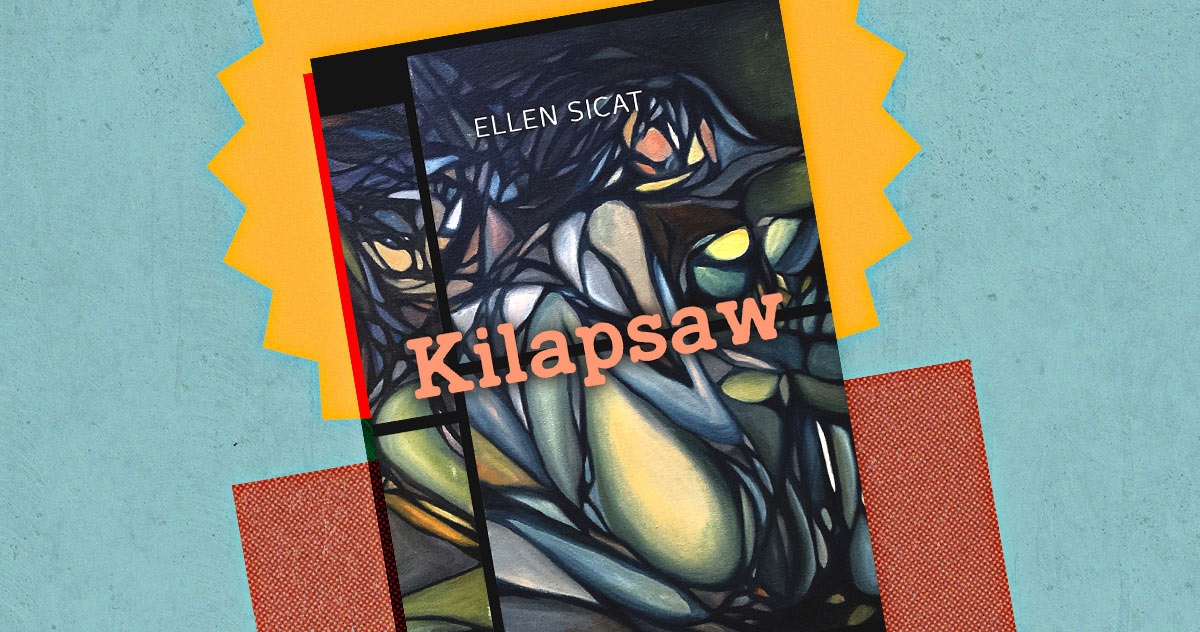
Spot Shelf: Ellen Sicat’s Kilapsaw Is an Introspection of Society’s Moral Illness
This Filipino novel is a finalist at the 40th National Book Awards.
Products and services recommended on our websites are independently selected by our editors. If you buy something through our links, Summit Media may earn an affiliate commission at no extra cost to you.
(SPOT.ph) "Walang iniwan sa kilapsaw ang ating buhay. Sawsaw nang sawsaw."
In an introductory video of Luna Sicat-Cleto published by the National Book Development Board on April 25, she said that Kilapsaw was actually written by her mother, Ellen Sicat, in 2004. The manuscript was initially submitted as an entry for the Filipino novel category of the Don Carlos Palanca Memorial Wards for Literature, but did not win. Fifteen years later, Kilapsaw was submitted to the editors of UP Press, which published the novel in 2021. It later became a finalist in the Filipino novel category of the 40th National Book Awards.
Just as the publication of the book is marked by its own timeline, the novel also carries the imprint of its era, serving as a testament to a bygone period in history. The cadence, tension, and even the length of the narrative carve out a distinct niche within the realm of young adult fiction.
The story revolves around Diwata (a.k.a. Diwa) who—at the story's outset—is only 16 years old. The protagonist undergoes significant changes as the storyline unfolds, starting out as a sexually abused teenager and into a disenchanted married woman with a husband and two children. In between these snippets, readers encounter a vibrant cast of characters, along with challenges and complexities stemming from Diwa's internal and external struggles, touching on morality, beliefs, and the meaning of life.
The book also delves into the romantic facets of Diwa's intricate relationships. This includes her relationship with Cesar, her simple-minded husband, whom she struggles to love; her connection with Fay, her lesbian friend who introduced her to literature and broadened her horizons to the myriad possibilities that life has to offer; and her involvement with Gener, her lawyer-boss and lover, who uncovered her interest in studying law, thus propelling her career from a secretary's role.
But even with these categorizations, which adhere to certain unspoken conventions to cater to its audience, Kilapsaw refuses to be boxed in. It carves out its niche with an intriguing twist in the narrative and defies the established love story formula. Instead of adhering to the well-trodden path of conventional romance novels, Kilapsaw ventures into uncharted territory.
Historical Timelines in Kilapsaw by Ellen Sicat
An evident pattern in the book is the use of historical timelines to explore and share the culture of the past. This encompasses the values, traditions, and ways of life of people from different eras, providing insight and enrichment for the readers.
The backdrop spans the EDSA Revolution (1986) to Duterte's war on drugs. In between, there are significant events in the timeline of Philippine history, such as the Glorietta bombing and the Hello Garci scandal.
To illustrate how moral standards intertwine with the forces of modernization, Sicat uses technology to transport readers from a time when the typewriter was the most accessible writing equipment in every office to the modern era, where email and mobile phones have become necessities rather than luxuries.
In this changing time, Sicat also highlights the evolving ideologies in society, raising questions such as: What is considered moral and what is not? What is right and what is not? Why was it permissible then but not now? How does modernization alter people's perspectives?
Themes, Metaphors, and Symbolisms
The novel primarily revolves around family dynamics and domestic life, consistently demonstrating a profound sensitivity to our society, particularly its ailments.
In Kilapsaw, Sicat is vocal about the issue of gender-based violence and the myriad of harsh realities that women endure in relationships, including marital problems, infidelity, deception, and even questioning one’s sexuality.
The novel is rich in metaphors and symbolism. The title, which means "ripple" in English, is likened to life itself due to its impermanence. Life, like the ripples on the water, is fleeting and temporary, much like many moments in life. Life is characterized by constant change, and nothing remains static. The ripples symbolize the transience of both individual experiences and life.
Another recurring image is the mutual relationship between fish and plants inside an aquarium, which Diwa enjoys watching and observing. Fish and plants often exist in a mutually beneficial relationship. The fish produce waste, which can serve as nutrients for the plants, while the plants provide oxygen and a habitat for the fish. This metaphor highlights the concept of mutual benefit, where different individuals cooperate for their shared advantage.
The story challenges stereotypes that Sicat debunks in her narratives, such as misconceptions that laborers are communists, activism is terrible, or that women who nag are vulgar—the author refers to them as "siling walang anghang," like Diwa's mother.
While there may be words that the younger generation might not readily recognize or understand, the cadence and style of Sicat's narrative are fluid, making it easy to read and rich in substance. The author asserts that although the characters are entirely products of her creative imagination, they were inspired by real people she knew while writing. This aspect makes Kilapsaw a realistic and thought-provoking read.
Kilapsaw (University of the Philippines Press, 2021) by Ellen Sicat is available on Shopee and Lazada for P470.
Rita T. dela Cruz is a science writer and editor at a government research institute. She finished BS Development Communication from UPLB and MA Filipino (Malikhaing Pagsulat) from UP Diliman. Her first book, Solo Flight: Mga Kuwento (Balangay Books, 2021), is available on Lazada for P617.
Also read:
Majestic Trees, the Celebes Sea + More in El Arbol de la Alegria
Mark Angeles' Ang Huling Emotero Is a Quick Read for Busy People
Links are updated regularly and as much as possible but note that products can run out of stock, discounts can expire, and listed prices can change without prior notice.
For more discounts and deals, check out Spot's exclusive vouchers.