

Spot Shelf: This Horror Fiction Asks: Are Humans Actually Scarier Than Monsters?
The stories are set during the Duterte administration's "war on drugs."
Products and services recommended on our websites are independently selected by our editors. If you buy something through our links, Summit Media may earn an affiliate commission at no extra cost to you.
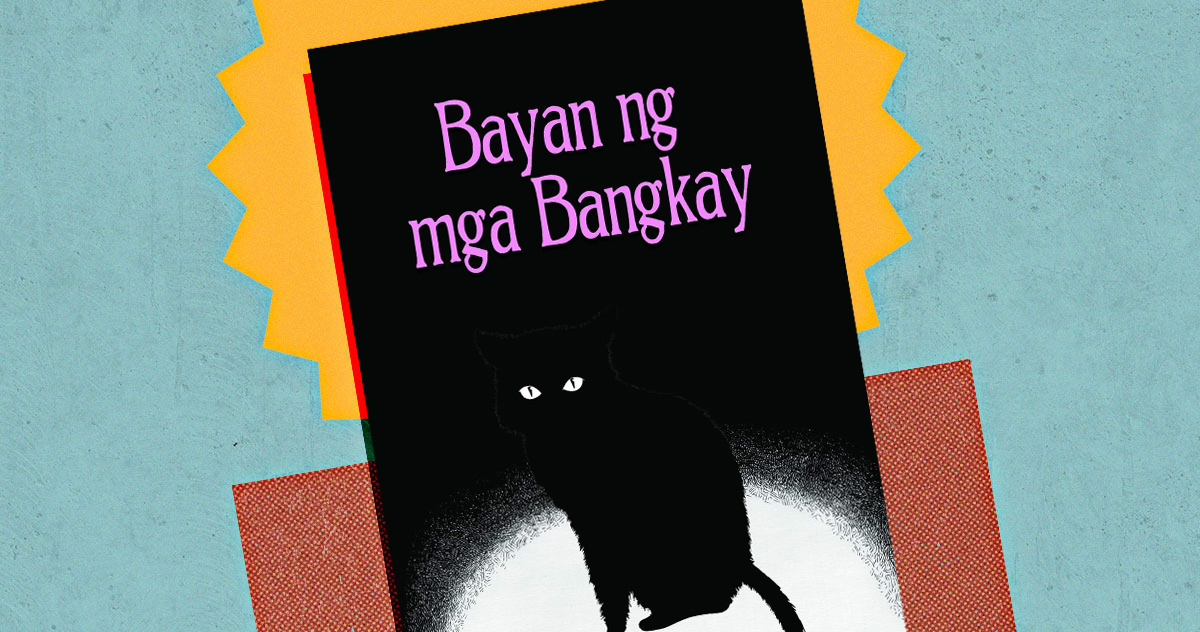
(SPOT.ph) People love a good scare. A good horror story elicits a strong emotional response from the readers. To be disturbed or emotionally affected suggests that the story has successfully tapped into the reader’s imagination. But it should not stop with the emotional response; an effective horror story should also resonate and prompt readers to reflect on the social relevance of the narrative. Chuckberry J. Pascual’s Bayan ng mga Bangkay has the ability to make readers reflect and linger.
The 10-story collection is set during the Duterte administration’s "war on drugs" that led to large-scale extrajudicial killing, mostly among poor Filipinos living in urban areas, and the recent global pandemic that also took millions of lives.
All the stories are written from the perspective of a queer individual or those in a queer relationship. It encompasses a variety of characters, including an obsessed fan, an elderly single gay man who lost his lover to cancer, a handsome aswang who fell in love with a fellow aswang, a victim of abuse visited by a black cat at night, a regular motel customer who fell in love with a guard, a gay man who enjoys voyeurism with his neighbors, and a lover who became a zombie, among others.
Humans versus Monsters
A common literary trope in horror stories involves monsters and ghoulish creatures drinking human blood and feeding on their flesh. In Philippine literature, aswangs, mananangal, and black cats often embody this trope.
Pascual's stories employ these recurring subjects and motifs but subvert them to create fresh and innovative narratives. For example, in "Aswang as You Love Me," the monster that feeds on human flesh is a responsible son to his aswang parents, who, due to their age, must depend on him to bring them human food. His "family comes first" trait is culturally Filipino. The author also debunks the typical portrayal of the aswang as seen in literature, transforming into human-beast hybrids. In Pascual’s story, the aswang transforms into a giant black bird that transports his victims in a body bag to take home to his parents.
In "Ang Pusang Itim," the cat is a child who is a victim of abuse. He turns into a black cat and seeks comfort in his neighbor's house, who has also been a victim of domestic abuse when he was still living with his parents. He once dreamt of shapeshifting into a black cat as well. In literary tropes, black cats are often considered omens of bad luck, but Pascual's story depicts them as a refuge—an escape from the grim reality of a painful childhood.
Zombies are also recurring motifs in horror stories, as exemplified in the titular story "Bayan ng mga Bangkay." It portrays a post-apocalyptic society where individuals turn into zombies after six hours of death. They can manifest as killers, vegetarians, or ascetic zombies—a classification that mirrors aspects of our present society. The concept of zombies can serve as a metaphor for various themes, such as the breakdown of societal structures during a crisis or the dehumanization process, stripping individuals of their identity and compassion.
Social Commentary on Philippine Society
The crimes depicted in the collection are situated in contemporary times. Lives are taken, whether justified or not. The stories represent Pascual’s take on death in a time where killing is justified by the "war against drugs," and death manifests as a pervasive and somber presence with a heightened awareness of mortality due to a global health outbreak.
The narrative prompts readers to view death as a spectacle society rationalizes and normalizes based on circumstantial events. It urges readers to reflect on the fragility of human existence.
What does death look like during these times? How does our society normalize death in these grim moments in the country's history? Pascual's stories provide commentaries on these issues, offering a harsh perspective on the social realities in the Philippines.
In "Sasaeng," a young man fires a gun out of fear when confronted by a motorbike rider during an ungodly hour, only to return to his house as if nothing happened. Interestingly, in "Room 202," two gay members of a riding-in-tandem show no qualms about killing people in the name of money.
The families affected by EJK suffer significant psychological distress. This type of fear is vividly depicted in "Puno ng Luha," a story that cleverly uses katmon, a tree that releases resin when a victim of extrajudicial violence occurs in the area, as a metaphor for grieving family members of EJK.
In using the pandemic as the backdrop for the stories, Pascual explores a myriad of topics, including isolation, loneliness, anxiety, uncertainty, and even paranoia, as seen in "Lockdown" and "Bigote."
In the heart-rending tale "Ang Matandang Binata," Pascual addresses a common stereotype about gay people ending up alone in their old age. This unconventional ghost story revolves around an elderly gay man whose lover succumbed to cancer, with the ghost of his former partner lingering as he strives to move on with his life.
Contribution to Queer Literature and Horror Fiction
In each narrative within the collection, Pascual masterfully employs death and crime as integral elements in crafting horror tales that extend beyond mere fright, compelling readers to delve into the profound shadows of societal realities. This represents a distinctive and creative contribution to the discourse on queer literature and horror fiction, underscoring Pascual's pivotal role in offering readers a platform for reflection and analysis through his narratives. While Pascual's stories may be rooted in his unique experiences, their resonance with broader themes such as death and dying renders them universally poignant.
Bayan ng mga Bangkay (University of the Philippines Press, 2022) by Chuckberry J. Pascual is available on Shopee and Lazada for P520.
Rita T. dela Cruz is a science writer and editor at a government research institute. She finished BS Development Communication from UPLB and MA Filipino (Malikhaing Pagsulat) from UP Diliman. Her first book, Solo Flight: Mga Kuwento (Isang Balangay Media Productions, 2021) is available on Lazada for P556.
Links are updated regularly and as much as possible but note that products can run out of stock, discounts can expire, and listed prices can change without prior notice.
For more discounts and deals, check out Spot's exclusive vouchers.
Also read:
Patricia Evangelista's Some People Need Killing Is an Ode to Truth
Isang Dekadang Resty Is a Relatable Novel About the Child of an OFW