
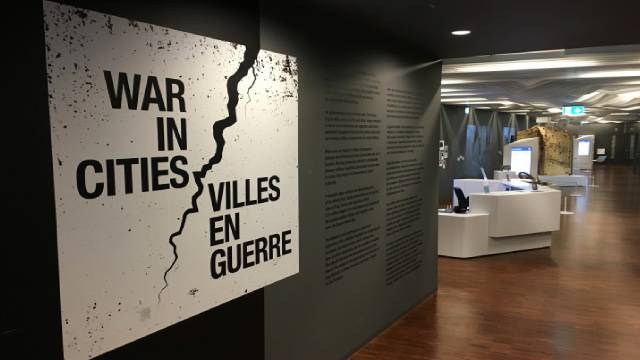
(SPOT.ph) Have you ever wondered what it's like to live in a war zone? Scratch that. Have you ever imagined suddenly losing everything or leaving everything behind in order to survive? Every day, more and more civilians are finding their lives disrupted due to armed conflicts in urban areas; think of the Marawi Siege in 2017 if you need an example. Wars in cities have caused immeasurable damage to buildings and cultural sites and, more importantly, to people who have found themselves without livelihoods, homes, and even access to essential services. But when we think of wars and armed conflicts, they seem abstract to most of us. We think of them as things that are far away, as if they couldn't happen to us. But that's the thing; you never know when it could happen to you and what you would have to leave behind.
That being said, in commemoration of International Humanitarian Law month in the Philippines, the International Committee of the Red Cross, the Embassy of Switzerland in the Philippines, and the Intramuros Administration, partnered up to bring us the War in Cities exhibit. It is open to the public until August 31 at the Baluartillo de San Francisco tunnel at Fort Santiago in Intramuros, Manila. While the exhibit is free, the entrance to Fort Santiago is P75 for adults and P50 for students, senior citizens, and persons with disabilities.
Also read: Intramuros' Outdoor Attractions Remain Open Under Alert Level 3
Explore the remnants of modern-day conflict at the War in Cities exhibit at Fort Santiago:
War in Cities allows visitors to learn more about the human toll of fighting in cities and how we could work towards preventing them in the future. Started in Geneva, Switzerland, in 2017, this traveling exhibit provides the public a glimpse of the humanitarian crises and resiliency surrounding those who have lived through urban warfare.
You won't find any archaeological artifacts, unique works of art, or anything specifically beautiful in the exhibit. Instead, it is simply a collection of objects found or sourced in conflict-affected cities in Iraq and the Philippines. The things could be your everyday handbag, a metal gate, a toy, or anything that witnessed the suffering of those whose lives were disrupted by conflict.
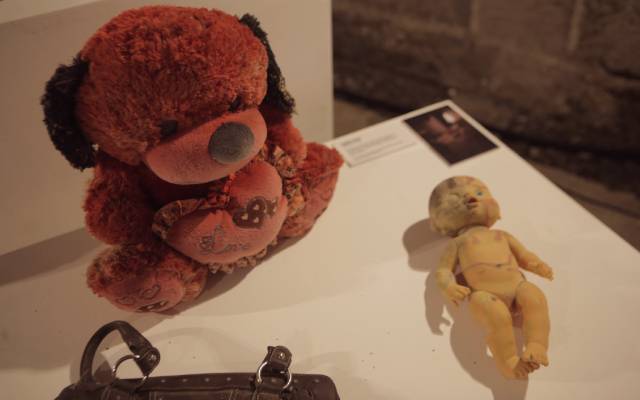
These objects are real. They once belonged to a community, a family, or a child; they once served a purpose, that is, until someone attacked and they had to flee. Aside from objects gathered from war-torn cities, visitors can also expect to see drawings made by children affected by the Marawi conflict, audio-visual materials from the ICRC archives dating back to 1922, and audio excerpts of testimonies by former ICRC staff and other people affected by urban warfare.
This exhibit speaks volumes about lives lost, sidetracked, and lives forever changed due to the violent intrusion of war.
War in Cities runs until August 31 at the Baluartillo de San Francisco Javier tunnel, Fort Santiago, Intramuros, Manila City. in Fort Santiago. It is open from Monday to Friday, from 9 a.m. to 8 p.m.; and from Saturday to Sunday, from 6 a.m. to 9 p.m. For inquiries, follow War in Cities on Facebook.