

Why Doreen Fernandez’s Book 'Tikim' Still Matters at 30
When this food writer needs guidance, she often returns to the pages of Tikim.

(SPOT.ph) Whenever I’m tasked with writing an article about food—one involving more than a quickie feature on a restaurant or food product—my starting point is always, and I mean always, Doreen Gamboa Fernandez’s Tikim: Essays on Philippine Food and Culture. I would ask myself: how would she approach the topic? What would she say?
First published by Anvil Publishing in 1994, Tikim celebrates its 30th anniversary this year with a soon-to-launch expanded edition featuring six brand new essays. Yes, thirty years later and this book still matters. The reason is simple—Doreen G. Fernandez’s writings have inspired and influenced pretty much anything you’ll find on Philippine food writing and history today. That’s true staying power for this relatively slim compilation of 40+ food essays from her columns for the Philippine Daily Inquirer and Mr. & Ms., as well as articles from other publications.

Meeting Doreen Fernandez
The first time I met Tita Doreen (yes, she’s a relative on my mother’s Negrense side) was in the late 1980s, long before I thought I would be writing about food. I sought her out at the Ateneo de Manila University’s English Department, eager for advice as a fresh graduate and wondering what to do with my literature degree. (Long story short—I got my first job as a substitute English teacher thanks to her.)
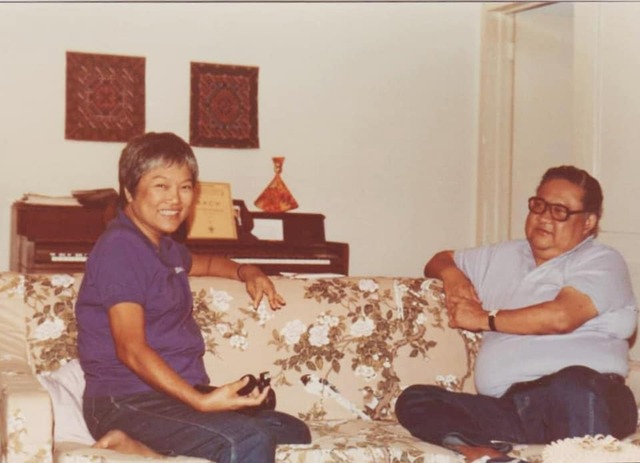
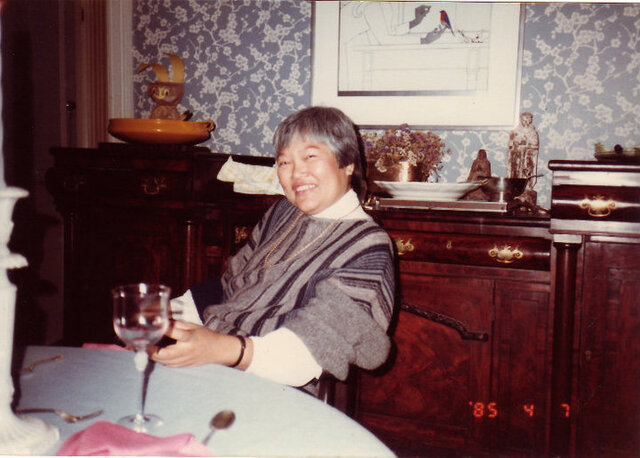
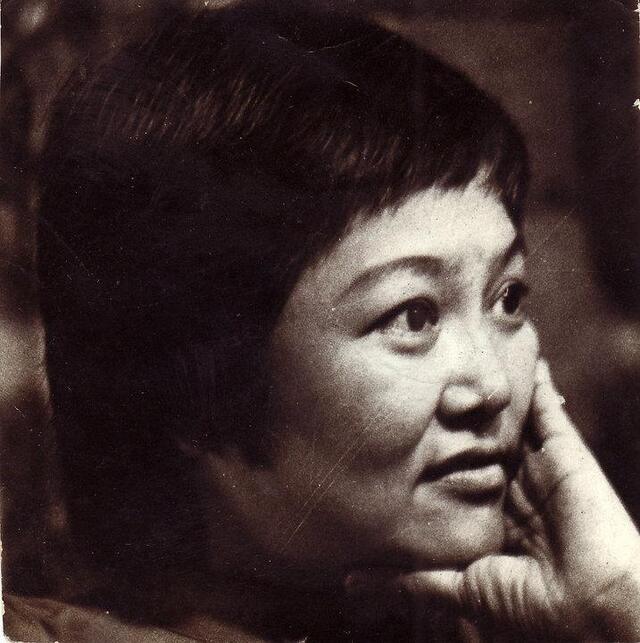
I still remember Doreen’s signature silver gray pixie cut and eyes that sparkled whenever she smiled (which was often). But what I remember most is her voice— sweet, melodious, even girlish at times, with a calming crystalline quality that seemed to cut through the cacophony. And I guess the same can be said of her food writing. It pierces through the “messiness” of our common beliefs about our cuisine to provide a clear-headed and sustainable lens by which to understand Philippine food, whether it’s the cooking of our ancestors or of today’s generation.
What is Philippine food?
This is one question that every Filipino food writer and practitioner grapples with. Thirty years ago, Doreen had already posed this question in Tikim, admitting that, “The answers can be neither brief nor simple.” That’s because distractions abound, like the endless squabbles about what should be our national dish. But if you feel confused, just read Doreen’s concluding essay “Colonizing the Cuisine: The Politics of Philippine Foodways” and leave that useless debate behind.
Doreen guides us through geography, history, culture and politics to delve into the heart of the matter. On the one hand, Philippine food involves our indigenization of influences from all over—noodles from China, stews from Spain, canned goods from America—while on the other hand, she identifies an “indigenous” cuisine that, she writes, “…has stood steadfast and unchanged even in the onslaught of foreign tastes.” Fast forward to today’s food scene and realize that Philippine food can encompass both kinilaw and kimchi, sinigang and sushi, puto and pizza.
Regional adventures
Food tours around the provinces? Doreen has been there, done that. In Tikim, she travels the country through the dishes she samples, from fresh lumpiang ubod in her hometown of Silay, to wild bayawak in Angono, and dudol in Marawi City. She makes them come to life, encouraging us to eat our way through the islands: “Have binakol in Iloilo, pinangat in Albay, lawot-lawot in Tacloban, pinapaitan in Laoag, betute (stuffed frog) in Pampanga, tiulang itum in Jolo, inihaw na barilis in Davao, shark kinilaw in Catbalogan, paklay in Silay. The adventure will telegraph through your palate the regional variants and the recognizable culture that make the savor that is Filipino.”
Tikim is a deeper dive
Want to learn all there is about a dish or ingredient? Doreen provides a template to follow. Read her essay “Si Sugpo: Prawns in Philippine Lore and Culture” for a comprehensive take on prawns, involving a mix of folklore, science, and personal anecdotes. Or leaf through the pages of “Salty and Sour, Bitter and Sweet: Philippine Flavorings” where she connects our flavor principles through the ingredients we have and the ways we use them, calling these flavors “matamis na ala-ala, sweet remembrances, being legacies from nature.”
Stars of the kitchen
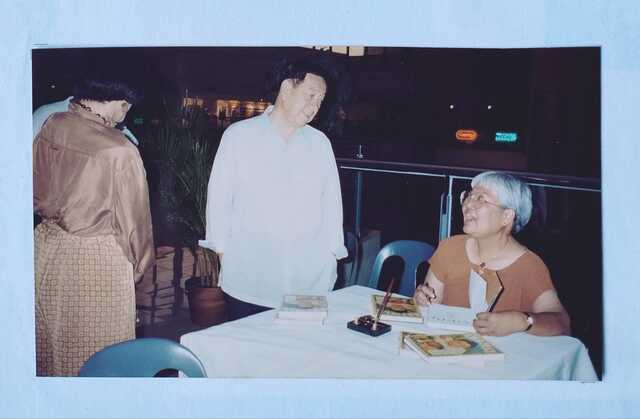
Fascinated by our modern-day celebrity chefs and food influencers? Decades ahead, Doreen was already a star maker who “discovered” those she felt deserved to be recognized, whether local artisans, cooks or chefs. Enting Lobaton of Sagay City, Negros Occidental gained fame thanks to Doreen, whom she describes as “a kinilaw artist non-pareil, as well as a careful and intelligent craftsman, who knows exactly what he is doing and why.” Doreen also sings high praises of Manila’s foremost culinarians, whether it was Glenda Barretto of Via Mare, Chef Gene Gonzalez or the late Chef Ed Quimson.
Family connections
Tikim is special to me because I can’t help but smile at the multiple references Doreen makes to the women in my family. She dedicates a whole essay, “A Cookbook and a Billiard Table” to my great-grandmother, Pura Villanueva Kalaw, who wrote one of the country’s earliest cookbooks, Condimentos Indigenas, in order to make enough money to buy a billiard table for her husband, Teodoro M. Kalaw. Doreen references my grandmother Purita Kalaw-Ledesma’s own cookbook, Family Recipes, in “Inside Information: A Tribute to Mothers,” as well as mentions my mother in the Acknowledgements, most likely due to the many conversations they had about food, Silay and whatnot. In essence, Tikim is peppered with Doreen’s family, friends, colleagues who provided her with a treasure trove of intimate food knowledge and lore that inform her understanding of our food. She reminds us that if we want to learn about Philippine food, we should always start with those closest to us.
Food of the people
Doreen lived a privileged life, growing up among the hacendero elite in Silay, Negros Occidental, marrying one of the country’s most acclaimed interior designers Wili Fernandez, and rubbing elbows with the literati and glitterati of her time. But she was foremost a cultural scholar who could see beyond her own background to find where the beating heart of our foodways lay. She writes, “The indigenous cuisine wins out in the power play if the criteria are geographical spread and breadth of market. Native food feeds more people in more areas of the Philippines than does the colonial cuisine—because it is what the majority can afford.” Simply put, Philippine food is what most Filipinos eat day in, day out, not reported by media, not glamorized in food shows, not really talked about at all. Her essay “Balut to Barbecue: Philippine Streetfood” is a fascinating snapshot of what we eat on the streets, while “What’s Cooking?” provides an overview of all that we eat, from traditional cooking to fast food and convenience fare.
On food writing
Do you want to write about food? Then start by reading Tikim’s introduction “Writing about Food: Savor the Word, Swallow the World.” There, Doreen instructs us to steer clear of the word “delicious” and all its synonyms, instead evoking writers like John Keats and Edith Templeton as shining examples of how to transpose food memories and experiences into words.
I only started writing about food after Doreen passed away in 2002, and thus missed on learning from her firsthand. But somehow, food had a way of creeping into our many encounters. I remember tagging along with my mother on various lunch dates with Tita Doreen, whether it was to try a new Chinese restaurant in Greenhills or to sample Claude Tayag’s degustation at his Angeles City home (long before his famous Bale Dutung was born).

My true claim to food fame was having Tita Doreen and her husband Wili try my chicken liver pâté, which I had the bright idea of selling at a local bazaar. A few days after I sent my pâté in its white ceramic pot to their Mandaluyong residence, Tita Doreen wrote a glowing little review in her Philippine Daily Inquirer column, and I received quite a number of orders as a result. But while my culinary career sadly ended with that chicken liver pâté project, I can happily surmise that the seeds of my food writing and editing career may have been planted many ages ago in that one review.
Her food writing advice, though, lives on in Tikim, as she urges aspiring food writers to steep themselves in literature and the arts: “Writing about food should not be left to newspaper food columnists, or to restaurant reporters. It should be taken from us by historians of the culture, by dramatists and essayists, by novelists, and especially by poets. For it is an act of understanding, an extension of experience. If one can savor the word, then one can swallow the world.”
I’m elated that, 30 years later, Tikim is still around to influence and inspire a new generation of food practitioners and content creators who will find their own ways to “savor the word” in order to “swallow the world.”