

I Burnt My Laing, So Leni Robredo Taught Me Her Recipe
Chef Jayson Maulit on the nightmare that would have the ex-VP remind him that laing is a test of patience.
(SPOT.ph) I burnt the laing we were supposed to serve the former Vice President.
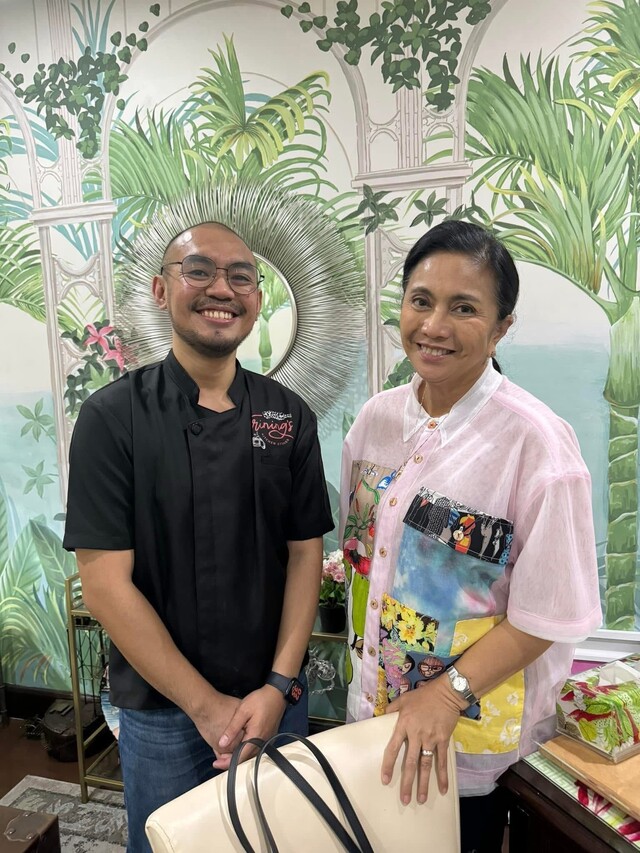
She laughed when I told her, but still called it out. “Bakit mo nasunog? Minadali mo, no?” I nodded. Laing, she said, is a test of patience. I already knew. I rushed the process, turned up the heat, and forgot that time was an ingredient, too. It carried the flavor of being neglected, with that faint, bitter scrape from the bottom of the pan. That’s not something you serve to someone who understands food as deeply as she understands public service.
What came after was part recipe, part policy briefer. Laing, like most Bicolano dishes, rests on three essentials: taro leaves (natong), first-press coconut milk (kakang gata), and shrimp paste (balaw). Everything else—the aromatics, spice level, even the protein—can shift, but those three hold the line. Start with balaw and aromatics, sautéed until the oil runs fragrant. Add the protein. That’s your first chance to season. Pour in the coconut milk, then the leaves, and leave them untouched. Wait for the first boil. I asked if stirring more than once breaks the rule. “Not necessarily,” she said. “But a good cook shouldn’t have to.” One gentle fold is enough. Then the second layer of coconut milk. Lower the heat. From there, you surrender.
Laing is not a fast dish. It demands time, control, and a relationship with fire. Bitter, grassy leaves, fermented paste, and heat pull in different directions at first. But as it simmers, the coconut milk rounds the edges. The aromatics deepen. The heat folds into the cream. The funk mellows. The spice settles, no longer loud but lasting. What once shouted in your ear now stays on your tongue and lingers in your head. By morning, it’s something else. The leaves hold their shape but carry the sauce. Like a good adobo, it doesn’t just improve overnight—it introduces its real self.
The laing on an Ilocano table
We didn’t grow up with Bicolano laing, but when my Ilocano family moved to Manila in the ’90s, it found its way onto our table: first as guest, then comfort, then default. It showed up at church lunches and potlucks, folded into our ginataang aba (taro in Ilocano). Later, it became my college dormer dish of survival, stacked in the fridge, eaten straight from the container with rice. It was dependable, forgiving, and full. The kind of food we talked about with Leni when the conversation turned to nourishment.
That’s why our conversations about food were never just about flavor. They were always about what holds things together: people, systems, kitchens, lives. We talked about the daily tensions small restaurants face such as unstable supply, hard choices about pay and pricing, why Filipino food done equitably should cost more. The policies we once fought for—fair pay, regional equity, dignity in work—no longer sit on paper. They’re decisions we make at the pass.
I told her where I think the hospitality industry should be headed: if we’re serious about building the future of Filipino cuisine, then it has to be rooted in community, shaped by duty and generosity, and reach the people who need us most. Otherwise, what are we awakening, and for whom?
Mostly, we spoke of our own cuisines: hers Bicolano, mine Ilocano. Two traditions shaped by ingenuity, survival, and disparity. As true probinsiyanos, we know how hard it is to find the flavors we grew up with—the unapologetic spice of Bicol and the steady, earthy bitterness that defines Ilocano cooking. We landed on the same three words to describe good laing: ‘yung lutong lola.
What's Lutong Lola?
And we weren’t just naming nostalgia. We were naming a system. Lutong Lola is a philosophy: built on memory, thrift, instinct, and care. I hold one other dish in equal reverence, my grandmother’s pinakbet. Both taught me the same things: make more from less, cook without waste, feed with heart, and stretch what’s left until it becomes enough.
At Trining’s, it isn’t just structure. It’s inheritance. My grandmother taught me how to make food last without letting it feel like less. Public service taught me how to turn that care into systems. Together, they shaped a kitchen built to serve: first with what we have, and second with what we can imagine.
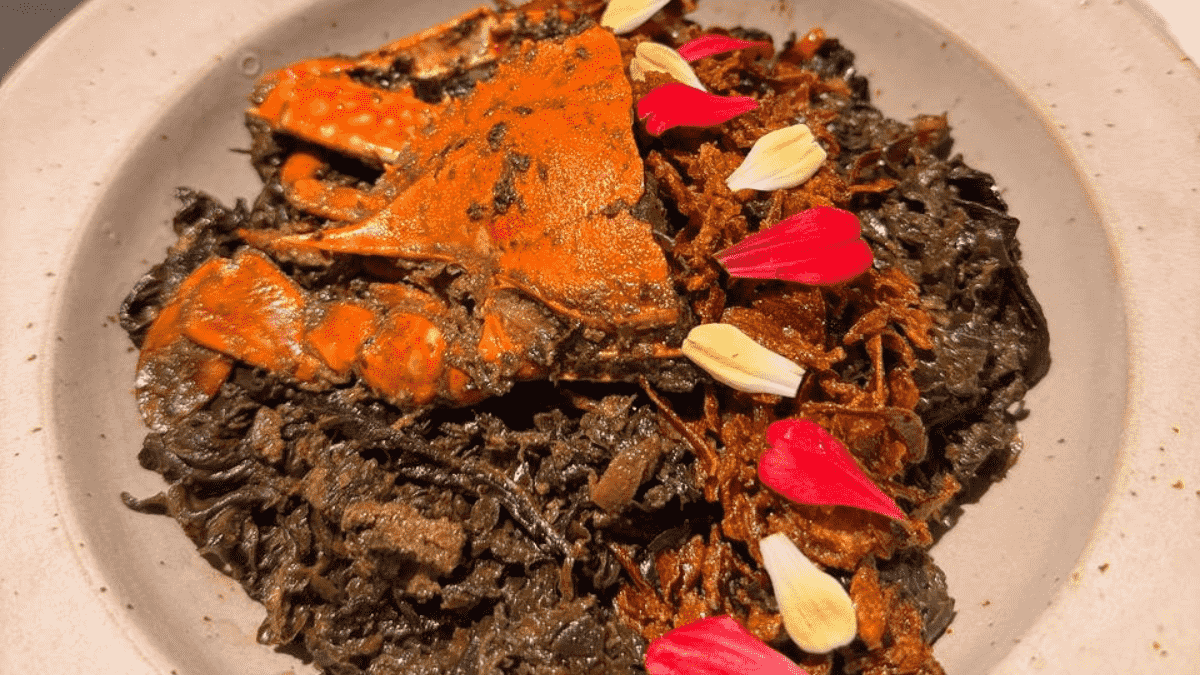
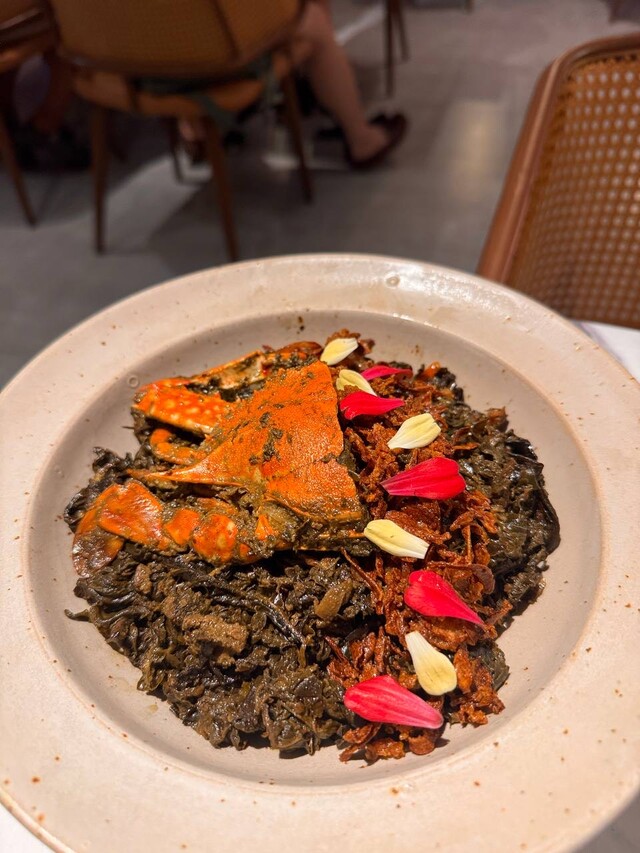
We took her laing and made a tribute: Ang Presidential! Crab Laing. The dish leads with ginger and lemongrass for lift and sharpness. Our version uses coconut milk steeped in seaweed and kelp, balaw rinsed in vinegar and mirin, sautéed with aromatics and bonito flakes. We release it in small batches, often sold out before service to regulars.
The first time the dish left our kitchen, it went to evacuation centers. We packed it into bento boxes during a nutrition brigade after a typhoon and served it to evacuees. That was where we wanted it to begin.
That version of laing carried memory, discipline, and care. It is an embodiment of the kind of leadership I learned from VP Leni: the kind that feeds the powerful and the vulnerable out of the same plate. That day, we didn’t just serve food. We practiced the kind of kitchen that reminds us of the future we want to build—a table with seats for everyone.
Jayson Maulit is chef and owner of Trining's Kitchen Stories, one of Spot's 50 Great Restaurants in 2024.