

Here's Why Merging Cuisines Is Natural and Cooking, "Logical" for Cloudstreet SG's Chef Rishi Naleendra
The Sri Lanka-born chef of the two Michelin-starred spot blurs the lines between cultures.

(SPOT.ph) What are we if not a product of our life experiences? Chef Rishi Naleendra of two Michelin-starred Cloudstreet’s would know a good thing on this, particularly how it translates to his cooking.
The celebrated chef’s background is multifaceted, being born and raised in Sri Lanka before delving into the culinary world in Australia and now owning restaurants in Singapore. And in the same way that the different phases of Naleendra’s life come together to form who he is today, the multitude of influences found in his cooking come together to form cohesive, vividly flavored plates that take from different cuisines—Japanese, Sri Lankan, French, even a little bit of Filipino.
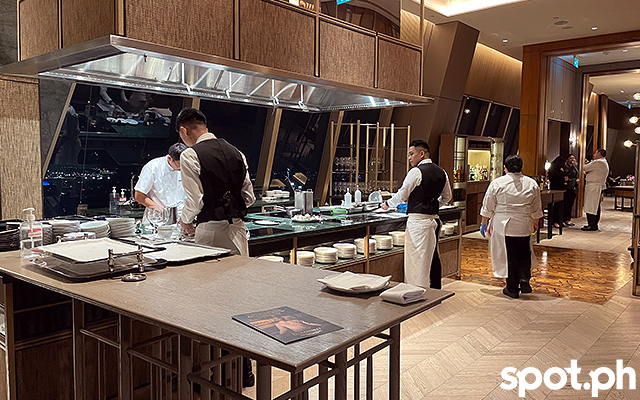
We saw this in action as Naleendra recently visited Manila for a dinner at Grand Hyatt Manila’s Penthouse No. 66—where he demonstrated his naturally multicultural approach over nine sublime courses.
Also read:
Thai Meets Japanese at This Exciting Dining Collab in Cavite
Celebrate What's Available: Lessons From Gallery by Chele, Toyo + Asia's No. 1 Resto
On Eating Local to Help the World at the Toyo, Metiz, Labyrinth, Native SG Collab
Here’s how Chef Rishi Naleendra of two Michelin star restaurant Cloudstreet Singapore takes on food, and what he served at Grand Hyatt Manila:
Naleendra hails from Colombo, Sri Lanka, where his parents owned a catering business back in the day. Amazingly, he wasn’t particularly into cooking then; it was the desire to study architecture that led him to move to, and study in, Australia. But the love for food came out as he worked part-time as a dishwasher, that he found himself delving into learning more about the topic and learning how to cook himself.
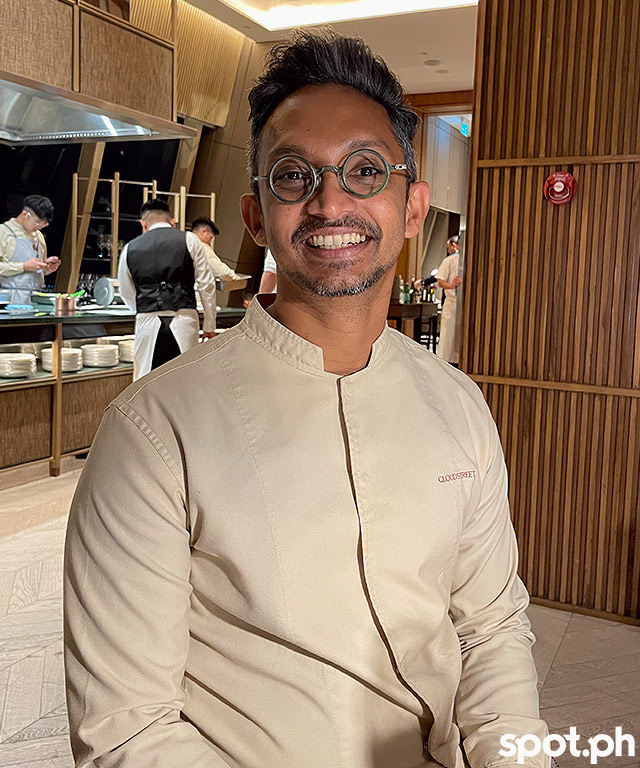
From there, he’d end up landing stints at Melbourne’s Taxi Dining Room (known for its modern Australian fare with Asian touches) and Sydney’s two-Michelin starred Tetsuya’s (known for their degustation that takes after Japanese traditions and French techniques). After a decade working in land Down Under, he moved to Singapore and led the team at ever-experimental MACA. Soon he joined modern Australian spot Cheek by Jowl, which would be awarded a Michelin star a year after opening. Come 2019, Cloudstreet opened on Amoy Street, as a space where the flavors of Naleendra’s life experiences, travels, and other personally relevant momentos congregate. And a year after came Kotuwa, dedicated to Sri Lankan classics.
While Naleendra definitely acknowledges the creativity entailed in cooking, he also calls it “logical” in the sense that any good dish ought to have flavor balance—specifically a balance between "acid, salt, fat, [and] bitterness." “If you eat something spicy, you eat something cooling. And if you eat something sour, you add sugar into it. And it's just a balance of that,” he explains in an exchange with SPOT.ph. “That's how I always see it.”
Crucially, this idea applies—whatever ingredients actually steer the wheel to arrive at that destination. And given his own life story, he thus gets to draw from a variety of cultures—not deliberately in the sense of doing fusion, but naturally, as a byproduct of having been personally acquainted with all sorts of flavor combos, ingredients, and techniques. “So it's not so much like, ‘I want to pay ode to my Japanese, but also put some Australian [influence]...’—no, but being exposed to all that helps.”
"[This approach] makes you actually a lot more creative, because then you're not trying to force things or go out of your way to make something," Naleendra tells us. "It needs to come naturally."

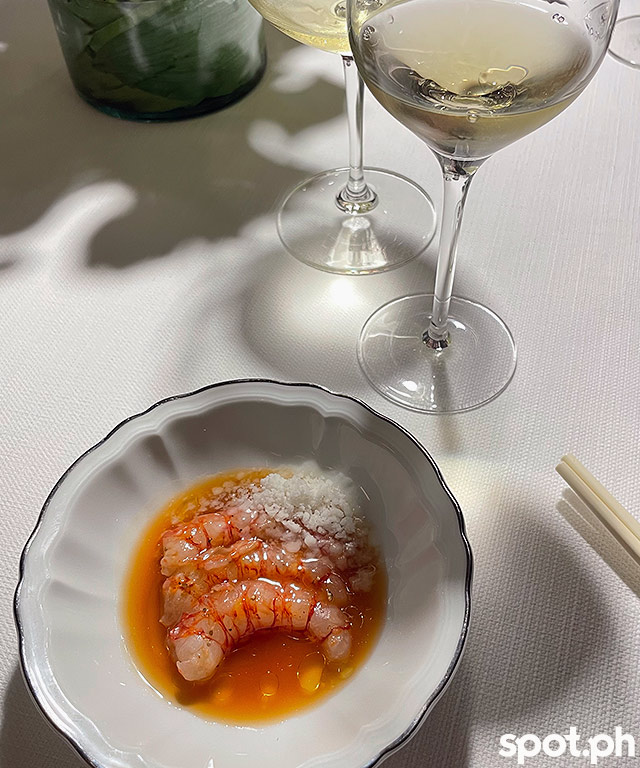
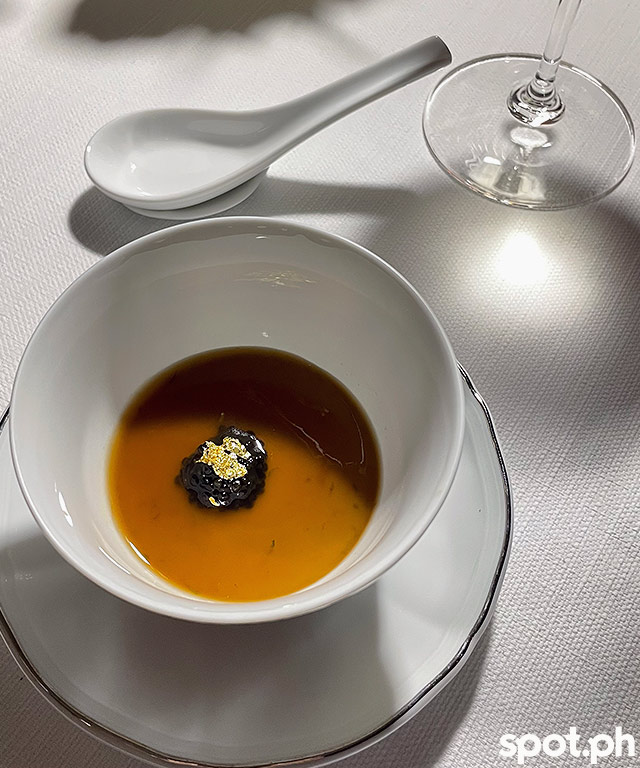
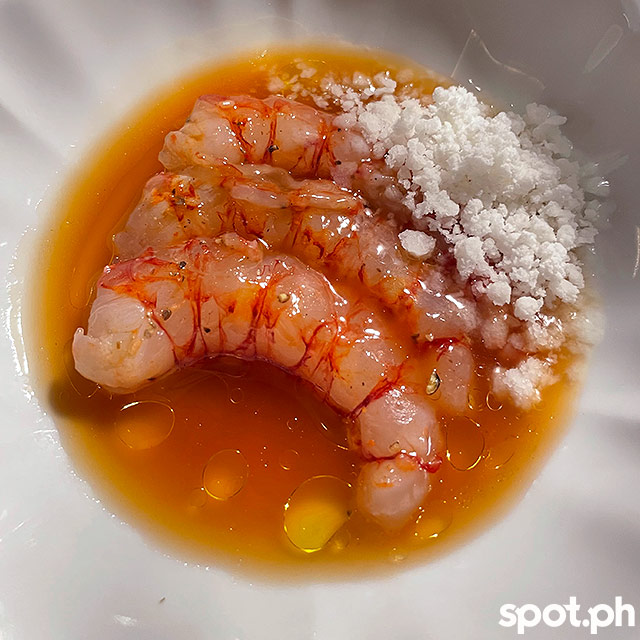
In the Porcini Custard, the earthiness of porcini mushrooms imbues a silky custard similar to chawanmushi in onion consomme; a dollop of Baeri caviar takes the small plate to luxe heights. We get a taste of the Mediterranean sea in the Red Sicilian Prawns, which pairs the barely cooked prawns (so soft it quivers when poked) with a fermented tomato juice that emphasizes the seafood’s natural flavor just a touch—and a lemon granita spooned over upon serving brings the element of temperature contrast to the party.
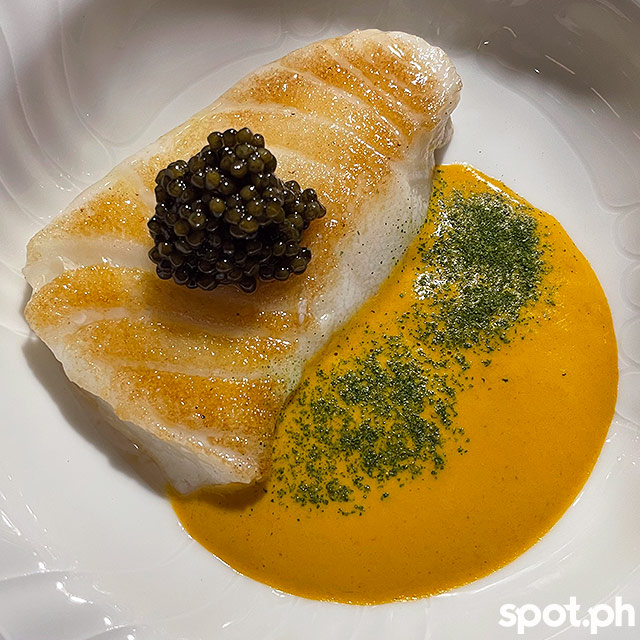
Naleendra’s logical approach to coming up with dishes is especially evident in the Sea Bass, which ties together unexpected elements in his aforementioned logical way, as far as flavor combos go. The fish in itself, of course, is succulent as is proper. But the real fun starts as you get to its accompaniments, namely an umami-rich sauce of crab fat (yup, that’s our aligue—an ingredient ”all my friends from Philippines bring”); a spiced raisin preserve for sweetness with a touch of heat; and Oscietra caviar, for buttery brininess that emphasizes the flavors of the sea.
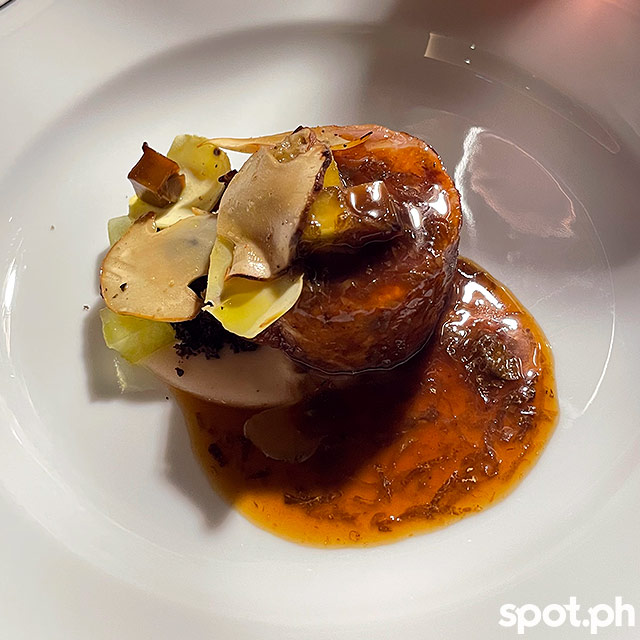
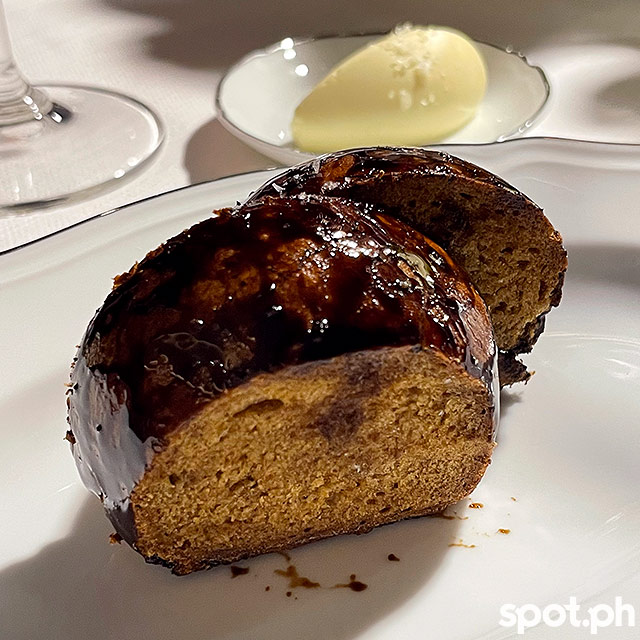
Some diversions Naleendra takes are more subtle, as in the case of the Roasted Quail. Naleendra fashions a small roulade out of the tender bird and pairs it with a chestnut puree—classic Christmas-y stuff—as well as shiitake mushrooms, which contributes a subtle but present umami undertone without taking over. Shortly after came the Sri Lankan Stout and Liquorice Bread—the chef’s signature soda bread with a burnt-sugar crust, and a tight yet pillowy crumb that soaks up the butter beautifully.
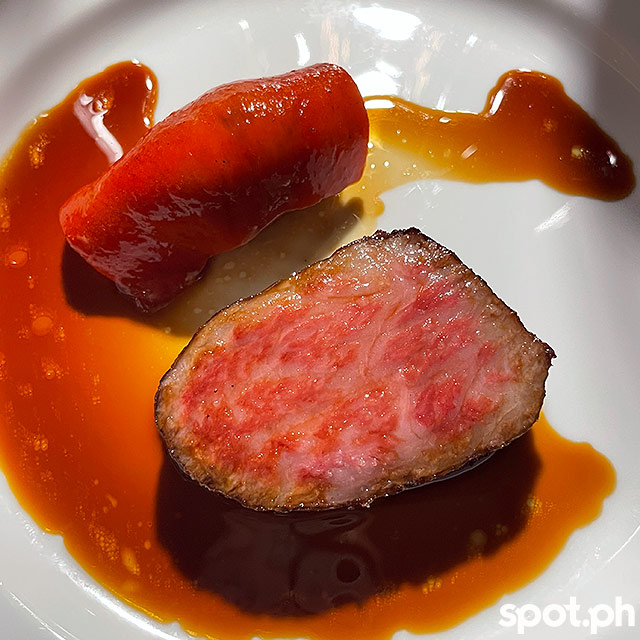
The chef is far from done, however, and pulls all stops with the A4 Wagyu Striploin. Perfectly seared on the outside yet rare within, it delivers decadence on all fronts that’s restrained just a touch by bell pepper cooked in the beef’s juices. Asian-style umami enters the chat from there: as it’s served, the team also pours over a soy-based sauce aged for a whopping 14 months—the aging of which Chef admits happened by accident, but a happy one, given the deeply savory profile it contributes.
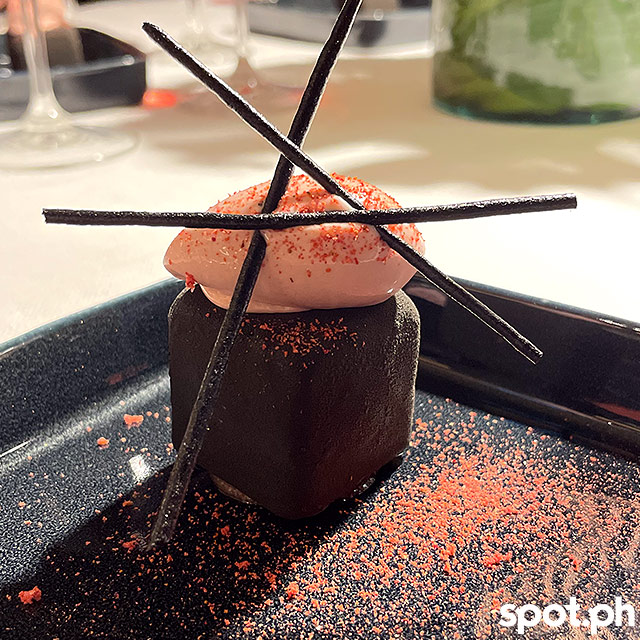
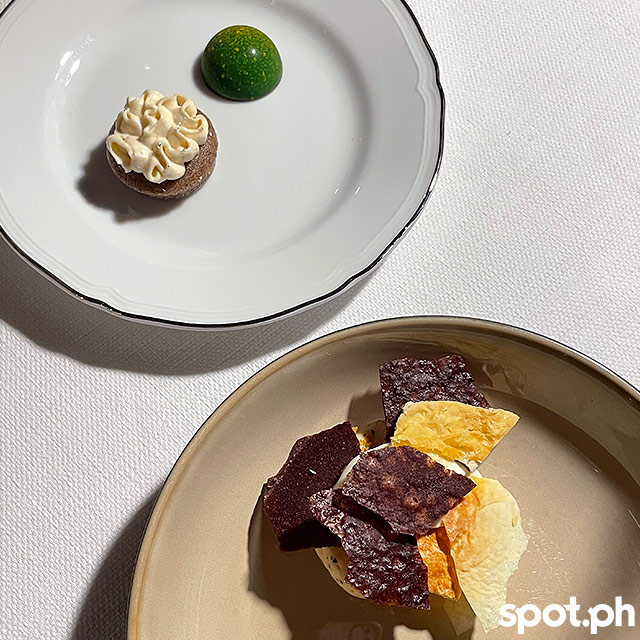
Naleendra also blurs the conventional lines between savory and sweet—as we saw in his Black Olive Panna Cotta, where the fruit (yep, olives are fruits) adds a rich, subtly savory but berry-like tinge mirrored by strawberry and rhubarb. Earthy meets creamy and sweet in the Jerusalem Artichoke Ice Cream; finally, the Ragi Financier made with finger millet (ragi)—a cereal popular in India and Africa—ties the concierto together.
Some argue multiculturalism to be the future as folks travel more and nations converge. This has its pros and cons—but in food at least, it makes for bedazzling dishes and flavor combos where borders are transcended, if not done away with altogether.
Naleendra's creations show us how it can be done: as he's not limited by the need to stick to one central cusiine, the chef is free to explore his and other cultures for inspiration, grounded by the logic of flavor balance. Makes sense: if the love for good food and great flavors is universal, then it shouldn't matter what the source.
Hey, Spotters! Check us out on Viber to join our Community and subscribe to our Chatbot.