

Café Owners Speak Up: Is It Really Okay to Stay for Long at a Coffee Shop?
Coffee shop owners share their thoughts on the issue that's all over our feeds.
(SPOT.ph) Coffee shops have been a recurring topic on our social-media feeds of late. Last month there was that viral rant by a foreigner on Filipinos using a coffee shop—Starbucks in this instance—as a personal work space. The popular response from the online community: there shouldn't be any problem with it. Then there was that news earlier last week about a Bacolod coffee shop review-bombed by “unsatisfied kids” —10 kids who occupied three tables and got just two drinks. Since then small coffee shop owners have been making their voices heard.
Also read:
We'll Continue Working at Coffee Shops, Thank You Very Much
10 Seats For Two Drinks? Bacolod Café Gets Review-Bombed After Asking Group to Leave
What do café owners think of customers who stay for long periods of time at coffee shops?
To be clear, coffee shops do appreciate the communities they harbor. "Cafés love having people over and having regular customers," shares Adrian (not their real name), the owner of a homegrown coffee brand and small business who prefers to stay anonymous.
Kevin Tang of Yardstick admits to having a preference for having a "bustling atmosphere" within their cafés. "I believe it's more beneficial to have more customers sitting inside rather than none, as it presents us with increased opportunities to enhance our business." In Yardstick's case, overstaying customers hasn't been a significant issue. "We're fortunate our café space is adequately sized to comfortably accommodate a larger number of customers compared to smaller cafés," Kevin shares.
Sidrick Cabatingan of Mandaluyong’s YDG Coffee also admits they've "never had a problem" with individual customers ‘overstaying’ in their cafés. "Based on our experience, that same customer [would] get hungry and order again anyway,” he explains. “Same also with groups. If they stay long enough, they [would] just get hungry and order again from us. So it’s good that they’re ordering from us repetitively than somewhere else!”
Though Cabatingan contends this can be inconvenient for “new customers who wants to dine in,” he says overstaying, from this perspective, is good for the café’s sales. “[On] rare occasions, we sometimes even appreciate overstaying customers because it can keep the café’s vibe alive and/or busy. Plus, we may even befriend them for a while.”
It's a similar case for The Black Bean's Christian Paul Casino, who says that, for them, there's "really no such thing as overstaying customers." While he contends they might just be lucky to not have been involved in sticky situations, they ultimately prioritize delivering the right "experience" with "great service." "Generally, we don’t time our guests. Experience is what we wish to make special for them so the longer they stay, the more we feel we’re doing our job right. How do we make it worth it? We continuously work hard on our food and drink to make sure they’re great stuff that people would want to try, or have again."
A social media post on overstaying in coffee shops, published by Facebook user Justin Francis Castro Bionat on December 12th, also sheds light on the value of having loyal customers. “These students aren’t just [like other] paying customers. They are actually regulars,” he writes. While most other customers would maybe visit a coffee shop once or maybe twice in a month, regulars, he explains, would stay six to eight hours in one pop—“but also visit the same coffee shop, every single day of the week. Not to mention, [they would] order not just once [in a visit], but multiple times.”
The Perils of Having Overstaying Customers
But there is a point where things become too skewed toward the side of the customer and their needs—so much so that it comes at the detriment of the café. There's the above mentioned incident involving the Bacolod coffee shop SLO_BAR Café visited by "non-paying" customers who occupied three tables and ordered just two drinks during their entire stay. These "unsatisfied kids" had the audacity to leave negative Google reviews following the incident, too.
Adrian shares some of the extreme cases they've had to deal with in their business: once they witnessed a party of two to three occupy a table for six with just one drink for over six hours. "With all their stuff spread out on a table... then you notice they step out to buy convenience store food and eat before coming back to their table again." Another incident involved a family that brought their dog and hung out for over six hours without letting the dog step out once—the dog was already peeing in their premises. "It wasn’t the dogs fault. But you can also see how this experience can make other customers feel uncomfortable and feel like the space is unsanitary."
Adds Adrian: "Cafés rely heavily on turnover. That means how many paying customers can get productive use of a seat in the cafe. Because if you think about it, [an order of] coffee is really P100 to P300 only. A café needs to pay rent, salaries and the cost of all the ingredients and utensils used."
Big Franchises vs. Smaller Spots
Not all coffee shops are created equal. In the case of the two viral incidents on social media, they involve two kinds of spots with similar functions but radically different natures. Whereas Starbucks is an international franchise, the Bacolod coffee shop—and many other local coffee shops—are smaller, homegrown, and independently owned.
"Oftentimes, making a business thrive is much harder for newly opened shops, small brands, and small operations," says Adrian. "We don’t have the deep pockets and economies of scale of bigger brands."
“While larger establishments may absorb these prolonged stays, the same leniency cannot be extended to smaller or startup businesses struggling to sustain their operations,” Facebook user Tio Moreno writes in a public Facebook post that’s received some 1,800 reactions, 280+ comments, and 1,200+ shares as of writing.
Moreno brings up how the typical cost of orders doesn't quite match how long a customer typically stays in coffee shops: “While one might consume a cup of coffee in 10 to 15 minutes at home, the same order, valued at 100 to 120 pesos, is sustained for hours within the coffee shop premises," he writes. And this prolonged stay could instead have been given to a greater number of briefly staying customers in that same timeframe. In short, profit suffers.
“It’s true—BIG businesses like Starbucks don’t mind if you stay the entire day with only one cup of coffee purchased. However, small businesses do,” writes Rachel Ravana, owner and proprietor of Cafe Lucca in Los Baños, in a Facebook post published December 13. She illustrates how the typical small, local establishment (fitting, say, 10 tables) suffers losses in income when folks stay for long. If drinks go for just P150 to P200 a pop and 20 guests stay for long periods in a day, the café would make just P4,000—quite little, considering the usual daily overhead of around P3,000 to P5,000.
"[It] would be okay if all seated guests were paying customers, but no. A lot of people come in, take a table, take a seat, and not order—because they’re with a friend or a groupmate who got a drink.” (Rachel also points out how things differ at Starbucks, "because people who go there would be too embarassed to take up space without getting something.”). She adds: “Small businesses don’t force these people to leave—heck, they would even allow them to charge their laptops and phones. That’s literally free outlet and Wi-Fi use. Such habits kill small businesses.”
When Can You Call It Overstaying?
That there are no explicit guidelines as to what even counts as overstaying leaves the term open to interpretation. This was a point brought up in passing in Justin Francis' trending post mentioned earlier. “If the coffee shop has no policy about ‘overstaying’ and aren’t even asking these students to leave, then why would you criticize students when they study in coffee shops?”
For Cabatingan, he tends to be more loose (even saying there's "no limit") when it comes to the hours customers spend in their space, in that "there would [eventually] always be a turnover of tables and new customers will eventually be able to sit," at least from their experience. "For example, we’d have one customer staying for the whole day occupying one to two chairs but it doesn’t really bother us since other people come and go.”
Things become a little more complicated when you consider other factors—like how big the group is in question, how much they ordered throughout the day, and how long they’re staying. “If it’s only one customer buying one drink and occupying only one to two seats, we usually wouldn't notice that because again other tables get turned over,” says Cabatingan. “For us, overstaying becomes a problem when a big group comes in, say [with] six to eight people, and only one or two [of them] buys a drink for the whole day. I think that’s overstaying for us. So definitely it has something to do with the size of order.”
But he wouldn’t classify it as overstaying if everyone in that same group ordered coffee and food—even if they were to stay for hours, e.g. from breakfast until lunch. “This is because we’re continuously earning from the same table as the day goes by, which is good.”
Tang prefers to shift his focus on customers occupying "appropriately sized tables" for their party. "It's less about a defined time limit, and more about ensuring that customers are considerate in choosing a table that suits the size of their group."
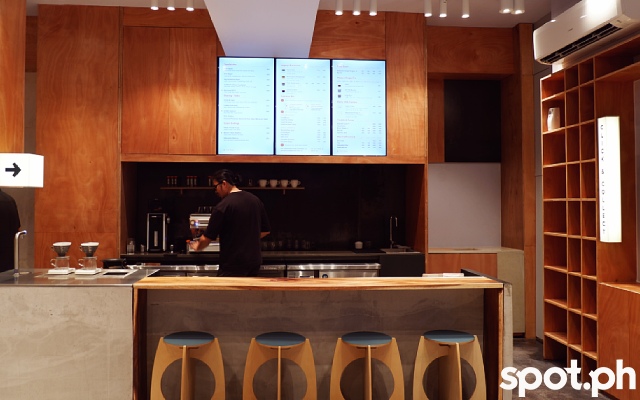
Yardstick's "adequately sized" space works in their favor in this context. They can accommodate more customers compared to smaller cafés. "This shows the importance of thoughtful seating space design," says Tang. "Incorporating a variety of seating options, such as bar-type seats for solo customers and larger tables for groups, allows us to cater to different preferences. This approach not only maximizes the utilization of available space but also contributes to creating a dynamic and welcoming environment that encourages both individual patrons and larger groups to enjoy their time at our café."
How to Balance Out Extended Stays
Of course, it shouldn't solely be up to the coffee shop to adjust. Customers like you and me ought to do their part, too. The trick is to match your consumption of the coffee shop’s resources—that includes the mere time you spend in there—with how much you give back to the café.
It may not be written in a rulebook anywhere but when it comes to the matter of staying in coffee shops, courtesy is key. Moreno preaches “proportional spending”, or spending amply so as to match the amount of time you’re staying.
“Your prolonged occupancy without proportional spending does more harm than good to these establishments," he writes. “The P180 you spent is nothing compared to the comfort you availed when using their Wi-Fi, aircon, and other amenities—it's a disproportionate use of resources without adequate support for the business.”
Adrian offers suggestions for what we can do to help the coffee shop out if we must stay for long.
"First off, be nice and courteous to the café crew. Ask when the off peak hours of the café are." Off peak hours should be a better time to visit when you plan to stay longer. Adrian shares how, since the pandemic, they'd occasionally get direct messages explicitly asking if it’s okay to work or study at the cafe. "We then politely inform them it’s okay but customers are encouraged to order every couple of hours."
More than that, you'll want to pay attention to how your actions affect other people: "Use only the allocated space per customer. Do not hog the table or put all your things on all the chairs. At least one order per person would be the courteous thing to do. If you're coming with a friend and your friend really cannot consume anything, again, just don’t hog tables or overstay. [And] if you'll be staying for a while, ordering every other hour is reasonable. Have a coffee then a cookie; if it’s lunch time, consider having a meal."
It alll boils down to being sensitive to those around you. "Be aware of your surroundings," Adrian adds. "When the place is getting crowded and other customers need a seat, [then you shouldn't overstay.]" As has been mentioned earlier, cafés rely heavily on turnover, which means the number of paying customers who can get productive use of a seat in the café.
The purpose of cafés, emphasizes Adrian, is to provide a space for "get-togethers, quiet time, getting some reading or quick work done," rather than being a dedicated working space. "If you intend to do some productive work for over four hours, you may consider checking out co-working spaces that are better equipped and suited for work... cafés with very limited seating is not made for lingering."
Tang acknowledges the "special role" cafés play in customers' lives—to the point of it "often becoming a second home or office." With that, the café design once again comes into play. "Offering amenities like power outlets, free or limited Wi-Fi options, and comfortable seating contributes to the overall atmosphere. Finding the right balance between allowing customers to enjoy their time and ensuring a steady turnover involves careful design choices."
Perhaps the root of it all is the need for empathy, as Tang explains eloquently. "Empathy is key in the relationship between cafe owners and customers. Recognizing the different needs of patrons—some looking for a quick coffee fix, others using the cafe as a workspace—creates a harmonious environment. Striking this balance is essential to meet the varied expectations of customers while keeping the cafe business sustainable."
"Coffee people love people," Adrian continues. "But any business—[be it a] café, resto, or bar—will need to sell products you be able to continue running a business... But we love what we do. So let’s just be considerate of each other and help each other out."
Hey, Spotters! Check us out on Viber to join our Community and subscribe to our Chatbot.