The United Nations Gastronomy Tourism Forum in Cebu Explored the Power of Food-Focused Travel
As we learned, there's more to gastronomy tourism than sating one's appetite and wanderlust.
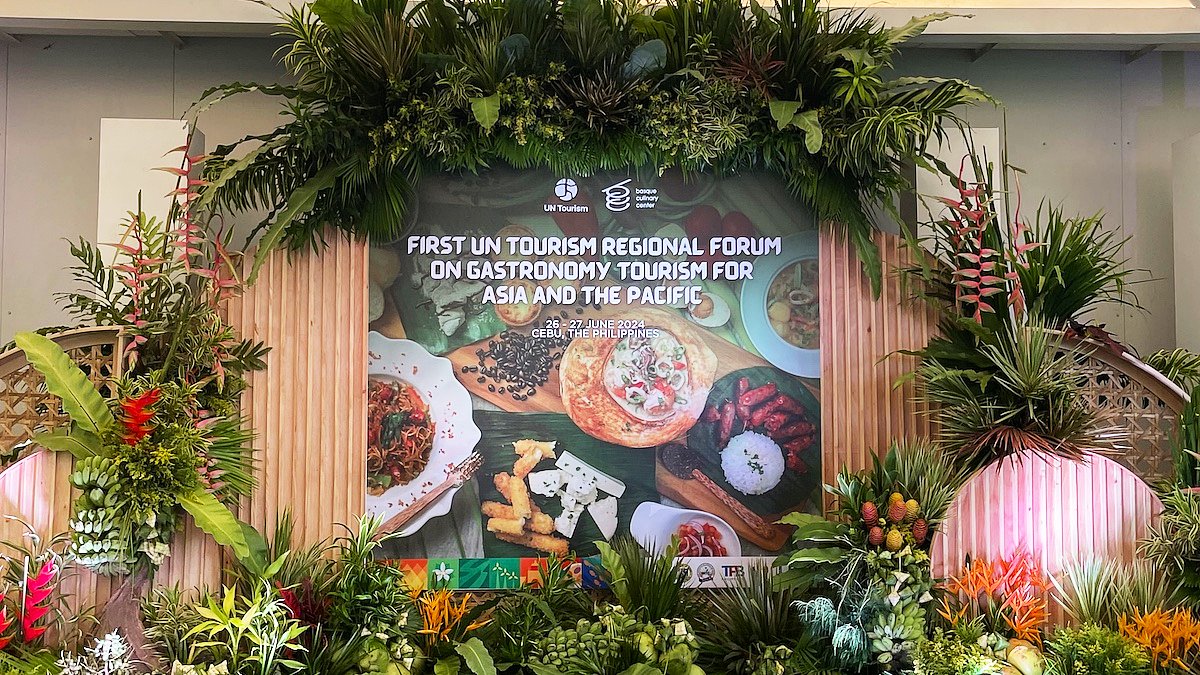
(SPOT.ph) Food and travel are heavily linked, so it’s no surprise that food-centric travel—dubbed gastronomy tourism—is booming. And there's more to it than being, ahem, fun. As we learned at the recent United Nations Gastronomy Tourism held for the first time in Cebu, it also presents opportunities for socioeconomic development; helps culinary heritage to thrive; and allows people to learn more about the cultures of others.
Also read: Rabbit Sausages, Kalamancello + More Great Finds at the DTI Food Fair
What we learned about food-focused travel at the United Nations Gastronomy Tourism forum in Cebu
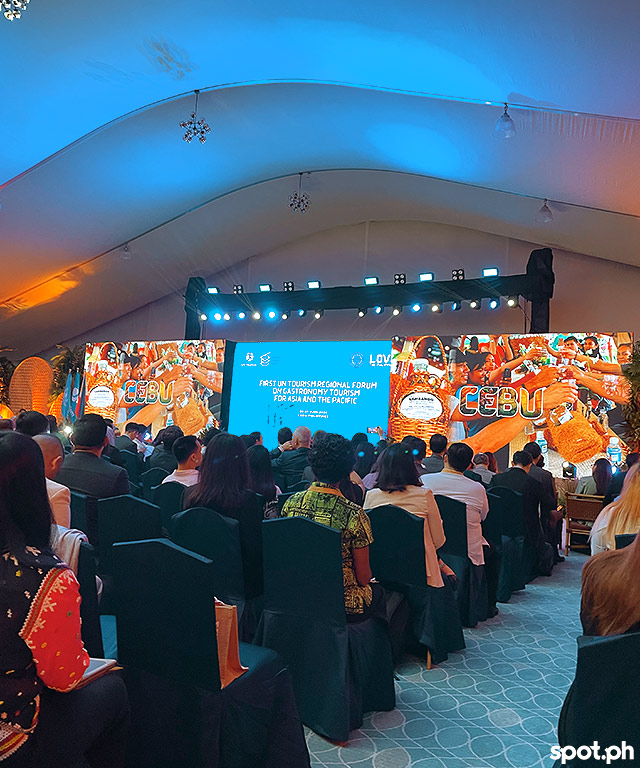
Held at Shangri-La Mactan, the United Natons (UN) Gastronomy Tourism forum was co-organized by UN Tourism and the Basque Culinary Centre and hosted by the Department of Tourism of the Philippines. The goal? To explore policy frameworks and government acts that would support gastronomy tourism, and to discuss the connections between tourism and avenues like agriculture and culture and rural development. This was done through talks and panels by known food and government figures. Pusô, the Cebuano delicacy of banana leaf-wrapped rice often paired with savory viands, served as the event’s symbol of sorts.

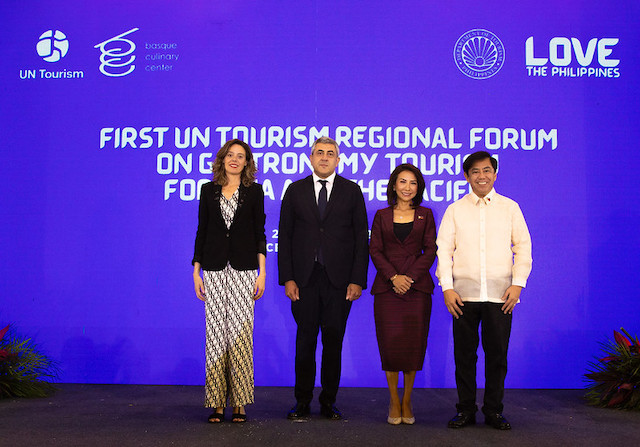
Opening the event were Lapu-Lapu City Mayor Junard Chan; the Basque Culinary Center Director of Masters and Courses Idoia Calleja; Department of Tourism Secretary Christina Garcia Frasco; and UN Tourism Secretary-General Zurab Pololikashvili, who pointed out food's centrality in every tourist experience. "Gastronomy tourism delivers many social and economic benefits. For it to deliver on its potential, we need to create well-defined gastronomy tourism policies and strategies that bring together all stakeholders with a common vision and mission, as exemplified by this first regional Forum.” Pololikashvili thus encourages the establishment of a "gastronomy and culinary center" in Cebu that would spread education and "be a legacy."

Concluding the event, UN Tourism issued the Cebu Call to Action—an outcome document urging public and private sector leaders to participate, and in finding ways in using gastronomy as a way to draw visitors in. This, in effect, benefits the locals in a multitude of ways, as we’d learned about the huge potential gastronomy tourism holds for the planet and the people.
Gastronomy Tourism for Social Inclusion and as an Economic Driver
Love to travel to eat? You’re not alone; as we learned in a talk by UN Tourism Director Sandra Carvao, food is a powerful driver for people to travel, with 81% of travelers in a 2023 American Express Travel trends report saying they look forward to trying local food and 37% even planning entire trips around visiting specific dining spots.
Gastronomy tourism isn’t just for feeding your appetite and wanderlust, as it can also be of great benefit social and economic inclusion. It can create destinations outside the typical hotspots and encourages travelers to visit rural areas, and to engage with oft-overlooked food producers. That way, lost traditions could more likely be recovered in these more remote communities.
With that, gastronomy tourism allows us to “bring together different parts of society and reduce the disparities among the different components of a country.” Plus, it can lead to more job opportunities for disadvantaged communities—women and indigenous people to name a few. Food-focused travel also raises the demand for the revival and protection of traditional products, allowing old-standing food traditions and culinary heritage to survive for the years to come.
Preserving Food Heritage, Creating Cultural Connections
For 2016 Asia’s Best Female Chef Margarita Forés, gastronomy tourism is a “cultural bridge that deepens our connection with the place’s essence,” she says. “It celebrates centuries-old recipes, local ingredients, and culinary traditions, preserving an enriching cultural heritage for future generations.” Highlighting these emblems of our heritage, she explains, helps keep them alive—consider the case of asin tibuok, for example, which was on the brink of extinction but is now experiencing a “wonderful revival,” being featured in culinary tours and used at top restaurants locally. “By celebrating [these] heirloom recipes, homegrown ingredients, and age-old skills, gastronomy tourism helps prevent their disappearance.
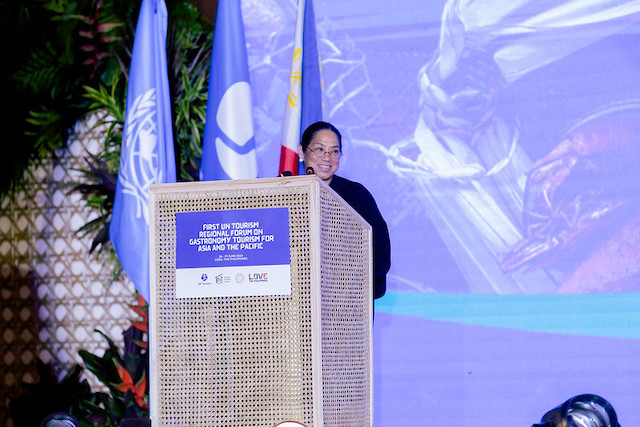
Forés shares how her travels—and the food she’s gotten acquainted with in the process—have brought about a “new love affair with our own [cuisine].” And a diverse cuisine that is: Filipino food, as she points out, is multifaceted in nature, having Malay, Chinese, Indian, Spanish, Mexican, American, and Japanese influences. “To taste the Philippines is literally to taste the fascinating diversity in ethnic backgrounds, terrain, and agriculture.” Today, Forés holds “market tours” where she takes guests to local farmer’s markets and shows them the produce, meats, delicacies, and other distinctly Filipino finds available at the site. “What I continue to find most rewarding is traveling around my own country, reconnecting with learning about and helping to preserve our culinary heritage.”
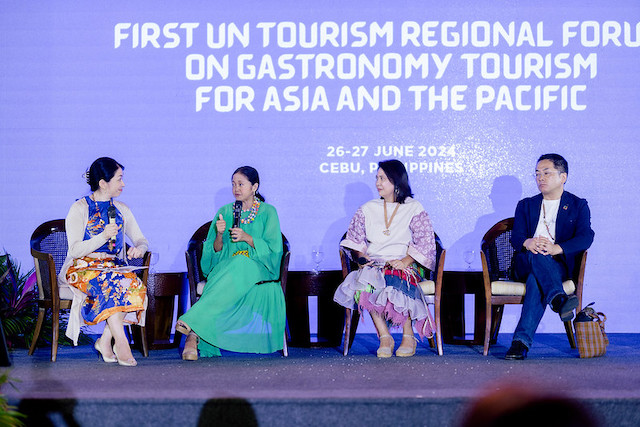
Traveling for food also brings about better appreciation of the nature of the land. In the Gastronomy Meets the Territory panel led by Forbes Japan columnist Kyoko Nakayama, World Food Travel Association Philippine Ambassador Clang Garcia lauds the country’s diversity, brought about by its geographical location. “The Philippines is very diverse—we have 7,641 Islands, we are within the ring of the ring of fire, we have… [around] 26,000 square kilometers of marine biodiversity. These elements define our terroir. It yields robust produce that make our food very flavorful, and then you integrate the tradition and techniques of our people.” As you travel through the islands, she says, the scene changes “and so does the flavor… everything changes also in flavor, depending on what grows on the islands.”
This, in turn, also encourages the protection of the people in it. In the Nakayama panel, Filpino culinary historian Doreen Alicia Gamboa brings up how the greatest asset of her hometown of Negros Occidental is its agriculture—for which reason their farmers ought to have their well-deserved share of the spotlight. The talk further discussed the value of preserving heritage food, as the "last bastion of ethnicity that gives people and places [their] identity."
With that, it's well worth embracing the ingredients, flavors, and delicacies unique to certain locales. Fortunately, the Philippines currently participates in what's called the Ark of Taste, a Slow Food movement-manned initiative that catalogues endemic ingredients in different places around the world.
Embracing local also applies to restaurants, as we learn from the talk of Chef Vicky Cheng of Hong Kong’s VEA restaurant. Cheng has a multicultural background as he was born in Hong Kong, grew up in Toronto, soon moved back to New York to learn to cook, and eventually circled back to Hong Kong, in large part as he found himself yearning for food of his hometown. At VEA, which opened in 2015 and has since copped awards from the likes of the Michelin Guide and Asia’s 50 Best, he connects the two worlds by merging his French culinary know-how with Chinese culture, using traditional Chinese ingredients like dried seafood for dishes like their their signature Abalone Pithivier and Roasted Sea Cucumber.
Sustainability
Food and sustainability notoriously have a complex relationship: food service contributes to 26% of all food wasted at consumption stage; a whopping one-third of food produced globally for our consumption is wasted; and some 63 million tons of food are wasted every year in the US.
Still, Carvao says gastronomy tourism presents huge opportunities to “embrace sustainability,” through ways like working “more seasonally” and making sure sourcing is “done in the correct way that we have the procurement in place that allows us to reduce our [carbon] footprint.” In light of these points, UN Tourism has created the One Planet Sustainable Program, a “road map” for food waste that she encourages countries to implement the principles of.
Forés makes a similar point, pointing to how gastronomy tourism can pave the way to a “more sustainable future.” She uses the case of her home province of Negros, currently the center of the Slow Food Movement in Southeast Asia, as an example: “By integrating stakeholders across the gastronomy and tourism value chains, producing organic products, and urging the hospitality industry to put environmentally friendly protocols in place, the movement has influenced the region's farmers, who were inspired to farm in a more sustainable way.”
She explains how Negrenese chefs, too, have collaborated to “create dishes that reflect the island’s ecological diversity” in the name of honoring Negros’ rich agriculture. This, in turn, “enhances visitor experiences” and “supports the economy of rural communities.”
Implementation
Carvao emphasizes how we need “leadership” to advance gastronomy tourism. Together with the Basque Culinary Center, she says, they’ve created guidelines with a structure and action plan that can help implement gastronomy tourism plans in different places. One destination in Indonesia now has a gastronomy tourism plan, she shares; there’s also a plan to expand to other regions in the country. Extra developments were also seen in the gastronomy tourism in Nara, Japan. With the aforementioned Cebu Call to Action that UN Tourism has endorsed, we could well be next.
Forés makes clear that despite gastronomy tourism’s great potential for positive impact, there, too, exist potential issues—e.g., “overcommercialization and irresponsible tourism can dilute traditional dishes, corrupt traditons, and strain infrastructure.” “This is why such an important undertaking requires everyone to pitch in—not just the hospitality and tourism sectors, [but also] the… local communities, and of course, the local government, to share and preserve their culinary culture and traditions.” She then commits to be part of the goal of “[making] gastronomy tourism make the world a better place,” through acts like investing in infrastructure, and training chefs, food producers, and service staff to “ensure tourism development respects traditions.”
“If we all work together, I believe the Philippines is posed to become a global food destination.”
Hey, Spotters! Check us out on Viber to join our Community and subscribe to our Chatbot.
Special thanks to: the Department of Tourism and J.A. Villegas

